
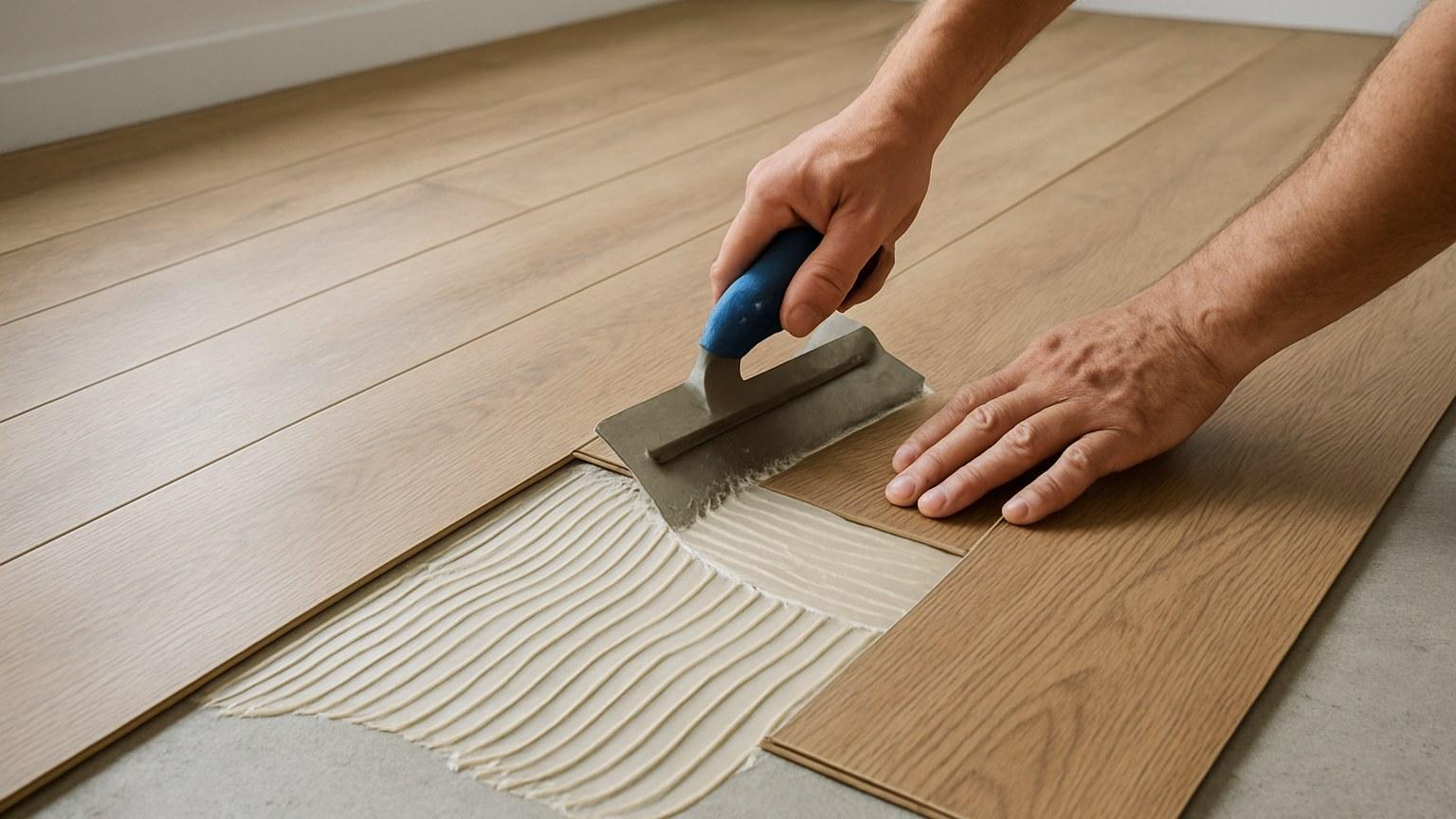
You can glue down vinyl plank flooring if it's a dryback (glue-down) or loose lay plank, but not if it's click-lock or rigid core, which are engineered to float. The confusion is that both get sold as "vinyl plank," so homeowners buy glue for a floor that was never meant to be stuck down. Guess wrong and you can buckle the floor and lose the manufacturer's coverage, so the type decides this, not you.
Key takeaways
- Dryback (glue-down) and loose lay planks can be glued; click-lock/rigid-core is built to float, and gluing it causes failure.
- Tell them apart by the edge: click planks have an interlocking tongue-and-groove edge, dryback planks have flat square edges and a smooth back.
- Gluing a click floor can buckle, cup, and gap it, and it voids the warranty on most click products.
- Most rigid-core LVP (luxury vinyl plank) has an attached pad, so adding a second underlayment under it can void the warranty.
- Glue-down LVP material runs about $1.20-$7.72 per sq ft per thisoldhouse.com; glue-down labor runs $1-$10 per sq ft per rightstepflooringnc.com.
Can You Glue Down Vinyl Plank Flooring? The Short Answer
Yes for dryback (glue-down) planks and loose lay, no for click-lock and rigid core. Those last two are built to float as one loose sheet over the subfloor, and gluing them fights the way they're engineered to work.
Your preference doesn't get a vote here. The lock type on the plank and the maker's install sheet decide the method.
Glue a click floor down and you can end up with buckling, gapping, and a warranty the maker won't honor anymore. So the first job is figuring out which product is actually in your boxes, not picking an adhesive.
One more thing worth saying up front: on any glued floor, the subfloor prep and the moisture reading matter as much as the glue itself. In the work I've done, that prep is what the warranty quietly hinges on, long before the adhesive does anything. Picking the correct adhesive formula for the flooring type you're bonding is a separate decision worth getting right too.
Which Vinyl Plank Do You Have? Dryback, Loose Lay, or Click
Flip a plank over and look at the edge and the back. That tells you faster than any label.
A flat, square edge plus a thin, flexible plank with a smooth back means dryback, the glue-down type. An interlocking tongue-and-groove edge, the kind that clicks together, means click-lock or rigid core, and that floor floats.
Loose lay sits in the middle. It's thick and heavy, has flat edges with no click, and the back feels grippy, almost rubbery. That grip is the point. Loose lay can go down loose, spot-glued at the edges, or in full adhesive, so you have options.
A quick spot-check saves a lot of grief: if there's a foam pad already stuck to the bottom, often an IXPE pad, a thin closed-cell foam cushion bonded to the plank to make the floor quieter and softer underfoot, it's almost always a floating click product, not a glue-down one. When the edge and back leave you guessing, the box and spec sheet name the install method, and that overrides whatever a forum told you.
| Type | How to spot it | Glue it down? |
|---|---|---|
| Dryback (glue-down LVP) | Thin, flexible plank; flat square edges; smooth back, no pad | Yes, glue is required |
| Loose lay | Thick and heavy; flat edges; grippy rubber-like back; no click | Optional (loose, spot, or full glue) |
| Click-lock / rigid core (SPC, stone plastic composite, or WPC, wood plastic composite) | Interlocking tongue-and-groove edges; often an attached foam/IXPE pad | No, it floats |
How to tell the three vinyl plank types apart and whether each one glues down.
Why You Can't Glue Down a Click-Lock or Floating Floor
A click floor is engineered to move as one connected sheet, drifting a hair in every direction as the room warms and cools. Glue pins random points to the subfloor, and then the floor fights itself.
What that fight looks like is ugly: buckling where planks lift, cupping and crowning along the edges, gaps opening at the seams, and locking joints that pull apart and never reseat. On most click products, adding glue also gives the manufacturer grounds to deny the warranty, so you're on your own when it fails.
I pulled up a floating floor in a Dayton rental once where the last installer had run a few beads of construction adhesive under it "to keep it from shifting." By the next summer the planks near the patio door had humped up like a speed bump, and every locked seam in that run had popped. The glue held, and the floor had nowhere to go.
This answers two questions people type separately. A "floating vinyl plank floor" and a "click-lock floor" are the same system described two ways. Neither one should be glued. That floating system is also how most LVP (luxury vinyl plank) goes into a room in the first place, following its own LVP installation sequence from acclimation to layout.
Can You Glue Down Vinyl Plank on Concrete and Over Old Floors?
Yes, you can glue dryback vinyl plank to concrete, and concrete is actually a good base for it. But only if that slab is flat and dry, so run a moisture test before any adhesive comes out of the pail.
Flatness comes next. Glue-down telegraphs every lump and dip, so grind the high spots and patch the low ones until the slab reads flat under a long straightedge. A floating floor can bridge a small dip; a glued one can't, because the plank is bonded right to the imperfection. That prep work is just one piece of a full luxury vinyl plank flooring installation, where method and layout matter just as much.
Keep one thing straight about moisture: a "waterproof" plank only means the plank itself shrugs off water, not the seams and not the slab. Water can still travel under the floor and sit on the concrete. So you deal with moisture up front, at the slab, not by trusting the word on the box.
Then match the adhesive to what you're bonding to. The right product for a dry slab isn't the same as the right one for an above-grade wood subfloor, and the plank's own sheet names what it wants.
Can You Glue Down Vinyl Plank Over Linoleum?
Sometimes, but it's conditional. The old linoleum or sheet vinyl has to be a single layer, well bonded, flat, and clean, with no loose spots or wax. If it's cushioned sheet vinyl, that soft foam backing moves under the planks and the bond fails, so that comes out.
When the old floor is solid and flat, the plank's spec sheet and the adhesive label tell you whether that surface is an approved base. If either says no, you're skimming it flat or taking it up, not gluing over it and hoping.
Can You Glue Down Vinyl Plank Flooring With Padding?
No, and the word "padding" is doing two jobs here, both of which steer you away from gluing.
If your planks have a pad already attached, that's a floating click product by design, not a glue-down plank. You install it floating, the way it's built. Many rigid-core planks come with that pad bonded on, and adding a second underlayment under them can cost you that warranty, so you don't stack anything beneath them either.
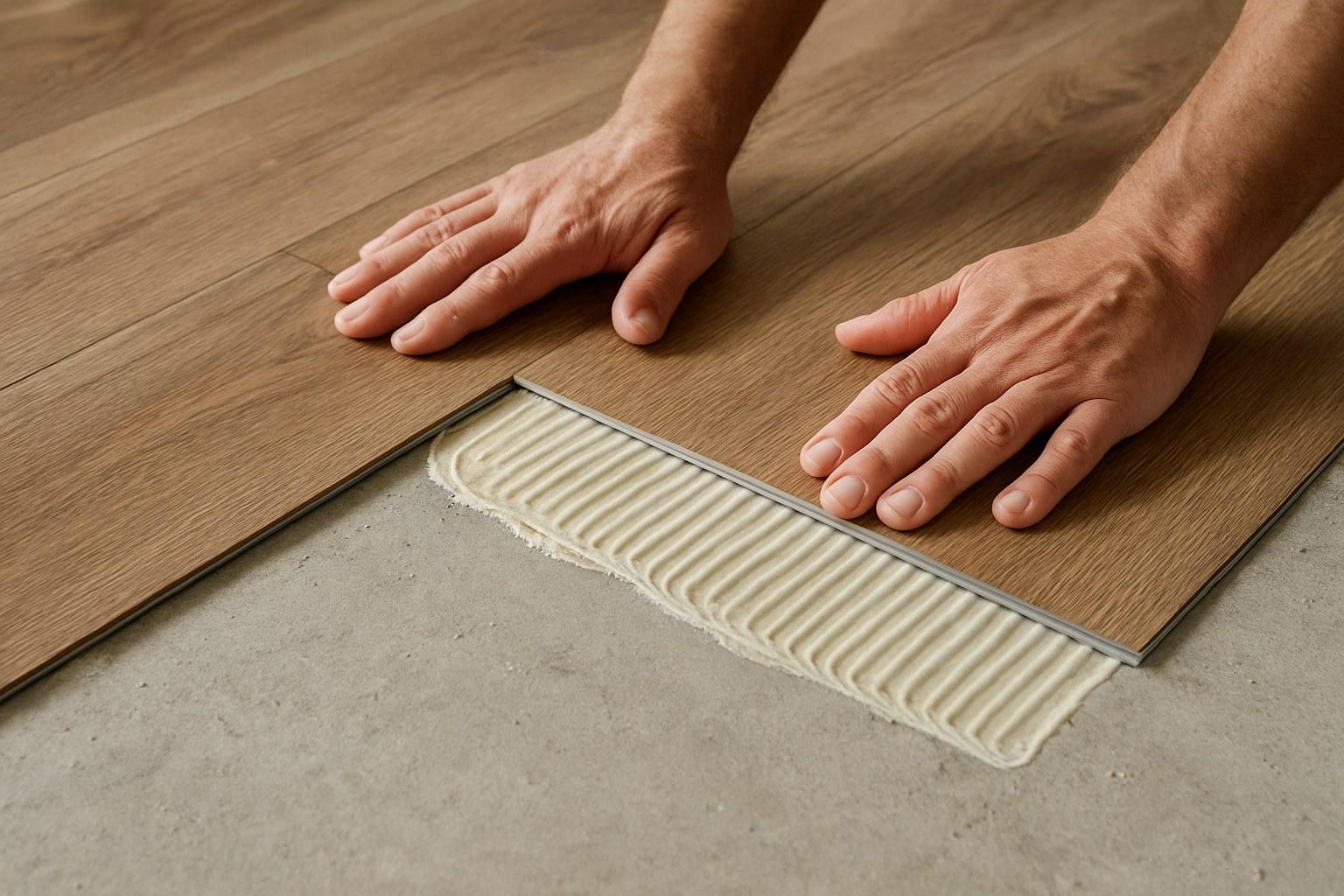
If you mean laying a soft, loose pad under glue-down planks, don't. Glue-down planks are supposed to bond straight to the prepped subfloor. Put a cushion between the plank and the floor and you've built in movement the adhesive can't beat, and the bond lets go.
So if what you're really after is a softer, quieter step underfoot, that's a reason to float a padded click floor, not a reason to glue anything. Pick the system that gives you the feel you want.
Should You Glue It Down? Cost and the Right Adhesive
Glue-down earns its keep in big open rooms, under heavy rolling loads like office chairs and carts, in busy commercial spaces, and across moisture transitions. A bonded floor feels solid and quiet instead of hollow, and there's no field of floating planks to drift. That same logic is what separates the two systems room by room, which I lay out in my glue-down vs floating vinyl plank flooring breakdown.
Skip it in small rooms, rentals, and most DIY jobs. A floating click floor goes down faster, costs less in labor, and lifts right back up when you need to swap a damaged plank. For a confident DIYer, click-lock is a realistic weekend job. Glue-down, stairs, and large open-plan moisture transitions are where I'd tell you to hire it out, because those are the ones that come back broken when they're rushed. Whichever method you land on, the thickness and wear layer you pick matter just as much, which is why I put together a guide to what makes vinyl flooring last covering basement and bedroom installs specifically.
Hard Set vs Pressure-Sensitive Adhesive
There are two families of glue, and they behave differently. Hard-set adhesive cures hard and permanent, which is what you want under heavy loads but it gives you no do-overs. Pressure-sensitive adhesive stays tacky, grabbing the plank while letting you lift and reposition it. Match the type to the plank's spec sheet, because the maker names which one keeps the warranty alive.
Now for the numbers: the table below breaks down material and labor cost per square foot for both methods.
| Item | Cost per sq ft | Source |
|---|---|---|
| Glue-down LVP material | $1.20-$7.72 | thisoldhouse.com |
| Click LVP material | $1.39-$5.99 | thisoldhouse.com |
| Glue-down labor | $1-$10 | rightstepflooringnc.com |
| Click (floating) labor | $1.50-$4 | nedesestimating.com |
Notice the labor spread. Glue-down labor tops out far higher than click, which is the real cost difference between the two methods once a pro is doing the work.