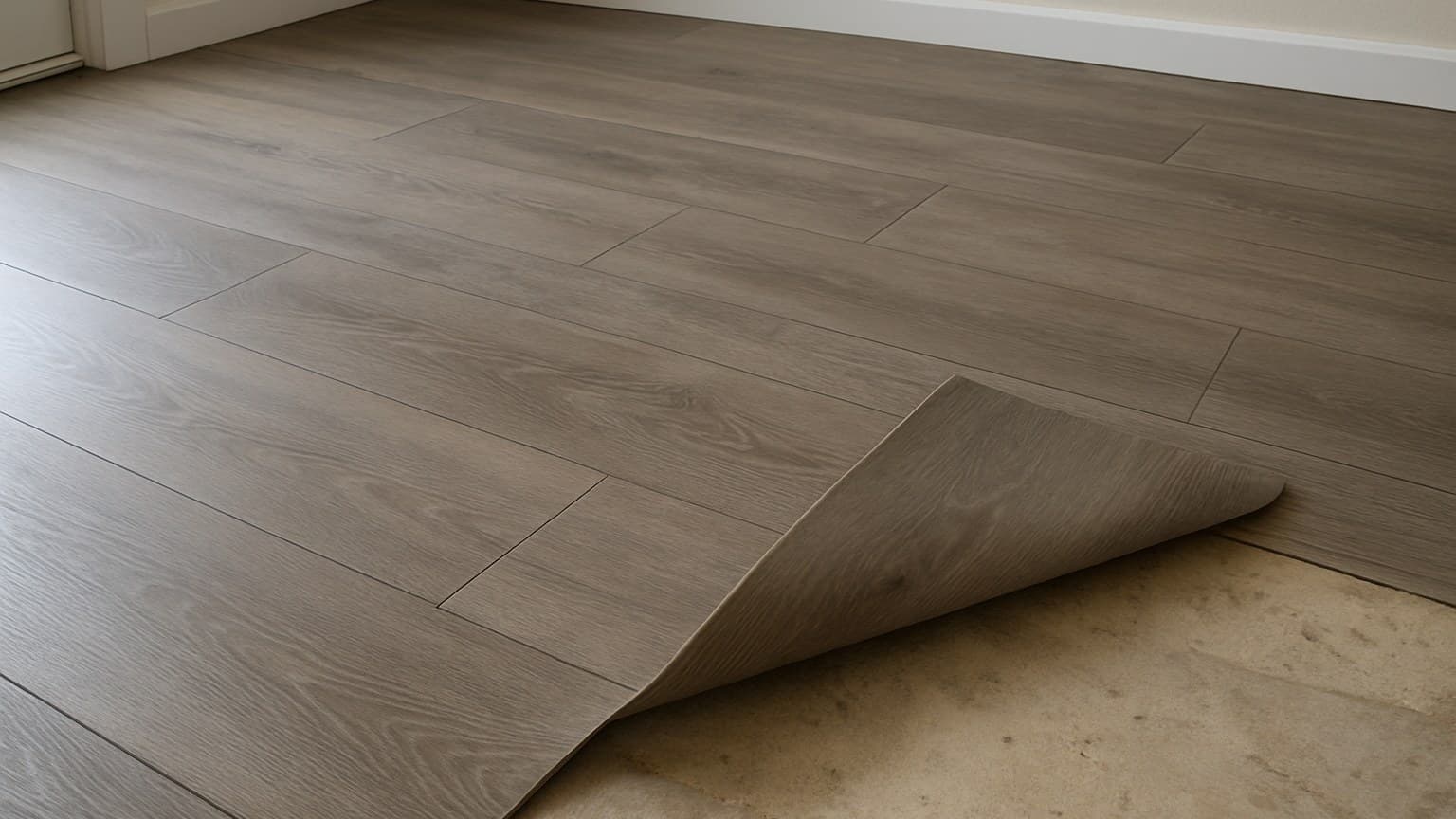
Vinyl flooring lasts 5 years or 20 based mostly on what sits under it and how it goes down, the subfloor prep and the moisture control decide that, more than which plank you picked off the display. In 14 years of fitting floors in other people's homes, the jobs I get called back to fix almost never failed at the plank surface. They failed at a seam that sat in water, a subfloor nobody flattened, or a slab nobody tested.
Below are the 9 things that decide which floor you end up with: the type that fits your room, the "waterproof" claim you can trust, real cost ranges split into materials and labor, and the install choices that make or break the whole job.
Key takeaways
- Callback jobs almost never fail at the plank surface—they fail from untested moisture and unflattened subfloors, so budget the first day for those checks.
- Materials cost roughly $1-5 per square foot and labor adds about $1-3 per square foot, with basements and stairs running higher than open rooms.
- A 'waterproof' core only protects the plank body—seams, edges, and the subfloor aren't protected, and standing water can still creep under a floating floor at the joints.
- Wear layer thickness (measured in mils) indicates scratch and traffic resistance, but the mil number alone doesn't predict how many years the floor will last.
- LVP vs. laminate is a real tradeoff: laminate often looks more like real wood for less money, while LVP handles water better—choose based on the room's moisture and traffic, not marketing.
1. Start Where Floors Actually Fail, Not With the Prettiest Plank
The floor you should worry about is the one you can't see: the subfloor and the moisture under it. That's the part that actually decides how long the floor lasts, the finish on the sample board is almost beside the point.
My callback list is boring and it repeats. Moisture rising through a basement slab nobody tested. Seams that let water sit until it crept underneath. A subfloor with dips and humps that left the planks flexing and clicking until the joints wore loose. The plank almost never gives up first.
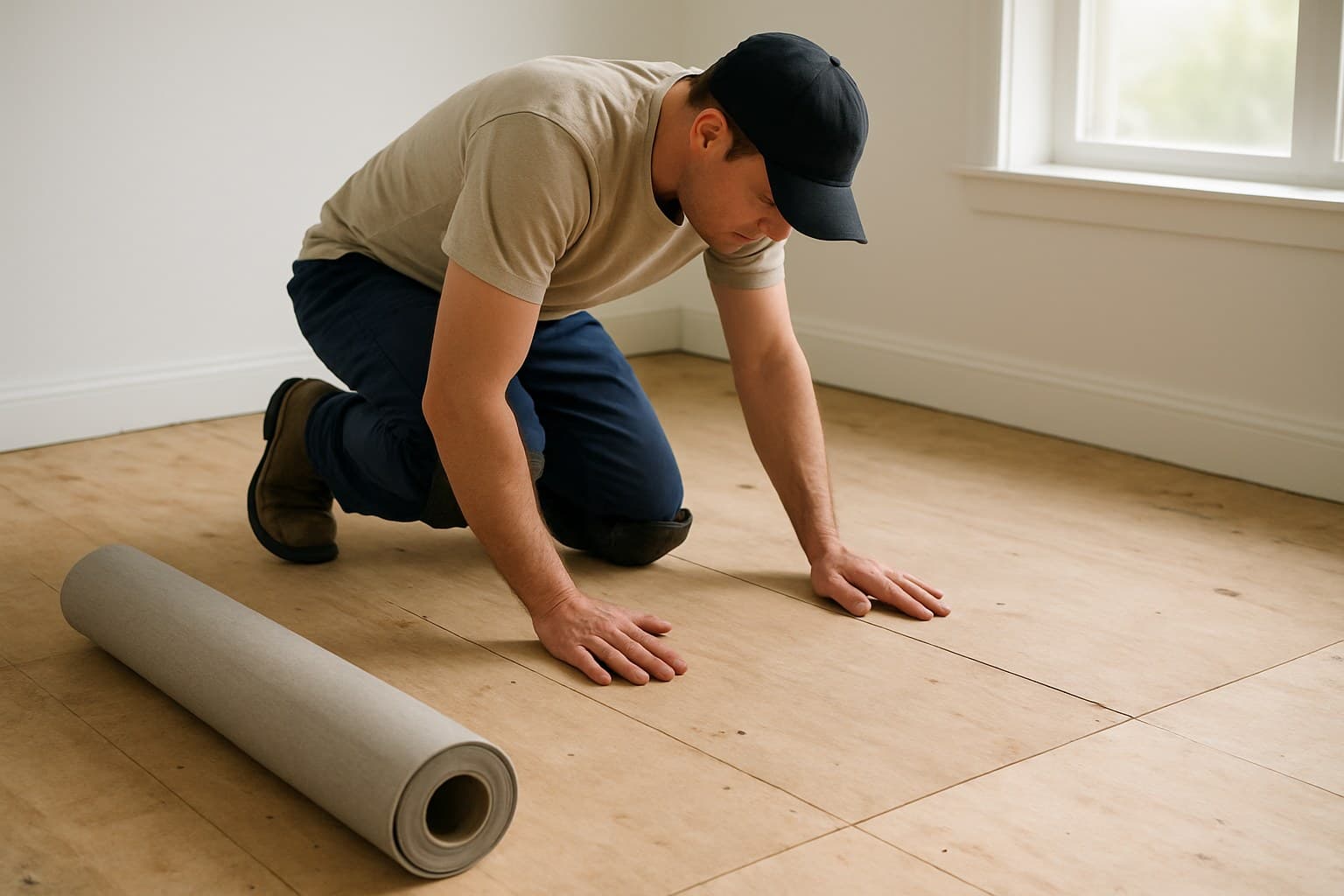
Before I quote a single job, I get down on the floor with a long straightedge and a light behind it. The gaps of light under that straightedge tell me more about the job than the box the customer already bought. Dips and humps are where floating floors fatigue and where glue-down telegraphs every flaw through the surface.
One thing to burn into memory: the flatness tolerance and the moisture limit are set by the flooring maker's own install sheet, not by a rule of thumb you read somewhere. Those numbers govern the warranty too. So here's the plan: match the vinyl type to the room and the budget it can survive in, then check the floor underneath before anything gets laid.
2. Know the 5 Types of Vinyl (LVP, LVT, Sheet, SPC, WPC)
There are really five things people mean when they say vinyl flooring, and they behave very differently underfoot and around water.
Flexible LVP and LVT
LVP (luxury vinyl plank) and LVT (luxury vinyl tile) are the flexible, plank-and-tile format. Before you get hung up on the word "luxury" in the name, it's worth knowing what that label actually promises versus what it's just marketing, which I break down in what the luxury vinyl flooring label really means. LVP mimics wood boards; LVT mimics stone or ceramic tile, and if you're eyeing the stone look specifically, it's worth knowing the signs of realistic stone-look vinyl tile flooring before you buy, since plenty of it still reads as plastic up close. They can be thinner and a bit softer than rigid core, and cheaper grades bend enough to follow small subfloor flaws, which is not a good thing. If you want the full breakdown of how tile-format vinyl differs from plank and laminate, I walked through it in what LVT flooring is and how it differs from LVP and laminate.
Sheet vinyl on a roll
Sheet vinyl comes on a wide roll, so a small bathroom can go down with almost no seams at all. That is exactly why it still wins in some wet rooms. Fewer seams means fewer places for water to sneak under. It doesn't have the premium look of plank, but for a laundry room or a kids' bath, seam count matters more than looks.
Rigid core: SPC vs WPC
Rigid core is the "floating plank" most people picture now. SPC (stone plastic composite) has a denser core, so it is harder and firmer underfoot and hides minor subfloor flaws a little better. WPC (wood plastic composite) has a slightly softer, warmer core, so it feels easier on the feet and quieter in a bedroom. Both float over the subfloor and click together at the edges.
Peel-and-stick tile
Peel-and-stick tile sits at the budget end. It is the cheapest way in, but every tile is a seam, and those seams are where it lets you down.
| Type | Materials, per sq ft | Wear layer (varies by product) | Water tolerance | Best room |
|---|---|---|---|---|
| Peel-and-stick tile | ~$1-2 | thin | low, seams everywhere | low-traffic budget spaces |
| Sheet vinyl | ~$1-3 | thin to medium | high, fewest seams | bathrooms, laundry |
| Flexible LVP / LVT | ~$2-4 | medium | core resists water, seams vary | kitchens, living areas |
| WPC rigid core | ~$3-5 | medium to thick | waterproof core, softer and warmer | bedrooms, living rooms |
| SPC rigid core | ~$3-5 | medium to thick | waterproof core, denser | kitchens, basements (test slab) |
General market ranges for the five common vinyl types. Exact wear layer and waterproof claims vary by product, so confirm them on that product's spec sheet.
3. "Waterproof" vs "Water-Resistant" (Where the Marketing Lies)
A waterproof core means the plank body itself won't swell when it gets wet. It does not mean the seams, the edges, or the subfloor are protected. Those are the real weak points, and they rarely make the marketing photo.
Here is what I see on service calls: the leaks I get paid to fix are almost always at the joints or at a transition strip, not on the plank surface. Water finds the gap between two boards, sits there, and works its way under the floating floor to the subfloor below. The plank looks fine. The mess is underneath it.
So treat every "waterproof" claim as claim-per-product. A rating only means something when it names the specific product it belongs to and you've read what that product's own documentation actually covers. There is no industry-wide "vinyl is waterproof" guarantee, and anyone selling it that way is skipping the part that fails.
For basements and baths, this is the whole ballgame. Standing water can still reach what's under a floating floor through the seams, so the moisture check under the floor matters far more than the badge on the box.
4. Match the Vinyl to the Room and Its Moisture
Route your choice by room and by how much water and traffic it sees. That single decision fixes most of the tough calls, and if you want a deeper walkthrough of the process, see choosing the right luxury vinyl tile for your room.
Kitchens and bathrooms
Kitchens get spills and dropped pans, so a rigid core (SPC or WPC) with tight-locking seams is a solid pick, and fewer seams help. Bathrooms are wetter and smaller, which is where sheet vinyl or a tightly sealed rigid core earns its keep. In a full bath, I lean toward the option with the fewest joints for water to exploit.
Basements (test the slab)
Basements live or die on the slab. The one time you skip the moisture check on a concrete slab to save a day is the one time the floor cups on you. I stopped letting people talk me out of that test years ago. Test the slab against the product's moisture limit first, and if it reads high, deal with that before you open a single box.
Bedrooms, pets, and high traffic
Bedrooms and living rooms are led by comfort and look, so this is where WPC's softer, warmer feel or a quality underlayment pays off in quiet and cushion. If carpet is still on the table for these rooms, a room-by-room way to pick the right carpet walks through that same comfort-first reasoning. For pets and high traffic, a thicker wear layer is more forgiving against claw scratches and grit. I won't promise you a number of years from it, because grit and dog nails vary house to house, but thicker takes the abuse better. Bedroom vinyl flooring can run thinner and cheaper than a kitchen floor, since it sees less water and fewer hard knocks.
5. What Vinyl Flooring Really Costs (Materials vs Labor)
Always split the number. Materials run roughly $1-5 per square foot depending on type, and labor adds about $1-3 per square foot. Anyone quoting one flat national figure is hiding which half is which. Hardwood sits well above vinyl on both halves of that split, and seeing the full breakdown across a 500 to 2,500 square foot range makes the gap between the two materials easy to picture: what hardwood flooring costs in 2026.
Here is the common question, a 1000 square foot job, answered straight:
- Materials at $1-5 per sq ft: about $1,000 to $5,000
- Labor at $1-3 per sq ft: about $1,000 to $3,000
- Rough total: about $2,000 to $8,000
That total swings with the type you pick (peel-and-stick sits at the bottom, rigid core near the top) and with the room. Basement and stair jobs cost more than an open room, every time. Basements need extra moisture prep and sometimes a moisture barrier, and stairs are slow, fiddly cuts where labor climbs fast. An open living room is the cheapest square footage you'll ever buy.
For shopping, big-box and specialty stores like Floor & Decor, Home Depot, and Lowe's carry the whole range. Cheap peel-and-stick and thin LVP anchor the low end; SPC and WPC rigid core sit near the top.
6. Wear Layer and Warranty, Decoded (What "Lifetime" Doesn't Mean)
A "lifetime" or "20-year" warranty is a limited claim against specific problems like surface wear, fading, and staining. That's different from a promise the floor will still be down and looking good in your kitchen after 20 years. Those are two different things, and stores let the confusion sit because it sells.
The wear layer is the real durability number. It's measured in mils, and each maker publishes it per product. Thicker is more forgiving under traffic and pets; thinner is fine for a guest bedroom that barely gets used. I won't quote you a mil figure without a product name on it, because it means nothing detached from the specific floor it describes.
Read the warranty exclusions, because they usually rule out the failures that actually happen. Moisture damage, a subfloor that wasn't flat, and improper installation are commonly excluded.
Warranty term and real-world lifespan are not the same, and install quality decides the gap between them. A cheap floor installed right on a flat, dry base can outlive an expensive one laid over a damp, wavy subfloor. Every time.
7. Vinyl vs Laminate vs Hardwood vs Tile
The LVP-versus-laminate question doesn't have a universal winner. Laminate often gives a more convincing real-wood look for less money, because its printed top layer and texture can read very natural. LVP tolerates water better. So let the room decide, since neither one earns the title of universally "best," and if you're weighing where laminate itself holds up, this guide to which rooms suit laminate flooring breaks it down room by room. If you're still weighing the two, my breakdown of how LVT and LVP compare to laminate lays out where each one holds up.
Here's the fast self-sort:
- Choose laminate if you want the best wood look for the least money in a dry room (bedroom, living room, dining room).
- Choose LVP or rigid core vinyl if the room sees water or spills (kitchen, bath, basement) and you can live with a slightly less natural look on cheaper grades.
- Choose hardwood if you want the best look and the resale bump, you're in a dry room, and the higher price and poor water tolerance don't scare you.
- Choose tile if you want the hardest, most water-tolerant surface and you don't mind that it's cold, hard underfoot, and labor-heavy to install.
One quick mix-up to clear: linoleum and vinyl are not the same. Linoleum is made from natural materials like linseed oil; vinyl is the plastic-based product most people actually mean today when they say vinyl flooring.
8. Installation: Floating, Glue-Down, or Peel-and-Stick (and DIY vs Hire)
Prep before any method
Prep first, always. Check subfloor flatness with that straightedge and light, and check moisture against the product's own limit, before you think about laying anything. Floating floors also need an expansion gap around the whole perimeter, because the material moves with temperature and humidity. The exact gap is on that product's install sheet, not a fixed number, so read it. Skip the gap and the floor can buckle when it expands.
Floating vs glue-down vs peel-and-stick
Click-lock floating floors snap together and rest on top of the subfloor with no adhesive. This is the forgiving, DIY-friendly method. Glue-down bonds each plank to the subfloor, so it wants a base that is flat, clean, and dry, and it is far less forgiving of flaws. Peel-and-stick is the budget floating cousin, and it also needs a spotless, dry base or the tiles let go at the seams.
For tools in a lived-in house, I lean on a score-and-snap cutter for straight runs because it's quiet and makes no dust while people are home. I only pull out the jigsaw for the fussy cuts around pipes and door casings. With sheet vinyl, I dry-fit it and let it relax before I commit to any adhesive. I used to fight it solo and crease it every time; letting it settle first shrank my scrap pile a lot.
DIY or hire it out
Click-lock LVP is realistic for most DIYers who take the prep seriously. Where I'd tell you to hire out: glue-down (unforgiving and messy to fix), stairs (slow, precise, and easy to waste material on), and big open-plan floors with large moisture transitions between rooms. Those are the jobs where a pro's prep and moisture control save you a callback.
9. Cleaning and Maintenance That Won't Void the Warranty
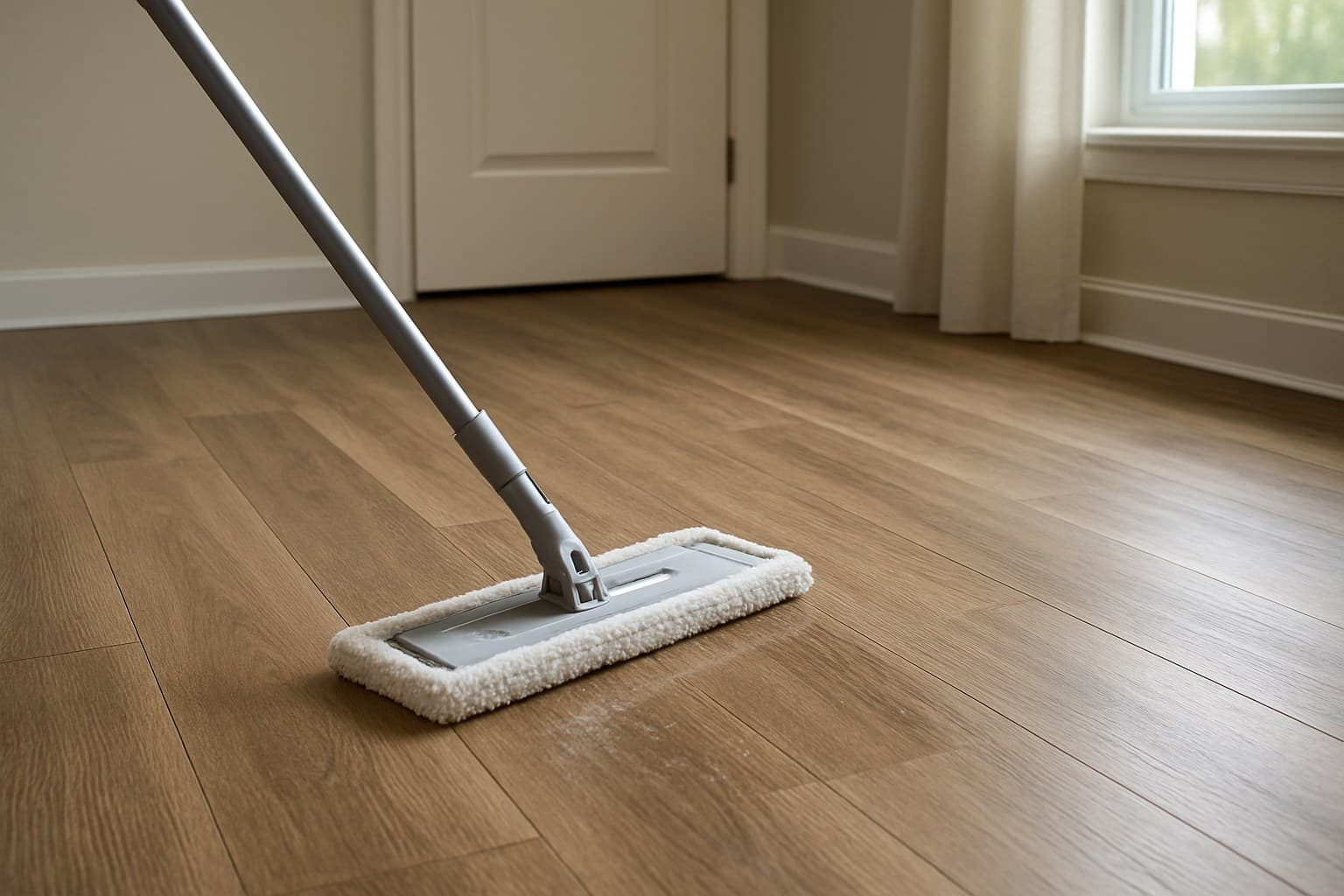
Start with what wrecks vinyl. Makers commonly warn against steam mops and harsh floor strippers, because heat and aggressive chemicals can damage the wear layer or the finish. Check that product's care sheet before you reach for anything, since using the wrong thing can also void the warranty.
For vacuuming, any vacuum works if the beater bar is switched off or set to a hard-floor mode. It's the spinning brush that scuffs the surface, not the brand name on the box.
The routine that actually keeps it nice is dull and it works: sweep or dry-dust to clear grit, damp mop with a mild cleaner, and wipe up spills before they sit. Grit is the sandpaper that dulls a floor early, so getting it up matters more than any fancy product.
Tie it back to seams one last time. Sitting water at a joint is the slow killer of a floating floor. Mop it up, wring the mop well, and never flood the floor, no matter how "waterproof" the plank is called.
If you're deciding between tile-format and plank vinyl, read what LVT flooring is and how it differs from LVP and laminate next. It shows exactly where the tile format fits and where it doesn't, so you don't buy the wrong shape for your room.