
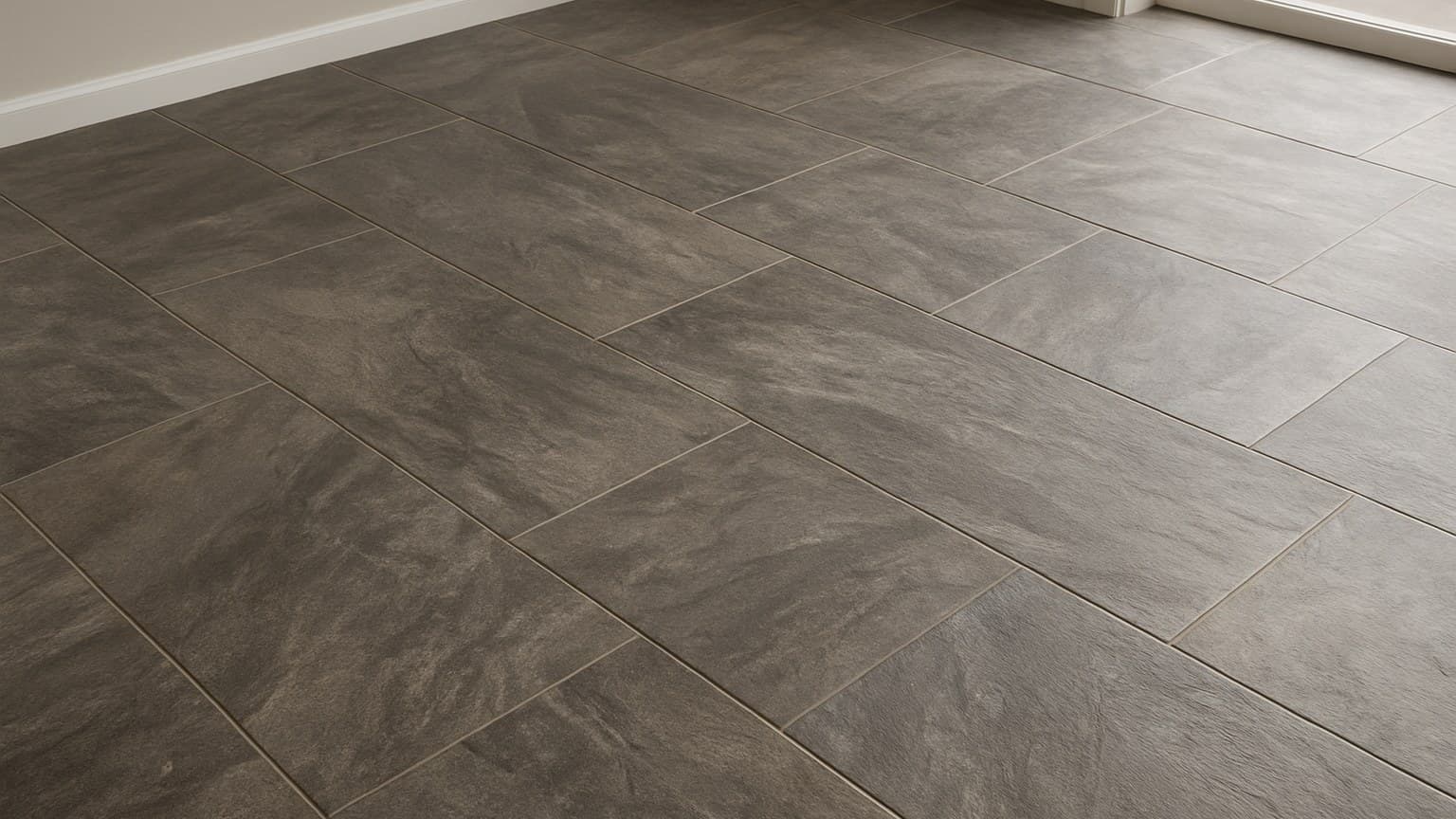
The plank surface fools almost nobody up close. From standing height, a good stone-look luxury vinyl tile floor can pass for real stone, but the cheap stuff gives itself away fast. Here are the seven details I check on a jobsite to tell a convincing stone-look LVT from the plasticky kind, so you can spot the difference before you buy instead of after it's down.
The price tag isn't one of these tells. Some expensive lines still look fake, and some mid-priced ones nail it. It's these seven specifics that decide it.
Key takeaways
- The tells are the grout line, the tile format, and whether the texture actually lines up with the print (embossed-in-register), not the price of the plank.
- A 12x24 tile format with a real or fake grout line reads as stone; small planks with a shiny uniform sheen give the fake away fast.
- Grouted stone-look LVT looks more like real tile but costs more and needs a groutable product plus vinyl grout; non-grouted is cheaper, faster, and easier to clean.
- Stone-look LVT runs roughly $2-7 per sq ft in materials plus $2-5 labor, well under natural stone, which usually starts higher on both.
- Named collections worth knowing: Shaw Synergy, Mannington Adura, and Karndean stone lines all come in tile formats; check each product's own wear-layer spec, don't assume.
1. The Grout Line: Grouted vs Non-Grouted
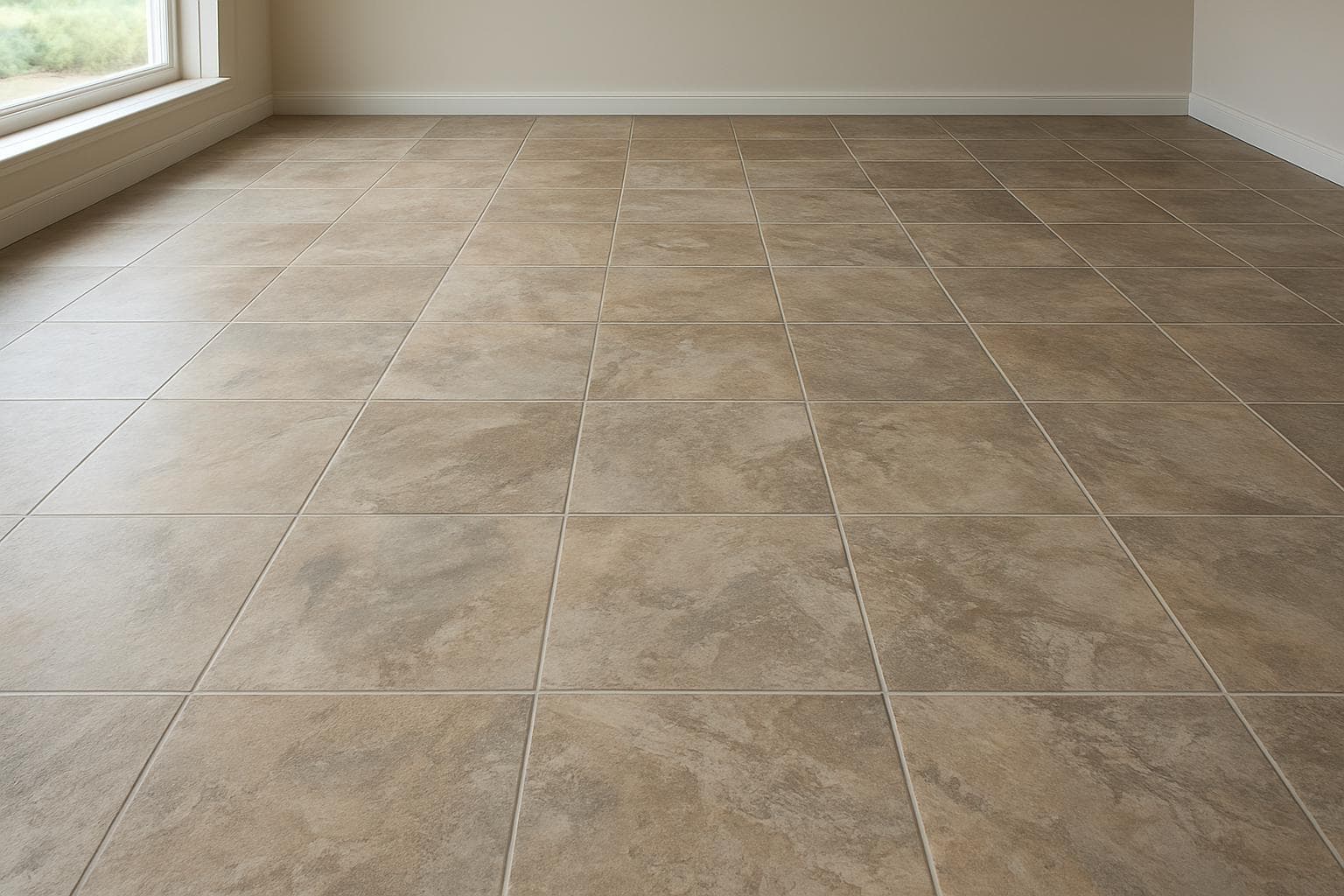
A visible grout line is the single biggest thing that makes vinyl read as real stone. Stone and porcelain almost always sit in grout, so your eye expects to see it.
You get there two ways. A groutable stone-look LVT uses tiles with a beveled edge plus a flexible vinyl grout you spread into the joints after install. Non-grouted tiles butt tight against each other, with a painted-in shadow groove doing the pretending.
The trade-off is real. Grouted looks the most convincing and hides the seams, but it costs more, takes longer, and gives dirt a low spot to settle into. Non-grouted goes down faster, costs less, and wipes clean with no line to scrub.
My call: I'll grout a kitchen or an entry where the customer really wants that tile look and will keep it clean. For a busy mudroom or a rental, I go non-grouted every time, because the fewer places dirt can hide, the better the floor ages.
2. Tile Format: Why 12x24 Beats Skinny Planks
Real stone comes in big rectangular tiles, so a 12x24 (or larger) format instantly reads more like the real thing than a narrow plank. Skinny planks say "wood floor" to your brain no matter what's printed on them.
Stone-look also shows up as vinyl plank, as sheet vinyl, and as true square or rectangular LVT. Format changes the look more than the print does.
In kitchens I'll sometimes mix two tile sizes or run a brick-set (offset) pattern to break up the repeat and kill that grid-stamp look. If you're not sure which format fits your room, our guide on how to choose the right luxury vinyl tile for your room walks through matching size to the space, and our vinyl vs laminate breakdown by room helps if you're still deciding between the two.
3. Embossed Texture That Lines Up With the Print
On convincing stone-look LVT the surface texture follows the printed veins and grout lines, so your hand feels what your eye sees. The industry calls this embossed-in-register, and it's the detail that sells the floor up close.
Cheap product skips it. The texture is a random pebble grain stamped over the whole surface, ignoring the photo underneath. That mismatch is the fastest plastic tell there is once you're on your knees.
Check it in the store the same way I do: drag a fingertip across a printed vein and feel whether the groove tracks it. If your finger falls into the vein, that's the good stuff. If it rides over a generic bumpy texture, keep looking.
Finish matters too. A matte or low-sheen surface reads like honed stone. A glossy, uniform shine screams vinyl across the room.
4. Pattern Repeat: How Often the Same Tile Comes Back
Real stone never repeats, so the more unique tile faces a product has before the pattern loops, the more believable the floor. Cheap lines reuse a small handful of faces, and once you spot the twins across a room the illusion is gone for good.
The fix on my installs is simple: dry-lay the tiles and shuffle across several boxes so two identical faces never end up near each other. Even a good product looks better this way, and a weak one looks less obvious.
Not every maker publishes the repeat count, so this is often a spec you have to eyeball in the showroom. Lay a few sample tiles side by side and hunt for the matching twins.
5. Wear Layer, Tied to the Actual Product You're Buying
The wear layer is what decides how the floor holds up to traffic, and every maker publishes it per product. Read the spec sheet for the exact collection, not a generic mil number off a blog.
Stone-look lines worth checking include Shaw Synergy, Mannington Adura, and the Karndean stone collections. Wear-layer thickness and warranty length vary by specific style within each brand's lineup, so pull the current spec sheet for the exact SKU you're buying rather than assuming one number covers the whole collection. Shaw lists wear layer and warranty details by style on its Synergy product page, and Mannington and Karndean do the same for their stone-look lines, always confirm the number for the specific SKU you're buying, since they don't all match.
One thing the marketing blurs: the waterproof-core claim covers the plank body, not the joints. The core can shrug off water all day while standing water still creeps through grout lines and edges down to the subfloor. That's where I see stone-look floors fail, not on the tile face.
For the full wear-layer and warranty picture, our vinyl flooring buyer's guide breaks down what "lifetime" actually covers and what it doesn't.
6. What Stone-Look LVT Costs vs Real Stone and Porcelain
Stone-look LVT runs roughly $2-7 per square foot for materials plus about $2-5 for labor. Natural stone usually starts higher on both, and it keeps climbing once you add sealing and heavier setting work.
Grouted installs cost more than a plain float, and basement or stair jobs cost more than an open room you can lay in a day. Here's how the three main options stack up.
| Factor | Stone-Look LVT | Porcelain Tile | Natural Stone |
|---|---|---|---|
| Materials (per sq ft) | $2-7 | $2-8 | $5-15+ |
| Labor (per sq ft) | $2-5 | $5-12 | $7-15+ |
| Comfort underfoot | Warmer, slight give | Cold, hard | Cold, hard |
| Water tolerance | Core waterproof, seams are the weak spot | Excellent when grouted and sealed | Needs sealing to resist stains |
| DIY-friendly | Yes, click-lock | Hard, mortar and cutting | No, hire a pro |
| Maintenance | Wipe clean | Grout upkeep | Periodic resealing |
Cost ranges are typical US installed pricing and vary by region, product, and job complexity.
My take: real stone is worth the premium when you want the genuine material and don't mind the cold, hard, slippery underfoot feel or the sealing. For most homes, a good stone-look LVT gets you most of the look for a fraction of the money, warmer feet, and none of the resealing.
7. Install Format and the Subfloor Underneath It
Stone-look LVT comes as click-lock rigid core, glue-down, and loose lay. The format decides how hard the DIY is far more than the look does.
Before any of it, get down on the floor with a long straightedge and a light behind it to check for spots where the subfloor rocks or sags, and run a moisture check on any slab. I had a job where a soft low spot near a doorway telegraphed right through the planks within a few weeks because nobody caught it before the glue went down, that kind of prep work is what I check first, every time, before I even open a box of tile. I stopped letting people talk me into skipping the slab moisture test years ago, because the one time you skip it is the time the floor cups on you.
DIY-vs-hire call: click-lock rigid-core stone-look is realistic for most handy homeowners. Grouted installs, glue-down, stairs, and big open-plan transitions are where I'd hire out, since those are the jobs that punish small mistakes. Our luxury vinyl tile room guide helps you match the install method to the room before you commit.
If you keep running into the word "luxury" on these products and want to know whether it means anything, read what the "luxury" label on vinyl actually buys you, because it sorts the real spec from the marketing.
Sources
- Karndean Stone-Look Floor Collections
- Mannington Select Stone LVT Collection
- Shaw Synergy Vinyl Collection