
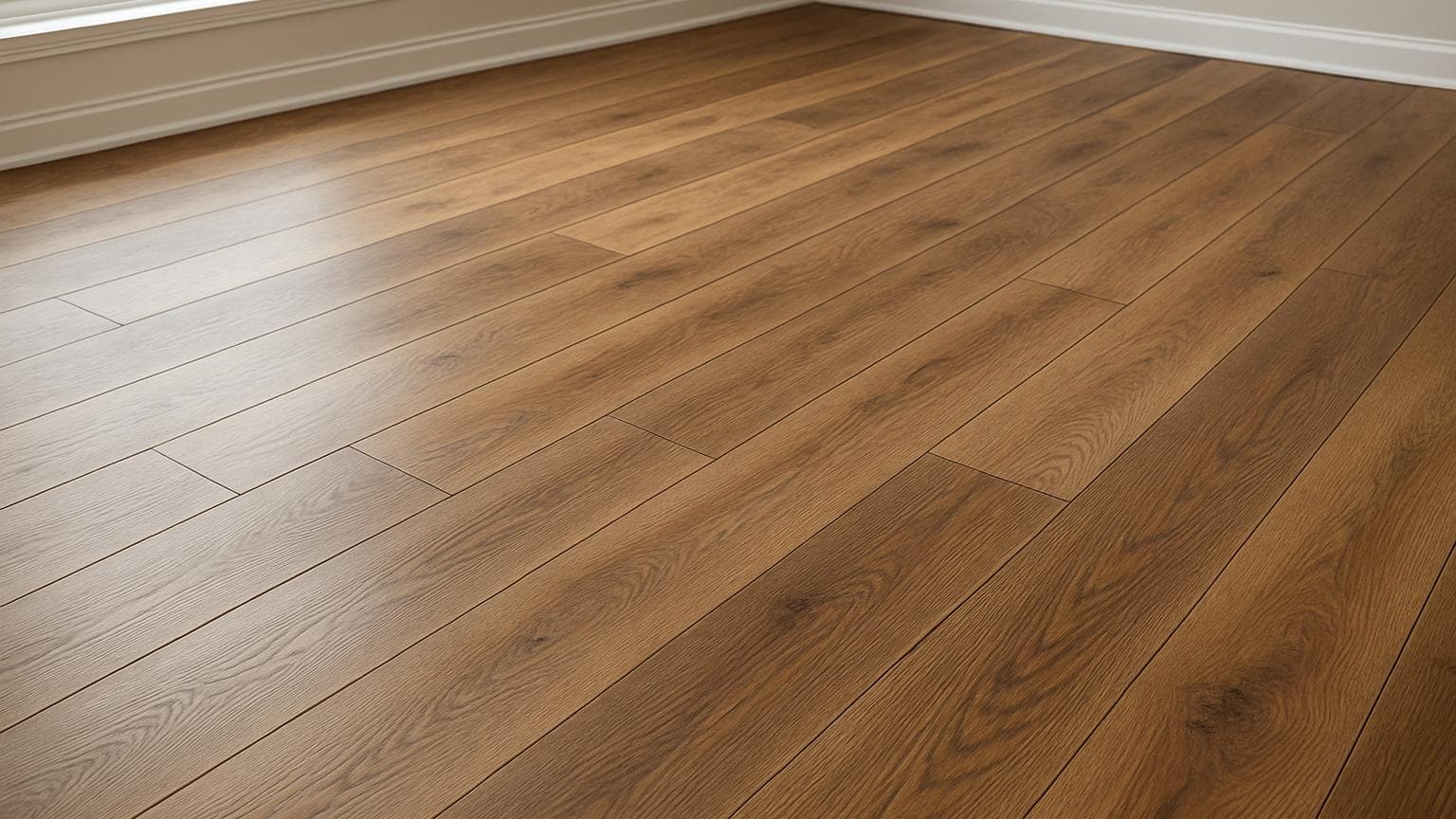
Hickory is the toughest wood look for vinyl to pull off. The whole point of hickory is wild grain and a big swing from pale to near-black. Feed that through a weak print and the swing turns into a loop your eye catches within a week of moving in. So the real question with hickory vinyl plank flooring isn't whether it holds up, it's whether it reads as wood or as plastic pretending to be wood.
Key takeaways
- Fastest fake test: count how many unique planks appear before the print repeats. Budget hickory loops the same 4-6 boards; convincing lines run 20 or more distinct faces.
- Look for embossed-in-register (EIR) texture, where the grooves you feel line up with the printed grain. Flat or off-register embossing is the dead giveaway of a cheap print.
- Real hickory hardwood material runs roughly $4-9/sq ft against hickory LVP at about $2-5/sq ft, but hardwood can't go over a wet slab or a bathroom floor, which is exactly where vinyl earns its keep.
- Match the core to the room: SPC rigid core for basements and slabs, WPC for a softer, warmer feel underfoot, and dryback glue-down only over a dead-flat subfloor (usually a hire-it-out job).
- Never trust a brand-wide wear-layer or waterproof claim. Check the exact product's spec sheet, and remember the waterproof core doesn't cover the seams where water usually gets in.
The Look Test: How to Spot Fake Hickory Before It's on Your Floor
You can catch a fake hickory print in about 30 seconds, before a single plank is on your floor. Three tells give it away: a short pattern repeat, flat or off-register texture, and washed-out color.
The pattern repeat is the big one. Budget hickory prints often loop just a handful of board faces, sometimes as few as 4-6, over and over, so once you notice one distinctive plank, you start seeing its twin three rows away. Convincing lines can carry 20 or more unique faces, and your eye never locks onto a repeat. Pull the planks out of the sample box and count how many genuinely different boards you get. That single number tells you more about how the finished floor will look than any spec on the label.
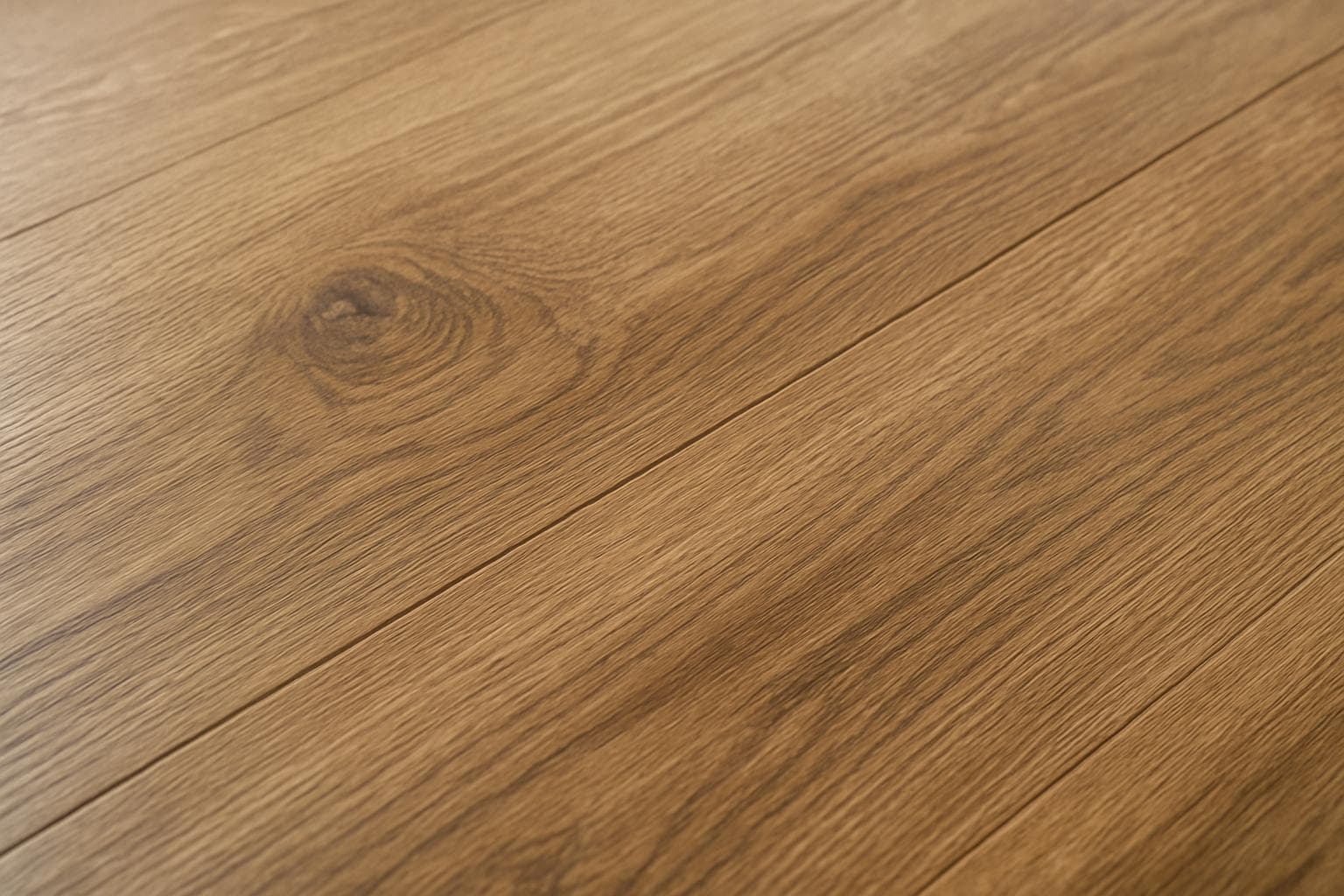
Next, feel the texture. On a good product the emboss is "in register," meaning the grooves you feel with a fingernail line up with the grain you see in the print. Drag a nail slowly across a knot or a grain streak. If the texture follows it, the floor will look like real wood even when light hits it at a low angle, the kind that throws shadows across every dip and ridge in the surface. If your nail glides over a flat sheet while your eyes see grain, that mismatch is what makes cheap vinyl look like a photo of wood, because that's exactly what it is.
Then check color contrast and the bevel edges. Hickory earns its keep on that light-to-dark variation, so a version toned down to one flat mid-brown throws away the reason you wanted hickory in the first place. Look at the beveled edge between planks, too. On a decent floor it reads like a real board seam. On a bad one it's a printed dark line stamped onto a flat surface.
On dark hickory versus light: dark planks hide crumbs and pet hair but show every speck of dust and every scratch. Light hickory hides scratches better but shows dirt and grime faster. If you're leaning toward the lighter end of that spectrum, our blonde maple vs blonde oak vinyl plank comparison digs into which light wood look actually suits your room. Neither wins outright. It's about what your room throws at the floor.
One thing a print gets right that real wood never will: it holds its color. Real species keep moving after they're down. I've pulled area rugs off floors to find a bright rectangle the rest of the boards had darkened right past, and no refinish evens that out. That happens hardest with tropical species like Brazilian cherry, which keeps getting darker and blotchier for years. Hickory moves less than that, but on the lighter end of the spectrum, pale species have their own drift to worry about — our breakdown of how to keep blonde floors from yellowing over time covers why that shift happens. If you want the exact face in the sample box to stay that way, vinyl's frozen photo is the safer bet.
What separates a convincing hickory vinyl plank from an obvious fake, side by side.
Hickory Vinyl Brands Compared: COREtec, MSI Glenridge, Lifeproof, Vinduri
The four specs that actually decide a hickory vinyl floor are pattern repeat, whether the texture is embossed in register, the core type, and the wear layer. Everything else is noise. Here's how the common hickory lines line up on the things you can't tell from a website photo.
| Product line | Where you buy it | Core | Common plank size | Wear layer |
|---|---|---|---|---|
| COREtec (Plus and higher tiers) | Flooring dealers | SPC or WPC by line | 7-9 in wide, 48 in+ | Thicker tiers often list wear layers around 20 mil on their spec sheet (confirm per SKU) |
| MSI Glenridge | Flooring dealers | Thin glue-down vinyl | 6 x 48 in | Budget line; read the exact Glenridge SKU sheet |
| Lifeproof | Home Depot (house brand) | Rigid core | around 7.1 x 48 in | Listed on the Home Depot page per SKU, not one brand-wide number |
| Vinduri | Bestlaminate (online) | Rigid SPC | varies by collection | Confirm on that collection's spec sheet |
That's the trap the big catalog pages leave open. They list thickness anywhere from 2mm to 8mm and wear layers from 12 to 22 mil with no explanation, so you can't tell if you're comparing like for like. Here's what each buys you.
Wear layer is the clear top coat that eats scratches and scuffs. More mil means a longer-wearing surface, and it's the number you pull off the exact product's spec sheet, never a brand-wide claim. COREtec's thicker lines often list wear layers around 20 mil, a genuinely tough surface, while MSI Glenridge's budget SKUs tend to run closer to 6 mil, which is fine for a guest bedroom and wrong for a mudroom, always confirm the exact figure on that SKU's own spec sheet rather than a brand-wide number. Don't read a thick-tier number and assume the brand's cheaper line matches it.
Plank size drives the fake look as much as the print. Wider, longer boards, like 7x48 or 8.7x48, show fewer seams per row and fewer repeats across the room, so they read more like a real hickory floor, and the wide-format trend itself isn't just a fad — current data on wide plank flooring popularity backs up why more lines are shifting that direction. A 6x48 plank packs more seams in and gives the repeat more chances to show.
Buy where the brand actually sells. Lifeproof is Home Depot's house line, so that's your "near me" and in-stock option. Vinduri runs through Bestlaminate online. COREtec and MSI Glenridge move through flooring dealers, not the big boxes. For the full rundown on what pushes any LVP toward a 5-year life or a 20-year one, our vinyl flooring buyer's guide breaks down the other specs that matter.
SPC vs WPC vs Dryback: Which Core Belongs in Which Room
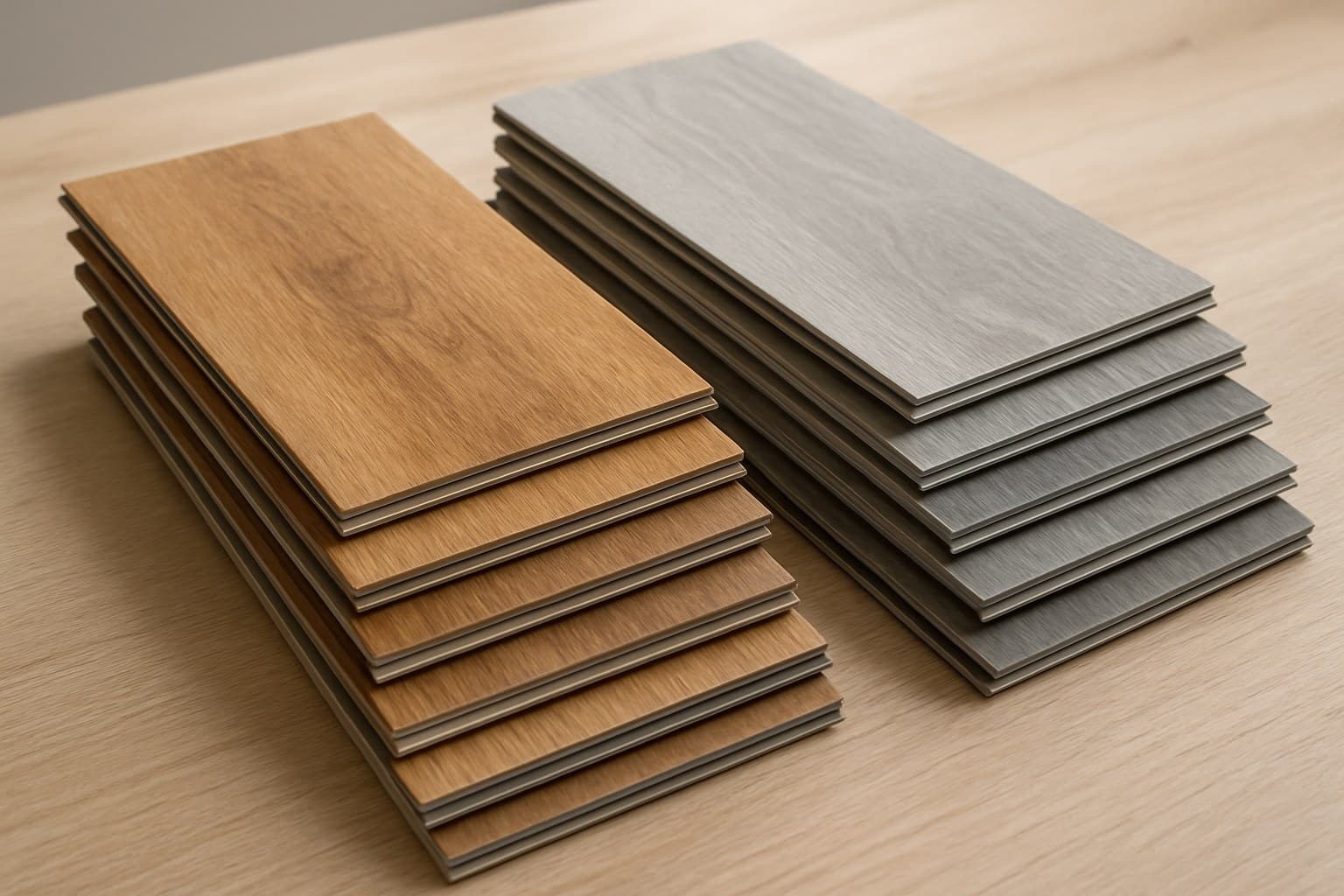
The core decides which rooms the floor survives, so pick it by the room, not the price. SPC is a stone-plastic composite: rigid, hard, and the most dent-resistant of the three. WPC is a wood-plastic composite: thicker, a touch softer, and warmer underfoot. Dryback is a thin glue-down plank with no rigid core, meant to be bonded flat to the subfloor. Knowing which acronym is stamped on the box only gets you halfway there, and our guide to LVP terms and failure signs covers the rest of the label you need to decode before buying.
Match them like this. SPC goes in basements, over concrete slabs, and in high-traffic kitchens where a dropped pan would dent something softer. WPC suits bedrooms, where the extra give underfoot is worth more than dent resistance — though if resale is part of that decision, it's worth checking whether hardwood in bedrooms increases home value before ruling it out in favor of vinyl. Both SPC and WPC click-lock together, and that click-lock rigid core is realistic for most DIYers to install themselves, snapping row after row with no glue and no trowel work. Dryback is for a dead-flat subfloor where you want a permanent bond and the lowest plank height, and it's usually a hire-it-out job because it punishes every hump and dip you didn't fix first.
The slab rule is simple: over concrete below grade, a rigid SPC core with proper moisture control is the safer pick. That same below-grade logic is why we steer people toward engineered builds over solid wood down there, covered in the hardwood and vinyl guides. Whatever the core, the maker's warranty quietly rides on subfloor flatness and a moisture reading, so check both before anything gets laid. Push the plank width up toward 12 inches and that same flatness or moisture problem gets amplified, which is exactly the risk our 12-inch wide plank flooring guide walks through in terms of cupping and gapping.
On radiant heat, many rigid-core hickory products are fine over it, but only up to a maximum floor temperature set by that product's own install guide. There's no universal number, so read the sheet. Some planks also come with an attached pad for quiet and a little cushion, and some don't.
Now the part people mix up. A "waterproof core" means the plank body won't swell if water sits on it. It does not mean the floor is sealed. Standing water still works into the click seams and edges, and that's where most bathroom and kitchen failures actually start. The core is waterproof. The seams are only water-resistant, and only for as long as the water doesn't sit.
The four layers of a rigid-core plank, top to bottom, with the mil and thickness figures that change by product.
Hickory Vinyl vs Real Hickory Hardwood: Look, Cost and Where Each Wins
Real hickory wins on depth and second chances; hickory vinyl wins on price and water. Solid hickory gives you real grain you can sand and refinish, but it costs more and cannot go over a wet slab or in a bathroom, and if you're leaning toward wider boards, our wide plank hickory flooring cost and grades guide breaks down what those wider widths actually cost and how much they move. Good hickory vinyl fakes the look convincingly for less and shrugs off surface water. Neither is "better." They win in different rooms.
Cost splits into materials and labor, and the two products land in different lanes, though exact prices vary by brand, retailer, and region, treat these as starting ranges, not a quote for your project.
| Item | Cost per sq ft |
|---|---|
| Hickory LVP material | $2 - $5 |
| Hickory LVP labor | $1 - $3 |
| Hickory hardwood material | $4 - $9 |
| Hickory hardwood labor | $3 - $8 |
Typical per-square-foot ranges, split into material and labor. Basement and stair jobs run higher.
Those are open-room numbers. Basements and stairs cost more on both products, because stairs mean nosings and hand-cutting every tread, and basements mean moisture prep before anything gets laid. I stopped quoting a flat rate per square foot after a job packed with closets, doorways and a bay window ate an extra full day. The open middle of a room is never where the hours go.
Put those per-square-foot ranges against an actual house and the gap gets easier to feel. On a 2,000 sq ft job, hickory LVP at roughly $3-8 per sq ft installed (material plus labor combined) works out to about $6,000-$16,000 total. The same 2,000 sq ft in solid hickory hardwood, at roughly $7-17 per sq ft installed, lands closer to $14,000-$34,000. If a whole house feels too abstract, scaling that same math down to a single 144 sq ft room is a useful sanity check, and our 12x12 room hardwood cost breakdown walks through that line-by-line. That's the number worth asking a contractor to confirm before you commit, the per-foot ranges look close on paper, but multiplied across a whole floor plan, the two materials can land tens of thousands of dollars apart.
On durability, hickory is one of the hardest domestic woods, so it dents less than softer species. But it still scratches, and a scratch means refinishing, because you can't spot-fix a hardwood floor invisibly. Vinyl flips that: the surface can't be sanded or refinished at all, but a damaged plank can be pulled and swapped, which is a real repair advantage in a busy house.
On water, hickory hardwood is the wrong call anywhere a moisture meter reads high. Engineered hickory is more stable than solid over concrete because of its plywood-style core, but vinyl still beats both in genuinely wet rooms. That instability only gets more noticeable as the boards get wider, which is exactly the territory covered in the downsides of wide plank flooring. In a basement, my call almost always comes down to the slab reading, not the material sitting on top of it.
If you decide the real-wood depth is worth the price and the prep, our guide to picking solid vs engineered hardwood and the right species for your room walks through which build actually survives your subfloor before you spend a dollar on hickory boards.