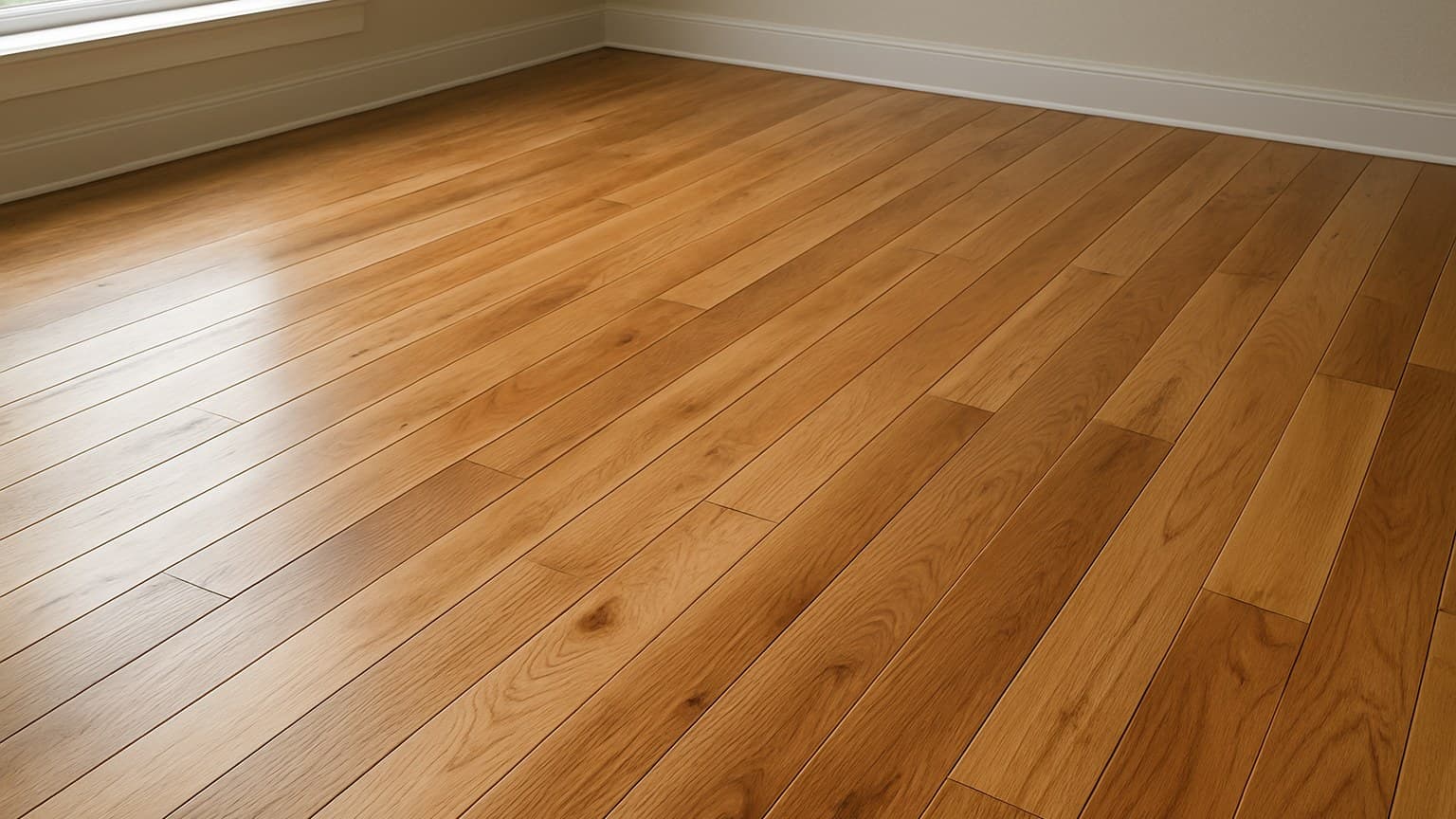
I laid wide plank hickory in a Denver kitchen that looked flawless in July and showed hairline gaps by February, same house, same floor. The wood is beautiful and genuinely tough. The trap is picking a width, core, and grade that don't fight your home's humidity.
Key takeaways
- Wide hickory at 5 inches and up moves more than narrow boards because each plank's seasonal swell and shrink stacks across its width, so expect thin gaps in dry winter months.
- Hickory's Janka hardness of about 1820 makes it harder than oak, maple, and walnut, which is why it holds up in busy homes with pets and kids.
- Engineered wide hickory stays flatter over concrete, basements, and radiant heat; solid wide hickory belongs above grade over a plywood subfloor.
- Material runs roughly $4-12 per square foot and labor about $3-8 per square foot, with basement and stair jobs costing more than open rooms.
- Grade names track board length and character: NOFMA Clear needs 36-inch minimum boards down to #2 Common at 24 inches, with more knots and color mix as you go down.
Wide Plank Hickory: The Look Is Real, the Movement Is the Catch
The dramatic wide rustic look is the real deal, and hickory is one of the hardest woods you can put on a floor. The catch is that wide boards swell and shrink with the seasons, and that movement, not durability, is what you plan around. If you'd rather skip that seasonal trade-off entirely, hickory vinyl plank flooring reproduces that same rustic grain and color swing without any of the width-driven movement.
Here's where hickory sits on the Janka hardness scale, which measures how well wood resists dents. Hickory lands around 1820, harder than white oak at 1360, red oak at 1290, hard maple at 1450, and black walnut at 1010. That hardness is why it shrugs off dog claws, dropped pans, and kid traffic.
| Wood | Janka hardness |
|---|---|
| Black walnut | 1010 |
| Red oak | 1290 |
| White oak | 1360 |
| Hard maple | 1450 |
| Hickory | 1820 |
Janka hardness by species, higher means more dent resistance.
But hardness does not stop seasonal movement. Width and core do. Hickory is a good floor for busy homes, pets, and open living areas that can live with a little winter gapping. It's a poor choice for a damp basement unless you pick the right core — and if that basement moisture is a dealbreaker, a pine vinyl plank floor sidesteps the whole issue.
Why Wide Hickory Moves More Than Narrow Boards
Wide boards move more because wood swells and shrinks across its width with humidity, and a 6-inch board is twice as wide as a 3-inch board. The same percent change in the wood shows up as twice the movement in each plank. That's the whole reason a wide floor gaps more than a narrow one, and at the extreme end of that scale, how 12-inch planks handle cupping and gapping is worth understanding before you commit to the widest boards on the market.
Two different problems come from that. In dry, heated winter air the boards shrink apart, and you get thin gaps between planks. In humid summer air the boards drink in moisture, and the edges can rise higher than the center, a shape called cupping.
Hickory reacts to moisture swings more than a lot of other species, so once you go 5 inches and up it wants a steady indoor humidity range and the acclimation the maker's own box sheet asks for. Some products want the wood to sit in the room for days; some say it is not needed. The sheet on your box decides, not a rule you read online. The NWFA's own homeowner guidance echoes this: wood flooring is a natural material that will expand and contract with seasonal humidity changes, and maintaining a consistent indoor climate is the main way to keep that movement in check.
This is why subfloor moisture and flatness checks matter more on wide hickory than on a narrow oak floor. On a remodel for a homeowner in Aurora, Colorado, the concrete slab felt dry to the hand but read wet on a meter, a tool that measures moisture inside concrete or wood. The hidden moisture in that slab was the real problem, not the hickory itself. The core you pick next is the real fix for movement.
Width Options: 3 to 8 Inches and What Each One Does
Width sets how much the floor moves and how bold it looks. The narrower the board, the calmer it behaves.
At 3 to 4 inches, hickory moves the least and reads a bit more traditional. This is the most forgiving choice if your home swings a lot between summer and winter. If you want that same calm, narrow-board look with zero seasonal movement at all, maple vinyl plank flooring gets you there.
At 5 to 7 inches you get the popular wide look most people are after, with real seasonal movement you should plan for. Expect thin gaps in the driest months and pick a good core. At 8 inches and up the look is dramatic, but you should treat engineered as the only safe core and hold a tight indoor humidity range year round. For a fuller rundown of what tends to go wrong at these widths, see the real downsides of wide plank flooring.
Wide boards have stayed in demand for years. Just know that the widest sizes narrow your reliable options down to engineered.
Room size changes how much you notice movement. A wide board across a big open floor hides a hairline gap far better than the same board in a tight hallway, where your eye follows every seam. If you want a wide look with a calmer, darker grain instead of hickory's high contrast, a wide plank walnut floor is the trade to weigh.
Solid vs Engineered Wide Plank Hickory
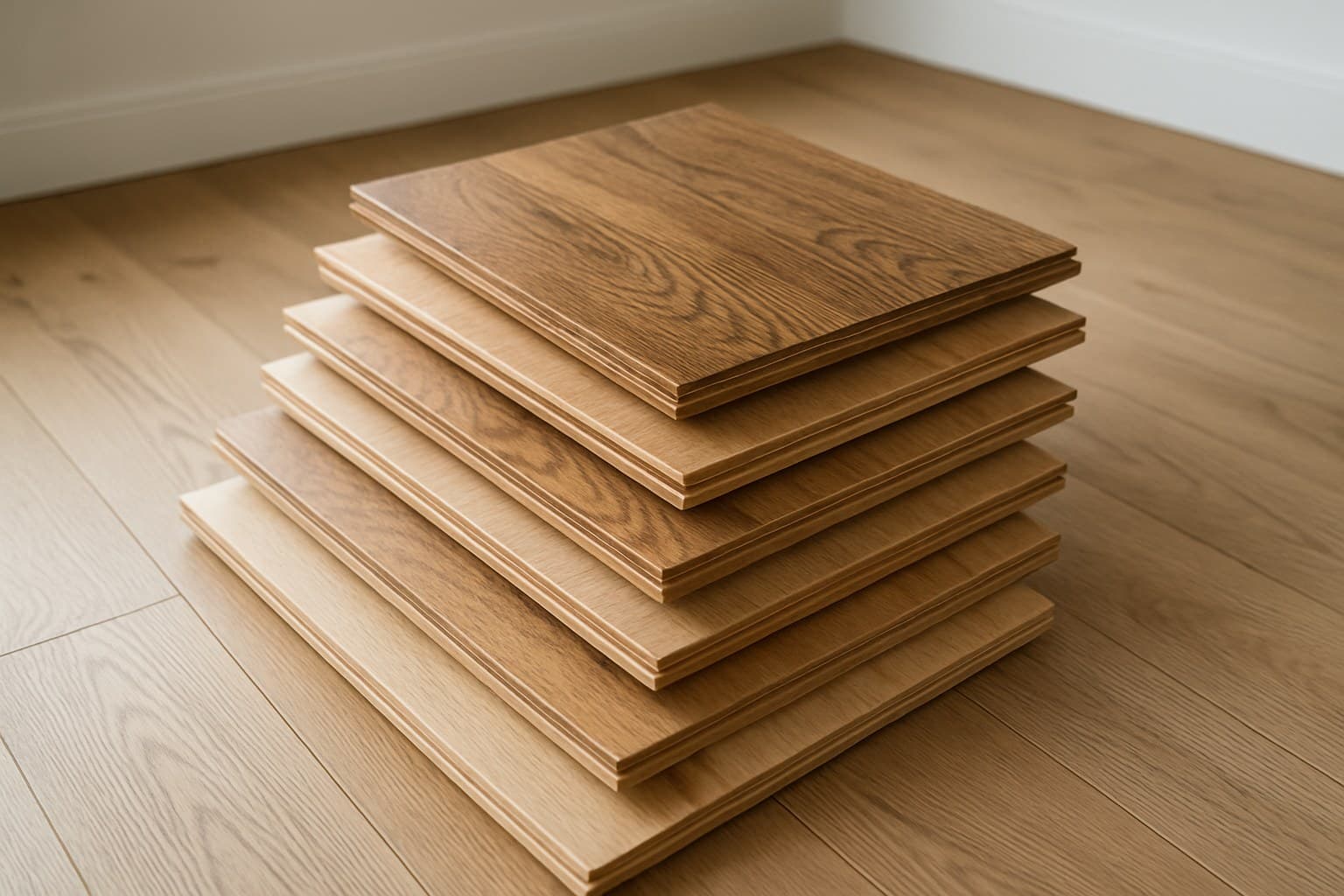
The rule is simple: solid wide hickory belongs above grade, meaning a main-floor room sitting over a plywood subfloor, not a basement or a room built on a concrete slab, and engineered belongs anywhere solid is a gamble. Engineered uses a plywood-style core with layers glued in crossing directions, and that cross-layering stays flatter over concrete, in basements, and over radiant heat. This same logic for weighing solid vs. engineered hardwood floors holds across other species and rooms, not just hickory.
Engineered also wins the movement fight at wide widths. Those crossing layers fight the width-wise swell that pries solid boards apart, so a 6-inch engineered plank gaps less than a 6-inch solid one in the same room.
Refinishing is the honest trade. Solid hickory can be sanded several times over its life. An engineered floor can only be sanded down to the thin real-wood top layer, called the veneer, and the maker publishes that thickness. Sometimes that means one or two sandings, sometimes zero.
| Factor | Solid | Engineered |
|---|---|---|
| Widest size that stays flat | up to ~5 in above grade | 5-8 in+ with less worry |
| Below grade / basement | not recommended | yes, after a moisture check |
| Over concrete slab | needs plywood laid over the slab | glue or float directly |
| Radiant heat | risky, can gap and cup | approved by many makers |
| Refinishing | sand several times | veneer sets the limit, often 0-2 times |
| Seasonal movement at 6 in | the most | noticeably less |
Source: what I've watched these two cores do over slab
Solid versus engineered wide plank hickory across the choices that decide where each one belongs.
For a damp or below-grade room where even engineered hardwood is a roll of the dice, I steer people to a dark walnut vinyl plank instead. It gives you the wide, dark look without betting on a slab that fails a moisture test.
Decoding Hickory Grades: Clear, Select, Character, Rustic
Grade tells you how uniform the boards look and, quietly, how long they run. Clear is the most even with few knots. From there you step down through Select, then Character (also called #1 Common), then Rustic (#2 Common), each one with more knots, splits, and color swing.
What the catalog pages rarely show is that grade also sets a minimum board length under NOFMA, the industry's hardwood grading rules (NOFMA stands for the National Oak Flooring Manufacturers Association). Per the NWFA/NOFMA unfinished flooring grading standard, Clear-grade boards run a minimum of 36 inches, Select a minimum of 32 inches, #1 Common (Character) a minimum of 28 inches, and #2 Common (Rustic) a minimum of 24 inches. Higher grades come in longer average boards, which reads calmer on the floor.
Hickory has one more twist. It swings from near-white sapwood to deep brown heartwood inside the same box, and the lower grades lean hard into that contrast. If you're chasing that pale sapwood look across the whole floor, it's worth checking whether blonde hardwood floors hold up over time first, since that near-white tone can yellow with age the same way it does on other light species. A calmer, more even floor means paying up for a higher grade, not just fewer knots.
| Grade | What you see | Min board length |
|---|---|---|
| Clear | most uniform, few knots, least color swing | 36 in |
| Select | light character, some color mix | 32 in |
| #1 Common (Character) | knots, streaks, strong color contrast | 28 in |
| #2 Common (Rustic) | heavy knots, splits, widest color range | 24 in |
Source: NOFMA hardwood grading rules for board length
Hickory grade names matched to what they look like and their minimum board length.
If wild color jumps from room to room are your worry, buy Clear or Select. If you want the rustic drama, lean into Character or Rustic and let the knots show. And if what you really want is a light, even tone with none of the contrast fight, a blonde maple vinyl plank gets you there without sorting boards by color.
Finish Choices: Prefinished, Site-Finished, and Hand-Scraped
You have three real paths, and they trade convenience for control. Prefinished boards arrive with the finish already baked on at the factory, so there is no sanding dust or dry time in your house and you walk on it the day it is down. The seams sit as tiny beveled grooves, since each board is finished on its own.
Site-finished means bare boards go down, then get sanded flat and coated in your home. You get a smooth, seamless surface and any stain color you want, but you pay for more labor, dust, and days of the room being off limits. On a hard wood like hickory, that sanding takes longer and dulls blades faster.
Hand-scraped is a texture, not a separate wood. The surface is worked to look worn and rippled, which hides dents and hairline gaps well, a real plus on a floor that moves. It also reads busy, so pair it with a calmer grade if you don't want the floor shouting.
What Wide Plank Hickory Costs
Plan on roughly $4 to $12 per square foot for the material and about $3 to $8 per square foot for labor. Never trust one flat national number, since species, grade, and prep all move it. Wider boards and higher grades sit at the top of the material range. Engineered and solid overlap, so core alone does not settle the price.
Here's the arithmetic on a real room. Take a 200 square foot living room: material at $4 to $12 runs $800 to $2,400, labor at $3 to $8 runs $600 to $1,600, so the installed total lands around $1,400 to $4,000. Add sanding and finish on top if you go site-finished.
Basement and stair jobs cost more than an open room. A basement needs a moisture test and often a subfloor built over the slab before a single board goes down. Stairs are slow, cut-heavy work, so labor per step runs well above the flat-floor rate. Get the material and labor quoted as separate lines so you can see where the money actually goes.
If you're torn between hickory's high-contrast grain and a calmer wide-plank wood, read Wide Plank Pine Flooring: Is 'Soft' a Dealbreaker or the Whole Point? next, since it weighs a softer, cheaper wide board against exactly the durability hickory is famous for.