
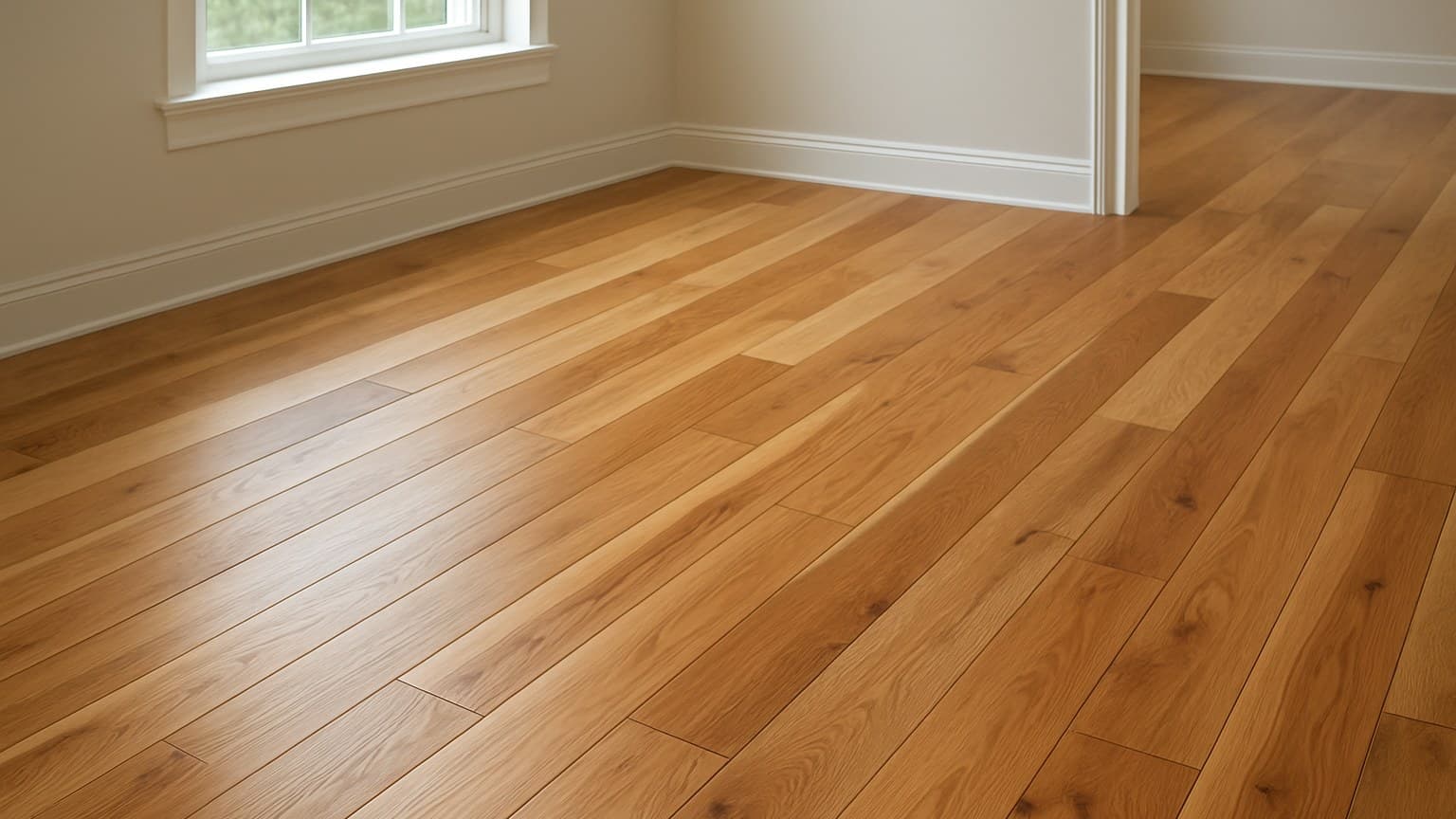
Two cartons of unfinished hickory flooring can share a species name and still behave like different products once you open them. The grade on the label, not the brand, decides how your floor looks and how hard it fights you during install. Pick the wrong one and you find out on your knees, mid-job.
Key takeaways
- Grade is the biggest choice you make: Select & Better runs the calmest and cleanest to finish, while Character and #2/#3 Common give you wild contrast and knots but a bigger waste pile.
- Order extra by grade: budget about 5-7% waste for Select & Better, 10-12% for Character, and 15% or more for #3 Common. The math is room square footage times (1 + waste factor).
- Hickory rates 1820 on the Janka hardness scale, harder than hard maple (1450) and both red and white oak, which is great for dents but tough on sanding and cutting.
- Unfinished hickory materials run roughly $2.50-8 per square foot by grade; then add install labor and separate sand, stain, and seal labor on top, with stairs and basements costing more than open rooms.
- Always run a moisture check and let the wood acclimate to the room per the maker's own sheet before install, because unfinished solid hickory moves a lot.
Start Here: The Grade Is the Choice That Bites You Later
On a hickory job, the wrong grade is what turns a smooth install into a fight, not the name stamped on the box. Grade sets your color contrast, your waste pile, and how many hours you spend on your knees filling and sanding.
"Unfinished" means the boards ship raw. You or your installer sand, stain, and seal them on site after they're down. Grade changes how much finishing labor you're signing up for. A knotty, rustic grade means more filling, more careful sanding, and more time before the room is walkable.
I learned the prep lesson the hard way on a kitchen remodel for the Ortegas in Denver. Their split-level kitchen was on a tight schedule, and when they asked to skip the moisture test to save an afternoon, I let them talk me into it. That floor cupped before the season turned, and I relaid it on my own dime rather than argue about whose call it was. Ever since, I treat the moisture check and the right order as the first two steps, not the last two.
Here's the framework we'll walk: the grades in plain English, the waste-factor math, hardness and what it costs you, unfinished versus prefinished, and real prices split by materials and labor.
Hickory Grades in Plain English (NWFA/NOFMA Standards)
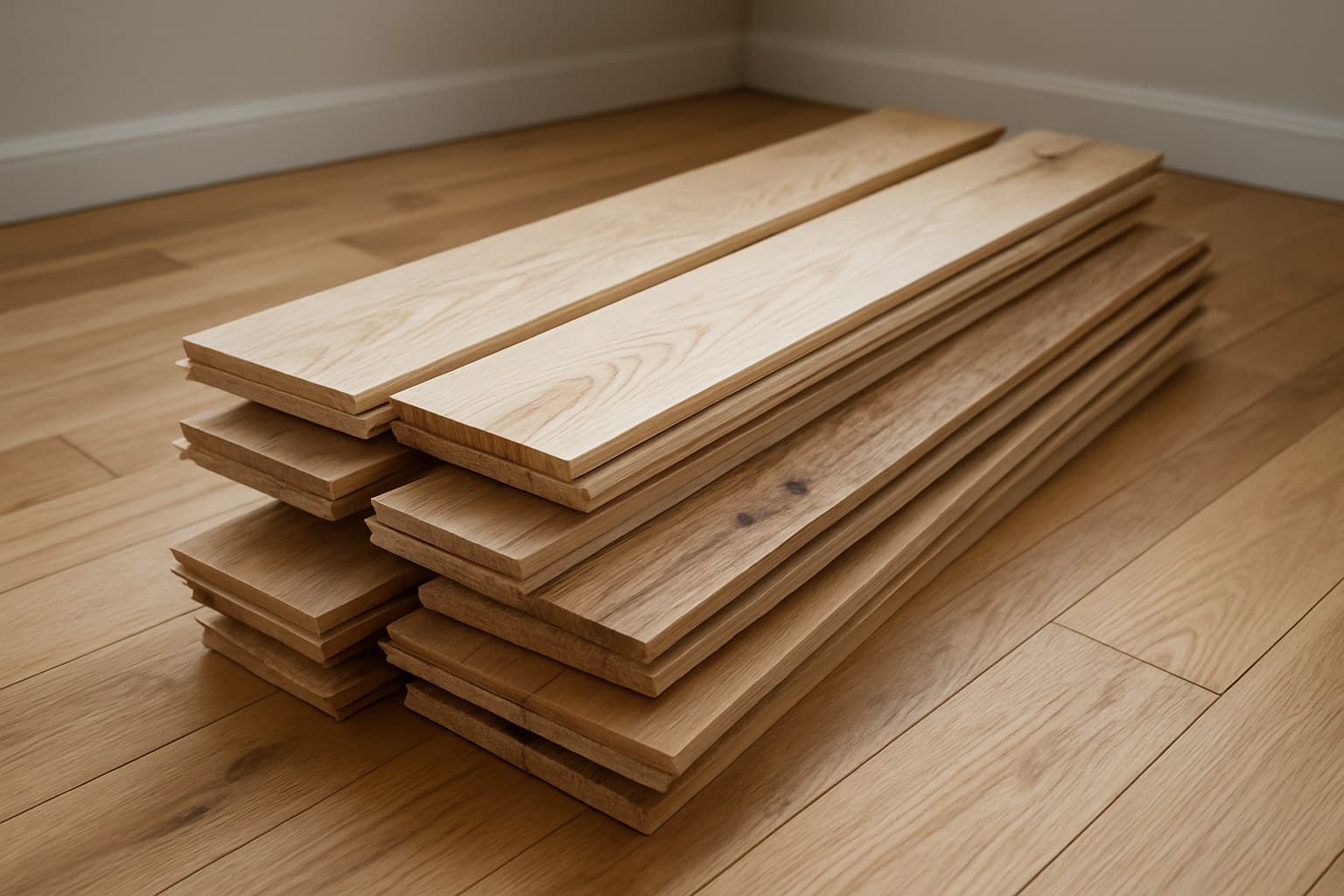
Grade is a set of official rules about how many knots, streaks, and color swings a board's face is allowed to have. The NWFA (National Wood Flooring Association) and its NOFMA (National Oak Flooring Manufacturers Association) grading arm write those rules in the NWFA/NOFMA unfinished wood flooring grading standard, so a "Select" board from one mill should match a "Select" board from another.
One thing to know up front: with hickory, natural color variation is not counted as a defect. Hickory runs light-to-dark within a single board no matter the grade, so even the cleanest hickory shows more contrast than clean oak.
Select & Better: The Calmest, Cleanest Face
According to the NWFA/NOFMA unfinished flooring standard, Select & Better hickory means the face is "practically free of all defects," and the standard specifically notes that natural color variation "is not considered a defect." You still get hickory's natural blond-to-brown color swing, but knots and streaks are kept to a minimum. This is the calmest floor and the easiest to finish, since there's less to fill and sort. It's also the most expensive per square foot.
#1 Common: Some Character, Still Tame
#1 Common allows some color variation, small tight knots, and minor character marks. You get a floor with personality without the wild rustic look. Waste creeps up a little because you'll cut around a few more marks, but finishing stays manageable.
Character, #2 and #3 Common: Knots, Streaks, and Waste
These grades lean into the rough look on purpose. Character grade brings intentional knots, streaks, and a strong light-to-dark swing. #2 Common allows larger and more frequent knots. #3 Common is the most rustic of all, with open knots, sound defects, and heavy variation.
As you go down the grades, three things climb together: color contrast, waste, and site-finishing labor. Open knots need filling. Heavy variation needs more sorting to get a layout you like. That's the trade for the lower board price.
| Grade | What the standard allows | Color contrast | Typical waste factor | Relative price |
|---|---|---|---|---|
| Select & Better | Face practically free of defects; natural color variation not a defect | Low to moderate | 5-7% | Highest |
| #1 Common | Some color variation, small tight knots, minor character marks | Moderate | 7-10% | High |
| Character | Intentional knots, streaks, and strong light-to-dark swing | High | 10-12% | Mid |
| #2 Common | Larger and more frequent knots and character marks | High | 12-15% | Low |
| #3 Common | Most rustic; open knots, sound defects, heavy variation | Very high | 15%+ | Lowest |
Source: The NWFA/NOFMA grading rules for hickory
What each unfinished hickory grade allows, with the waste factor and relative price that ride along with it.
If you like the busy look but not the movement that comes with wide rustic boards, it's worth reading up on wide plank hickory and how much it moves before you order.
Grade vs Budget vs Look: A Quick Decision Table
Match the grade to the number you can actually spend and the look you truly want, not to whatever's on sale that week. The trade is simple: cheaper grades save you money on boards but hand it back in waste, sorting, and extra hours of filling and sanding.
Decide the look first. A busy, high-contrast rustic floor is a feature in a mudroom or a farmhouse kitchen and a headache in a calm, modern living room. And here's a real perk of the knotty grades: all that character hides dents and scratches better, which matters in a house with dogs or a room that takes a beating.
| If you want | Pick | Look you get | Watch out for |
|---|---|---|---|
| The calmest floor, least finishing fuss | Select & Better | Softer, more uniform tone | Highest material cost |
| A little character without chaos | #1 Common | Light knots, gentle color swing | Still a premium price |
| Rustic look on a real budget | Character | Bold knots and contrast | More waste, more board sorting |
| Cheapest boards, most dent-hiding | #2 or #3 Common | Very busy, farmhouse feel | 15%+ waste and heavy finishing labor |
Source: My own grade recommendations after walking homeowners' rooms on hickory quotes
How I steer homeowners toward a grade once I know their budget and the look they're after.
If the rustic look is what pulls you but you're weighing species, acacia flooring delivers a similar high-contrast, knotty feel and is worth a look before you commit.
Widths, Lengths, and the Waste-Factor Math You Can't Skip
The most common unfinished hickory spec is a 5-inch by 3/4-inch solid board, but you'll find widths from 3 inches up to 8 inches. Wider boards move more with humidity and often carry a bit more waste, because a cupped or bowed wide board costs you more square footage when you cut it out.
Length matters too. Rustic grades ship more short boards, which means a bigger cut pile and more waste. Cleaner grades give you longer average boards and cleaner runs.
Is 5-Inch the Right Width for Unfinished Hickory?
For most rooms, 5-inch is the sweet spot. It shows off hickory's grain and contrast without moving as much as a 7- or 8-inch plank. If you want the wide, dramatic look, go in knowing wider boards need tighter moisture control and usually a higher waste allowance. The full breakdown of wide plank hickory covers how much those wide boards actually move.
Working the Waste-Factor Math
Waste factor is the extra flooring you order to cover cuts, culls, and mistakes. The formula is short:
Order square footage = room square footage x (1 + waste factor)
Every part named: room square footage is the space you're covering, and the waste factor is a decimal (12% is 0.12). So a Character-grade floor in a 200 square foot room is 200 x 1.12 = 224 square feet to order.
| Step | Detail |
|---|---|
| Formula | Order sq ft = room sq ft x (1 + waste factor) |
| Select & Better (6%) | 200 x 1.06 = 212 sq ft to order |
| Character (12%) | 200 x 1.12 = 224 sq ft to order |
| #3 Common (15%) | 200 x 1.15 = 230 sq ft to order |
| Then round up | Buy full cartons, so round to the next carton and keep a few spare boards |
Source: The waste percentages I actually order to on hickory installs
Waste-factor math for a 200 square foot room across three grades, using the percentages I actually order to on hickory jobs.
One more thing: flooring ships in cartons, so you can't order 224 square feet exactly. Round up to the next full carton and keep the spares. Boxed spares from the same lot help when a board needs replacing years later, since dye lots shift over time.
Hickory Hardness: Why 1820 Janka Matters (and When It Doesn't)
The Janka scale measures how much force it takes to press a steel ball into the wood, so a higher number means the wood is harder to dent. Hickory rates 1820, which puts it among the hardest common domestic floors, harder than hard maple, red oak, and white oak.
That hardness is real dent resistance, great for busy rooms and heavy furniture. But it cuts both ways. Hickory is tougher to cut, nail, and sand, so an unfinished hickory floor eats blades and adds site-finishing time compared to oak. Plan for that in labor.
And remember what hardness does not do: it resists dents, not scratches. A dog's nails or grit under a shoe can still mar the surface, so your finish choice and grade still drive how the floor looks in five years.
| Wood | Janka (lbf) |
|---|---|
| Red oak | 1,290 |
| White oak | 1,360 |
| Hard maple | 1,450 |
| Hickory | 1,820 |
| Brazilian teak (cumaru) | 3,540 |
Janka hardness of five flooring woods, with hickory highlighted against three softer domestic species and one much harder import.
If you want dent resistance well past hickory, an import like Brazilian teak climbs to 3,540, though it's a harder floor to work and a different price bracket. For a domestic step down from hickory that's still tough, hard maple sits at 1,450 and sands a little easier.
Unfinished vs Prefinished Hickory: Which Should You Buy?
Buy unfinished when you want a seamless, custom finish or need to match an existing floor; buy prefinished when you want the room usable fast and can't spare the days for on-site sanding and coating.
Unfinished hickory ships raw. After it's down, you sand it flat, then stain and seal on site. The upside is a smooth, gap-free surface and any color you want. The downsides are days of dust, fumes, and downtime while coats cure, plus the sanding labor, which runs higher on hickory because the wood is so hard.
Prefinished hickory arrives sealed with a factory finish, applied to specs set out in the NWFA/NOFMA factory-finished flooring standard, and that finish is often more durable than a coating applied on site. You install it and you're done, no cure time. The trade is micro-bevels (small grooves) between boards and a finish you can't change without sanding the whole floor.
For a rustic Character or Common grade where a little texture fits the look, prefinished often makes sense. For a clean, uniform Select floor or a color match to existing wood, unfinished usually wins.
What Unfinished Hickory Really Costs (Materials + Labor)
Unfinished hickory materials run roughly $2.50 to $8 per square foot depending on grade. Then you stack install labor and separate finishing labor on top, and those add up fast on a hard wood like hickory.
Here's how I break a quote down, and every figure is a starting range to confirm with local quotes, since prices swing by region, species, and how much subfloor prep the job needs.
| Line item | Rough range | Notes |
|---|---|---|
| Materials, #2/#3 Common | $2.50-4 / sq ft | Cheapest boards, most waste |
| Materials, Character | $3.50-5 / sq ft | Bold look, mid price |
| Materials, #1 Common | $4-6 / sq ft | Some character, premium |
| Materials, Select & Better | $5-8 / sq ft | Calmest, highest cost |
| Install labor (nail-down) | $3-6 / sq ft | Higher on hickory, tough to nail and cut |
| Sand, stain, seal labor | $3-7 / sq ft | Separate step; more coats, more cost |
Cost ranges for unfinished hickory split into materials by grade and the two labor steps; confirm each against local quotes.
Two things that always cost more than an open room: stairs and basements. Stairs are slow, precise work, often $45 to $75 per step in labor alone, plus the stair-nose and tread material on top. Basements mean a concrete slab, which raises the stakes on moisture and can rule out solid hickory entirely if the readings are wrong. In those spots I steer people toward engineered wood or run the numbers again before anyone orders a carton. If you're still weighing that choice, this breakdown of solid vs. engineered hardwood floors walks through which option and species fit which rooms.
Where to Buy Unfinished Hickory Flooring
Buy unfinished hickory from flooring specialty suppliers, hardwood distributors, and local lumberyards; those are the places that stock real grade options and can pull from one dye lot. Big-box stores carry some unfinished hardwood, but often only as a special order with limited grades.
A few tips from ordering it for jobs:
- Ask for the grade in NWFA/NOFMA terms, not a marketing name. "Character" from a mill's brochure and "#2 Common" on the grading sheet aren't always the same thing. Buying from a mill that holds NWFA/NOFMA certification, as Lewis Lumber and Milling recently did, is one way to confirm the grading actually follows the standard.
- Order it all from one lot. Color and grade consistency drift between production runs.
- Confirm the board is kiln-dried and get the moisture content on the packing sheet, so you know where the wood starts before it acclimates.
- Online mills can beat local pricing, but you're paying freight and you can't inspect the load before it ships. Factor that in.
If hickory's contrast is more than you want and you're still shopping species, it's worth comparing against calmer domestic options like maple or a softer, wide-plank look like pine before you settle. For a budget-conscious, stylistically different alternative to traditional hardwood species altogether, it's also worth reading up on bamboo flooring and its typical cost.
Prep First: Moisture and Acclimation
Before a single board goes down, check the subfloor for moisture and let the wood acclimate. Skip this on unfinished solid hickory and you're gambling, because raw hickory moves a lot with the seasons.
Run a moisture check with a meter, a handheld tool that reads how much water is in the wood and the subfloor. You want the flooring and the subfloor within the range the maker's own sheet lists, not a number you read online. On concrete, that means a slab moisture test too, not just a wood reading.
Then let the hickory acclimate, which means sitting in the room where it'll be installed until it settles to the home's normal humidity. How long, and whether it's even needed, is set by the manufacturer's instructions, not a rule of thumb. Some products want days in the room; some say it's unnecessary. Read the box.
Check subfloor flatness too. Most nail-down and floating floors need a flat base, and hickory's hardness won't fix a wavy subfloor, it'll telegraph every dip. Level it first.
This is the part I never let a homeowner talk me out of again. Skip the moisture and flatness checks and you risk cupping, gapping, or a voided warranty, no matter which grade you picked. Most manufacturers list the exact moisture and flatness numbers you need to hit before install, so pull that sheet and check your readings against it before a single board goes down.
Sources
- NWFA/NOFMA Unfinished Wood Flooring Grading Standard (PDF)
- NWFA/NOFMA Factory-Finished Flooring Standards (PDF)
- NWFA: Lewis Lumber and Milling Receives NWFA/NOFMA Certification
- NWFA Event: Springcreek Flooring, Why Unfinished
- NWFA Event: Springcreek Flooring by McClain Forest Products, Unfinished Solid Hardwood Flooring Manufacturing