
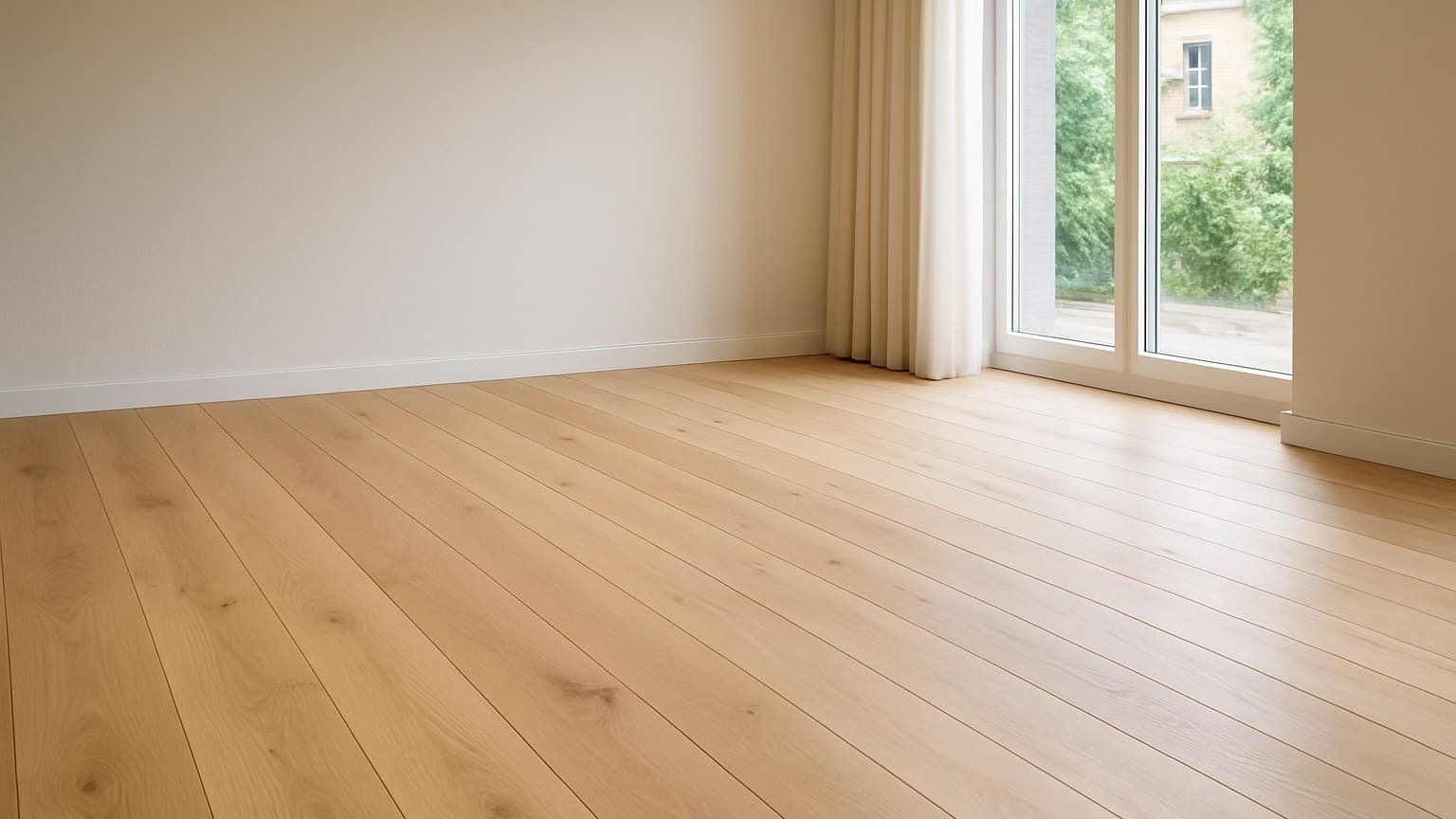
Most light wood flooring I get called back to fix went wrong at the sample rack, where a homeowner fell for a plank before checking the room, the traffic, or the slab under it. Pick in this order: room, species, finish, pattern, then install method. Skip a step and you pay twice. If you're starting that whole process from scratch, I walk through it step by step in the wood flooring buying guide.
Key takeaways
- Pick in order: read the room's light and traffic first, then species, then finish, then pattern, then install method. Jumping straight to the sample is where regret starts.
- "Light" is a color family, not one wood: white oak, ash, hard maple, birch, hickory, and pale pine all qualify, and NWFA counts more than 50 domestic and imported species available.
- The dirt-vs-scratch truth: a pale floor hides dust and small scuffs better than a dark one, but a real scratch shows on any wood. A matte oil or matte lacquer hides wear far better than gloss.
- Over concrete or in a basement, choose engineered light wood over solid. NWFA's engineered wood EPD cites a 75-year functional service life.
- Click-lock engineered is realistic to DIY; glue-down, herringbone, and stairs are worth hiring out.
Start With the Room, Not the Sample: My Pick-in-Order Method
Choose in a fixed order: read the room's light and traffic first, then species, then finish, then pattern, then install method. Almost every bad light floor I get called back to skipped that order and started with a plank someone loved in the showroom.
"Light" is a color family, not one wood. White oak, ash, hard maple, birch, hickory, and pale pine all land in it, and the National Wood Flooring Association's Homeowner's Handbook to Real Wood Floors counts more than 50 domestic and imported species you can draw from. So the sample is the last decision, not the first. Beyond the light end of that spectrum, the full range of options is worth browsing on its own, which is exactly what the wood flooring types guide sets out to cover.
Here's the whole method on one line per room. Find your closest match and read across.
| Room | Species | Finish | Pattern | Install |
|---|---|---|---|---|
| Small, dim living room | White oak or ash | Matte oil or matte lacquer | Wide plank | Glue-down or floating |
| Busy kitchen | Hard maple or hickory | Matte lacquer | Straight plank | Glue-down engineered |
| Bedroom | Birch or white oak | Oil, any sheen | Plank or 2-strip (two narrow boards laid side by side in each row) | Floating or nail-down |
| Basement / over concrete | Engineered white oak | Factory matte | Wide plank | Glue-down (moisture check first) |
| Entry with kids and dogs | Hickory or hard maple | Matte lacquer or hardwax oil | Straight plank | Glue-down |
Source: the order I run through with a homeowner before we ever open a sample box
Print this table and hand it to your installer before you order samples, it saves the back-and-forth once boards actually show up on-site.
One honest expectation up front: light wood brightens a small or dim room, but it won't fix a moisture problem or hide a deep gouge. Those are separate jobs.
Step 1: Read the Room's Light and Traffic Before Anything
Start by gauging the natural light, because a north-facing or window-poor room is exactly where light wood pays off. NWFA's homeowner handbook backs the plain rule of thumb here: lighter floors open a room up compared with medium or dark tones that soak up light.
Then count the traffic honestly. Front and back entry doors, kids, dogs, rolling office chairs. This drives your finish choice more than the species does, so be truthful about it now.
Before you commit, lay a sample on the actual floor and look at it in the morning, in the evening, and in direct sun. That's how you catch ambering, the slow yellow shift some woods take on with light and age, before it surprises you a year in.
Note the subfloor too. If it's concrete or below grade, that decision is already narrowing toward engineered, which I'll get to in Step 5. For a deeper read on exactly what pale floors hide and what they don't day to day, I laid that out in Light Hardwood Floors: What They Actually Hide, and What They Don't so I won't repeat it here.
Step 2: Pick a Light Species (Oak, Ash, Maple, and Friends)
The genuinely light woods are white oak, ash, hard maple, yellow birch, hickory, and pale pine. White oak gives you an even, calm grain and a soft blonde tone. Ash reads a touch busier with bold streaks. Hard maple is nearly grain-free and very pale. Birch sits close to maple but softer. Hickory swings light to caramel across the same floor. Pine is the palest and the softest.
European White Oak is the popular blonde go-to for good reason: even grain, takes a light finish without fighting it, and stays stable underfoot.
The Lightest Species, Ranked by How Easily They Dent
Hardness decides how easily a light floor dents, so rank by the number, not the look. Janka hardness is a standard test that measures the pounds of force it takes to press a steel ball into the wood, and higher means it resists dents better. This same math holds whenever you're comparing hard wood floors overall, not just the pale end of the spectrum.
| Species | Janka hardness |
|---|---|
| White pine | 380 |
| Yellow birch | 1260 |
| Red oak | 1290 |
| Ash | 1320 |
| White oak | 1360 |
| Hard maple | 1450 |
| Hickory | 1820 |
Relative dent resistance for seven common light species, softest to hardest, see the table above for the exact Janka pounds behind each bar.
The takeaway: light does not mean soft. Hickory and hard maple shrug off dents, while pine picks up a dog-nail dimple fast. A busy kitchen or entry wants the harder end of that list.
Grade Matters Too: Select/Clear vs. Character/Rustic
Species picks the wood; grade decides how much of the tree's natural character you keep in that same species. Select (sometimes sold as "clear") grade pulls the cleanest boards: minimal knots, tight consistent grain, and even color, so a white oak floor in select grade reads as one calm, uniform blonde. Character grade (also labeled rustic or cabin grade) keeps the knots, mineral streaks, and color swings a mill would otherwise sort out, so the same white oak looks more varied board to board. Because select grade rejects more of each log to get that clean look, it typically runs more per square foot than character grade in the identical species. This is a call worth making right alongside species in this step, not as an afterthought at checkout: if you're after the calm, even blonde look from the small-room case in Step 1, lean select; if you like visible knots and more tonal movement, character grade gets you there for less. That same appetite for visible character is what pushes some homeowners past rustic grading entirely and into reclaimed vs. factory-distressed wood flooring, where the wear marks are baked in rather than just left unsorted.
Light Wood Floor Colors: Blonde, Honey, and Pale Gray
When people search light wood floors or light colored hardwood floors, they mean one of three lanes: near-white blondes (bleached or white-oiled oak, pale maple), warm honeys (natural white oak, birch, light pine), and pale grays (oak with a gray-wash or light stain). Pick the lane first, then match the species to it, since some woods amber toward honey no matter what you start with.
Step 3: Choose the Finish (This Settles the Dirt-vs-Scratch Question)
A pale floor hides dust and light scuffs better than a dark one, but a genuine scratch shows on any wood. The finish decides how loud that scratch reads, and it matters more than the species.
Oil vs. Lacquer vs. Varnish, in Plain Terms
Oil, usually a hardwax oil (a blend of oil and wax that soaks into the wood instead of sitting on top), penetrates the fibers and lets you spot-repair a worn patch without redoing the room. Lacquer and varnish are films that sit on the surface as a clear coat, tougher against spills but they wear as a whole area, so a scuffed traffic lane means recoating the lane, not dabbing one board.
For most homes I steer toward hardwax oil in living spaces and matte lacquer where water and grit are constant. If you want the palest, lowest-sheen look and the most control, a site-finished floor (bare boards sanded and finished in place) beats many factory options. I walk through that route in the unfinished wood flooring guide.
Matte vs. Gloss on a Light Floor
Matte wins on a light floor. Gloss throws back every fine scratch and every dust bunny as a bright line, while a matte oil or matte lacquer scatters that light and buries the same wear. Save gloss for a formal room that stays quiet.
| Room | Finish | Sheen | Why |
|---|---|---|---|
| Entry / mudroom | Matte lacquer or hardwax oil | Matte | Hides grit-scratches; recoats or spot-fixes without a full sand |
| Kitchen | Matte lacquer | Matte | Wipes clean, and matte masks the fine scratches sand and water leave |
| Living / dining | Hardwax oil | Matte to satin | Spot-repairable under chairs and pet nails |
| Bedroom | Oil or lacquer | Any | Low traffic, so looks lead the choice |
| Home with dogs | Matte lacquer or hardwax oil | Matte | Nail marks and dust read least on a low-sheen light floor |
Source: watching these finishes wear in the kitchens and entryways I've refinished
Use this table when you're standing at the sheen counter, the room-by-room logic holds even if the brand or finish line changes.
Step 4: Pick Pattern and Plank Width for the Look
Width first, pattern second. A wide plank in a pale oak makes a small room read bigger than a busy narrow strip, because it shows off the long grain and cuts the number of seams your eye has to track. Narrow strip looks fussier in a small space.
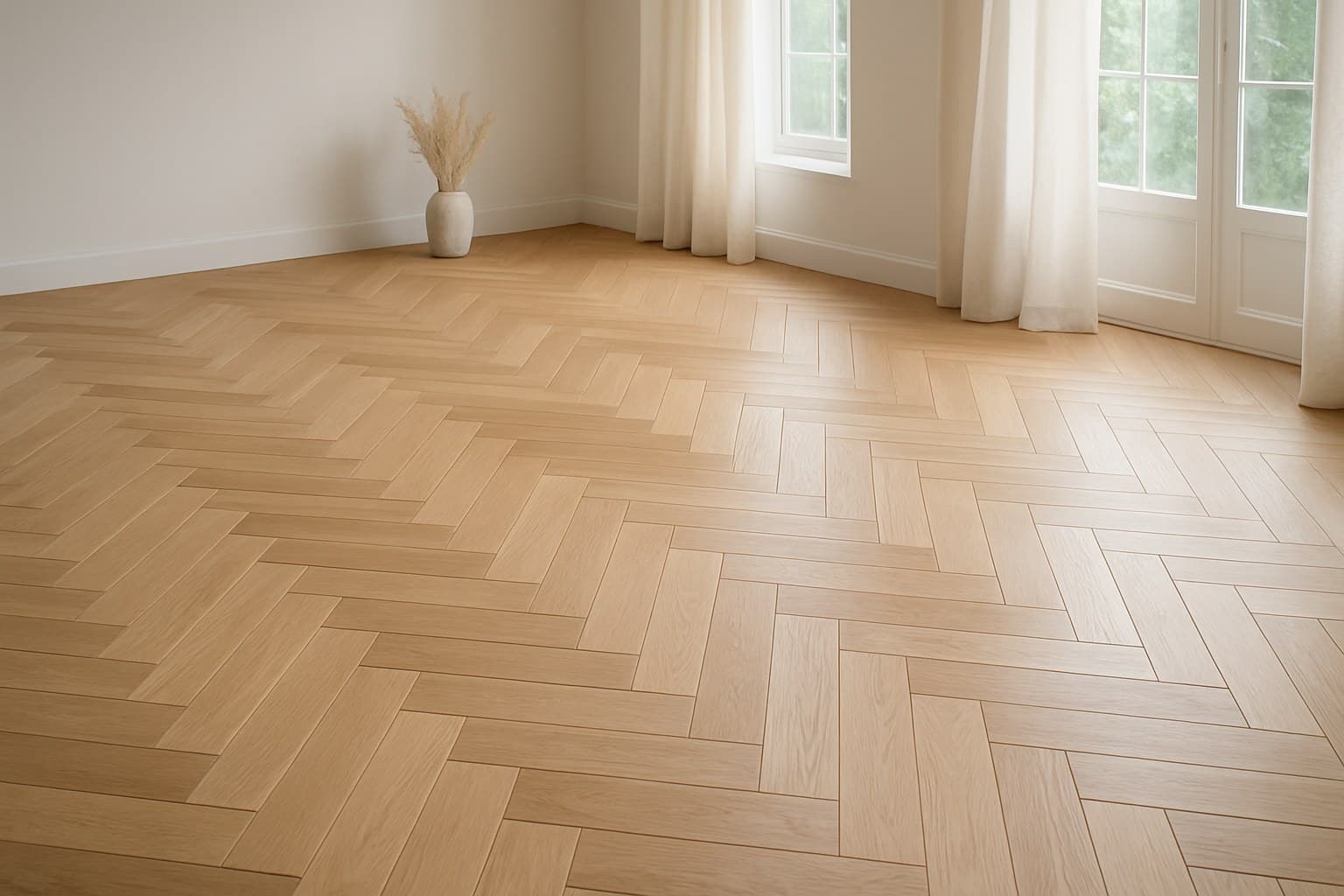
Then pattern: straight plank is the calm default, 2-strip adds a little rhythm, and herringbone or chevron give you that tailored look that pairs well with light wood. Keep pattern subordinate to room size and budget. Herringbone and chevron add real labor and material cost: straight-plank installation typically costs noticeably less per square foot than herringbone or chevron, since the diagonal cuts, tighter tolerances, and extra fitting time push labor higher. Material costs follow a similar pattern, engineered white oak cut for herringbone generally runs more per square foot than the same species in straight plank, due to higher cutting waste and more selective milling. Exact rates vary a lot by region and installer, so treat any number here as a rough starting point and confirm with local quotes before budgeting.
If you're set on the wide, pale look, I go deeper on species and grade in the wide plank light wood flooring guide.
Step 5: Decide Install Method and Solid vs. Engineered
Match the install method to the subfloor. Floating (planks click together and rest on the subfloor, not fastened down) and glue-down both work over concrete; nail-down needs a wood subfloor. A basement or any over-concrete room usually means engineered, because solid wood isn't recommended below grade where moisture moves through the slab. For the fuller case on choosing between the two constructions and matching species to your room, see how to pick solid vs. engineered floors.
Engineered light wood is built on a plywood-style core that stays put over concrete, and it's the right call there more often than solid. According to NWFA's Engineered Wood Flooring Environmental Product Declaration, engineered wood flooring carries a 75-year functional service life, a useful industry benchmark for the category, though it's not a guarantee for every specific product, so ask your dealer for the number on the exact line you're buying. Before anything goes down, check the subfloor for flat spots (a gap of 3/16 inch or more under a 10-foot straightedge means you level it first) and run a moisture test on top of concrete. Budget more for a basement or concrete job than for an open room upstairs, since the moisture prep, leveling, and glue-down time all add cost.
On DIY versus hiring: click-lock engineered is realistic for most handy homeowners to install themselves. Glue-down, herringbone, and stairs are where I'd hire out every time. The glue and the angles punish small mistakes, and a botched stair nose is a daily eyesore.
If engineered is where you've landed, Engineered Wood Flooring: The Two Specs That Decide If It's Worth It is the useful next read, because it breaks down the wear-layer thickness and core quality that separate a floor you can refinish from one you can't.