
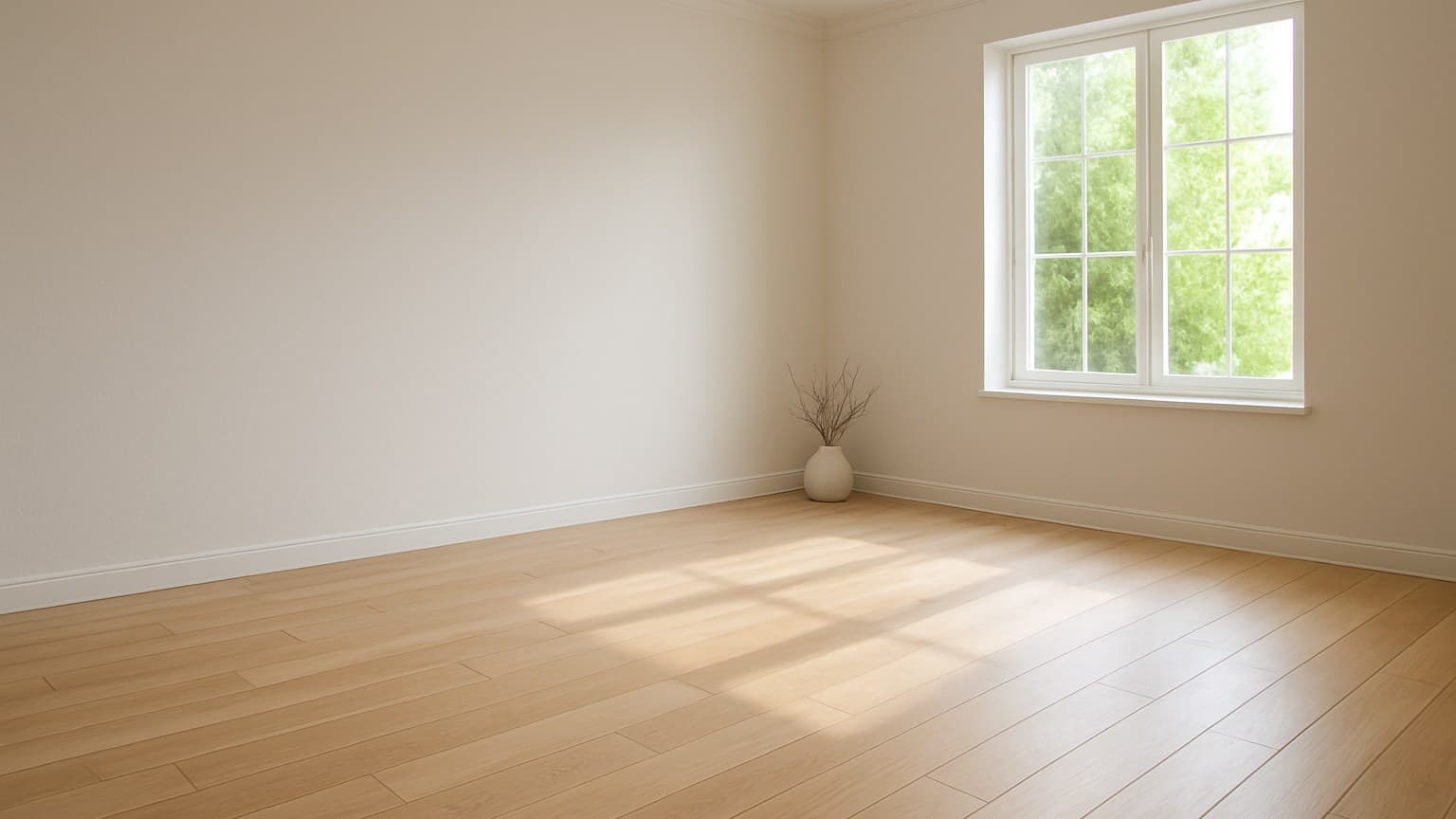
Light hardwood floors get sold on one promise: they hide everything. On a maple refinish I did for a family in Dayton, Ohio, that promise turned out only half true, and the half nobody mentions is what trips owners up a few years in.
Key takeaways
- Light floors hide dust and fine scratches well, but they show dents and gouges like any wood; species hardness, not color, decides denting.
- Oil-based poly ambers (yellows) light wood over the years; a water-based finish keeps white oak and maple looking pale.
- Hickory is the hardest common light species (~1820 lbf on the Janka scale); yellow birch is the softest (~1260 lbf).
- A 'select' grade looks cleaner and more uniform; a 'character' grade hides small dents better because the eye reads the marks as part of the wood.
- Check subfloor flatness and moisture and follow the maker's acclimation sheet before install; that, not the species, is where most callbacks start.
What Light Hardwood Really Hides (and What It Doesn't)
Light floors hide dust, pet hair, and fine surface scratches between cleanings, a pattern the NWFA's Homeowners Handbook to Real Wood Floors also flags for buyers. They don't hide dents, gouges, or water rings. Low contrast blurs small marks, so a scuff that would jump out on dark walnut just disappears on pale oak. But a dent is a change in the wood's shape, not its color, and shadow gives it away no matter how light the board is.
Denting is about hardness, not color. A soft light wood dents just as easily as a soft dark one. So the species you pick decides how the floor takes abuse far more than the shade does. For anyone weighing wood against a different material altogether, seeing how bamboo flooring vs hardwood compares on that same hardness question is worth doing before you commit to either.
Grade drives how "clean" the floor reads. According to the National Wood Flooring Association's NOFMA grading system, grade is simply how much natural character (knots, streaks, color swings) the boards are allowed to have. A uniform, near-flawless grade looks tidy the day it goes down but shows a fresh dent plainly. A busier grade with knots and streaks hides small dents, because your eye reads the mark as part of the wood. A side-by-side hardwood flooring grades chart makes those tiers and their trade-offs easier to compare at a glance.
| Grade | Look | What it hides |
|---|---|---|
| Clear | Very uniform color, almost no knots or streaks | Looks cleanest day one; shows new dents plainly |
| Select | Mostly uniform, slight color and grain variation | Tidy backdrop, small marks still noticeable |
| #1 Common | Moderate knots, streaks, color variation | Good at masking minor dents and scuffs |
| #2 Common | Heavy character, knots, mineral streaks | Best at hiding wear, busiest overall look |
Source: NWFA hardwood flooring grading rules
Appearance grades from clearest to busiest, and how each one handles everyday wear.
The honest trade the vendor pages skip: light wood forgives everyday grime, but the finish you put on top decides whether it slowly yellows on you. More on that below.
What Counts as Light Hardwood, and the Lightest Options
"Light" covers a range, not one color. It runs from pale, warm-neutral floors like natural hard maple and white oak through whitewashed and pale-gray finishes. So two "light" floors can look nothing alike.
For the lightest raw color, hard maple, ash, and birch read almost blond straight off the pallet. If you want paler still, a whitewash or a wire-brushed white finish on white oak pushes it lighter than the wood is on its own. Wire-brushed just means the soft grain is scrubbed out to leave texture the white settles into. That scrubbed-out texture is exactly what defines wire brushed hardwood flooring as its own category, separate from a smooth-sanded board wearing the same stain.
Every species carries its own undertone. Maple and birch lean slightly yellow, red oak leans pink, white oak sits more neutral with a faint tan. That undertone, plus your finish, is what people are really reacting to when they call a floor "too yellow." They blame the wood when it's usually the topcoat.
One flag for wide-plank looks: wide boards show more color variation per plank, so a light wide-plank floor can look busy fast. On wide planks, grade choice matters even more than it does on narrow strips.
Best Light Species Compared: Hardness and Grain
If you want a light floor that takes a beating, hickory is the tough one and maple is the one that shows every knock. The Janka scale measures how much force it takes to dent the wood, so a higher number means better dent resistance. Here's how the common light species line up, with red oak thrown in as a familiar reference. The National Wood Flooring Association's white oak vs. red oak comparisons highlight the same core distinction: the two species are close in hardness but differ in grain tightness and undertone.
| Species | Janka (lbf) | Grain | Best for |
|---|---|---|---|
| White oak | 1360 | Tight, straight; hides fine scratches well | High-traffic main rooms |
| Hard maple | 1450 | Smooth, subtle; shows dents readily | Clean modern look, medium traffic |
| White ash | 1320 | Bold, open like oak; forgiving | Neutral backdrop, everyday rooms |
| Yellow birch | 1260 | Fine, gentle waves; softer underfoot | Bedrooms, low-traffic areas |
| Hickory | 1820 | Wild, high color variation; very tough | Busy halls, kids and pets |
| Red oak (reference) | 1290 | Open, pinkish; not truly light | Comparison baseline |
Source: the USDA Forest Products Lab's Janka hardness data
Janka hardness in pounds-force (lbf) alongside grain character for common light species.
Reading the numbers is simple. Hickory at 1820 takes real abuse in a busy hallway with kids and dogs. Yellow birch at 1260 is softer, which is fine in a bedroom that never sees much traffic. The gap between them is big enough to feel in daily life.
Grain personality pairs with hardness. White oak's tight, straight grain hides fine scratches on top of resisting dents. Hickory's wild grain hides dents well but fights a clean, minimalist room. Maple is the tricky one: it's fairly hard but so smooth that any dent it does take shows clearly.
On cost, white oak and hickory usually run more per square foot than maple or birch. On jobs I've bid, white oak and hickory materials run about $6 to $11 per square foot, plus $4 to $8 per square foot for install labor. Maple and birch materials tend to land around $4 to $8 per square foot, with labor in that same $4 to $8 range. Prices swing by region and grade, and a basement subfloor tear-out or a stair job pushes labor toward the top of that range. If a light species you want is pricey, it's worth checking clearance and closeout hardwood lots before you pay full retail, since leftover material is often the same product at a lower price.
The Ambering Trap: Why Some Light Floors Yellow
Here's the downside no vendor page mentions: oil-based polyurethane carries a warm tint that deepens over the years. On pale wood, that means a crisp white oak slowly drifts golden, and a clean maple picks up a yellow cast. It's not dirt and it won't clean off. The finish itself is doing it.
The fix is a water-based (waterborne) polyurethane. It dries clear and keeps maple, ash, and white oak close to their raw pale tone for years. It costs a bit more per coat, but on a light floor that's the whole point of going light in the first place. Water-based also dries fast and has far less odor, while oil-based is cheaper, slower to dry, and strong-smelling.
Keep the finish separate from the stain in your head. A whitewash or pale-gray stain sets the starting color. The topcoat over it decides whether that color stays true or ambers. You can pick the perfect gray and still watch it turn warm if an oil-based coat goes on top.
One more reason to choose right up front: matching an ambered oil finish later is a headache. When you go to refinish or repair one board, the new patch reads lighter than the aged floor around it. Waterborne from day one saves you that grief.
Solid vs. Engineered, and Prepping the Subfloor
Pick between solid and engineered by where the floor is going, not by looks. Solid light hardwood suits above-grade rooms, meaning at or above ground level. Engineered has a plywood-style core that stays more stable over concrete and below grade, like a basement, where solid wood generally isn't recommended. For a deeper breakdown of when each construction type makes sense for your room and budget, this guide to choosing between solid and engineered hardwood floors walks through species picks in more detail.
Refinishing caps matter if you want to keep a light floor pale over decades. Solid can be sanded several times, so you can strip an ambered finish and start fresh. Engineered is limited by its veneer thickness, the thin real-wood layer on top, listed on the maker's spec sheet. Some engineered floors can be refinished once or not at all, so read that number before you buy.
If you're leaning engineered and want to install it yourself, click-lock planks are the realistic DIY route. That's a bigger comparison than this section can hold, so read whether click hardwood flooring is worth it before you commit. If a budget click-lock brand like Pergo is on your shortlist, it's worth checking whether Pergo hardwood is real wood before you assume it performs like a true engineered plank.
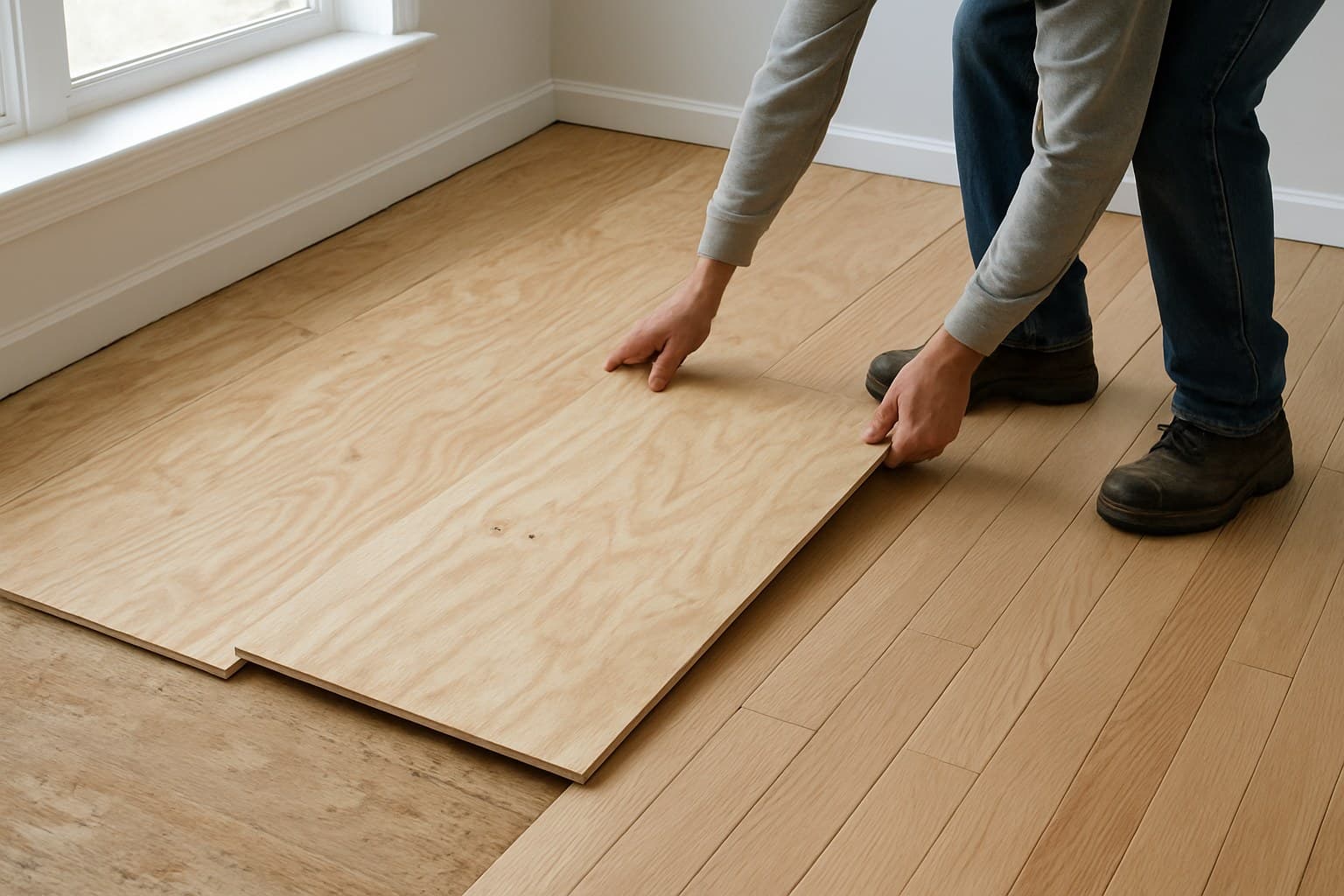
Before any of this, the standing rule set out in the NWFA's installation guidelines: check subfloor flatness with a long straightedge and test moisture with a meter, which is a tool that reads how much water is in the slab or wood. Then follow the maker's own acclimation sheet for how long the boards sit in the room first. Skip these checks and a hidden hump or a wet slab will telegraph through the new floor within months, and you'll be the one pulling it back up to fix it.
Styling and Whether Light Floors Will Date
Light neutral floors, especially natural white oak, have held their spot for years and show no sign of falling out of favor. They read clean, they make small rooms feel bigger, and they work with almost any wall color.
The part that dates is the trend color, not the light tone itself. Heavy gray washes and stark cool-white floors were everywhere for a stretch and now feel tied to a specific era. A warm-neutral or natural finish ages better because it isn't chasing a moment.
So if you're nervous about a light floor looking old in ten years, the move is a natural or lightly warm tone over a strong gray or blue-white stain. You keep the bright, open feel without pinning the room to a trend that will pass.