
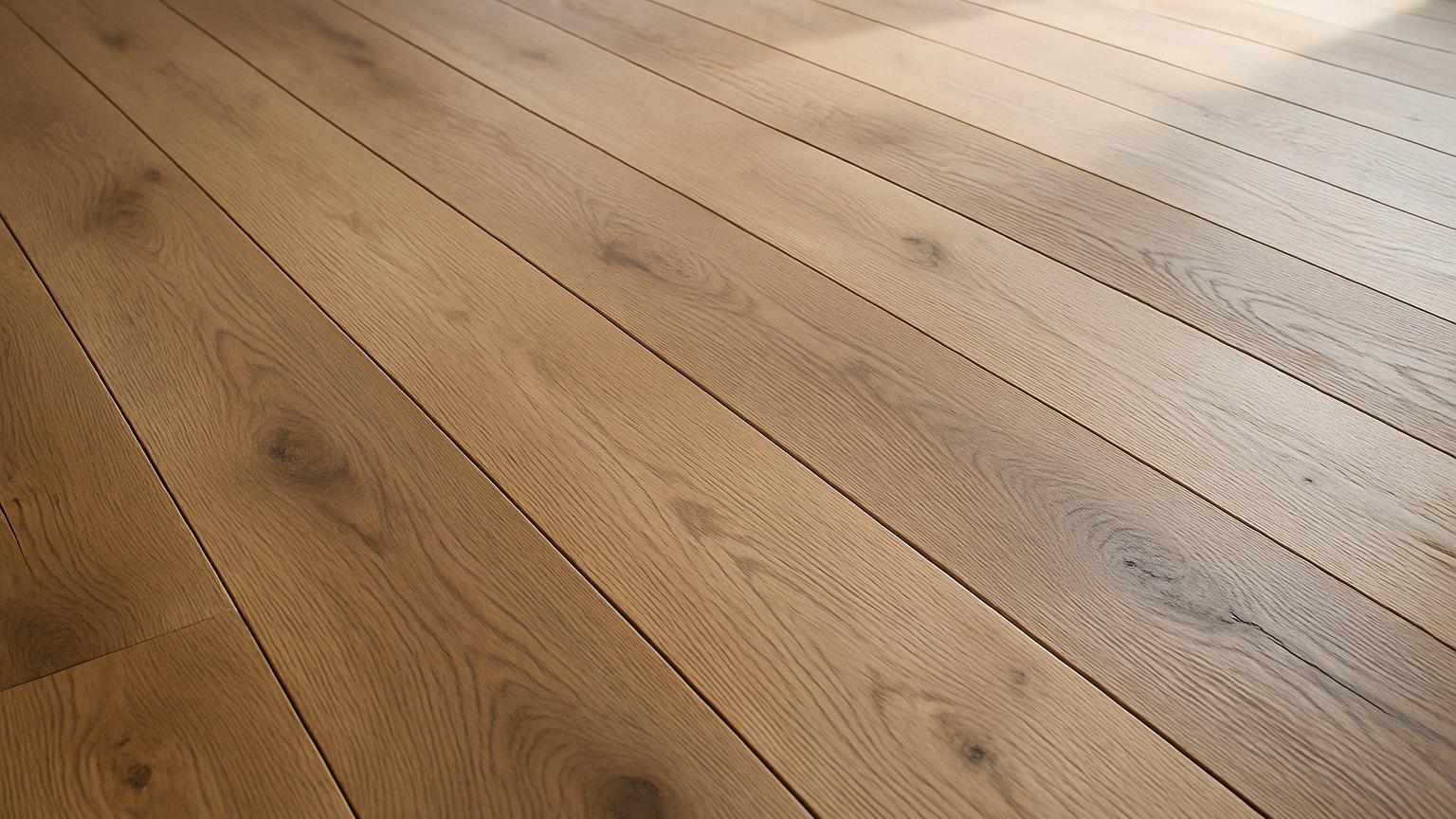
Wide plank wood flooring means boards over 5 inches wide, a line the National Wood Flooring Association sets, not a quality grade. That trips buyers up because suppliers charge a premium for the word "wide," and most never cite a standard to back it. Know the number and you can hold any claim to it before you pay.
Key takeaways
- The National Wood Flooring Association (NWFA) defines wide plank as boards over 5 inches wide; 3 to 5 inches is 'plank' and under 3 inches is 'strip.'
- 'Wide plank' is a width, not a quality grade. Grades like Clear, Select, and #1 Common (NWFA/NOFMA) describe board length and looks, not width.
- For boards over 5 inches, engineered construction tends to stay flatter than solid over concrete or below grade, where solid usually isn't recommended.
- Installed wide plank runs roughly $12 to $30 per square foot per remodelingexpense.com, with pine at the low end and Brazilian walnut near the top.
- There is no NWFA/NOFMA length-compliance grade for true wide plank, so ask a supplier for mill certification to check its claims against a standard.
What Counts as Wide Plank Wood Flooring? (NWFA Says Over 5 Inches)
Over 5 inches. That's the whole answer. The National Wood Flooring Association puts strip at under 3 inches, plank at 3 to 5 inches, and wide plank at over 5 inches. So "wide plank" is a width spec, nothing more.
Some sellers set their own line. Havwoods calls wide plank "5 inches or wider," but it cites only itself. The NWFA (National Wood Flooring Association) number is the one that backs the threshold, which is why you can hold a supplier to it instead of taking their word.
It doesn't matter whether you search wide plank hardwood flooring, wide plank oak flooring, or plain oak plank flooring. They all point at the same width question.
What buyers are really paying extra for is the look. A wider board shows more of each piece's grain and puts fewer seams on the floor. That's the premium, not some hidden quality bump.
| Category | Width | Look |
|---|---|---|
| Strip | Under 3 inches | Classic, narrow, busiest seam pattern |
| Plank | 3 to 5 inches | Standard board, most common on shelves |
| Wide plank | Over 5 inches | Premium look, fewer seams, more grain per board |
| Extra wide / wide plank oak | Often 8 inches and up, some mills to 12 inches+ | Specialty and reclaimed stock, moves the most |
Source: the NWFA's plank-width definitions
The NWFA width lines that split strip, plank, and wide plank.
How Wide Can Plank Flooring Go Before It's "Extra Wide"?
There's no official ceiling on board width. Mills tag anything around 8 inches and up as extra wide, and a few specialty or reclaimed suppliers cut boards past 12 inches. Going that wide turns the floor into specialty stock rather than shelf stock, and it moves more with the seasons. A 12-inch board swells and shrinks across its face far more than a 5-inch one, so extra-wide floors ask more of your subfloor prep and humidity control before you install anything.
Grades and Standards: How to Check a Supplier's Claims (NWFA/NOFMA)
A grade describes a board's appearance and its average length, not its width. That means a "Clear" floor and a "#2 Common" floor can both be wide plank. Width and grade are two separate questions.
The grades come from the NWFA (National Wood Flooring Association) and NOFMA (National Oak Flooring Manufacturers Association), the NWFA's oak flooring grading arm. They run from Clear (cleanest, longest boards) down through Select and #1 Common to #2 Common (heaviest character, shortest boards). Each grade carries an average board-length target, which is what the grade is really measuring.
| Grade | Avg board length | What you see |
|---|---|---|
| Clear | ~36 inches | Most uniform color and grain, longest boards |
| Select | ~32 inches | Some natural color variation, minor character marks |
| #1 Common | ~28 inches | Visible knots, color streaks, more character |
| #2 Common | ~24 inches | Heavy character, knots, mineral streaks (rustic/cabin look) |
Source: the NWFA/NOFMA hardwood grading rules
NWFA/NOFMA grades sorted by average board length and appearance.
That heavy-character #2 Common look is what most people mean when they shop for a rustic hardwood look rather than a grade.
Here's the gap in the standards: there's no NWFA/NOFMA length-compliance grade for true wide plank. So the real check on a "wide plank" claim is mill certification. Carlisle Wide Plank Floors holding NWFA/NOFMA mill certification is the kind of thing to ask a supplier for. If they can't point to a standard, the word is just marketing.
Solid vs. Engineered Wide Plank: Which Stays Flat?
For boards over 5 inches, engineered tends to stay flatter. Monarch Plank's engineered wide plank, for example, runs on a plywood-style core that resists cupping and gapping better than solid, especially over concrete or below grade, where solid generally isn't recommended at all.
Solid moves more as width grows. A mill like Vermont Plank Flooring, which cuts solid wide plank, deals with more seasonal swelling and shrinking as the boards get wider, so a wide solid floor is less forgiving when humidity swings. More width means more movement.
Refinishing isn't a yes-or-no decision; it depends on your specifications. Solid wood typically permits multiple sandings. An engineered floor's veneer thickness, published by the maker, caps how many times you can sand it, if at all.
One warning from my own work on refinishing: on a job in a Dayton bungalow I filled the old board gaps with wood putty before sanding. The stain soaked into those filled spots unevenly and left pale blotches over every one. Now I either flag that filler-stain mismatch up front or skip filling altogether.
You'll see sellers pull in opposite directions here. Solid-focused shops push wide solid plank as the premium pick, engineered-focused shops build their whole line around engineered. The straight answer is that where the floor goes decides it as much as looks do. For a fuller breakdown of how to weigh solid against engineered and match the species to the room, see our guide on choosing solid vs. engineered hardwood.
Installing Wide Plank: Prep, Movement, and DIY vs. Hire
Before a single board goes down, check subfloor flatness and moisture. On most floating and glue-down jobs, the maker's warranty truly depends on prep work rather than the plank you picked. A wide board magnifies any dip or high spot underneath it, so flat matters more here than with narrow strip.
Acclimation and the expansion gap are per-product, not universal. Some boxes ask for days of acclimation, some say it's unneeded. The gap size around the room is set by the maker's own instructions, not a number passed around online. Read the sheet in the box every time.
Underfloor and radiant heat suit engineered better in most cases. Confirm the specific product is rated for it before you commit, because not all engineered is.
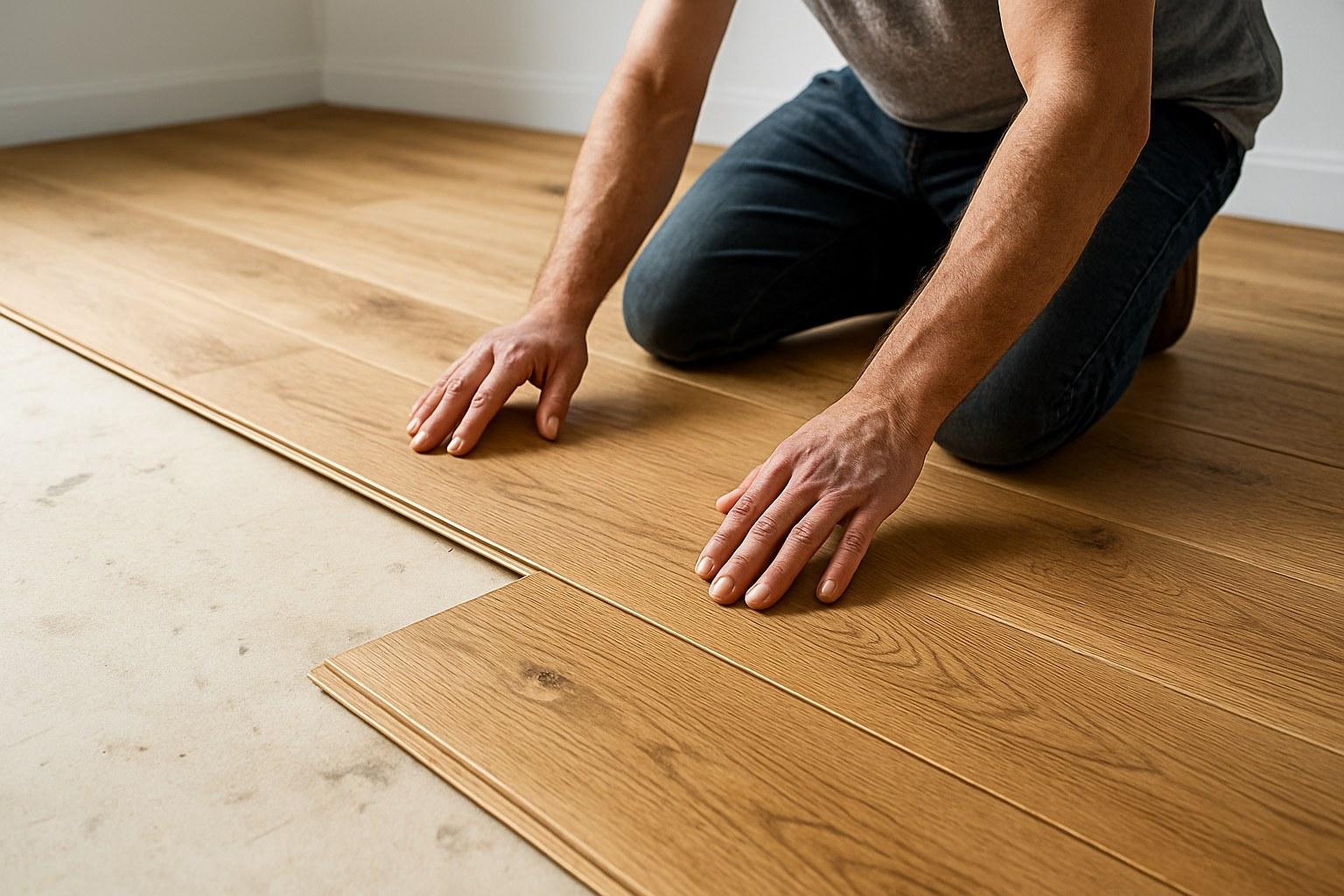
As for doing it yourself: click-lock engineered wide plank is realistic for a careful DIYer. Wide solid nail-down, glue-down, stairs, and big open-plan floors with moisture transitions are where hiring out usually pays for itself. If you want the full method, see our walkthrough on installing hardwood flooring and the test that picks your method.
What Wide Plank Wood Flooring Costs
Split it into materials and labor. For wide-plank hardwood, angi.com puts materials at $4.50 to $18 per square foot and labor at $3 to $4 per square foot in 2026.
By species installed, bobvila.com gives pine at $4.50 to $10, oak and hickory at $6 to $13, and Brazilian walnut at $11 to $20 per square foot. All-in, remodelingexpense.com puts installed wide plank at roughly $12 to $30 per square foot, with basements, stairs, and big floors that cross moisture transitions pushing toward the top.
Wide plank runs above standard board for a simple reason: milling wide boards wastes more lumber, and reclaimed or exotic species pile more cost on top.
| Species | Installed per sq ft | Note |
|---|---|---|
| Pine | $4.50 - $10 | Softest, cheapest, common in farmhouse looks |
| Oak & hickory | $6 - $13 | The workhorse wide plank species |
| Brazilian walnut | $11 - $20 | Dense exotic, top of the range |
Source: bobvila.com's cost data
Is Wider Hardwood More Expensive?
Yes. A wider board costs more per square foot than a narrow strip of the same species, because milling wide boards wastes more lumber and the look commands a premium. Expect wide plank to sit above standard 3-to-5-inch board in any given species.
What Is the Price of Beech Wood Flooring?
Beech isn't a species the cost data here breaks out, so the honest answer is that it varies by supplier and grade. Beech tends to land in the mid range near oak and hickory rather than at the exotic end, but confirm it with a local quote before you budget, since species pricing swings by region and stock.
Where Can I Find a Wood Flooring Clearance Sale?
Look for discontinued runs, overstock lots, and short-board bundles at flooring liquidators and the clearance aisle of big box stores. The catch with wide plank clearance is lot size: buy enough for the whole room plus waste in one dye lot, because you usually can't reorder the exact batch later.
Is Beech Wood Better Than Oak?
Neither wins outright, beech and oak each suit different rooms, and the right pick depends on how much humidity swing the floor will see. Beech is a dense, tight-grained hardwood that takes a smooth, even finish and shows less visible grain pattern than oak, which some homeowners prefer for a cleaner, modern look. Oak's open grain hides small dents and scratches better day to day, which matters in high-traffic rooms.
The bigger difference is stability. Beech moves more with humidity changes than oak does, so it's less forgiving in basements, over radiant heat, or in homes with big seasonal swings, exactly the conditions that already ask more of any wide plank board. Oak's grain structure handles those swings more evenly, which is why most wide plank lines on the shelf default to oak rather than beech.
If you're set on beech, stick to engineered construction and keep the room's humidity steady. For anything prone to swings, oak is the safer call.