
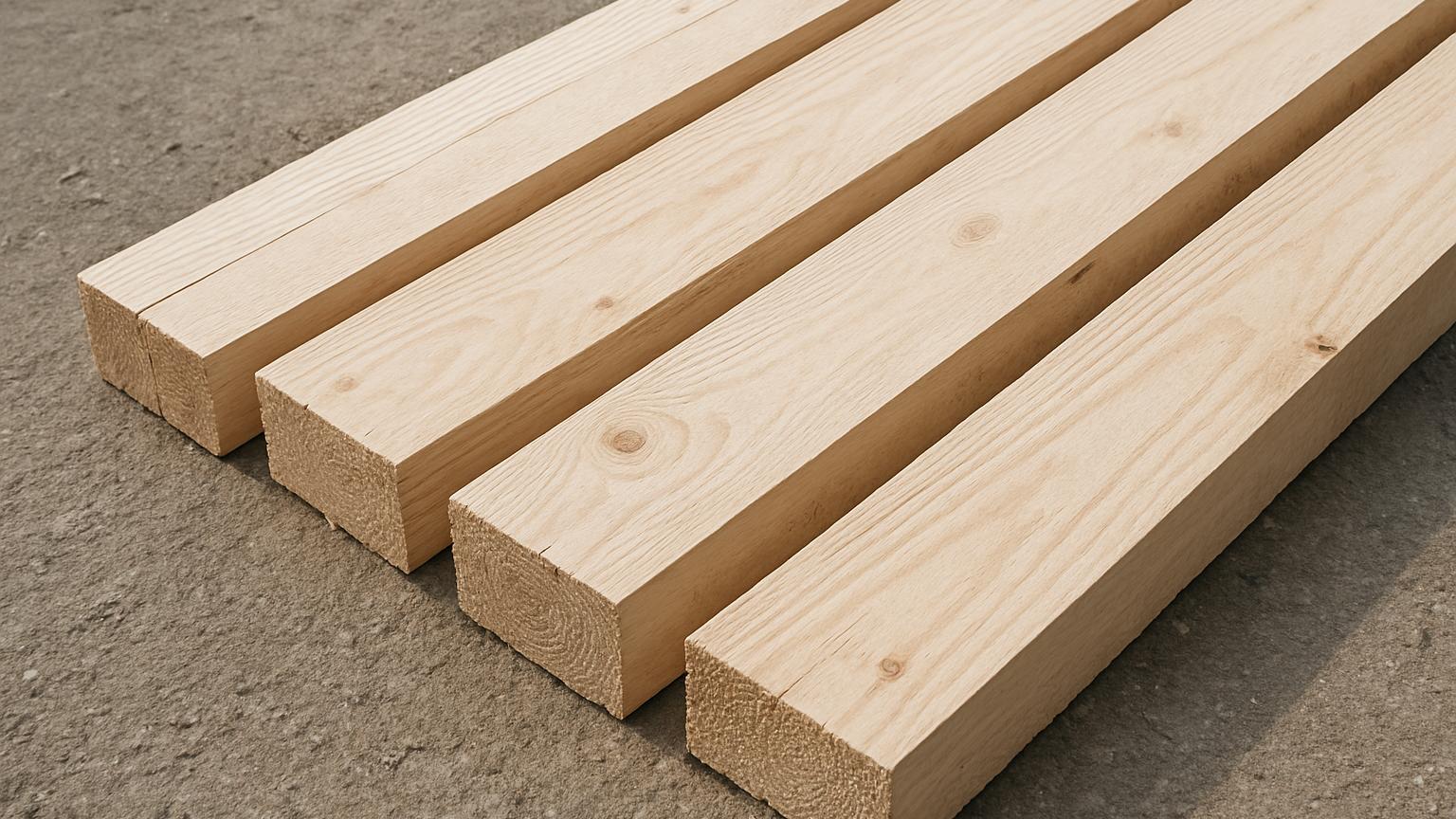
Unfinished wood is raw board with no stain, sealer, or topcoat on it yet, so finishing is a separate job done after you buy it. That split is where the real cost and time hide. Get the sanding wrong and every mill mark shows through the finish.
Key takeaways
- Unfinished wood is raw board with no coating applied; the finish is a separate job done after the wood is in place, not something built into the product.
- Almost all unfinished wood needs sanding before paint or stain: start around 60-80 grit and work up to 120-180 for stain, 220 for paint.
- Finish cost swings by type. brazilianlumber.com lists wax finish at $10-$25 a quart and lacquer at $20-$50 a quart.
- Raw boards are cheap: currentcost.org puts rough-sawn pine at $0.40-$1.60 and oak at $0.60-$2.40 per board.
- Finishing small furniture or craft pieces is DIY-friendly; sanding and finishing a whole floor on site is usually worth hiring out.
What Is Unfinished Wood?
Unfinished wood is raw wood with nothing on the surface yet: no stain, no sealer, no paint, no topcoat. You're buying the wood itself, not the final look.
Think of it like a blank canvas instead of a painting. The color, the sheen, and the protection are all decisions you make later, not things baked into the product.
On prefinished boards, the coating is sprayed and cured at the factory, so you can walk on the floor or set a lamp on the shelf the same day. With unfinished wood, the finishing is still ahead of you, whether you do it or pay someone.
The word means the same thing no matter what you're buying. Flooring boards, furniture blanks, cabinet doors, and little craft cutouts are all "unfinished" in exactly this sense: bare surface, your call on everything else.
The Finish Is a Job, Not a Feature
On an unfinished floor, the sanding, sealing, staining, and curing all happen on site after the boards are nailed or glued down. That's where your cost, your days off the floor, and how well it holds up actually get decided, not at the store.
The finish is only ever as good as what sits under it. A smooth, even coat over a lumpy or damp subfloor still fails, just a little later.
I'll give you a real example. A while back, outside Dayton, a homeowner asked me to price out a refinish on a floor that squeaked every time you crossed the room. The budget was set for sanding and a fresh coat of poly. But that squeak wasn't the finish at all. The subfloor underneath had started to give, and sanding the surface alone wouldn't have fixed the real problem. Now I chase down why a floor squeaks before I ever quote surface work, because a beautiful finish over a bad subfloor is money thrown away.
So before any finish goes on, the floor has to be flat and dry. That's the quiet condition most manufacturer warranties hinge on.
Prefinished wood skips all of this because it shows up sealed and ready. Unfinished gives you a seamless, color-matched surface with no factory bevels between boards. The trade-off is days of dust and drying. If you want the on-site sequence, see the full step-by-step on installing hardwood flooring, and weigh the time cost against what prefinished hardwood gets you for less fuss.
Does Unfinished Wood Need to Be Sanded Before You Paint or Stain It?
Yes, almost always. Raw wood comes with mill marks from the saw and raised grain, and any finish you put on top shows every single one, so you sand first.
Work up through the grits instead of jumping straight to fine. Start coarse at 60-80 to knock down the mill marks and level the stock. Step to 100-120 to smooth it. Then finish at 150-180 for a stain-ready surface, or go to 220 if you're painting.
If you're painting bare wood, prime it first or it drinks the paint unevenly and blotches. A bonding or stain-blocking primer like Zinsser or KILZ costs more per quart than a basic latex primer, but the exact price swings with brand, container size, and where you shop, so check current listings at your local store or home center before you budget for it.
Clean the dust off between grits so grit from the coarse pass doesn't scratch the fine one. For water-based finish, wipe the wood with a damp cloth first to raise the grain, let it dry, then knock it back with a light sand so the finish doesn't roughen up on you.
| Grit and type | What it does | Cost per sheet |
|---|---|---|
| 60-120 (coarse to medium), aluminum oxide | Knock down mill marks, level and smooth rough stock | $0.08-$0.50 |
| 60-120 (coarse to medium), garnet | Cleaner cut on bare hardwood | $0.20-$0.35 |
| 180-220 (fine), aluminum oxide | Stain-ready and paint-ready surface | $0.25-$0.50 |
| 400-600 (specialty ceramic) | Fine furniture and final smoothing | $1.50-$4 |
Source: designtransitionstudio.com and oneanddoneprep.com
A hand block or a random orbital sander handles furniture and small pieces fine. A whole floor is a different animal: that's a drum or big orbital floor sander rental job, and leaving swirl marks on a floor is a lot harder to hide than on a bookshelf.
Unfinished Wood for Furniture, Cabinets, Crafts, and Decor
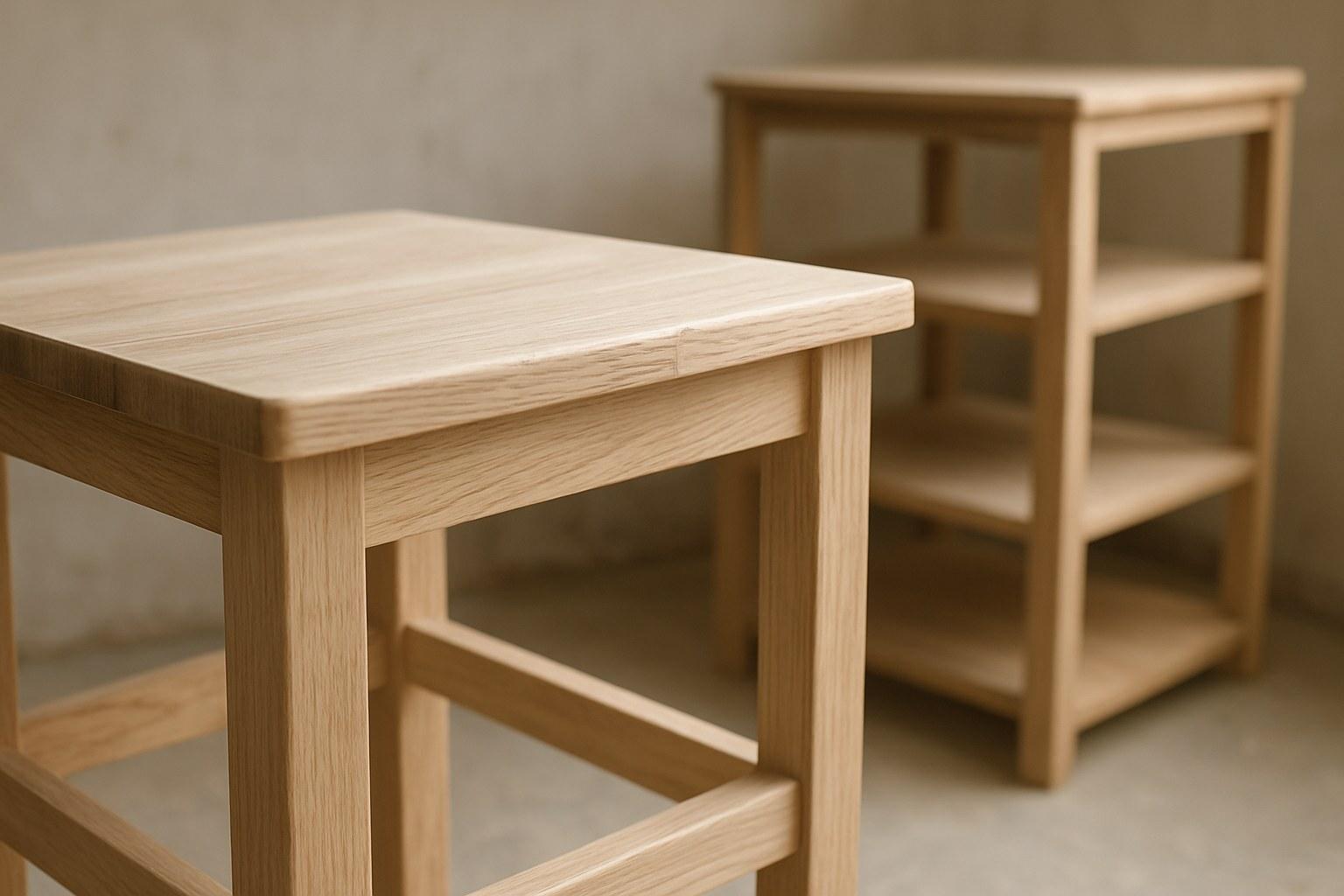
People buy bare wood because it's cheaper than a finished piece, it's usually solid wood rather than a thin coating over cheap core, and you get to pick the exact color and sheen.
Furniture, Cabinets, Dressers, Shelves, and Bookcases
For boards and raw cabinet stock, your spots are lumber yards and home centers. Before you pay, check whether the piece is solid wood or just a veneer skin over particleboard, because a veneer only lets you sand lightly before you cut through it.
Look at the species too. Pine dents if you look at it wrong, while oak and maple take a beating and stay put. Run your hand over the surface as sold; heavy mill marks mean more sanding time on your end. The same species trade-offs come into play when you're choosing hardwood for floors, where picking solid vs. engineered hardwood by species depends on the room and how much wear it gets.
Watch for knots and cracks that will telegraph right through paint, and make sure the thickness matches the load. A thin shelf packed with books will sag no matter how nicely you finish it.
Crafts, Cutouts, and Decor
Craft stores are where the cutouts, letters, and shapes live. These are usually soft wood and sanded fairly smooth already, so you often just need a quick pass with fine paper before paint or stain.
The same checks apply in miniature: softer wood dents, and a knot under a coat of white paint will still show.
Is Unfinished Wood Safe to Use?
Raw, untreated wood carries no finish and no coating that off-gasses, so it's often the safer pick for things like toddler toys or anything that touches food. The flip side is that it's unprotected, so it stains, drinks up moisture, and can splinter.
Anything that gets handled a lot or sees water needs a finish to survive. For food contact, people usually reach for a food-safe oil or wax rather than polyurethane.
Outdoors, untreated wood turns gray and eventually rots unless you seal it or pick a naturally rot-resistant species. For any outdoor coating, follow the product's own directions on coats and reapplying, since that varies by product.
Nothing on the wood means no chemicals to worry about, but it also means no protection, so you match the choice to how the piece gets used.
What Unfinished Wood Costs and Whether to Finish It Yourself
The bare board or blank is almost always cheaper than a finished one, but you pay that difference back in finish materials, drying time, and labor, either yours or a pro's.
Raw boards are genuinely cheap to start. currentcost.org puts rough-sawn pine at $0.40 to $1.60 and rough-sawn oak at $0.60 to $2.40 per board. Milled, graded, or oversized boards cost more than that rough stock.
Then comes the finish, and the price swings a lot by type.
| Finish type | Cost per quart | Notes |
|---|---|---|
| Wax finish | $10-$25 | Soft sheen, easy to apply, light protection |
| Polyurethane | $15-$30 | Tough everyday topcoat |
| Oil finish | $15-$40 | Soaks in, natural look, reapply over time |
| Water-based finish | $20-$40 | Clear, low odor, fast dry |
| Shellac | $20-$45 | Warm tone, dries fast, not great with water |
| Lacquer | $20-$50 | Hard, clear, sprays smooth |
Source: brazilianlumber.com
Per-quart price ranges for common wood finishes, by type.
And think about the room before you commit to finishing raw wood at all. Dry living spaces handle real wood fine. In wet rooms like baths and laundries, a waterproof-core product usually beats finishing bare wood, and the LVP (luxury vinyl plank) vs hardwood comparison lays out which one wins where water is in play.
Sources
- NWFA/NOFMA Unfinished Wood Flooring Grading Standard
- National Wood Flooring Association: Use Real Wood
- NWFA NOFMA Certified Manufacturers Directory
- NWFA Homeowner's Handbook to Real Wood Floors
- NWFA Manufacturing Resources
- Designtransitionstudio.com
- Oneanddoneprep.com
- Brazilianlumber.com