
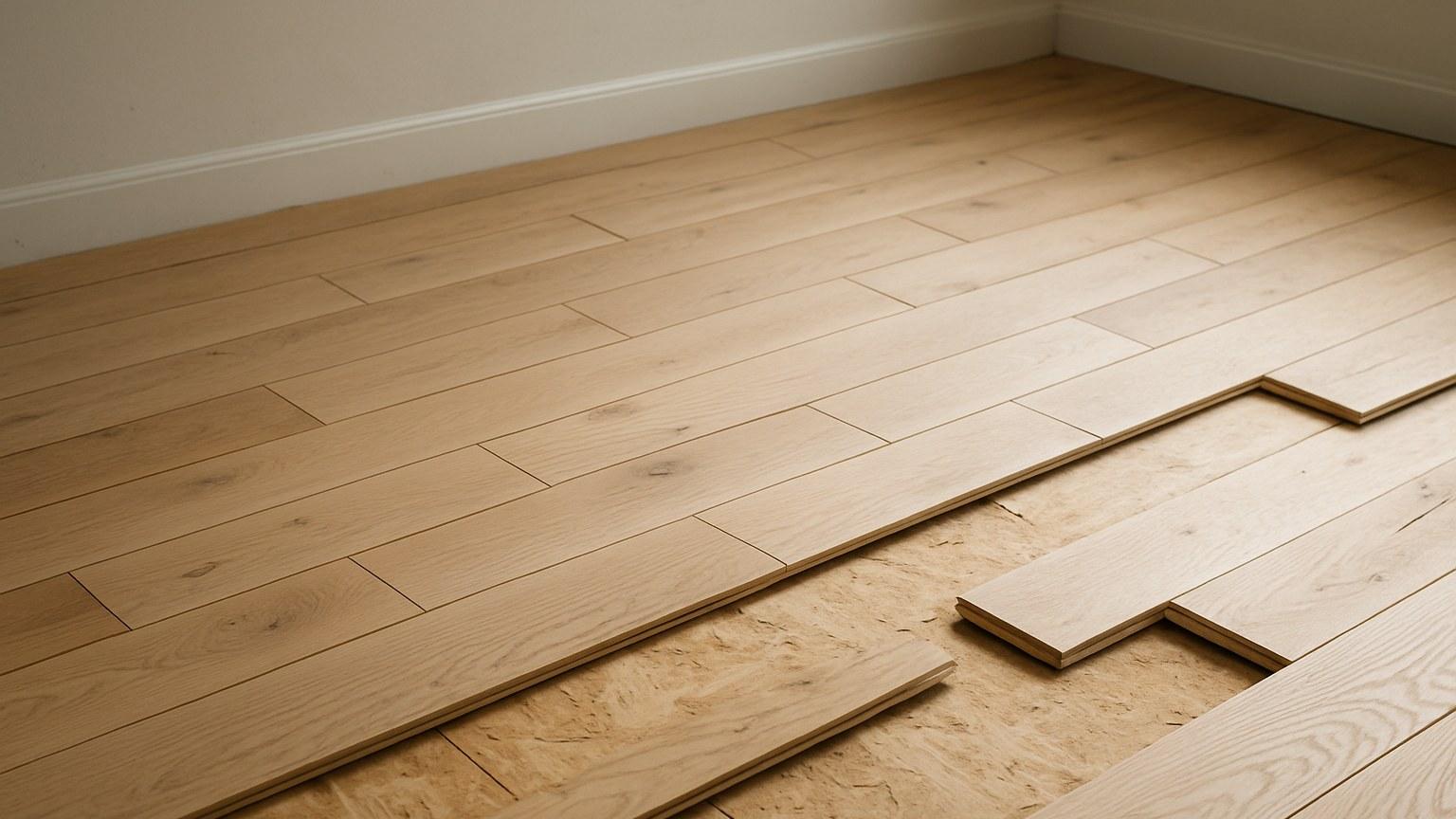
Unfinished wood is real wood that's been cut and milled but hasn't been coated yet, no added color, no sealant, no protective layer, so it's bare and unprotected. The confusing part is cost. People assume unfinished is always cheaper, but it only wins if you do the sanding and sealing yourself. Pay a pro for that work and prefinished often ties it or comes out ahead.
Key takeaways
- Unfinished wood is raw wood with no stain, sealer, or topcoat. It is milled and ready to use, but not protected yet.
- The verdict: unfinished saves money mainly if you DIY the finishing. Pay a pro the roughly $3-$8 per square foot to sand, stain, and seal (hallmarkfloors.com, nerdwallet.com) and prefinished usually comes out even or cheaper.
- Solid unfinished wood can be sanded many times; an engineered board's thin veneer caps how often, so check the veneer thickness before you buy.
- Raw wood must be sealed before you live on it or put it to work. Bare wood soaks up spills, stains, and moisture fast.
- Unfinished's real edge is a custom stain color and a flush, bevel-free surface most prefinished boards can't give you.
What Is Unfinished Wood? Raw, Unsealed, and Unstained
Unfinished wood is real wood that has been cut and milled but hasn't had anything applied to the surface yet, no coating, no color added, no protective layer. It's bare.
The National Wood Flooring Association (NWFA), the trade group whose definitions installers and manufacturers work from, treats "finished" as the step where a protective coat goes on. So "unfinished" just means that step hasn't happened. The board itself is done; the surface isn't.
You can spot it by eye and by touch. Unfinished wood looks paler and matte, with open grain you can feel under your fingers and no sheen at all. On flooring, there are no factory micro-bevels, meaning the tiny angled grooves machined along each board edge. That's why finished-on-site floors sit flush instead of showing a little valley at every seam.
Why sell wood this way at all? Control. Once a factory coat is baked on, the color and sheen are locked. Buy it bare and you pick the stain, the sheen, and the exact look.
Unfinished Wood for Sale: Furniture, Flooring, and Decor
You'll find unfinished wood sold three main ways: as flooring (strips and planks meant to be finished after install), as furniture (tables, dressers, bookshelves ready to stain or paint), and as smaller decor and craft pieces. All of it still needs a finish before it earns its keep.
Is Unfinished Wood Actually Cheaper Than Prefinished?
The bare material often costs a little less than prefinished, but once you add sanding, staining, and sealing, unfinished usually only wins when you do that finishing yourself.
There are two routes. Buy unfinished and finish it on site, or buy prefinished with the factory coat already on. The prefinished board costs more at the counter because that coat is already paid for. The unfinished board costs less at the counter but still needs the labor.
Here's where that labor lands: according to hallmarkfloors.com and nerdwallet.com, a basic site sand-and-finish runs about $3-$8 per square foot, split between materials and labor.
| Cost type | Cost per sq ft |
|---|---|
| Materials (stain and finish products) | $2-$5 |
| Labor (sanding and application) | $1-$3 |
| All-in basic sand-and-finish | $3-$8 |
Site-finishing cost per square foot, split into materials and labor, with a basic all-in range for comparison.
The material price gap between unfinished and prefinished is small, and it swings by species and region. Basements and stairs also cost more to finish than an open room, since prep, dust control, and awkward access all take extra time. That's why one flat number online means little. Get local quotes on both before you decide.
That per-square-foot figure also isn't the whole bill a pro hands you. Their quote usually folds in clearing the room of furniture, hauling off the old carpet or flooring underneath, and bagging up the fine dust a drum sander throws everywhere so it doesn't settle into every vent in the house. None of that shows up as its own line item, but it's real labor time. Do the job yourself and you're the one moving the couch, ripping out the old floor, and running a shop vac after every pass. Skip that part of the math and DIY looks cheaper than it really is; count it honestly and the gap between hiring out and doing it yourself shrinks a lot.
So settle the fight. Pay a pro the $3-$8 to finish bare wood and prefinished usually ties it or comes out cheaper once you count your time. Do the finishing yourself and the savings are real. Species matters too: hallmarkfloors.com and nerdwallet.com put pine refinishing around $4-$7 and oak around $3-$5. If you'd rather skip the finishing entirely, a factory coat on prefinished hardwood floors is what that extra counter price buys you.
What Is Unfinished Wood Flooring? Solid vs Engineered
Unfinished wood flooring is milled board with no factory finish, meant to be sanded and finished after it's installed. The split that matters is solid versus engineered. If you're still weighing which construction and species suit your room, it helps to see solid vs. engineered hardwood compared side by side.
Solid unfinished wood is real wood all the way through. That lets you sand and refinish it many times over its life. The catch is it doesn't like moisture or concrete, so it's a poor fit for basements and slabs.
Engineered unfinished wood is built different. It has a plywood-style core with a thin layer of real wood, called the veneer, on top. That cross-layered core stays flatter in concrete-based and subsurface installations, whereas solid wood is prone to cupping. But the veneer thickness, which the maker publishes, caps how many times you can sand it, if at all. So "can I refinish this later" is a spec question, not a yes or no. Check the number before you buy.
The NWFA runs a Refinishable Program that flags engineered products carrying enough veneer to take a real sanding. It's a useful tell when you're shopping.
Whichever you pick, flatness, moisture, and acclimation checks come first, before you finish anything. Acclimation just means letting the wood sit in the room for a few days so it adjusts to that room's temperature and humidity before you install it. That prep is the part that makes or breaks the job, and it's the same groundwork covered in installing hardwood flooring.
Can You Leave Wood Unfinished? Why Sealing Matters
You can leave wood unfinished, but you usually shouldn't for anything you live on or use. Raw wood drinks in water, dirt, and oils, and it grays over time. Bare means unprotected.
For flooring, unfinished is a stage, not a finished floor. Seal it before anyone walks on it, or the first spilled drink and a week of foot traffic will stain it fast.
For furniture and decor, it depends on use. A low-touch shelf might get by with a wax or oil rub. A tabletop or a chair seat needs a real protective topcoat, because those surfaces take abuse.
Treating raw wood for indoor use follows a simple order. Clean it and let it fully dry. Sand it smooth, working up through finer grits. Stain it if you want color, which is optional. Then seal it with a protective topcoat, adding more coats for floors and anything that gets used hard. Let each coat cure before you put the piece back to work. Skip the cure time and the finish bruises before it's set.
Unfinished vs Prefinished: Which Should You Choose?
Pick unfinished when you want a custom stain color, a flush bevel-free surface, or you're patching into an existing floor and plan to finish it yourself. Pick prefinished when you want the floor done fast, or you're hiring out the labor anyway and the factory coat saves a step.
On DIY versus hiring, be realistic. Sanding and finishing a single room is doable for a handy homeowner, especially once you've got the gear. It's dusty, and the stain and seal coats are where skill shows, but a bedroom is a fair first job. Renting a floor sander is the cheap part; the technique is the part that takes practice. Big open floors and stairs are usually worth hiring out, because the mistakes there are hard to hide and costly to redo.
One thing I warn clients about every time: new wood won't match old wood right away. On one job we finished fresh unfinished boards right up against an older room, same species, same stain. The new wood came out noticeably paler than the aged floor, and that mismatch at the doorway bugged the homeowner for weeks. Aged wood darkens and shifts with time and light, and the new stuff has to catch up. It eventually blends, but not on day one.
And if the room is really fighting you on moisture, a basement or a slab that stays damp, think hard before you commit to finishing any real wood there. In those spots a plank floor can be the smarter call, and it's worth weighing LVP (luxury vinyl plank) against hardwood before you buy a single board.