
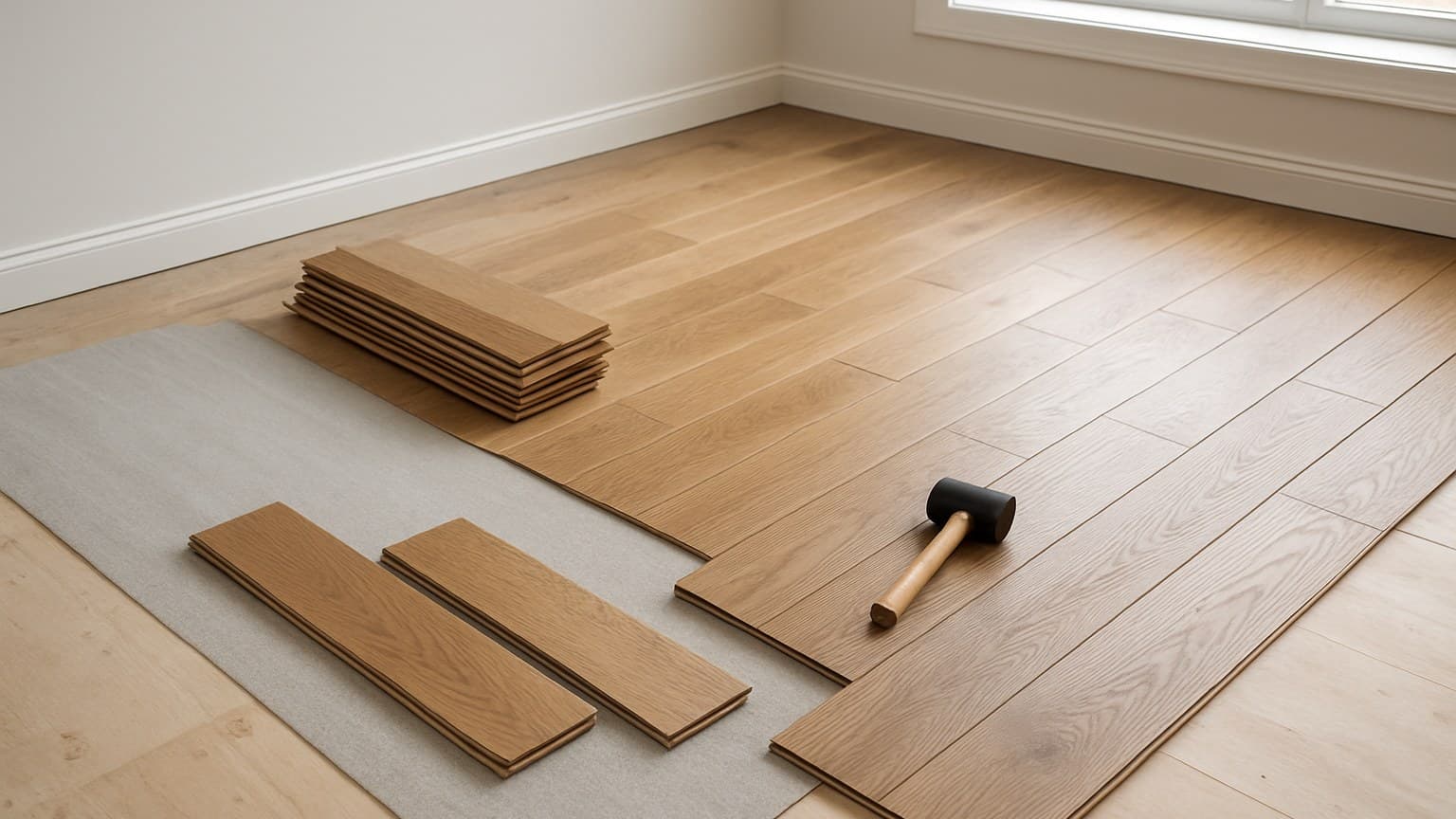
Denise, a homeowner in Dayton, Ohio, called me in after water damage forced a redo of her dining room floor, and picking between prefinished and unfinished turned out to be more than any pros-and-cons list could settle. The truth is messier: her subfloor, her renovation schedule, and one tiny beveled edge decided this more than price did. Here's how it played out on her floor, and how the same trade-off will decide yours.
Key takeaways
- Prefinished installs in 1-2 days with a tougher factory aluminum-oxide coat; unfinished takes days to a week with dust and fumes but gives a flat, seamless, fully custom look.
- NWFA/NOFMA thickness specs: unfinished solid runs 0.750" plus or minus 0.015"; factory-finished solid runs 0.725"-0.760".
- A 3/4-inch solid floor realistically takes 4-6 full sandings over its life; engineered's refinish count is capped by veneer thickness and is a per-product spec.
- The real prefinished catch is the micro-bevel V-groove seam that collects grit; unfinished sanded flat avoids it but needs a flatter subfloor.
- Installed costs often land close: prefinished carries higher material and lower labor, unfinished carries lower material and higher labor.
The One Trade-Off That Actually Decides This
The choice comes down to one thing: how flat and seamless you want the finished floor, weighed against how many days of dust, fumes, and contractor delay you can stomach. Everything else is detail.
I've watched buyers get burned in two ways. One camp picks prefinished, then spends years bothered by the small beveled seam at every board joint. The other picks unfinished, then lives through several days of sanding dust, polyurethane fumes, and a room they can't walk on. Neither is a defect. Both are just the deal you made without knowing it.
Here's the quick steer. If your floor is going over concrete or below grade and you want it done in two days, prefinished fits. If you're matching an old floor or you want a dead-flat, seamless surface with no grooves, unfinished earns its extra mess.
Below I'll back that up with real NWFA thickness specs, the actual sanding math, and cost ranges split into material and labor.
What 'Prefinished' and 'Unfinished' Actually Mean
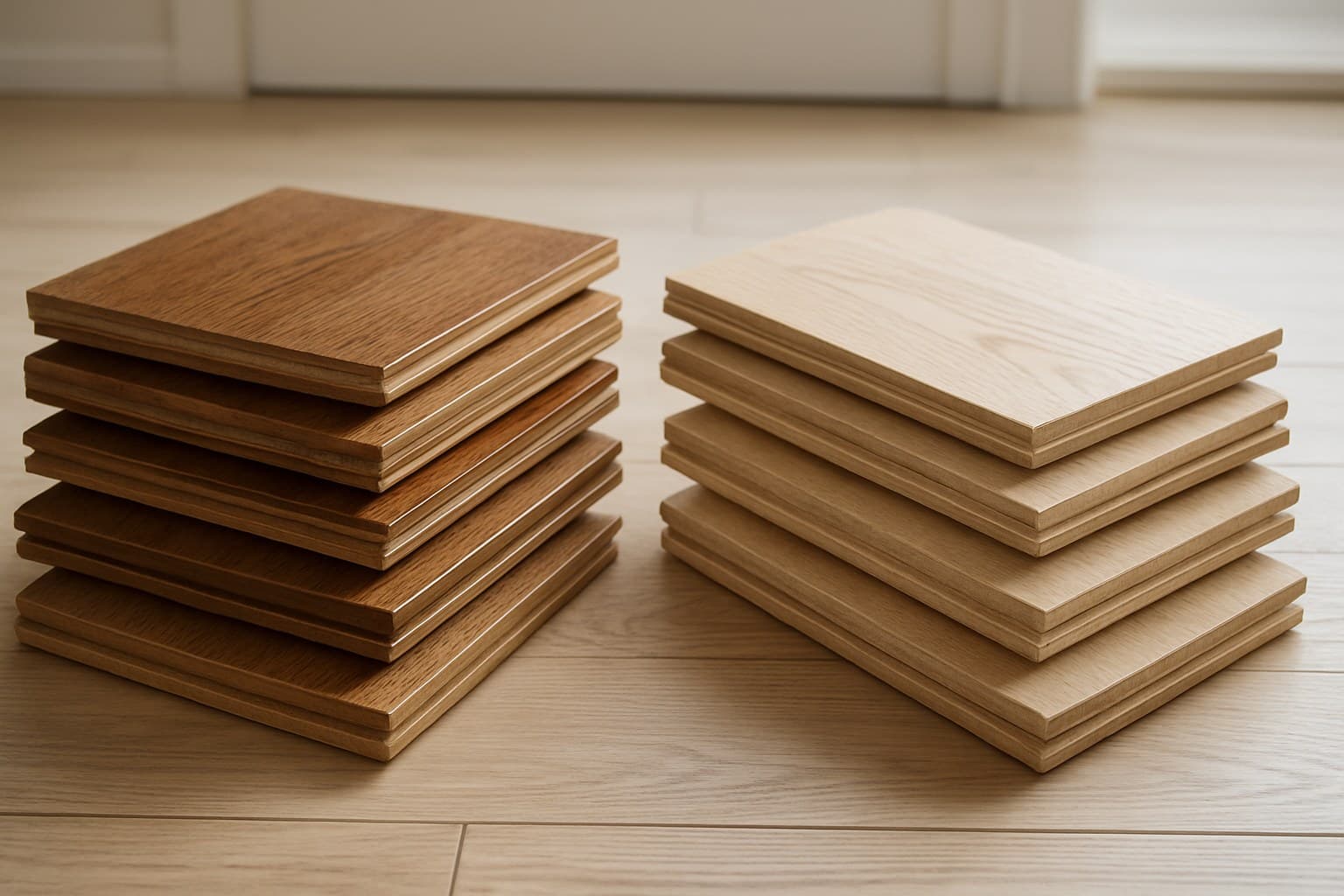
Prefinished hardwood is milled, stained, and sealed at the factory, usually with several UV-cured aluminum-oxide coats (a clear, very hard top layer baked on under ultraviolet light). It arrives ready to walk on the same day it goes down.
Unfinished hardwood, sometimes called raw, goes in bare. Then it gets sanded flat, stained, and coated on site over several steps before anyone can use the room.
Both come as solid or engineered. Solid is one piece of wood through and through. Engineered has a plywood-style core under a real wood top layer, which makes it more stable over concrete. The NWFA's (National Wood Flooring Association) Homeowner's Handbook to Real Wood Floors generally advises against installing solid wood below grade, so if you're going over a slab or in a basement, look at engineered hardwood built to hold up over concrete first. If you're still weighing solid against engineered beyond the concrete question, this breakdown of picking solid vs engineered hardwood walks through species and room-by-room fit too.
I'm keeping this page a straight comparison. If you want the full checklist on one type, the deeper guide on what to settle before you buy prefinished hardwood covers species, grade, and warranty in detail.
Installation Time and Mess, Side by Side
Prefinished wins on speed and cleanliness. A typical room installs in one to two days, you walk on it right away, and there's almost no dust or finish smell because the coating cured at the factory.
Unfinished is a different week. You install the bare boards, then run multiple sanding passes, stain, and two to three finish coats with cure time between them. The room stays off-limits for several days up to a week, depending on the finish.
That site-finish reality is worth spelling out. Sanding throws fine dust everywhere, even with good vacuums on the machines. Oil-based polyurethane cures slower and smells stronger; water-based poly has lower VOC fumes (the odor that off-gasses as it dries) and dries faster, but usually costs more. A site floor can be buffed and recoated later to freshen it, instead of a full re-sand.
On the DIY question, I'll be straight. Nailing down prefinished planks is realistic for a confident DIYer with a floor nailer and patience. Site sanding and finishing is where I'd hire out, because a drum sander gouges a floor fast in unpracticed hands, and an uneven coat shows forever. If you want the full sequence, see the steps for installing hardwood flooring the right way.
Either type needs the same starting point: a flat, dry subfloor. NWFA installation guidelines call for checking flatness with a long straightedge and confirming moisture levels with a meter (a small tool that reads how much water is in the wood or slab) before a single board goes down. I've walked slabs that felt bone-dry to the hand but read wet on the meter, and humps I almost talked myself into ignoring. Catching that before the first board goes down costs far less than tearing up new flooring later. This matters even more if you're installing wide plank hardwood flooring, since broader boards amplify every subfloor imperfection instead of hiding it in narrow seams.
Durability and Finish Types: What the Specs Actually Say
The factory finish is genuinely tougher. UV-cured aluminum oxide is a harder, more scratch-resistant surface than anything you can roll on at the jobsite. Finish warranties back that up, but they are always product-specific, some manufacturers advertise finish warranties in the 25- to 50-year range, but that coverage is tied to the coating on that specific product line, never an industry-wide promise, so read the warranty sheet for the exact product you're buying. Johnson Hardwood is one factory-finish brand worth vetting this way, and what to know before buying Johnson Hardwood breaks down its warranty terms and finish options line by line.
Site finish is oil-based or water-based polyurethane. It's a thinner build than the stacked factory coats, so it wears through sooner, but it's seamless and easy to recoat when it dulls without pulling up a board.
Here are the trade tolerances most comparison pages skip. According to the NWFA/NOFMA Unfinished Wood Flooring Standard and the NWFA/NOFMA Factory Finished Wood Flooring Standard, unfinished solid runs 0.750 inch, give or take 0.015 inch (National Oak Flooring Manufacturers Association). Factory-finished solid runs a hair thinner, 0.725 to 0.760 inch, because the mill sands and coats it before it ships.
One honest separation: a tougher factory coat still wears and fails first at the edges and seams, not out in the open field of the plank. Water and grit attack the joints. So "harder finish" does not mean "waterproof floor," and no hardwood is.
| Feature | Prefinished | Unfinished |
|---|---|---|
| Finish type | Factory UV-cured aluminum oxide | Site-applied oil or water-based poly |
| Surface hardness | Harder, more scratch-resistant coat | Softer build, but easy to recoat |
| Thickness tolerance, solid (NWFA/NOFMA) | 0.725"-0.760" | 0.750" plus or minus 0.015" |
| Finish warranty | Often 25-50 yr (product-specific) | Set by the finish you pick |
| Seam look | Micro-bevel V-groove | Flat, flush seam |
Source: the NWFA/NOFMA published thickness tolerances I check solid-wood deliveries against
Finish and build specs side by side for solid prefinished and unfinished hardwood.
The V-Groove Debate: Why Installers Split on It
Here's the term in plain words. Factory boards get a tiny beveled edge, called a micro-bevel or V-groove, machined along each plank. It hides small height differences where one board sits a touch higher than its neighbor. An unfinished floor, sanded flat on site after install, ends up with a square, flush seam and no groove at all.
Installers genuinely split on this. Some say the bevel is barely noticeable and never think about it. Others refuse it, calling the little valley a dirt trap that outlines every board joint on the floor.
My take from the jobs: the bevel is doing real work. It forgives an uneven subfloor and plank-to-plank height variation, which is a legit install advantage, especially in older houses. The flat, seamless unfinished look is cleaner and I prefer it in a formal room, but it demands a flatter subfloor to pull off, or the seams telegraph every dip.
Square-edge prefinished does exist for people who want the factory coat without the groove. It usually costs more and is far less forgiving of subfloor humps, so you're back to needing a very flat floor anyway.
Cost Breakdown: Material vs. Installed
There is no single national price, so I split every figure into material and labor. Prefinished tends to carry higher material cost but lower labor, because nobody is sanding and finishing on site. Unfinished material can run cheaper per square foot, but the added labor to install, sand, and coat usually eats that gap.
Installed totals often land close. So speed and the look you want decide this more than price does.
| Cost piece | Low | High |
|---|---|---|
| Prefinished labor | $3/sq ft | $6/sq ft |
| Unfinished material | $3/sq ft | $8/sq ft |
| Prefinished material | $4/sq ft | $10/sq ft |
| Unfinished labor (install + sand + finish) | $6/sq ft | $11/sq ft |
Per-square-foot material and labor ranges for prefinished vs. unfinished hardwood.
One more thing on either type: stairs and basement or below-grade jobs cost more than an open room. Stairs are slow, custom cuts, and a slab needs extra moisture prep. For a full room-by-room breakdown, the guide on what hardwood flooring costs from 500 to 2,500 sq ft runs the numbers, and the seven cost factors behind hardwood pricing explains what moves them.
Refinishing Life: How Many Times Can You Sand?
A solid 3/4-inch floor realistically takes about 4 to 6 full sandings over its whole life. That number comes from simple math, not a guess.
On a 3/4-inch solid board, only the wood above the tongue can be sanded, roughly a quarter inch. The tongue is the sticking-out edge that locks into the next board, and sanding past it ruins the floor. Each full sanding removes about 1/32 to 1/16 of an inch. Divide the wood you have by the wood each sanding takes, and you get the count.
| Input | Figure |
|---|---|
| Sandable wood above tongue | ~0.25 in |
| Wood removed per full sanding | 0.031-0.063 in (1/32-1/16) |
| Full sandings over life | ~4-6 |
| Worked example | 0.25 in ÷ 0.05 in ≈ 5 sandings |
Source: gauging leftover wear above the tongue on the 3/4-inch solid oak floors I've re-sanded
How the sanding math works out on a 3/4-inch solid floor over its life.
Two catches. On a prefinished floor, the very first sanding also grinds off that micro-bevel, so you lose the groove but flatten the seams at the same time. And on engineered wood, refinishing isn't about total thickness at all; it's capped by the veneer (the real-wood top layer over the core). Per NWFA's guidance on its Refinishable Program, thin veneers may allow zero to one light sanding, and that number is published per product, so read the spec before you assume you can ever refinish it.
The buff-and-recoat cycle helps both types. A light screen and a fresh coat every several years keeps the surface fresh and pushes a full re-sand years down the road.
Which One Should You Choose?
Pick prefinished if you want the floor done in one to two days, you're going over concrete or below grade, you want the hardest factory coat, or you simply can't have a room full of dust and fumes. The micro-bevel is the price of admission, and for most homes it disappears once furniture is back.
Pick unfinished if you're matching an existing floor, you want a dead-flat, seamless, fully custom stain and sheen, or you need square edges with no grooves. You'll pay for it in days of mess and higher labor, and you'll need a flatter, drier subfloor to make it look right.
If cost is your deciding factor, stop deciding on cost, because installed totals usually land close. Let speed, site conditions, and the seam look make the call. And if you've landed on prefinished, the roundup of the best prefinished hardwood floors worth buying is a useful next read, since it names which lines actually back their finish warranty.