
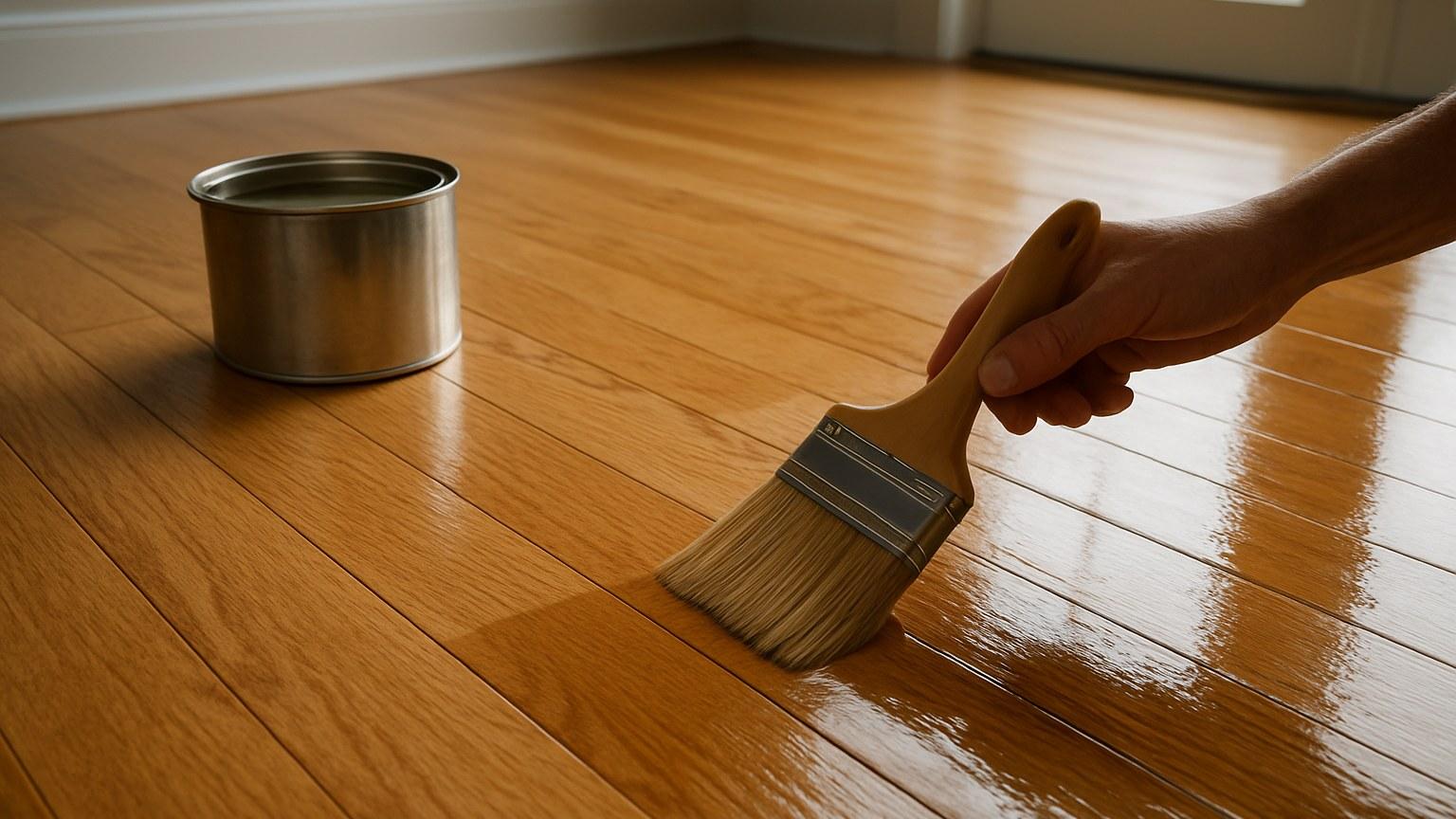
If you care most about fixing one worn spot without sanding the whole floor, hardwax oil is the only common hardwood floor finish you can truly patch in place; every polyurethane makes you recoat a whole room to hide the repair. That difference matters more than the durability numbers most guides lead with, because the finish that lasts longest is often the one you can't touch up at all. Below I rank all eight finishes by the thing that actually bites you years after the floor goes down.
I've laid and refinished enough floors to know the call people regret isn't picking a "weak" finish. It's picking a tough one, then learning the hard way that one scuffed doorway means renting a sander for the entire room.
Key takeaways
- The real question isn't which finish lasts longest, it's whether you can fix one worn spot without sanding the whole floor. Film finishes like polyurethane say no; penetrating finishes like hardwax oil say yes.
- Water-based polyurethane is the best all-round pick for most homes: clear, low-odor, fast-drying, and tough.
- Hardwax oil is the most repairable finish. You re-oil just the worn area and it blends, no full refinish.
- Moisture-cured, acid-cure (Swedish), and factory aluminum oxide finishes are the hardest-wearing, but when they finally fail you're sanding the floor or replacing boards.
- Matte and satin sheens hide scratches and dust best; gloss shows every mark and footprint.
Every Hardwood Floor Finish, Ranked by Whether You Can Spot-Fix It
The split that decides everything comes down to this: a film finish sits on top of the wood as a hard clear coat, so scratches live in that film and you can't blend a single patch invisibly. A penetrating finish soaks into the wood, so there's no surface layer to scratch through, and you re-treat just the worn area.
The polyurethanes, the moisture-cured and acid-cure finishes, and factory aluminum oxide are all film finishes. Hardwax oil, natural oils, and paste wax are penetrating. That's the whole fork in the road.
Most guides keep these in two separate buckets, surface finishes and penetrating finishes, and bolt factory finishes on as a third. I'm putting all eight in one scheme so you can see them against each other.
If you just want the safe answer: water-based polyurethane is a smart all-round pick for most homes, clear and fast-drying and tough. If being able to spot-repair it yourself matters most, hardwax oil wins. If you want the hardest-wearing surface money can buy and you accept you'll never touch it up, that's moisture-cured or a factory aluminum oxide coat.
Each finish below gets the same three things: how it fails, whether you can recoat just the worn area, and rough dry speed.
| Finish | How it fails | Can you spot-fix it? | Dry speed |
|---|---|---|---|
| Oil-based polyurethane | Ambers over time; scratches show in traffic lanes | No, recoat the whole room to blend | Slow |
| Water-based polyurethane | Scratches and scuffs in the film | Hard, recoat by area not by spot | Fast |
| Moisture-cured / acid-cure (Swedish) | Rarely fails; very hard film | No, full sand when it finally goes | Fast, but strong fumes, pro only |
| Factory UV-cured / aluminum oxide | Wears very slowly | No, won't rebond on site; replace boards or sand | Cured at the factory |
| Hardwax oil / natural oil | Dulls and dries out, not scratched through | Yes, clean and re-oil the spot | Moderate |
| Wood floor wax | Water-spots and dulls | Yes, rewax and buff the spot | Fast |
Hardwood floor finishes compared by how they fail and whether a single worn area can be repaired without refinishing the whole floor.
Oil-Based Polyurethane
This is the warm, amber-toned classic, and that amber is the catch. Oil-based poly darkens under sunlight over the years, so a rug moved after five years leaves a lighter ghost where the sun never reached. The film also scratches at doorways and in the main walking paths.
Spot-fix verdict: poor. Even a screen-and-recoat, where you scuff the old finish and roll a fresh coat over the whole room, leaves new clear finish sitting next to older ambered finish. You'll see the seam. In practice you recoat the whole room, not the worn spot.
It's slow to dry and cure next to water-based, and the solvent smell hangs around for days. Oil-based poly runs about $20 to $45 per gallon per bobvila.com, with heavier-duty lines higher. That's material cost only, applying it adds labor on top, and stairs or cut-up rooms with lots of edges take longer per gallon than one open room, so expect the finishing bill to climb there.
Water-Based Polyurethane
Water-based poly is a strong all-round finish for most homes, and both of the guides I trust on this agree: it's durable, low-odor, and fast-drying, and it dries clear instead of yellowing. That clarity is why white oak and maple keep their true color under it instead of going gold.
Bona is a water-based finish line you'll find at most pro flooring supply stores, and it's one I reach for often on site-finished jobs.
How it fails and the spot-fix verdict: it's still a film on top, so scratches live in the finish. You can recoat an area, but blending one worn patch so it disappears is hard. Plan on recoating by room, not by spot.
Cost runs around $25 to $55 per gallon per bobvila.com, with premium commercial lines running $50 to $90 per gallon per rusticwoodfloorsupply.com. Those numbers cover the finish itself, not the labor to apply it, expect to pay more for stairs and chopped-up floor plans, since a pro spends more time per gallon in those spots than in one open room.
One job taught me to respect the drying window. I let a finish coat go down while painters were spraying trim in a neighboring room, and the overspray drifted onto the wet floor. I had to screen and recoat the whole thing and lost a full day. I've learned not to apply finish while another trade is still working inside the house.
Water-Based vs Oil-Based: Which Should You Pick?
Pick water-based if you want the floor to stay the color it is now, you want back on it sooner, and you can't live with days of solvent smell. Pick oil-based if you specifically want that warm amber glow and you don't mind that it'll keep deepening. Neither one lets you fix a single worn spot cleanly, so don't choose between them on repairability. They're a tie there, and the tie is "no."
Moisture-Cured and Swedish/Acid-Cure Finishes
These are the toughest finishes you can put down on site, which is why they show up in school gyms and busy commercial floors. If raw abrasion resistance is what you care about, nothing brushed on beats them.
The tradeoff is fumes. They carry high levels of VOCs, the volatile organic compounds, which are the solvents that evaporate as the finish cures. The National Wood Flooring Association, the trade group known as the NWFA, publishes fact sheets on finish VOCs and odors. These are pro-applied with real ventilation, never a weekend DIY job. Glitsa is a Swedish, or acid-cure, brand you may see named.
Spot-fix verdict: none worth trying. They almost never fail, but when they finally do, you're sanding the floor to bare wood. Acid-cured and Swedish both run about $50 to $80 per gallon per bobvila.com. That's material price alone, since these need pro application with real ventilation, labor is part of nearly every job here, and stairs or tight rooms add to that labor cost.
Factory Finishes: UV-Cured and Aluminum Oxide
On prefinished boards the finish is sprayed at the factory and hardened under ultraviolet, or UV, lamps, usually with aluminum oxide mixed into the top coats. Aluminum oxide is one of the hardest things you can put on a floor, so this is a long-wearing surface. How long the warranty runs depends on the specific product line, so check the spec sheet for the exact board you're buying instead of assuming every prefinished floor carries the same coverage.
The machining under that finish is held to a standard too. The NWFA, through its NOFMA (National Oak Flooring Manufacturers Association) standards arm, sets the specs factory floors are built to, including the long-running 3/4-inch solid standard. That 3/4-inch solid standard is one of the first things worth understanding if you're still comparing solid vs. engineered hardwood floors and picking a species for the room.
The catch with repairs is this: that ultra-hard aluminum oxide layer won't take a fresh recoat on site without special abrasion to rough it up first, and even then the bond is iffy. So a worn or gouged board usually means swapping out boards or a full sand-and-refinish. Conversion varnish, a two-part catalyzed finish, lives in the same durable-but-unforgiving family.
Hardwax Oil and Natural Oils (Tung and Linseed)
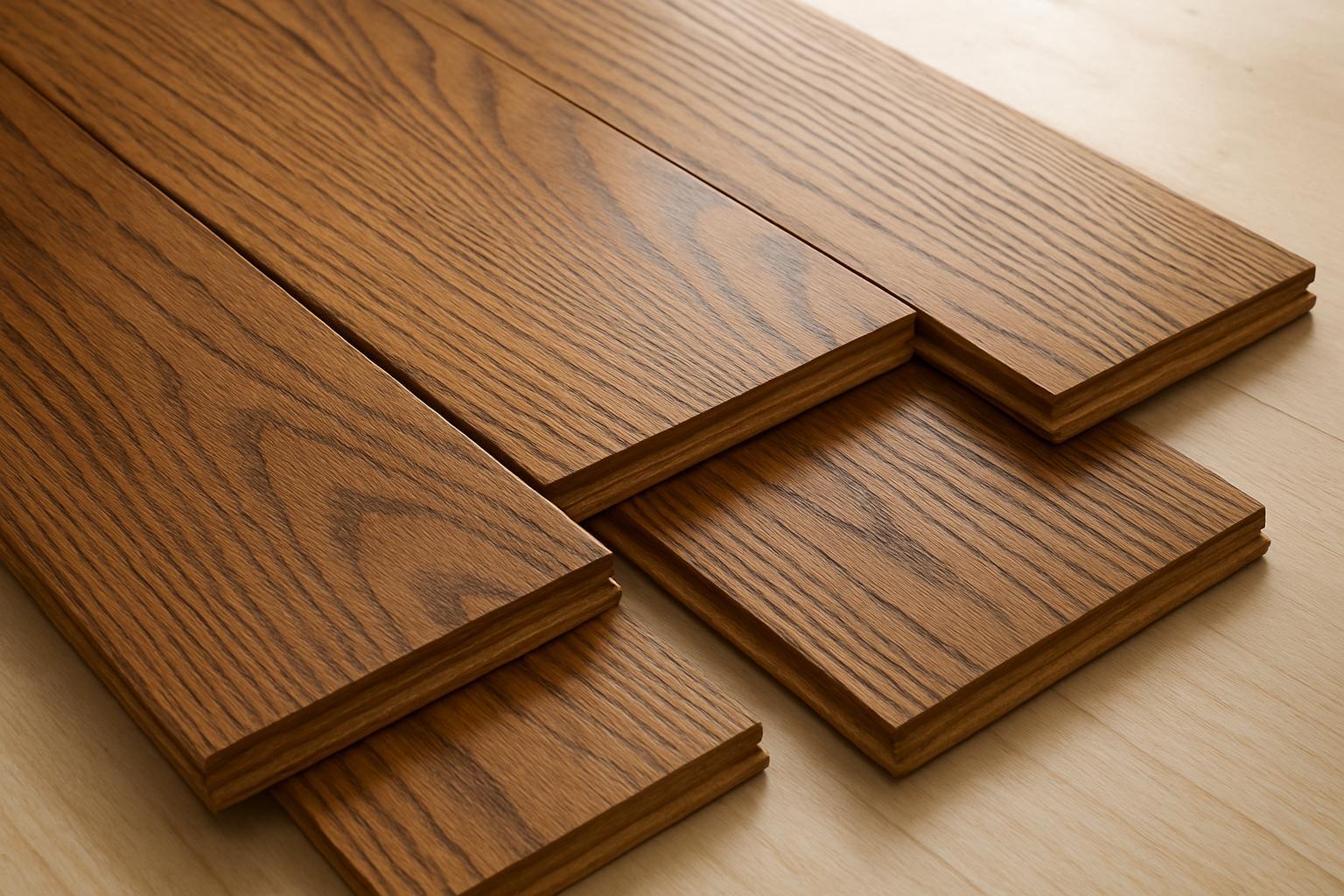
This is the repairability champion. A penetrating finish soaks into the wood instead of forming a film on top, so there's no hard surface layer to scratch through in the first place.
Spot-fix verdict: the best of any finish here. Clean a dull or worn area, wipe on fresh oil, buff it, and it blends with no sanding and no telltale patch. That's the reason I steer people who dread refinishing toward it.
The price of that is upkeep. High-traffic paths need re-oiling on a schedule, and the look is a low, natural matte rather than a built-up shine. If you want a mirror, this isn't it.
Terms matter here. Hardwax oil blends oil and wax into one product, while straight natural tung or linseed oil is simpler and softer underfoot. Hardwax oil ranges widely, roughly $70 to $550 per gallon per bobvila.com depending on the brand. Again, that's material cost only, applying it, especially on stairs or small rooms with more edges to work around, adds separate labor cost on top.
Wood Floor Wax
Paste or liquid wax is the oldest finish there is, buffed to a soft low sheen, and it's common on older and historic floors that have never seen polyurethane.
Spot-fix verdict: easy. Rewax the worn area, buff it in, done, no refinishing gear needed.
The downsides are real and worth weighing. Low durability, it water-spots fast, you can't wet-mop it, and if you ever decide to switch to polyurethane later, the wax has to be stripped off completely first or the poly won't stick. Wax runs about $35 to $55 per gallon per hallmarkfloors.com, and that's just the wax, buffing it in by hand or machine is separate labor, and stairs take longer to work than open floor. Best for low-traffic or period rooms, not a busy kitchen.
Picking a Sheen and Color
Sheen is the quiet lever on how worn your floor looks day to day, and it's independent of which finish you pick. Matte and satin scatter light, so they hide scratches, dust, and pet hair. Gloss reflects light in a straight line, so it shows every scuff, every footprint, and every speck. In a house with kids or a dog, matte or satin will look clean longer between cleanings.
Color is the other choice. Most film finishes let you stain the wood first, so you control the shade. Penetrating oils come either clear or tinted and tend to keep the wood's natural tone.
If you're still deciding between a site-finished floor and buying boards already coated, the repair math above is the real deciding factor, and it's worth reading alongside how the install itself goes before you rent a floor sander for a job you may not need to do.
What Are the Pros and Cons of Smooth-Finished vs. Wire-Brushed Hardwood?
Smooth hardwood has a flat, clean surface, while wire-brushed hardwood has shallow grooves pressed into the grain with steel brushes before the finish goes on. Each hides different problems and shows different ones.
Smooth boards give you that classic polished look, and they're easier to clean because there are no grooves to trap dust or grit underfoot. The tradeoff is that every scratch and dent shows clearly on a flat surface, especially under a gloss or semi-gloss sheen.
Wire-brushed boards hide daily wear much better. The texture breaks up light, so scuffs, pet nails, and small dents blend into the grooves instead of standing out. That makes it a solid pick for a busy household with kids or dogs. The downside is the texture can trap dust and pet hair, so it needs more frequent sweeping or vacuuming to stay clean, and it reads as a more rustic, less formal look than smooth boards.
Either texture can take any of the finishes above, the texture is about feel and hiding wear, the finish is about how it fails and whether you can spot-fix it.