
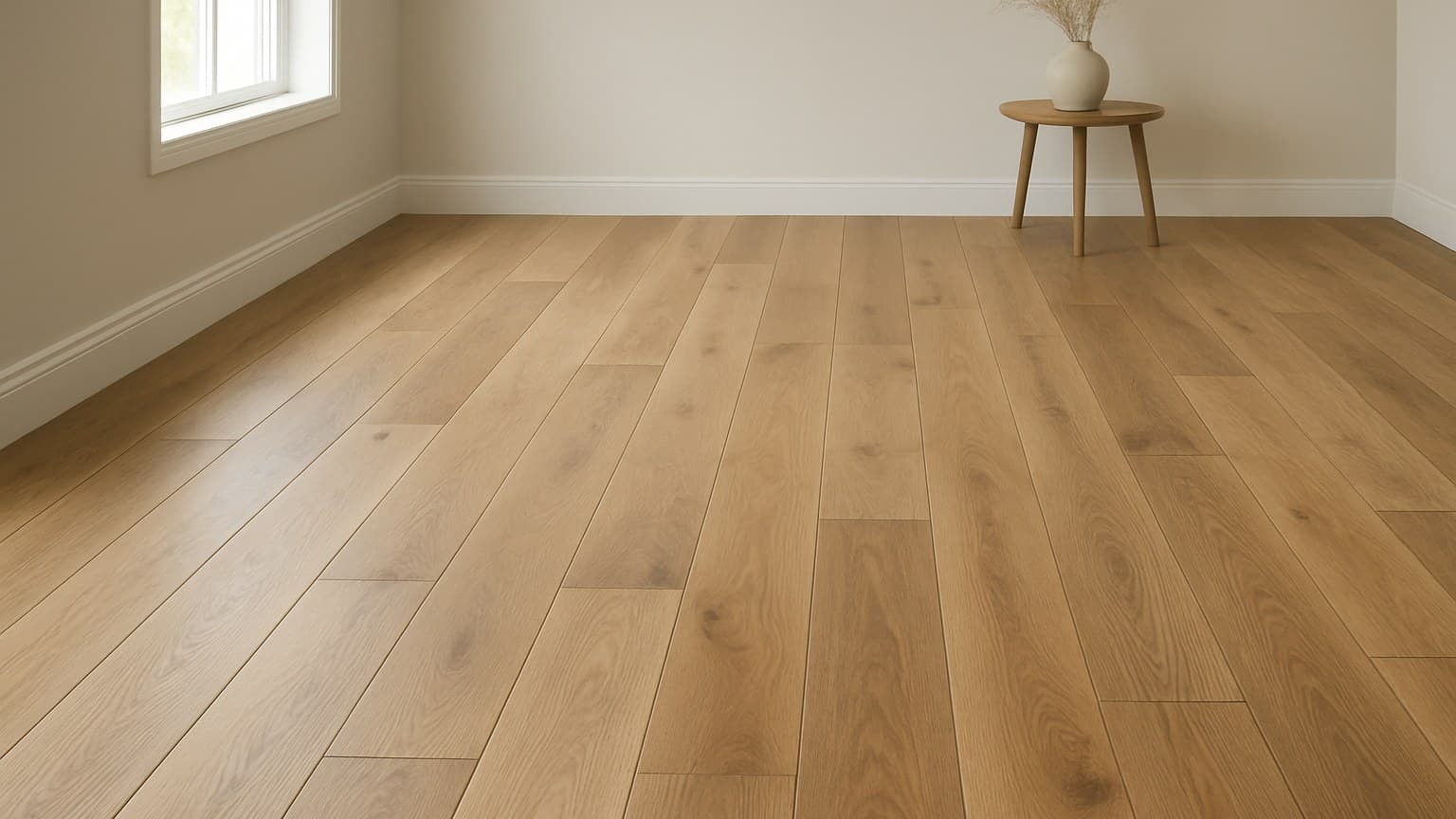
A customer in Aurora, Illinois showed me the box for her new floor last month and asked why her installer called it "Pergo hardwood" when everyone knows Pergo makes laminate. Here's the direct answer: Pergo hardwood is engineered wood, a real hardwood veneer glued over a plywood-style core, and it's a completely different product from Pergo's laminate line. Two Pergo products can share almost the same name and still refinish, age, and last completely differently, so the box tells you nothing useful, the spec sheet tells you everything.
Key takeaways
- Pergo hardwood is engineered wood: a real wood veneer bonded over a plywood-style core. It is not laminate, and it is not solid hardwood.
- Whether a line can be refinished comes down to veneer thickness on that specific product's spec sheet, not the Pergo name. Thin veneers sand once at most, or never.
- StayClean+ is a surface finish that resists spills; it does not make seams waterproof. Standing water still fails at the click-lock joints, not the plank face.
- US pricing runs roughly $3-7 per square foot for materials plus about $2-5 per square foot for labor, with basement and stair jobs costing more than open rooms.
- Click-lock Pergo wood is realistic DIY for most handy homeowners over a flat, dry subfloor; stairs and moisture transitions are where hiring out pays.
Pergo Hardwood, Defined: It's Engineered Wood, Not Laminate
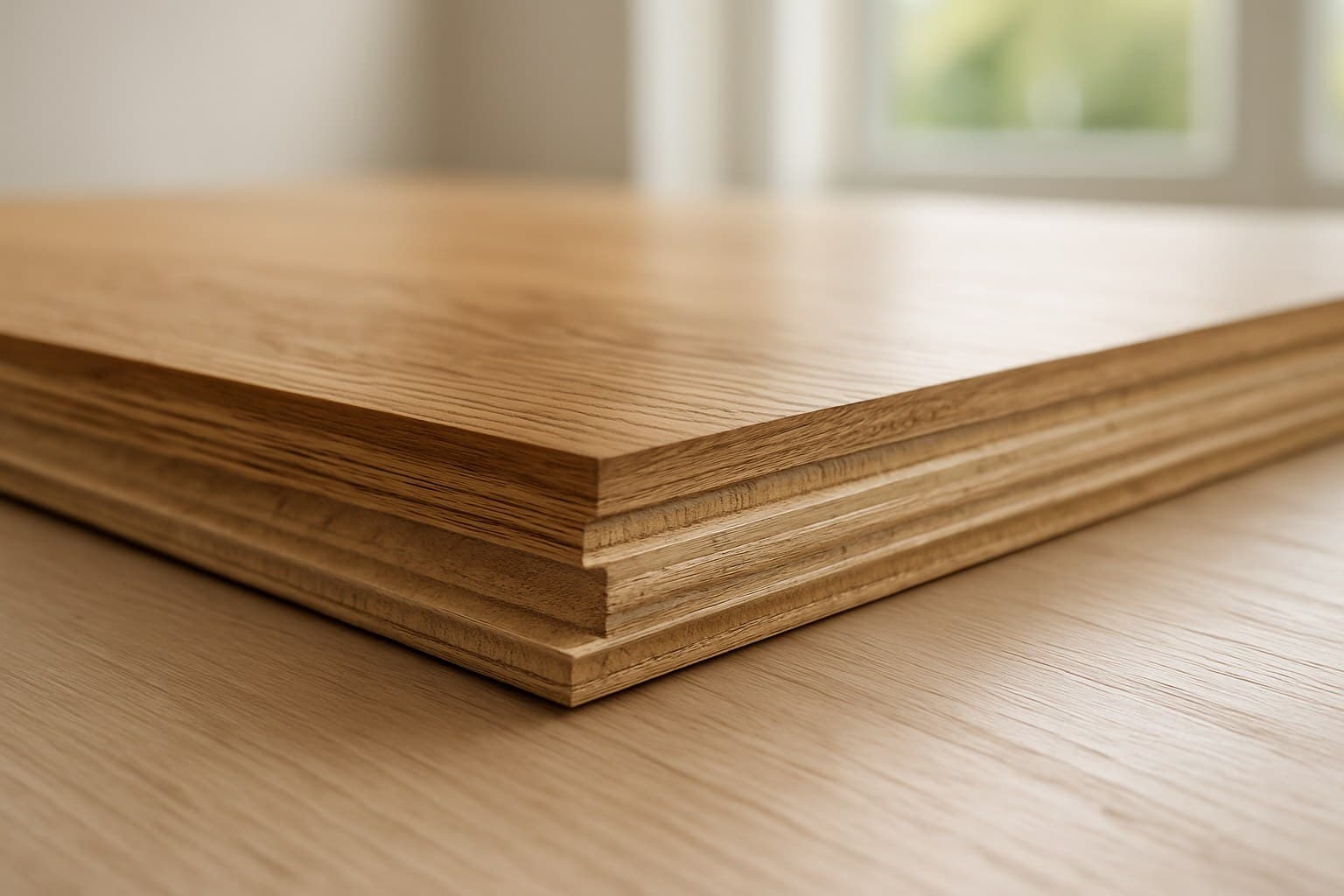
Pergo hardwood is engineered wood. That means a thin layer of real hardwood, called the veneer, sits on top of a plywood-style core. It is not laminate, and it is not solid hardwood cut from one board.
That distinction matters because "real wood" has an independent yardstick. According to the National Wood Flooring Association's (NWFA) official definition of real wood flooring, engineered flooring with a genuine wood wear layer qualifies as real wood flooring, right alongside solid boards. So when Pergo calls this line hardwood, it is not marketing spin. The face you walk on is actual timber. For a deeper look at weighing that same solid-versus-engineered choice, along with picking the right species for your room, see this guide to solid vs. engineered hardwood floors.
The core is the whole reason engineered wood exists. It is built from wood layers glued in a crisscross pattern, each one running against its neighbor. That cross-layering fights the natural swelling and shrinking that wrecks solid wood over concrete. Solid hardwood is generally not recommended below grade or straight over a slab; engineered stays far more stable there. If you want the full breakdown of how that core is built and how it compares to solid, I go deeper in what engineered hardwood actually is.
Most people know Pergo as the laminate brand, it practically launched laminate in US homes. So "Pergo hardwood" throws them, and that's a fair reaction. It's a separate, genuine wood product line that happens to carry the same famous name.
Pergo Hardwood vs. Pergo Laminate vs. LVP
There is no single winner here. Pergo laminate usually costs less and often shows a sharper, more convincing wood photo. Pergo engineered hardwood gives you a real wood face you may be able to refinish. LVP, luxury vinyl plank, holds up better in a genuinely wet room. The right pick depends on your room and your budget. If you're widening the search beyond Pergo altogether, it's worth reading these 9 things to know before buying Johnson Hardwood before you compare quotes.
The surface is the cleanest way to tell them apart. Laminate and LVP are printed images sealed under a clear wear layer, which is the tough top coat that takes the scuffs. Pergo hardwood has no printed picture at all. What you see is the wood grain itself.
That is also where the reviews split. Owners who like their Pergo engineered floors praise the real-wood warmth and the click-together install. The complaints that come back are usually about water sitting too long, or a buyer who assumed a thin-veneer line could be sanded down the road when it could not. Neither of those is a defect. They are mismatches between the product and the room. Weighed against other prefinished lines on the market, Pergo's engineered wood holds up well enough to earn a spot in this best prefinished hardwood flooring ranked picks.
| Type | Surface | Refinishable | Water tolerance | Look |
|---|---|---|---|---|
| Pergo engineered hardwood | Real wood veneer | Sometimes, if veneer is thick enough | Water-resistant surface, seams still vulnerable | Genuine wood |
| Pergo laminate | Printed image + wear layer | No | Water-resistant, not for standing water | Often very realistic print |
| LVP (luxury vinyl plank) | Printed vinyl + wear layer | No | Best of the three for wet rooms | Realistic, can feel less warm underfoot |
Source: This is how I sort these three for customers deciding room by room
How I sort these three for customers deciding room by room.
If you are stuck between the wood look and the water tolerance, that comparison is the real fork in the road. For a wet space, lean vinyl. For a living room or bedroom you want to feel like wood, lean engineered.
Wear Layer and Refinishability: The Spec Check That Decides
Whether a Pergo wood line can be refinished comes down to one number: the veneer thickness printed on that exact product's spec sheet. Not the brand. Not the collection name. The specific SKU, that's the exact product code tied to one plank line, not the whole collection it belongs to.
Here is the plain-English version of the criteria set out in the NWFA's Refinishable Program. A thicker wood veneer gives a sander something to bite into, so the floor can be sanded back and recoated. A thin veneer has almost nothing to remove; sand it once and you risk cutting through to the core. Some thin engineered floors are rated for no sandings at all. The wood is real either way, but "real wood" and "refinishable" are two different promises.
So before you buy, look up these things for the precise line you want, not the family it belongs to. This is the same list I run before I quote any engineered floor. If you want the fuller checklist beyond just veneer thickness, the 9 things to settle before buying prefinished flooring walks through everything else worth confirming first.
- Veneer (wear layer) thickness in mm for that exact line, not the collection
- Whether the maker lists it as refinishable, and how many sandings
- Factory finish type and warranty term for that SKU
- Grade recommendation: is it rated for below-grade or over concrete?
- Total plank thickness and the locking system
The five specs I confirm before quoting an engineered floor.
One more thing that catches people. A prefinished floor comes with a tough factory coat baked on, and refinishing means sanding that coat off first. That eats into your veneer budget, so a floor rated for "one sanding" really means one, total. If refinishing later matters to you, the difference between prefinished and site-finished wood is worth understanding before you buy, and I lay that out in the prefinished versus unfinished hardwood guide.
Do not assume all Pergo wood is cut the same. Lines differ by veneer, and that difference is the whole ballgame for refinishing.
StayClean+ and Water Resistance, Separated Honestly
Let me split this cleanly, because the marketing blurs it. StayClean+ is a surface finish on certain Pergo wood lines. It sheds spills you wipe up quickly. It does not make the seams waterproof, and it never claimed to.
Floors like this rarely fail on the plank face. They fail at the seam. Standing water finds the click-lock joint between two boards, seeps down into it, and swells the wood veneer edge until it lifts or the edge peaks up. The tough top coat does nothing there, because the water went around it, not through it. This is the same distinction I draw for every product with a "water-resistant" badge: a resistant surface is not a waterproof floor.
So use it where that math works. A kitchen is fine if you are the kind of household that wipes spills up rather than letting a dropped glass of water sit through dinner. A full bathroom or a laundry room, where water pools and sits, is not the place. That is tile or LVP territory.
And tie any water claim to the exact StayClean+ line it is printed on, not to Pergo wood as a category. If you specifically need a floor that laughs off standing water, read the waterproof engineered hardwood guide before you spend, because the term gets stretched a lot.
Popular Pergo Wood Collections in the US
US buyers usually run into a handful of names: Country Oak, Parquet, and Svalbard, plus TimberCraft and WoodCraft branding that pops up in searches. Some of those are wood lines and some blur into Pergo's other products, which is exactly why the name alone is not enough to shop by.
What actually separates one collection from the next is veneer thickness, plank width, finish look, and price tier. A wider plank reads better and calmer in a big open room; narrower boards suit tighter spaces. So match plank width to the room before you fall for a photo. And if you ever want the option to refinish, check that collection's veneer spec, because that's where one collection lets you sand it down the road and another simply can't be refinished at all.
Color is the trap people don't see coming. Wood shifts tone under sunlight over time, and it does it unevenly. I had a Naperville client set on a warm, reddish floor, and I told them what I tell everyone who loves that look: I have pulled area rugs off Brazilian cherry floors and found a bright patch underneath that no refinish job ever fully evens out. Near big south-facing windows, a rich wood tone will move on you. Test real samples in the room's own daylight, morning and afternoon, before you commit. Cherry tones especially are worth previewing, and I get into that in the cherry hardwood flooring guide.
Last practical step: confirm the line is actually stocked by a US retailer near you, because collection names come and go and a discontinued color is a headache if you ever need a repair board.
Installation, Underlay, and Accessories
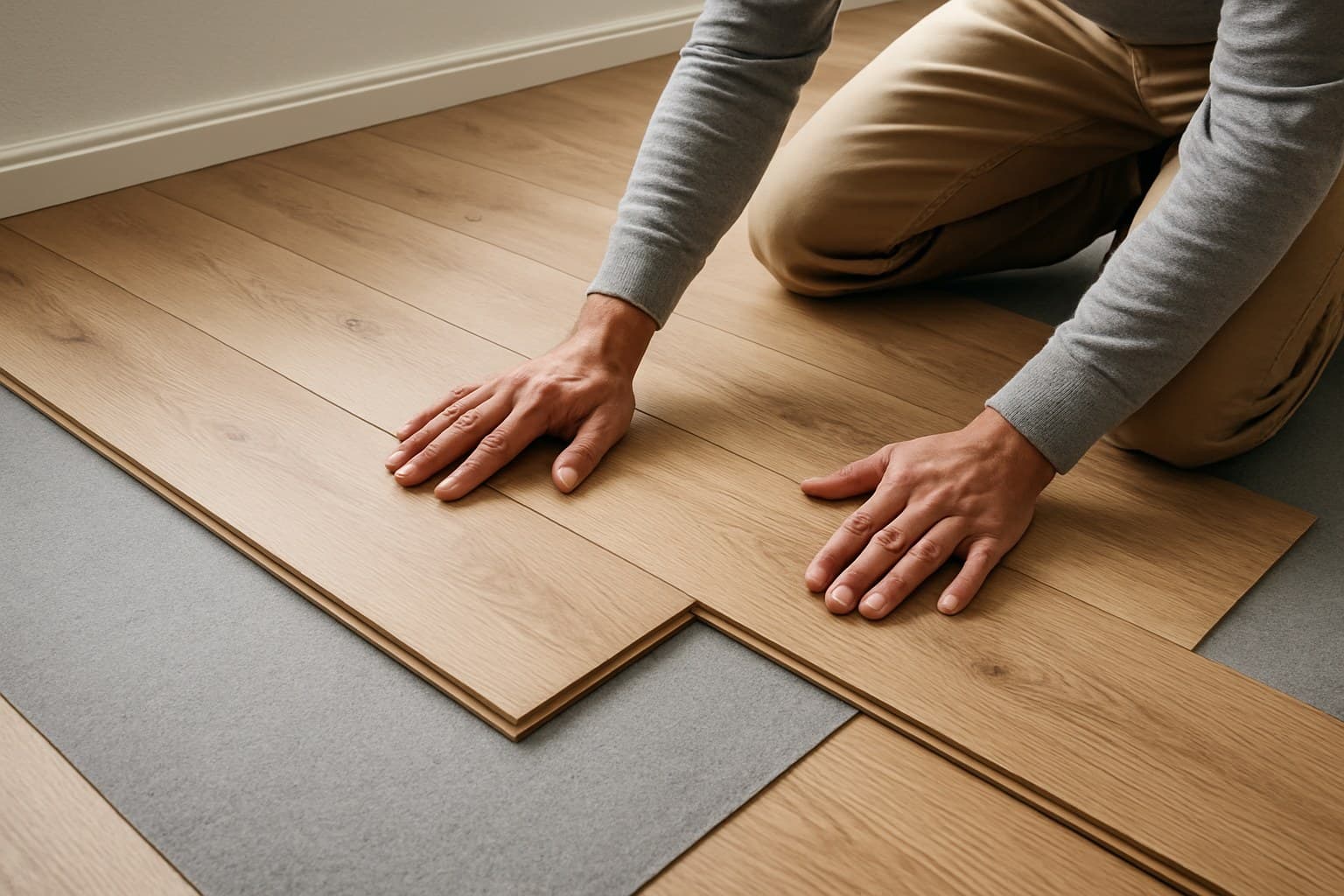
Click-lock Pergo wood is realistic DIY for most handy homeowners, as long as the room is flat and dry and roughly rectangular. Where I tell people to hire out is stairs and any spot where the floor meets a big moisture change, like a slab-on-grade transition. Stairs eat time and cuts, and a botched nose is dangerous, not just ugly.
Before a single plank goes down, two checks come first, and both are standard steps in the NWFA's installation guidelines. Flatness: lay a long straightedge across the floor and hunt for humps and dips. A bump you talk yourself into ignoring becomes a hollow, clicking spot or a gapped seam later. Moisture: on concrete, test the slab with a meter, which is a handheld tool that reads how damp the surface is, because a slab can feel dry to your palm and still be wet enough to swell wood. Do not skip this to get to the fun part.
The expansion gap around the edges is not a number I will hand you, because Pergo sets it in that product's own install sheet. Every floating floor needs a gap so the floor can move with the seasons; the exact size lives in the instructions, not in a rule of thumb.
The accessories are straightforward. Underlay is the thin cushion layer that goes under the planks for quiet and a little give, and some Pergo boards come with it pre-attached. Skirtings, what many folks call baseboards, hide the expansion gap at the wall. Transition profiles are the low strips that bridge doorways and where wood meets tile or carpet. For the full method, step by step, see the installing hardwood flooring guide.
Skip either check and the damage shows up weeks later, not on day one. A damp slab pushes moisture up into the veneer edges and you'll see cupping, where board edges rise higher than their centers. An ignored hump under the planks turns into a hollow spot that clicks with every step or a seam that gaps open. Fifteen minutes with a straightedge and a moisture meter now beats pulling up flooring later.
What Pergo Hardwood Costs in the US, and Where to Buy It
Expect materials to run roughly $3 to $7 per square foot and installed labor about $2 to $5 per square foot. There is no single national price, because both numbers move with your region, your wood line, and how much prep the old floor and subfloor need. Treat these as starting ranges to confirm with local quotes.
Basement and stair jobs cost more than an open room, and not by a little. Basements add moisture control and often a moisture barrier over the slab. Stairs are slow, cut-heavy, custom work, so labor per square foot climbs well above the open-room rate.
| Job type | Materials (per sq ft) | Labor (per sq ft) | Why it moves |
|---|---|---|---|
| Open room, flat subfloor | $3 - $7 | $2 - $4 | Fastest to lay, fewest cuts |
| Basement over slab | $3 - $7 | $3 - $5 | Moisture testing and barrier prep |
| Stairs | $3 - $7 | Priced per step, higher | Custom cuts, nosings, slow work |
Source: This is how I break a room quote down for a customer
Typical US ranges split into materials and labor, before regional and prep differences.
Here is the arithmetic worked out so you can price your own room. Total cost equals area times (material rate plus labor rate). For a 300 square foot living room at a $5 material rate and a $3 labor rate: 300 times ($5 plus $3) equals 300 times $8, so about $2,400 before any prep charges like leveling a dip or removing old flooring. Swap in your own square footage and the rates your local quotes come back with.
On where to buy, Pergo wood lines turn up through big-box and flooring retailers, and stock varies a lot by location, so call ahead on the specific collection and color. For a wider view of how engineered and solid pricing stacks up by room size, the hardwood flooring cost guide breaks it down further and is the useful next read before you lock in a quote.