
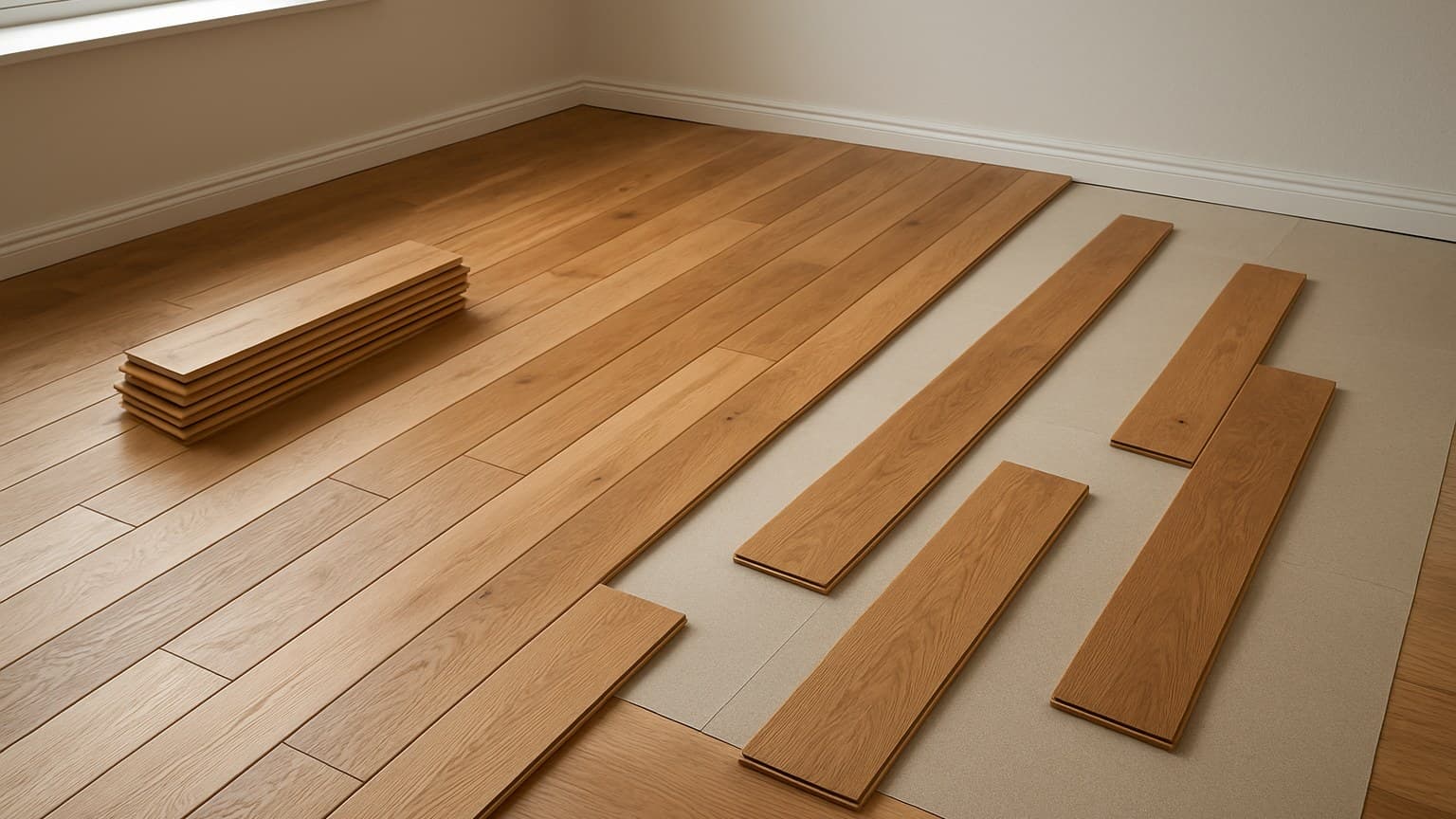
Greg called me about his white oak floors in Spokane after they'd started cupping near the patio door. He'd read four different buying guides and could still rattle off Janka, wear layer, RH, grade, oil versus poly, but none of those guides told him which number actually causes cupping. That gap between knowing a term and knowing what it changes is where the expensive mistakes live. Here is what each term actually decides in a real room, in the order you decide it.
Key takeaways
- Janka measures denting, not scratching or color change; northern red oak sits near 1290 and is the benchmark the trade measures every other species against.
- NWFA guidance points to installing in normal living conditions, commonly 60-80°F and 30-50% relative humidity, with the wood and subfloor already at those conditions, not a fixed number of acclimation days.
- On engineered floors the veneer thickness caps how many times you can refinish; it is a spec-sheet number for that exact product, not a rule for the whole category.
- Poly finish scratches show as lines you recoat; oil finish lets you spot-fix a worn patch without sanding the whole floor but needs re-oiling more often.
- 'Waterproof' wood almost always describes the core or coating, not the seams, and seams are where most water failures start.
Start Here: The Words That Actually Decide Your Floor
Most buying guides define these terms and stop there. They tell you Janka measures hardness but not whether your dog will dent the floor. They mention acclimation but not the number that keeps a plank from cupping. This one connects each word to the dent, the refinish, or the callback it causes.
Here is the order that matters, because it is the order you actually make choices in:
First, where the floor goes, which drives the solid versus engineered call. Then hardness (Janka). Then how many times you can refinish it and how it looks (wear layer and grade). Then getting the room and the wood ready (acclimation and RH). Then the finish. And last, the waterproof reality check that trips up so many people.
Every term below gets a real number or an NWFA-referenced range, plus what I have watched go wrong when someone skipped it. NWFA is the National Wood Flooring Association, the trade group whose installation guidelines most manufacturers point back to.
Janka Hardness: What the Number Protects, and What It Doesn't
Janka measures how well a wood resists denting, nothing more. Northern red oak sits around 1290 on the scale, and that is the benchmark installers use to judge every other species. When someone says a wood is "harder than oak," this is the number they mean. Walnut is a good example of that gap, since it costs more than oak while sitting softer on the scale, so it helps to know what walnut hardwood flooring actually costs before the color talks you into it.
White oak, like the floor in Greg's story above, actually rates a bit harder than that benchmark, coming in around 1360 on the Janka scale. That extra density is part of why it resists dents so well, and it's a completely separate number from what made his floor cup. Cupping comes from moisture and RH, not from where a species falls on the hardness scale, so a harder wood is no guarantee against it. Since moisture is the real culprit, the underlayment and vapor barrier you choose matter more here than the wood's hardness rating, which is exactly why what to put under hardwood flooring is worth getting right before install.
What it changes in your room is simple. Drop below about 1290 and dents come easier under pet claws, chair legs, and dropped pans. Climb way above it, into hickory or Brazilian cherry, and the wood gets harder to nail down and harder to sand flat when refinish day comes. Harder isn't automatically better; it's a trade-off. That same extra hardness is exactly what makes why exotic hardwood flooring fights installers so much tougher to nail down and sand than a domestic species.
Here's what Janka doesn't tell you. It says nothing about scratches, which are a finish problem, not a wood problem. And it says nothing about color change. On a job for Marie in Tacoma, I pulled an area rug off her Brazilian cherry floor and found a bright rectangle underneath where the sun had never reached. No refinish evened that out. Now I warn every customer with a photogenic exotic species before they commit. Lighter species show far less of that stark contrast, which ties into what light hardwood floors actually hide compared to darker, more photogenic wood.
Hardness is one input, but where the floor goes still drives the bigger choice. If you're weighing a slab or a basement, read how to pick between solid and engineered hardwood, which also carries the full species-by-species Janka table.
Wear Layer and Grade: Two Words the Blogs Blur Together
These two words get treated as one, and they measure completely different things. One decides how long the floor lasts. The other only decides how it looks.
Wear layer: how many refinishes you actually get
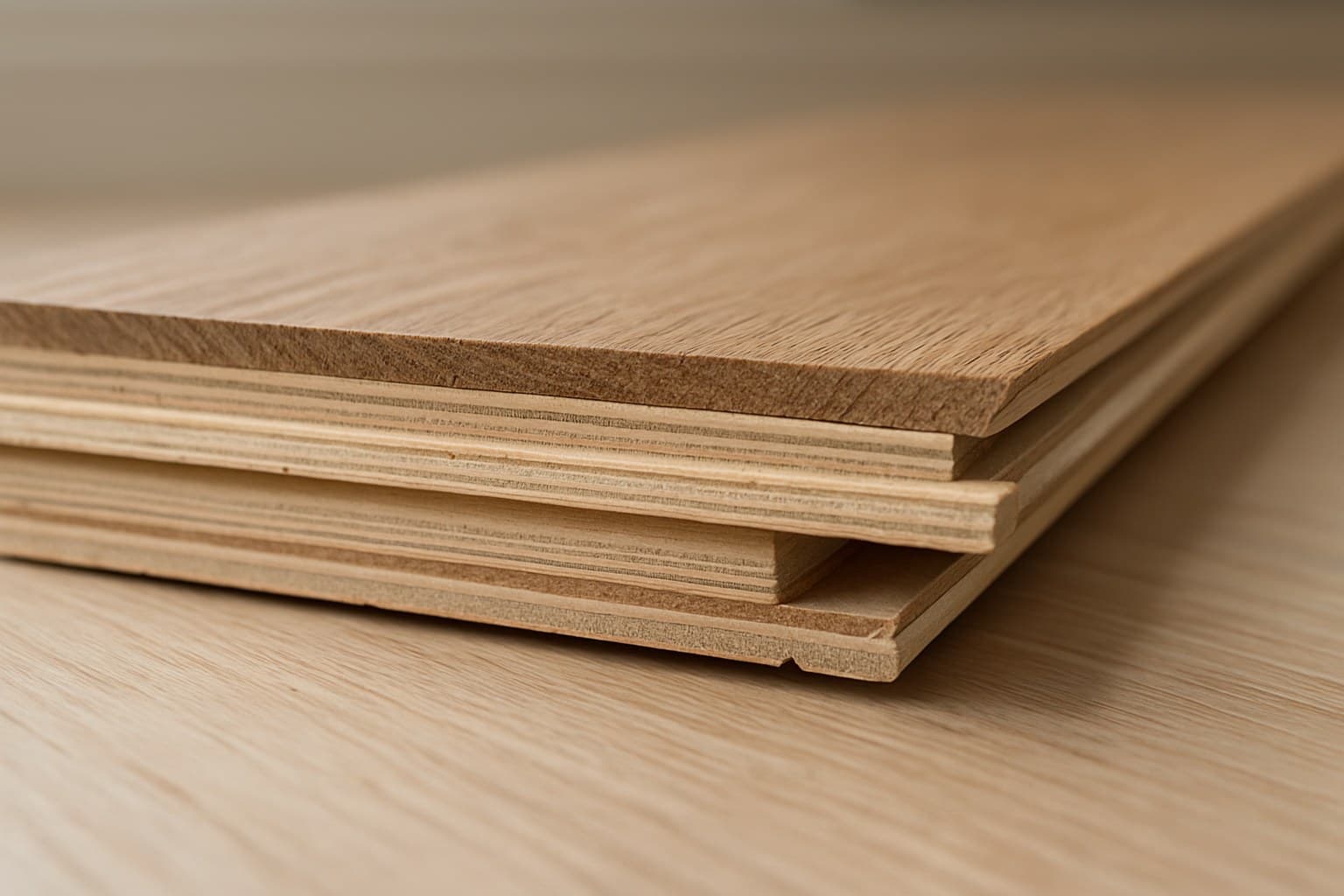
On engineered wood, the wear layer is the thickness of real wood veneer sitting on top of the plywood-style core. That veneer is all you have to sand, so it caps how many times you can ever refinish the floor. Pergo comes up constantly in these conversations, so it's worth settling whether Pergo hardwood is real wood before you count on that veneer number holding up.
Thin veneers may be refinish-once, or never. Thicker ones behave much more like solid wood and give you several sandings. This is a number printed on that specific product's spec sheet, not a rule for the whole category, so ask for it before you buy. That spec sheet matters just as much on click-lock engineered hardwood flooring, where the locking system can hide a wear layer thinner than the marketing photos suggest.
The callback I still think about: Tom in Dayton picked a thin-veneer engineered plank for his busy hallway, telling himself he'd sand out the scratches in a few years. The veneer was too thin to ever sand. His whole plan rested on a number he never checked.
Select vs character grade: paying for a look, not quality
Grade, select, character, or rustic, is about knots and color streaks, not strength. A character-grade board isn't weaker or lower quality. It just has more knots, more color variation, and a busier look, and it usually costs less than select.
So if you like the busier, more natural look, character grade saves you money without giving up a thing structurally. Don't let a blog talk you into paying up for "select" thinking you're buying a tougher floor.
RH and Acclimation: The NWFA Numbers Brand Blogs Skip
This is the gap most other blogs leave wide open. According to the National Wood Flooring Association (NWFA), hardwood should be installed in normal living conditions, commonly 60-80°F and 30-50% relative humidity (RH, the amount of moisture in the air), with the wood and the subfloor already sitting at those conditions before a single plank goes down.
Acclimation isn't a flat "leave it three days" rule, no matter how many times you read that. Some products want it, some tell you to skip it, and the box's own sheet governs. The point is to let the wood settle at the room's real, lived-in conditions, not to count calendar days.
And check the subfloor before any of that. A concrete slab can feel bone dry to your hand and still read wet on a moisture meter, a tool that measures how much water is actually inside the wood or concrete. Your hand is not a meter.
On a slab job for Wanda in Lansing, I trusted my hand instead of the meter, and the floor cupped a few weeks after install. The check would have cost a tiny fraction of that tear-out.
| Check | Target | Why it matters |
|---|---|---|
| Room temperature | 60-80°F | Wood is milled to live in normal indoor conditions |
| Relative humidity (RH) | 30-50% | Keeps planks from swelling or shrinking after they are down |
| Subfloor moisture | Test with a moisture meter | Dry to the hand can still read wet underneath |
| Subfloor flatness | Check with a straightedge | Humps and dips telegraph up through the floor |
| Acclimation time | Per the product's own sheet | Some products need it, some say don't, so the box governs |
Source: NWFA installation guidelines
Clear every one of these checks before you lay the first plank, skip even one and you're gambling on a floor that cups, gaps, or crowns within the first year.
Oil vs Poly: What Changes the Day You Scratch It
The real difference between these two finishes shows up the day you scratch the floor, not the day you install it.
Polyurethane, or poly, is a hard, plastic-like top coat that sits on top of the wood. Scratches show as lines in that coat, and spot-fixing them is tough, so you usually end up recoating or refinishing the whole area to make it disappear. The upside is poly is tougher day to day.
Oil finishes soak into the wood instead of sitting on top. Scratches blend in more, and you can spot-fix a worn patch without sanding the entire floor. The trade-off is you have to re-oil more often to keep the wood protected. So the choice comes down to whether you'd rather do occasional whole-area recoats (poly) or lighter, more frequent touch-ups (oil).
Sheen matters more than people expect. High gloss shows every scratch and every dust mote. Matte and satin hide both, which is why busy homes with kids and dogs lean matte.
And refinishing timing doesn't run on a set number of years. It rides on your wear layer and your traffic. Sand when the finish is worn through, not when a calendar says so, and never sand deeper than the wood you have to give.
Waterproof Wood Flooring: Decoding a Marketing Word
Start with the honest version: on real wood, "waterproof" almost always describes the core or a surface coating, not the seams. And wood still moves with moisture no matter what the label says.
So separate the claims. A waterproof-core plank can still swell or cup if water sits in the seams or works its way down to the subfloor. Water failures tend to start at the edges where two planks meet, not on the flat face of the plank that the coating actually protects.
If a bathroom or a basement genuinely needs to shrug off standing water, that's usually not solid hardwood's job. That's where luxury vinyl plank earns its keep, because its water tolerance is built for exactly those rooms.
When a salesperson says "waterproof," ask three plain questions. Is the claim about the plank surface, the core, or the seams? And what exactly does the warranty cover if water does get in? The answers tell you fast whether the word means anything for your room.