
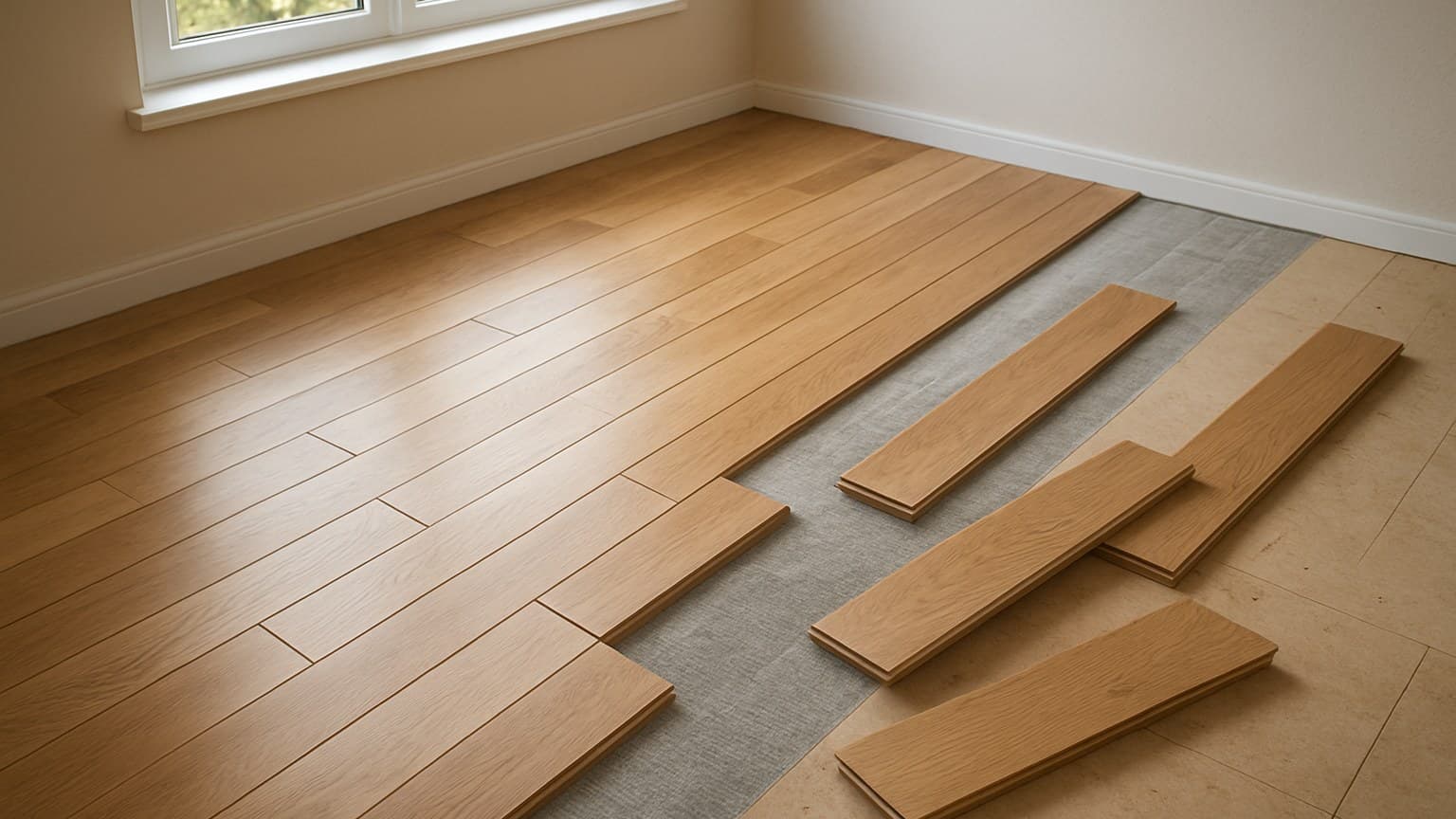
When Diane in Springfield asked two contractors to bid on her 900-square-foot bungalow floor, the quotes came back nine thousand dollars apart. Installed hardwood commonly runs $8-25 per square foot all-in, and that gap almost never traces to the wood on the box. It traces to how that wood has to go down.
Key takeaways
- Installation method, not wood species, is the biggest swing in your labor line: floating a click-lock floor runs about $2-4/sq ft in labor, while glue-down and wide-plank nail-glue assist run $5-10/sq ft.
- All-in installed hardwood usually runs $8-25/sq ft (materials $3-12, labor $3-10). A 1,000 sq ft job commonly lands between $8,000 and $25,000.
- Budget for near-universal add-ons: old-floor removal, subfloor leveling, and in pre-1980 homes an asbestos test ($50-150 for the lab) before any old tile comes up.
- DIY can cut the labor line, but honest savings shrink once you count subfloor prep and removal that DIYers skip. Stairs and glue-down over concrete are where hiring wins.
- Basement and stair jobs cost more per square foot than open rooms, so a per-sq-ft number from an open living room won't hold across the whole house.
The Quick Answer, and the Debate It Settles
Installed hardwood commonly runs $8-25 per square foot all-in, with labor alone at $3-10 per square foot. That's a wide honest band, and anyone who gives you one flat national number is guessing.
There are two camps in the buying guides. One says engineered wood wins because the material is cheaper per square foot. The other says the install method is what really moves the price. On a glue-down job I ran for the Ortiz family in Denver, the second camp was right where it counts: on the labor line, the method you need moves the number far more than the species does.
So here's the order to price your job in. Method first, because that's the biggest swing. Then the wood, which mostly decides where you can install and how many times you can refinish. Then the prep, which is the part that ambushes people.
One more thing before the numbers. A single per-square-foot figure never covers a whole house. Stairs and basements price higher than an open living room, so a rate pulled from one flat room won't hold across the rest.
Materials vs Labor: Where Your Money Actually Goes
Every hardwood quote has two lines, and you should ask to see both. Product runs about $3-12 per square foot depending on species and grade. Labor runs about $3-10 per square foot depending on the method and how much prep the room needs.
Most homeowners stand at the store and fixate on the plank price. That's the half you can see. The labor-plus-prep half is the one that surprises people when the quote lands. If you're eyeing a specific product like Johnson Hardwood, it's worth checking a buying guide for Johnson Hardwood before that sticker price talks you into anything the labor line will later correct.
Here's what pushes the labor line up: wider planks, pattern work like herringbone, and anything that slows the crew down. It's not the price sticker on the box. A cheap board in a fussy layout can cost more to install than a pricey board in a simple one.
Finish choice moves both lines too. Prefinished boards come sealed from the factory, so the crew lays and you walk. Site-finished floors get sanded and coated in your house, which adds labor days and dust but lets you match a stain exactly. Choosing between the two up front is its own decision, and the prefinished vs. unfinished hardwood comparison lays out when each one actually pays off.
| Line item | Typical range ($/sq ft) |
|---|---|
| Labor (install) | $3-10 |
| Materials (product) | $3-12 |
Per-square-foot ranges for the two lines on a typical residential hardwood quote.
Installation Method Sets the Labor Line
The method the room needs is the single biggest lever on your labor bill. Floating a click-lock floor is the cheapest and fastest. Glue-down over concrete and wide-plank work are the slowest and priciest.
Here's why the time adds up. A floating floor snaps together and rides on top of the subfloor, so a good crew moves fast. Glue-down means spreading adhesive, setting each board into it, and cleaning up squeeze-out, the extra glue that oozes out between boards, as you go. According to NWFA installation guidelines, wide planks 5 inches and up are prone to cupping and lifting, which is why installers often nail and glue them both, a slower, more careful process. You're paying for the crew's hours, not the board.
The room usually picks the method for you. Concrete slabs and basements push you toward glue-down or floating, because you can't nail into concrete the way you nail into a plywood subfloor upstairs. That's a big part of why those spaces cost more per square foot than a bedroom over a wood subfloor.
| Method | Labor ($/sq ft) | Best for | Difficulty |
|---|---|---|---|
| Floating (click-lock) | $2-4 | Engineered over flat subfloor or slab | DIY-friendly |
| Nail-down | $3-6 | Solid or engineered over wood subfloor | Needs a nailer, moderate |
| Glue-down | $4-8 | Over concrete slab | Messy, usually hire out |
| Nail-glue assist | $5-10 | Wide plank (5"+) that can cup | Slow, hire out |
Source: What I charge per square foot by install method on residential jobs
Labor-only ranges by install method on residential jobs, before materials or prep.
If you're weighing whether to do this yourself, the method decides it. Click-lock floating is realistic for a patient DIYer, while glue-down and stairs are where hiring out pays off. The full step-by-step guide to installing hardwood flooring walks each method so you can see what you'd actually be signing up for.
Solid vs Engineered: Does the Wood Type Move the Number?
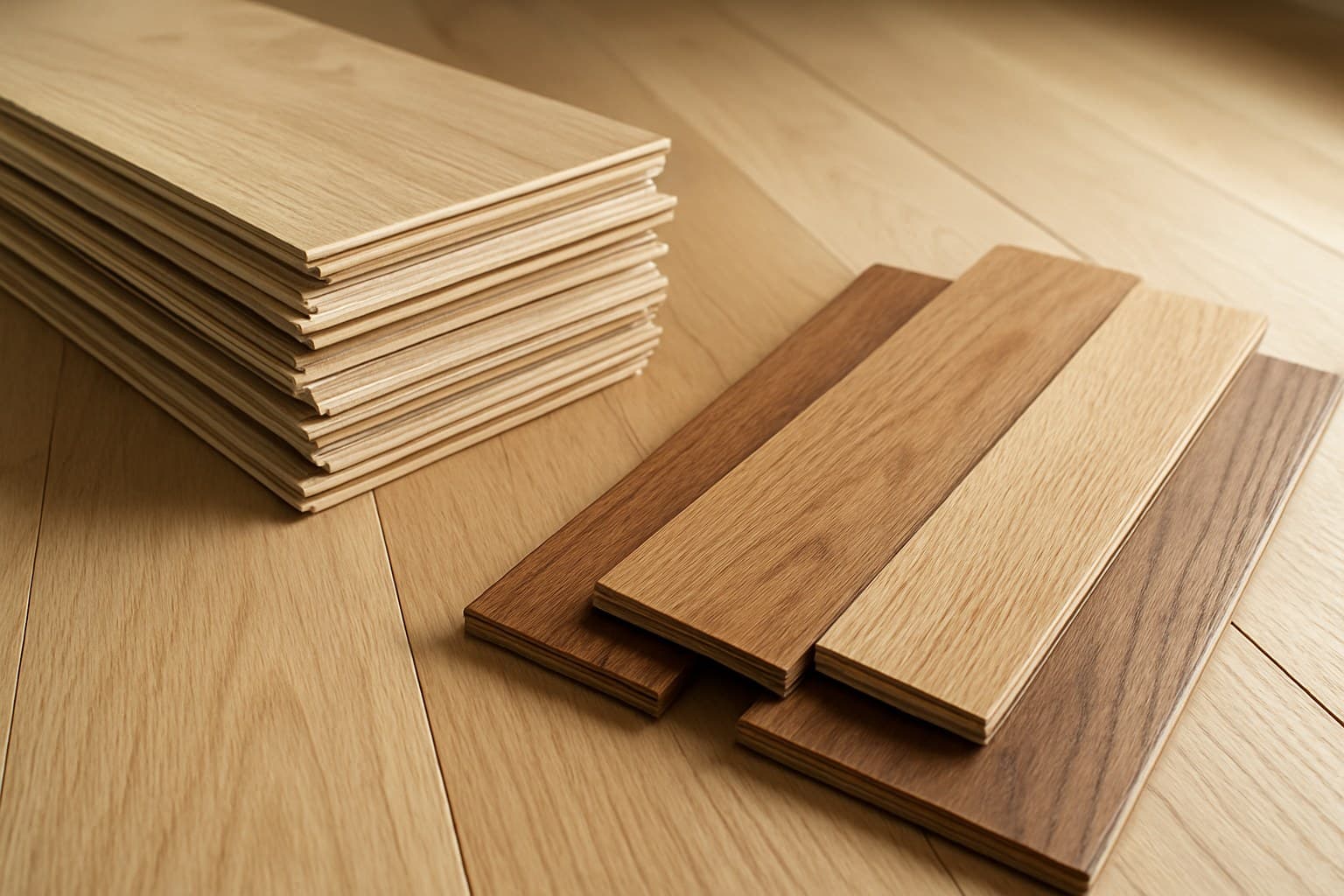
Not as much as people expect. Engineered hardwood can land cheaper or pricier per square foot than solid, depending on how thick the wood veneer on top is, so the material type alone doesn't reliably decide your bill.
What each type really changes is where it can go. Engineered has a plywood-style core that stays more stable over concrete and below grade, where solid usually isn't recommended. That stability opens up cheaper floating and glue methods in a basement, which is a cost decision as much as a durability one. In wetter basements or slab-on-grade rooms, that stability is exactly what pushes people toward waterproof engineered hardwood instead of a standard core.
When someone asks me solid versus engineered for a basement, I don't answer with a price. I answer with the moisture reading off the slab. I've steered people off solid hardwood down there, and off both materials when the numbers said the slab was too wet for either. For the broader decision beyond basements, a solid vs. engineered hardwood guide walks through matching each type to the room and species before you commit.
Two floors, same square footage, same species can quote thousands apart, and nearly all of that gap is the install method, not the wood.
Bottom line: the wood type mostly sets where you can install and how many times you can refinish later. The method sets today's labor bill. If refinishing over the years matters to your decision, the breakdown of hardwood prices and real cost per year is the better place to weigh that.
Hidden Costs: Subfloor Prep, Old-Floor Removal, and Asbestos
The add-ons are where quotes drift apart after work starts. Pulling old carpet, leveling a wavy subfloor, tearing out glued tile, and replacing rotten plywood all cost money that never shows up in the plank price.
Some of these carry a safety cost, not just a labor cost. Homes built before 1980 can have asbestos in old sheet vinyl and tile, so you want a lab test at $50-150 before that old floor comes up. Tile removal also throws silica dust, which is why a good crew tents the area off and wears real protection.
Now the part I never skip. A floating floor only lasts as long as the flat, dry subfloor under it. Per NWFA installation guidelines, the subfloor should be checked for flatness and tested for moisture before any flooring goes down. A moisture test is a quick meter reading that tells you if the base is dry enough to build on.
I learned that the hard way on a job for Carol in Tulsa. She talked me out of a moisture test to save an afternoon, and I let her. The floor cupped before the season was out, and I relaid the whole thing on my own dime rather than argue about whose call it was. That's the day the test stopped being optional for me.
| Add-on | Typical cost | Notes |
|---|---|---|
| Carpet removal & haul | $1-2/sq ft | Almost all labor |
| Subfloor leveling | $1-3/sq ft | Leveling compound + labor |
| Tile/glued-floor removal | $2-5/sq ft | Labor; silica dust, containment |
| Plywood subfloor replacement | $2-4/sq ft | Sheet material + labor |
| Asbestos test (pre-1980) | $50-150 flat | Lab fee; abatement priced separately if positive |
Source: Add-ons I've had to price after tear-outs uncovered subfloor or old-flooring problems
Common add-ons that surface once a tear-out uncovers what's under the old floor.
Total Cost by Home Size: 500, 1,000, and 2,000 Sq Ft
Here's the whole-project math, not just a per-square-foot number. The formula is simple: total = area x installed rate, then add prep. At the $8-25 installed band, a 1,000 sq ft floor at $12 per square foot is $12,000 before any add-ons.
| Home size | Low ($8/sq ft) | High ($25/sq ft) | Note |
|---|---|---|---|
| 500 sq ft | $4,000 | $12,500 | Small rooms; hallways and stairs add more per sq ft |
| 1,000 sq ft | $8,000 | $25,000 | Mid-size main floor |
| 2,000 sq ft | $16,000 | $50,000 | Whole level; mixed spaces run higher |
Source: My per-square-foot installed quotes scaled to whole-home sizes
Installed cost by home size using the $8-25 per square foot band, before add-ons like removal and leveling.
Read those as before-prep numbers. Stairs and basements run higher per square foot than open rooms, so a house with both lands above a flat living-room estimate. Add the removal and leveling from the table above on top.
For a closer read on 1,500 or 2,500 sq ft, or a room-by-room split, the fuller 500 to 2,500 sq ft hardwood cost breakdown prices those cases out so you can match your own floor plan.