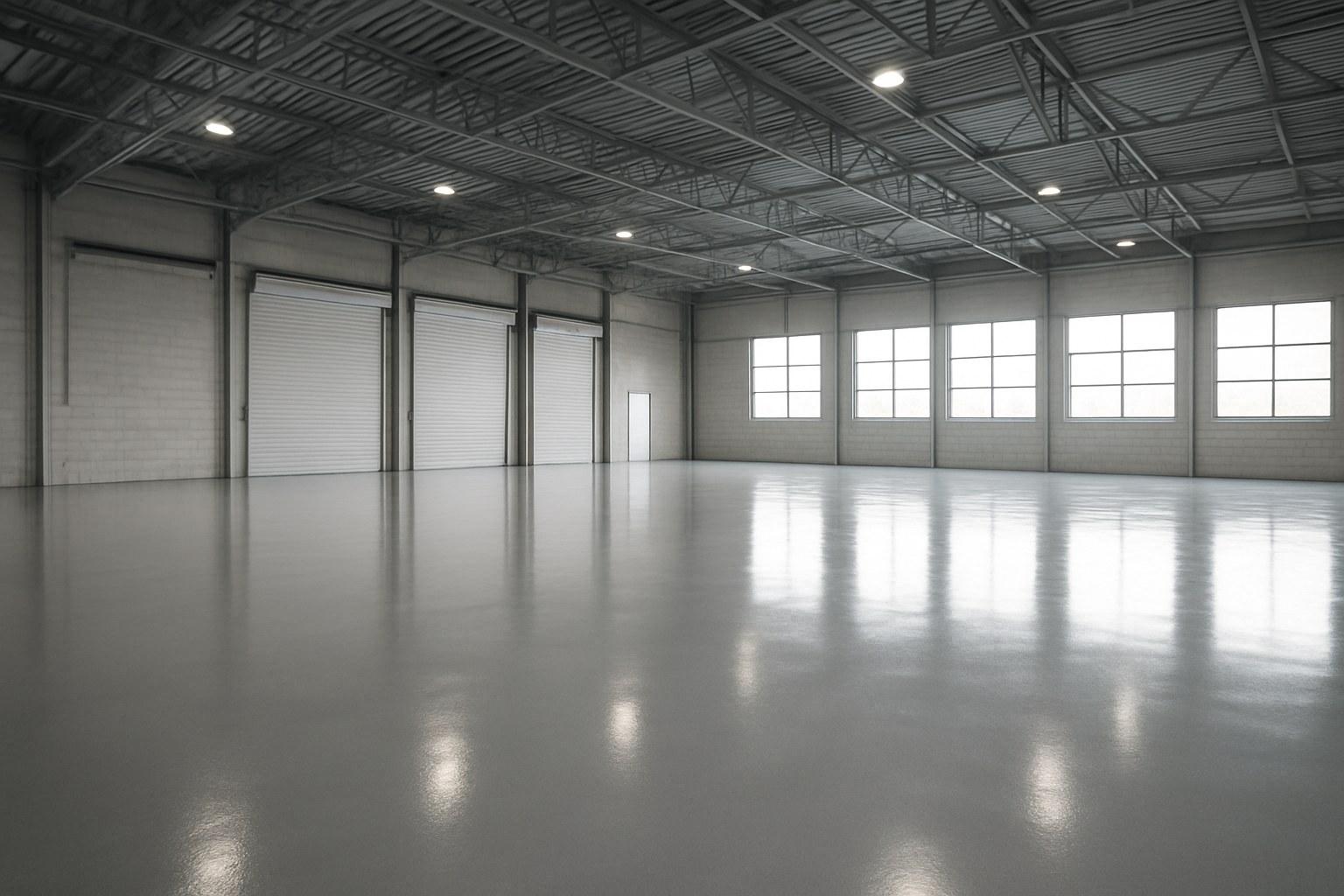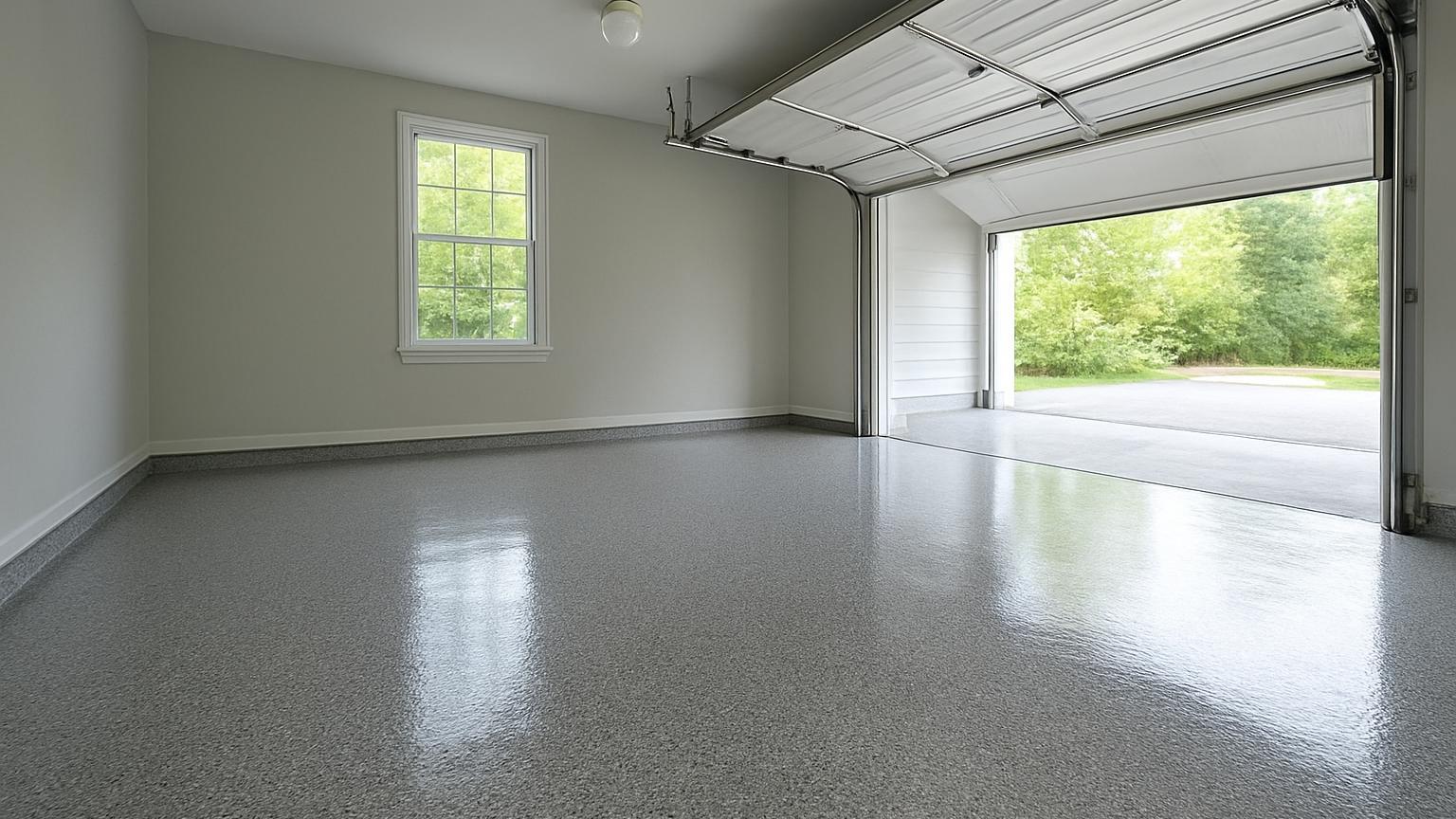
A DIY epoxy kit runs $1 to $4 per square foot for materials only, while hiring a pro for a residential garage runs $5 to $9 per square foot with materials and labor combined, more if the slab needs real prep. That gap isn't markup, it's the grinding, crack repair, and moisture work most kit boxes never mention. If you're weighing epoxy against other flooring types before committing to either route, the how much is epoxy flooring guide lays out the full cost picture beyond just the garage.
Key takeaways
- DIY kits run about $1 to $4 per square foot for materials only; professional residential installs run $5 to $9 per square foot installed, and commercial or industrial work runs $7 to $15.
- Prep is the hidden swinger: grinding ($0.75-$2/sq ft), old-coating removal ($1-$3/sq ft), crack repair ($1-$3/sq ft), a moisture test ($40-$200), and disposal ($50-$200) are left out of most headline prices.
- A cheap kit that peels in 18 months can cost more per year of life than a $3,000 pro floor that lasts 10 years, so compare cost divided by lifespan, not sticker price.
- The conflict over whether DIY kits fail fast is really about prep, not product quality: a dry, ground, flat slab is what makes any epoxy last.
- DIY suits a clean, flat, dry newer slab; hire out for cracked, old-coated, or damp slabs, stairs of prep, and large or spec commercial jobs.
The Short Answer: What Epoxy Floor Installation Really Costs
Here's the straight version. A DIY kit runs about $1 to $4 per square foot for the product only. A professional residential install runs $5 to $9 per square foot total, with materials at roughly $1.50 to $3 per square foot and labor at $3.50 to $6 per square foot, more once the slab needs real prep.
The catch is what each number includes. A kit price is just the buckets on the shelf. It doesn't cover your weekend of grinding, the grinder you rent, or the patch material for cracks. A pro quote folds all of that into one per-foot figure, which is why it looks so much higher at first glance.
This whole search comes down to one decision: buy a kit and do it yourself, or hire a pro. Prep is what flips the math either way, and I'll show you how below. If you want the granular per-square-foot breakdown by product type, the epoxy floor cost per square foot guide goes deeper than I will here.
| Option | Installed cost |
|---|---|
| DIY kit (materials only) | $1.08-$3.85 / sq ft |
| Professional, residential | $5-$9 / sq ft (about $1.50-$3 materials, $3.50-$6 labor) |
Installed cost per square foot by install type, DIY kit versus professional. Chart is not to scale.
Epoxy Cost by Garage and Floor Size
The bigger the floor, the lower the per-foot price. That's the pattern to remember. A pro has fixed costs, travel, setup, mixing, cleanup, and those get spread over more square feet on a big job, so the price per foot drops as the room grows.
| Floor size | DIY kit (product only) | Professional installed |
|---|---|---|
| 1-car (~250 sq ft) | $389-$499 | $1,250-$2,250 (about $375-$750 materials, $875-$1,500 labor) |
| 2 to 2.5-car (~450 sq ft) | $699-$899 | $2,250-$4,050 (about $675-$1,215 materials, $1,575-$2,835 labor; some quotes to $7,000 with heavy prep) |
| 3-car (~700 sq ft) | $1,098-$1,359 | $3,500-$6,300 (about $1,050-$1,890 materials, $2,450-$4,410 labor) |
| 1,000 sq ft | ~$1,420 (commercial-grade kit) | $5,000-$9,000 (about $1,500-$2,700 materials, $3,500-$6,300 labor) |
Kit prices cover product only; professional figures split into materials and labor above, with labor making up most of the total. Some 2-car quotes run higher when the slab needs heavy prep.
You'll notice the pro range on a 2-car job is wide, $2,250 all the way to $7,000. That's not one company overcharging. A clean, newer slab prices at the low end. A cracked slab with old failing paint on it prices at the high end because someone has to strip and repair it first. Our epoxy garage floor cost guide walks through exactly which conditions push a two-car quote toward either end of that spread.
What Interior Epoxy Flooring Costs Beyond the Garage
Basements and interior slabs often cost more than a garage of the same size, and the reason is water. A garage slab usually sits above grade and dries out. A basement slab sits in the ground and can push moisture up through the concrete for years.
That means an interior floor may need a moisture-blocking coat a garage never asks for. On a 450-square-foot basement, that one extra step can add $675 to $1,575 before the color coat even goes down. Test moisture before you price an interior job, because a damp slab changes the whole plan.
DIY Kit vs Professional: Cost, Lifespan, and the Real Per-Year Math
You'll read two flatly opposite claims online. One says big-box kits use the same manufacturer-grade product a pro uses, so you're paying a contractor for nothing. The other says those kits peel in a year or two. Both skip the real variable: how much grinding and drying happened before the coating went down, not whose name is on the bucket.
A coating only lasts as long as its bond to the concrete. Grind the slab so it's rough and open, get it dry, fix the cracks, and a good kit can hold for years. Skip that and roll it over smooth, sealed, or damp concrete, and it lifts no matter whose name is on the box.
Part of why professional labor costs what it does here is that epoxy simply isn't as forgiving to work with as standard materials, the Tile Council of North America notes that epoxy-resin systems are inherently harder to install and shape than standard cement-based materials, a dynamic that carries over to epoxy floor coatings and helps explain the labor premium a trained crew charges over a DIY kit. That's the whole idea behind the epoxy floor guide on concrete prep, which walks through exactly why the slab underneath is what decides whether a coating lasts.
So don't compare sticker prices. Compare cost divided by how long the floor actually lives. It's the same life-cycle-cost logic the National Wood Flooring Association applies when comparing flooring options over time, cost divided by expected lifespan, not just the sticker price, even though its figures are for wood floors, not epoxy.
| Option | Installed cost | Expected life | Cost per year |
|---|---|---|---|
| Big-box DIY kit, minimal prep | ~$700 | 1-2 years | $350-$700 |
| Quality DIY kit, proper grinding + prep | ~$1,100 (kit + rental + patch) | 5-8 years | $140-$220 |
| Professional flake system | ~$3,000 (about $900 materials, $2,100 labor) | 10+ years | $300 or less |
Cost per year of life for a 2-car garage of about 450 square feet, dividing installed cost by a realistic lifespan.
Look at the middle row. A quality kit that's actually prepped right is the cheapest floor per year on the list. A $700 kit slapped down without grinding can cost more per year than a $3,000 pro floor, because you're redoing it before the pro floor is even broken in.
Here's the honest DIY-versus-hire line: epoxy isn't click-together flooring. A good DIY result hinges on real diamond grinding (a machine with rough discs that scuffs the concrete open) and a dry slab. If you're willing to rent the grinder, test moisture, and patch the cracks, DIY a clean newer garage. If the slab is cracked, coated, damp, or you're eyeing stairs or a big open floor, hire it out. Skipping prep isn't saving money, it's repainting.
The Prep Costs Most Quotes Leave Out
This is where the headline prices lie by omission. Kit boxes and cheap quotes skip prep, crack repair, moisture testing, old-coating removal, and disposal. Those are the line items that actually swing your total, so add them back before you trust any per-foot number.
| Prep item | What it covers | Typical cost |
|---|---|---|
| Moisture test | A calcium chloride test (a small dish taped to the slab overnight to measure vapor coming through the concrete) or a handheld humidity probe reading | $40 DIY kit to $150-$200 pro |
| Diamond grinding / prep | Opens the concrete so the coating bonds | varies |
| Old coating removal | Strip paint, sealer, or failed epoxy | $1-$3 per sq ft |
| Crack & spall repair | Fill cracks, patch pits and chips (spall is chipped or flaking concrete) | $1-$3 per sq ft affected |
| Moisture mitigation coat | Needed only if the slab reads wet | varies |
| Disposal / haul-off | Old material and grinding dust | $50-$200 |
Source: the prep work I have to price on a slab before any coating goes down
Prep line items to add back into any headline price, with realistic ranges for each.
Two checks come before anything else. First, a moisture test, because a damp slab will lift a coating off no matter how well you rolled it. Second, a flatness check: lay a straightedge across the slab and look for gaps and high spots. Water tolerance lives in the coating; bonding lives in the prep.
If the slab dips more than about a quarter inch over 10 feet, you're into self-leveling underlayment, a pourable layer that flattens the floor before coating. That adds real money and a real learning curve. The self-leveling epoxy flooring cost guide breaks down when it's worth it and what it adds.
Book the haul-off before you start, not after. A garage full of ripped-up old coating and grinding dust sitting for a week waiting on a dumpster is a headache worth avoiding. Schedule disposal up front.
Epoxy Cost by Finish: Solid, Flake, Metallic, Quartz
Finish drives a big chunk of the price. A plain solid color is the cheapest and the most forgiving. Flake, quartz, and metallic each cost more because they use more product and take more skill to place.
| Finish | Professional installed | DIY note |
|---|---|---|
| Solid color | $3-$7 per sq ft (about $1-$2 materials, $2-$5 labor) | Kits widely available |
| Flake / chip broadcast | $7-$10 per sq ft (about $2-$3 materials, $5-$7 labor) | Kits widely available |
| Quartz broadcast | $9-$12 per sq ft (about $3-$4 materials, $6-$8 labor) | Usually pro only |
| Metallic | $9-$12 per sq ft (about $3-$4 materials, $6-$8 labor) | DIY kit |
Professional installed cost per square foot by finish type, split into materials and labor, with a note on realistic DIY options. "Broadcast" means scattering flakes or quartz sand into the wet coat.
Metallic and quartz cost more for a simple reason: more material and less room to fix a mistake. Metallic pigment moves while it's wet, and once it sets, that swirl is permanent. DIY metallic kits exist, but it's the hardest look to pull off clean without practice, so flake makes more sense for first-timers. If you've got your heart set on that look, the metallic epoxy floor cost guide covers the pricing and the pitfalls.
What About Commercial or Industrial Epoxy?
This guide is built for houses: garages, basements, and living spaces. Commercial and industrial floors run on a different scale, different specs, and different money entirely, and pricing them right takes its own guide.
If you're pricing a warehouse, shop floor, or other commercial space, expect thicker coatings measured in mils (a mil is one-thousandth of an inch), mortar or slurry systems, chemical-resistance specs, and costs that scale with how fast the business needs to reopen. None of the residential numbers above apply directly to that kind of job.
These jobs are almost never a DIY call once the spec gets serious. For the full breakdown, the industrial epoxy flooring guide covers heavy-duty systems, and the resin flooring cost guide digs into per-foot pricing for spec work.