Resin flooring runs about $3 to $18 per square foot installed, and the system you pick decides where in that range you land. "Resin" covers at least four systems, epoxy, polyaspartic, polyurethane cement, and MMA, and the faster-curing ones cost more for reasons that have nothing to do with how the floor looks. Here's how to read your own quote and match it to the right system for your room.
Key takeaways
- Resin flooring is not only epoxy. Polyaspartic, polyurethane cement, and MMA are resin systems too, and they cost more mostly because they cure faster.
- Installed resin floors usually run $3-$18 per sq ft: grind and seal $2-$6, solid epoxy $3-$7, flake epoxy $7-$12, quartz or river rock $9-$15, metallic $14-$18.
- A 1-day polyaspartic floor costs more per foot than a 2-3 day epoxy. You are paying for cure speed and less downtime, not a better-looking floor.
- DIY kits run about $1.08-$2.66 per sq ft; a pro residential install runs about $7-$9 per sq ft. The gap is prep, moisture work, and a warranty.
- The cheapest quote usually skips moisture testing and grinding, and that is exactly what fails in the first year or two.
What "Resin Flooring" Actually Includes (and Why It Changes the Price)
Resin flooring is a family of coatings, not another word for epoxy. The four systems people actually buy are epoxy, polyaspartic (a fast-curing plastic resin coating that holds its color in sunlight), polyurethane cement (a blend of polyurethane resin, sand, and cement built for heat and heavy chemical use), and MMA (methyl methacrylate, a fast-setting resin that smells strong while it goes down). They all pour on wet and harden into a seamless floor, but they do not cost the same. If you're also weighing a cement-based alternative to these resin systems, microcement flooring cost guide breaks down that pricing on its own terms.
Here's a plain one-liner for each:
- Epoxy is the cheapest and the slowest to harden.
- Polyaspartic sets fast and holds its color in sunlight, so it makes a good topcoat. It's in the same chemical family as the polyurea garage coatings that cost more than basic epoxy.
- Polyurethane cement is the tough one for hot, wet rooms like commercial kitchens and breweries.
- MMA is the fastest of all, back in use in a couple of hours, and the priciest and smelliest to install.
One word before the prices: cure. "Cure" is the chemical set that makes a coating hard enough to walk or drive on, which is not the same as dry to the touch. A floor can feel dry in an hour and still be days away from taking a car.
Why a Faster Cure Costs More
Cure speed is a big part of what moves price between these systems. A polyaspartic that lets you park a car the next day costs more per foot than an epoxy that needs two to three days. You're not paying for a better-looking floor. You're paying to get your garage, shop, or kitchen back sooner.
| System | Back in service | Price tier | Where it fits |
|---|---|---|---|
| Epoxy | 48-72 hours full cure | Lowest | Garages, basements, light commercial |
| Polyaspartic | Foot traffic in hours, cars next day | Mid to high | Garages and showrooms that can't close long |
| Polyurethane cement | About 24-48 hours | High | Kitchens, breweries, wet or hot plants |
| MMA | Back in service in 1-2 hours | Highest | Cold rooms, hospitals, 24/7 facilities |
Source: the cure windows I hold to before I let foot traffic or a car back onto a fresh floor
These are typical windows, not guarantees, actual cure time shifts with temperature, humidity, and film thickness, so treat them as a planning range rather than a promise, and confirm the number with your installer's product sheet.
If a quote doesn't name which system you're getting, ask, cure speed alone can shift the price more than the finish you pick.
Resin Flooring Cost Per Square Foot: Price by System
Most installed resin floors land between $3 and $18 per square foot, and the finish you pick is the biggest single lever on that number. These are installed prices, meaning material plus labor. On most jobs the resin itself is the smaller half; labor and prep often run half or more of the total.
| Finish or system | Installed cost (per sq ft) |
|---|---|
| Grind & seal | $2-$6 |
| Solid color epoxy | $3-$7 |
| Polyaspartic | $5-$9 |
| Flake/chip epoxy | $7-$12 |
| Quartz or river rock | $9-$15 |
| MMA | $10-$20 |
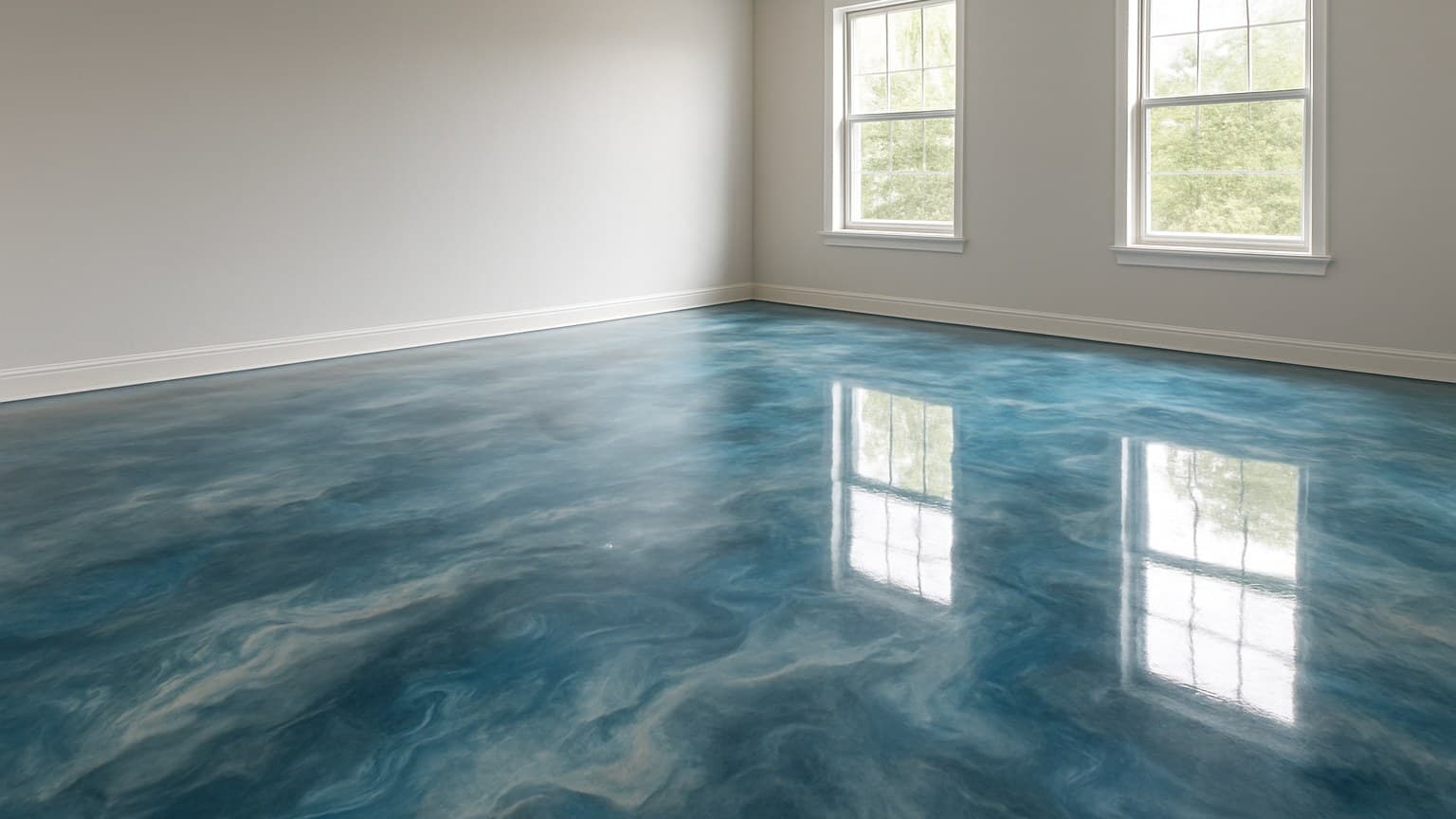
| Metallic epoxy | $14-$18 |
Installed cost per square foot by resin finish, materials and labor combined. Chart not to scale precision; read the ranges, not the pixel.
You'll see pricing pages disagree on the top end, with some capping at $15 and others at $18 or more. That gap comes from two things those "averages" hide: the condition of your slab and which system you pick. A cracked, oily slab in metallic MMA is a different job than a clean slab in solid epoxy. Treat the polyaspartic and MMA rows above as a general guide rather than an industry standard, far fewer installers publish benchmark pricing for those two systems than for epoxy, so get a few local quotes before you lock in a budget for either one. If you want to run the arithmetic for your exact slab, this step-by-step epoxy cost calculation walks the formula input by input.
DIY Kit vs. Professional Installation Cost
A DIY kit runs about $1.08 to $2.66 per square foot, while a pro residential install runs about $7 to $9 per square foot. Metallic swings the gap wider: a DIY metallic kit is around $2.67 per foot against $9 to $15 for a pro. If you want to see exactly what pushes epoxy into the higher end of that range, this breakdown of epoxy floor coating cost drivers walks through each factor.
In garage totals people recognize, that's roughly $389 to $1,359 for a kit, versus about $1,200 to $6,750 for a pro install depending on size and finish.
| Scope | DIY kit | Pro install |
|---|---|---|
| Per sq ft (residential) | $1.08-$2.66 | $7-$9 |
| Per sq ft (metallic) | about $2.67 | $9-$15 |
| Two-car garage (total) | $389-$1,359 (kit) | $1,200-$6,750 |
| What's included | Coating only; prep is on you | Grinding, moisture test, primer, warranty |
DIY kit pricing versus a professional residential install, per square foot and as a two-car garage total.
The gap isn't markup. The pro price buys diamond grinding, a moisture test, a real primer, and a warranty. The kit price assumes your slab is already clean, dry, and flat, which most are not.
When DIY Is Realistic and When to Hire Out
Resin floors are not a click-together product you can pull up and redo. Once the resin kicks, it's down for good, so your prep has to be right the first time.
A plain one-color epoxy in a two-car garage is doable for a careful DIYer who rents a grinder and tests the slab. Where it goes wrong is anything broadcast (flake or quartz scattered into wet resin), any metallic pour, or any slab you haven't actually ground. Those are the jobs that come back to me for a redo, and fixing it after the fact costs more than hiring it out up front would have. For a full breakdown of where the dollars split, the DIY kit vs pro install comparison lays it side by side.
Cost by Project Size: Garage, Basement, Commercial
The bigger the floor, the lower the per-foot price. Mobilization, setup, and grinder rental get spread over more square feet, so a 2,000 sq ft shop prices lower per foot than a one-car garage.
The math is simple: total = square footage x per-sq-ft rate. Measure your floor, pick a rate for your finish, multiply. For a 450 sq ft two-car garage in flake epoxy at $7 to $12 per foot, that's $3,150 to $5,400.
| Project | Sq ft | Rate used | Total |
|---|---|---|---|
| 1-car garage | 250 | $7-$12 (flake epoxy) | $1,750-$3,000 |
| 2-car garage | 450 | $7-$12 (flake epoxy) | $3,150-$5,400 |
| Basement | 800 | $7-$12 (flake epoxy) | $5,600-$9,600 |
| Small commercial | 2,000 | $5-$10 (volume rate) | $10,000-$20,000 |
Worked totals using square footage times a per-foot rate, in flake epoxy for homes and a volume rate for commercial.
Watch the premiums. Stairs, coves (where the floor curves up the wall), floor drains, and basement moisture work all push a job above the open-room rate. A garage number is a clean baseline; the extras are where quotes drift apart. For garage-specific pricing, see the full epoxy garage floor cost guide.
Commercial and Industrial Resin Flooring Cost Per Square Foot
Commercial resin runs roughly $5 to $10 per square foot at volume for standard builds, and climbs from there with thickness and chemical duty. Industrial floors use heavier builds, typically 14 to 30 mils ("mil" means one thousandth of an inch, so a 30-mil floor is a bit more than half as thick as a US dime, which runs about 53 mils), and systems like polyurethane cement that hold up against heat, forklifts, and solvents. Those cost more than a thin residential coat because there's more material down and the resin itself is pricier.
What Actually Drives the Price Up
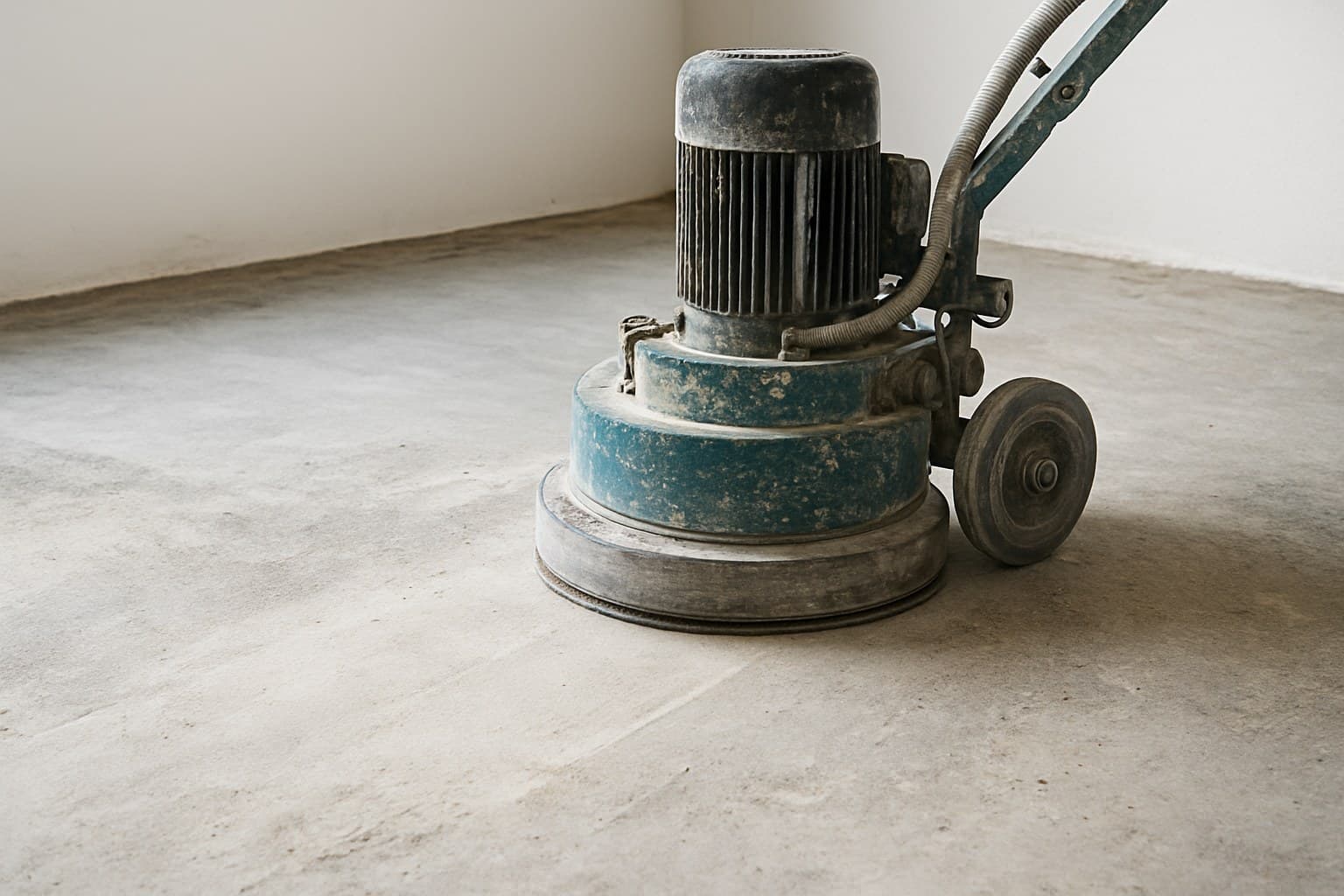
Prep is the biggest swing in any resin quote, and it happens before a drop of resin goes down. A slab that needs patching, crack repair, or oil removal can add dollars per foot on its own. If the slab is wavy, a self-leveling underlayment adds cost too, but it's what gives you a flat floor to coat.
Moisture is the budget line cheap quotes skip. A slab that reads high needs a moisture vapor barrier coat, which adds real cost but keeps the floor from peeling later. Every epoxy job I've had go wrong traced back to a slab that wasn't ground or was still damp, so I moisture-test the concrete before I open a kit. A slab that's still damp or never got ground down will lift the coating no matter how carefully it's applied.
Those are the two checks to do before any install: is the slab flat, and is it dry. Flatness decides whether the finished floor looks right; moisture decides whether it bonds at all. Skip either and the resin lets go, usually in the first year or two. That's the core reason the concrete slab decides epoxy floor lifespan more than any product choice does.
Two more things push the price. Thickness is one: a 14-to-30-mil industrial build costs more than a thin residential coat because there's more resin in it. Traffic and chemicals are the other: forklifts, hot tires, and solvents push you toward polyaspartic topcoats or urethane cement, which both cost more than a basic epoxy.
Price Today vs. Cost Over Time
A low bid looks attractive until you count what happens after year one. The National Wood Flooring Association's life-cycle cost analysis, which tracks the annual ownership cost of 18 flooring types over the life of a commercial building, weighing maintenance and replacement rather than just the install price, found that the cheapest material up front isn't always the cheapest to own. That research doesn't include resin flooring specifically, but the same logic applies here: a floor that needs a full regrind and recoat in two years costs more per year of use than a properly prepped system that lasts a decade, even if the sticker price was higher on day one.
A quick word on the cheapest bid. A Dayton homeowner named Carol once took the lowest of three quotes on her garage; six months later the gaps and lippage brought her back to me, and the fix plus the redo cost more than my first number would have. The cheapest quote leaves out the grinding and the moisture test, and those are exactly what fails. If you want to see how the up-front price compares to the cost spread over the floor's lifespan, that per-year math is worth a look before you sign anything.