
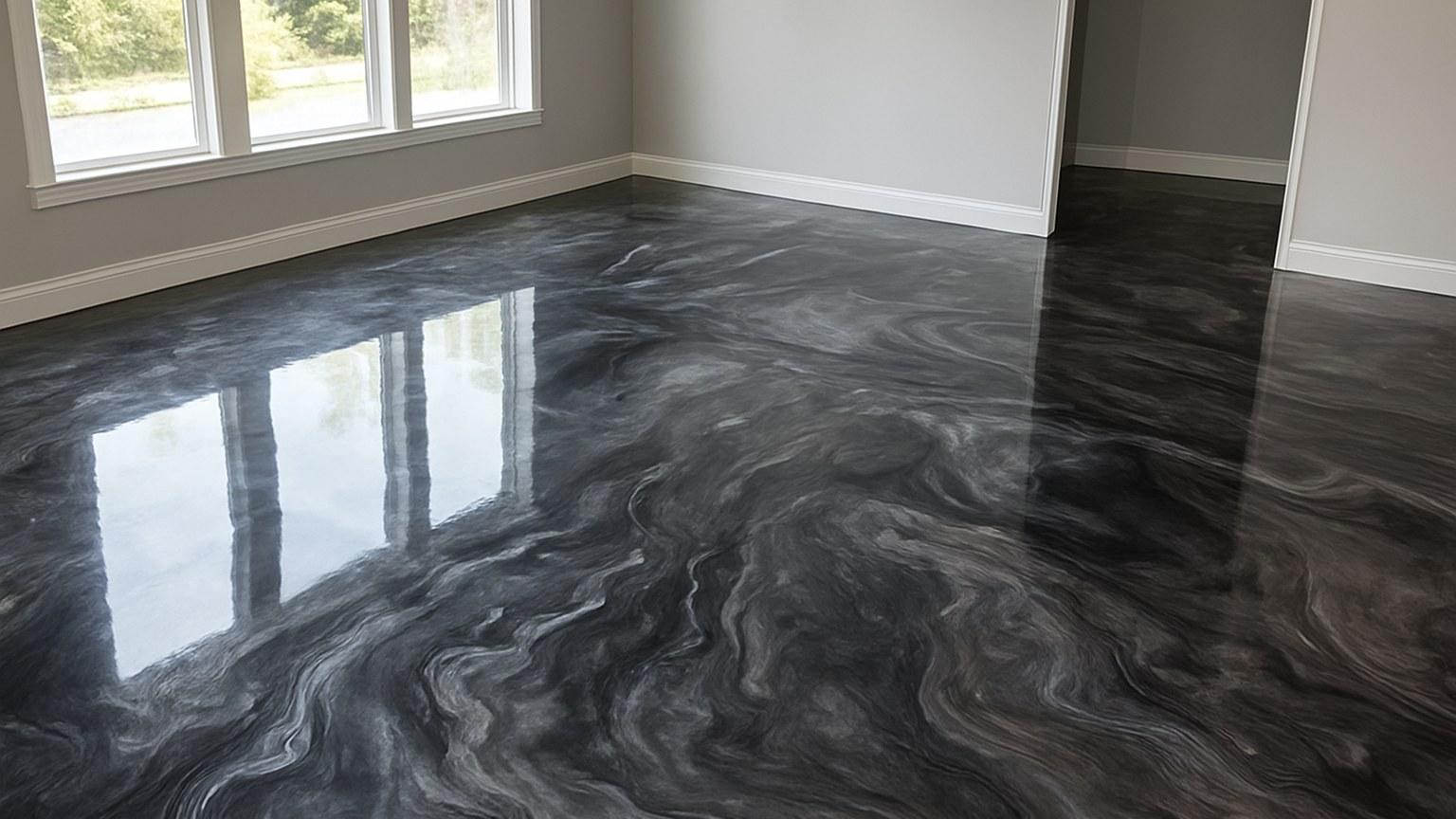
Get three bids for the same garage and the metallic epoxy floor cost comes back at $8, $13, and $18 a foot. Nobody's lying. The spread hides in six line items most quotes bury, and once you read them, the gap stops being a mystery.
Key takeaways
- Pro metallic epoxy runs about $8 to $18 per sq ft, and both ends can be fair depending on six line items in the quote.
- The two biggest price swings are prep (acid etch vs full diamond grind, which is 25-40% of labor) and a moisture-mitigating primer that adds $1.50-$3.50 per sq ft.
- By size, a 2-car garage runs roughly $3,600-$7,500 and an 800 sq ft basement runs about $6,400-$12,000; per-foot price drops as the floor gets bigger.
- A DIY metallic kit runs around $2.67 per sq ft (about $1,599 for 600 sq ft) vs $9-$15 pro, but metallic swirl work is the hardest epoxy finish to pull off yourself.
- Spread over its 10-20 year life, metallic epoxy costs roughly $0.40-$1.80 per sq ft per year, in the same ballpark as flake and solid epoxy.
The Short Answer: Where the $8-$18 Spread Comes From
A pro-installed metallic epoxy floor runs about $8 to $18 per square foot, and both ends can be honest prices. One crew is coating a dry, flat slab with a single color. The other is grinding a cracked basement floor, laying a moisture barrier, and pouring a three-color swirl under a heavy-duty topcoat. Same square footage, different job entirely.
Of that per-foot price, the materials (resin, metallic pigment, and topcoat) usually run about $2 to $4 per square foot. Everything above that is labor and prep. That's the key to reading your quote: the material cost barely moves, so almost the entire $8-to-$18 swing is work, not product. If you're weighing a plain resin floor instead, or need commercial-grade numbers per square foot, the resin flooring cost guide breaks that pricing down on its own.
Six line items do the moving: prep level, a moisture primer, color count, slab condition, floor size, and topcoat grade. Learn these and you can rebuild any quote yourself and see which end you actually belong on. If you want the broader view of what pushes these numbers around, the five price drivers behind epoxy cost per square foot guide walks the same logic for plain epoxy too.
| Driver | Low end ($8 side) | High end ($18 side) | Why it moves the price |
|---|---|---|---|
| Prep level | Acid etch on a clean slab | Full diamond grind plus crack repair | Prep is 25-40% of total labor |
| Moisture primer | None, on a dry slab | Moisture-mitigating primer coat | Adds about $1.50-$3.50 per sq ft |
| Color and design | Single color, simple swirl | 3+ colors, heavy manipulation | More pigment and more labor hours |
| Slab condition | Sound, flat concrete | Pitted, oil-stained, patched | Repairs add prep labor and product |
| Floor size | Large open floor | Small or cut-up room | Per-foot price drops as size rises |
| Topcoat grade | Standard clear coat | High-build UV-stable urethane | Grade sets wear life and cost |
The six line items that move a metallic quote from the $8 floor to the $18 ceiling.
Line Item 1: Prep Level (Acid Etch vs Diamond Grind)
This is the single biggest line a cheap quote can hide, because prep is 25-40% of the labor cost. The choice comes down to two methods, and they aren't equal.
Acid etching uses a mild acid wash to rough up only the thin top skin of the concrete. Diamond grinding uses spinning discs with abrasive grit to open the surface deeper, leaving real tooth for the coating to grab.
For metallic specifically, this matters more than the brand of epoxy on the truck. The coating is only as good as the bond under it. A cheap etch is where peel-and-callback jobs start, lifting at the edges a year or two later. A weak etch under a pretty metallic pour is one of the most common reasons I get called back to fix a floor that looked great for a year and then started lifting at the edges.
Ask every bidder, in writing, whether they grind or etch. That one word explains a big chunk of the $8 versus $18 gap, and it's the honest line a low bidder would rather you not ask about.
Diagram is not to scale; it shows the surface profile, not real depths.
Line Item 2: Moisture-Mitigating Primer
A moisture-mitigating primer adds roughly $1.50 to $3.50 per square foot, which can move a whole quote a couple dollars a foot by itself. It's a base coat that blocks water vapor rising up through the slab before that vapor can push the epoxy off the concrete.
Here's the part a good crew does and a bad one skips. Before any coating goes down, they check the slab for moisture and for flatness. Moisture testing tells you whether vapor is coming up through the concrete, the kind of concrete moisture-emission testing the Environmental Protection Agency's (EPA) Environmental Technology Verification (ETV) program has evaluated for accuracy. A flatness check tells you whether the slab dips or humps enough to pool the metallic pour unevenly. Both get checked before anyone opens a bucket.
Basements and on-grade slabs (concrete poured right on the ground) are the usual culprits. If your slab sits below grade, has no vapor barrier under it, or has a history of dampness, the primer is worth it. A dry, upper-level garage slab with a good barrier may not need it at all.
Skipping needed primer is a classic way a low bid gets down to $8. It's also the corner that comes back as bubbling and blisters, and by then the only fix is grinding the whole floor off and starting over.
Line Item 3: Color Count and Manipulation Work
A single-color metallic pour is quick. Every added color and every swirl pass means more pigment, more product, and more hours on the clock. That's the whole cost story for this line.
Manipulation is the trade word for how installers move the wet metallic pigment around to get that cloudy, marbled, poured-stone look. They use air blowers and splashes of alcohol to open up and push the color while it's still wet. It's a skill, so part of what you pay for here is the installer's hand, not just the material.
Intricate three- and four-color designs push a metallic floor toward the $18 ceiling. A simple two-tone floor, say a dark base with one lighter metallic worked through it, gets you much of the drama for far less than a custom four-color pour. If your budget is tight, this is an easy line to trim without making the floor look cheap.
Line Item 4: Slab Condition and Repairs
A sound, flat slab is cheap to coat. A pitted, cracked, oil-stained, or patched slab adds real prep labor and filler product, and it's a legitimate reason one honest quote comes in higher than another.
Oil and old sealers are the sneaky ones. They have to be ground out, or they wreck adhesion no matter how good the epoxy is. That's more grinding time billed to you. Cracks and divots need filling and feathering (sanding the patch down so its edges blend smooth into the surrounding concrete instead of leaving a ridge) before any color goes down, or they telegraph straight through the finished floor.
If the slab is badly out of flat, leveling comes first, and that's its own line with its own price. It's worth knowing what self-leveling epoxy flooring costs before you assume a quote is padded, because a dished slab genuinely needs it. Expect this line to be vague in a cheap bid, so ask plainly what crack and divot repair is included and what happens if they find more once grinding starts.
Line Item 5: Floor Size (Why Per-Foot Price Drops)
Bigger floors cost less per square foot. That sounds backward until you see where the money goes. Setup, mixing, masking, and getting the crew and gear to your house are mostly fixed costs. They barely change whether the floor is 300 square feet or 900, so they spread thinner across a bigger pour.
That's why a small, cut-up room, like a laundry room or a single-car bay with a water heater and shelving to cut around, lands near the $18 top. A wide-open two-car garage or an open basement lands lower per foot. Small and chopped-up pushes the price up; big and open pulls it down.
It also means basements cost more than a plain open garage of the same size, not less. Stairs, bulkheads, support posts, and tight corners all add cutting and edge work, and below-grade slabs are the ones most likely to need that moisture primer from Line Item 2.
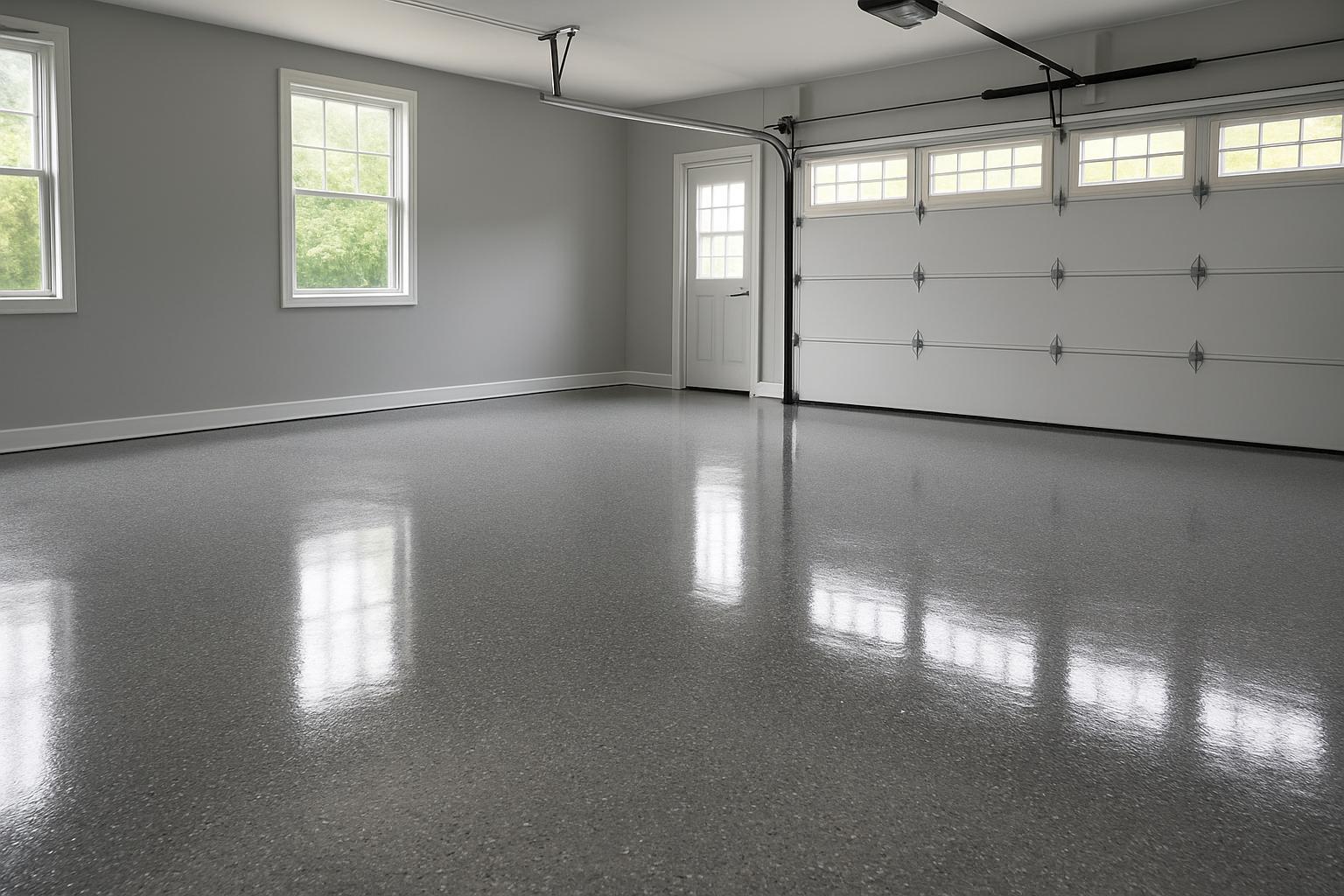
Metallic Epoxy Cost by Garage and Room Size
Here's what the total job runs once you stack the lines together. A standard two-car garage lands around $3,600 to $7,500. An 800-square-foot basement runs roughly $6,400 to $12,000, and it sits higher per foot partly because of the moisture and cut-up-space premiums above. If you'd rather plug in your own square footage and line-item choices than eyeball these ranges, the epoxy flooring cost calculator walks through that math step by step.
| Floor | Rough size | Price per sq ft | Total installed (materials + labor) |
|---|---|---|---|
| 2-car garage | ~440 sq ft | $8-$17 | $3,600-$7,500 |
| 800 sq ft basement | ~800 sq ft | $8-$15 | $6,400-$12,000 |
Source: pricing published by Tennessee Garage Floor Coatings
Total installed metallic epoxy cost for two common floors, showing the basement's size and moisture premium.
For a deeper breakdown by bay count and door size, the epoxy garage floor cost guide runs the numbers for one-car through three-car layouts, including DIY material totals.
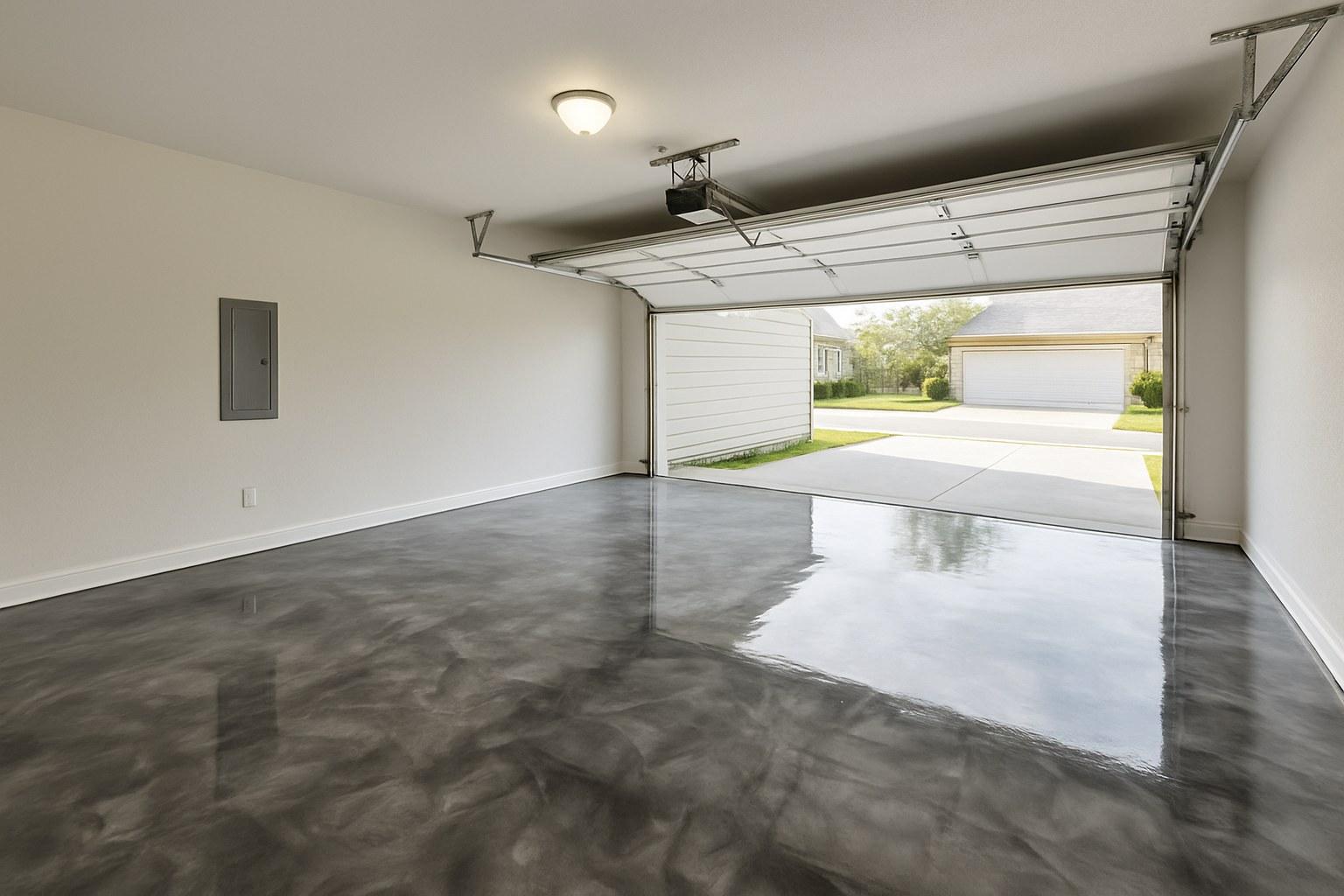
Line Item 6: Topcoat Grade
The clear coat on top is the last step, and the grade you pick directly sets how long the floor holds up before it needs recoating. A standard clear epoxy topcoat is the budget choice. A high-build, UV-stable urethane topcoat costs more but resists yellowing in sunlight and takes harder wear, which is why it shows up on the $18 side.
For a basement playroom that never sees sun, a standard topcoat is fine. For a garage with a big south-facing door, or any floor that gets direct light, the UV-stable coat is the one that keeps the metallic from going amber in a few years. This is the right place to spend if your floor takes sun or heavy rolling loads.
If you're actually pricing a shop, warehouse, or anything that takes forklift traffic, that's a different animal with much thicker systems, and the commercial epoxy flooring guide matches those systems to the floor they fit.
DIY Kit vs Hiring a Pro
A DIY metallic kit runs around $2.67 per square foot, roughly $1,599 for a 600-square-foot kit, and that's materials only. A pro charges about $9 to $15 per square foot installed, so the same 600 square feet runs $5,400 to $9,000 with labor.
| Option | Price per sq ft | 600 sq ft example | What it covers |
|---|---|---|---|
| DIY metallic kit | ~$2.67 | ~$1,599 | Materials only |
| Hire a pro | $9-$15 | $5,400-$9,000 | Materials + prep + labor |
Source: ArmorGarage's published kit and install pricing
DIY kit price versus pro installed price for a 600 square foot metallic floor.
That gap is tempting, but be honest with yourself about the finish. Metallic swirl work is the hardest epoxy finish to pull off. The pour sets up fast, you only get one shot at the color while it's wet, and a blower held wrong leaves a dead spot you can't fix without recoating. A plain flake or solid-color DIY kit is forgiving. A metallic kit is not. If flake sounds like the safer starting point, the epoxy flake flooring cost guide breaks down what that easier finish runs on its own.
My honest take: if you want to DIY, start with a solid or flake floor where mistakes hide. Save metallic for a pro, or practice on a small closet slab first. The prep is also where DIY jobs fail, because homeowners etch when the slab really needed grinding. If you want to compare kit-versus-pro math in more detail, the epoxy floor installation cost breakdown lays out both paths side by side.
What Metallic Epoxy Costs Per Year
Spread over its life, a metallic floor is cheaper than the sticker suggests. A well-prepped metallic epoxy floor lasts about 10 to 20 years. Take the installed range and divide by the lifespan: $8 to $18 per square foot over 10 to 20 years works out to roughly $0.40 to $1.80 per square foot per year.
Here's the arithmetic plainly. Cost per year equals installed cost per square foot divided by years of life. At the cheap end, $8 over 20 years is $0.40. At the top end, $18 over 10 years is $1.80. That lands metallic in the same ballpark as flake and solid-color epoxy, because they share the same base coats and topcoats, with the metallic pigment and extra labor being the only real add. This divide-by-lifespan approach is the same logic behind the National Wood Flooring Association's (NWFA) Life Cycle Cost Analysis methodology, which compares flooring options on an annualized basis instead of by sticker price alone.
The number that wrecks that math is bad prep. A floor that peels at year three because somebody etched instead of ground didn't cost $0.50 a year, it cost you the whole floor plus the regrind. That's the real reason prep deserves your attention more than the color does. For how metallic stacks up against tile, wood, and stone on a per-year basis, the epoxy floor price guide runs that comparison out.
If your slab is covered in old vinyl right now, read can you put epoxy over a vinyl floor before you budget anything, because the answer changes your prep line completely and it's a surprise I find often on a walk-through.