
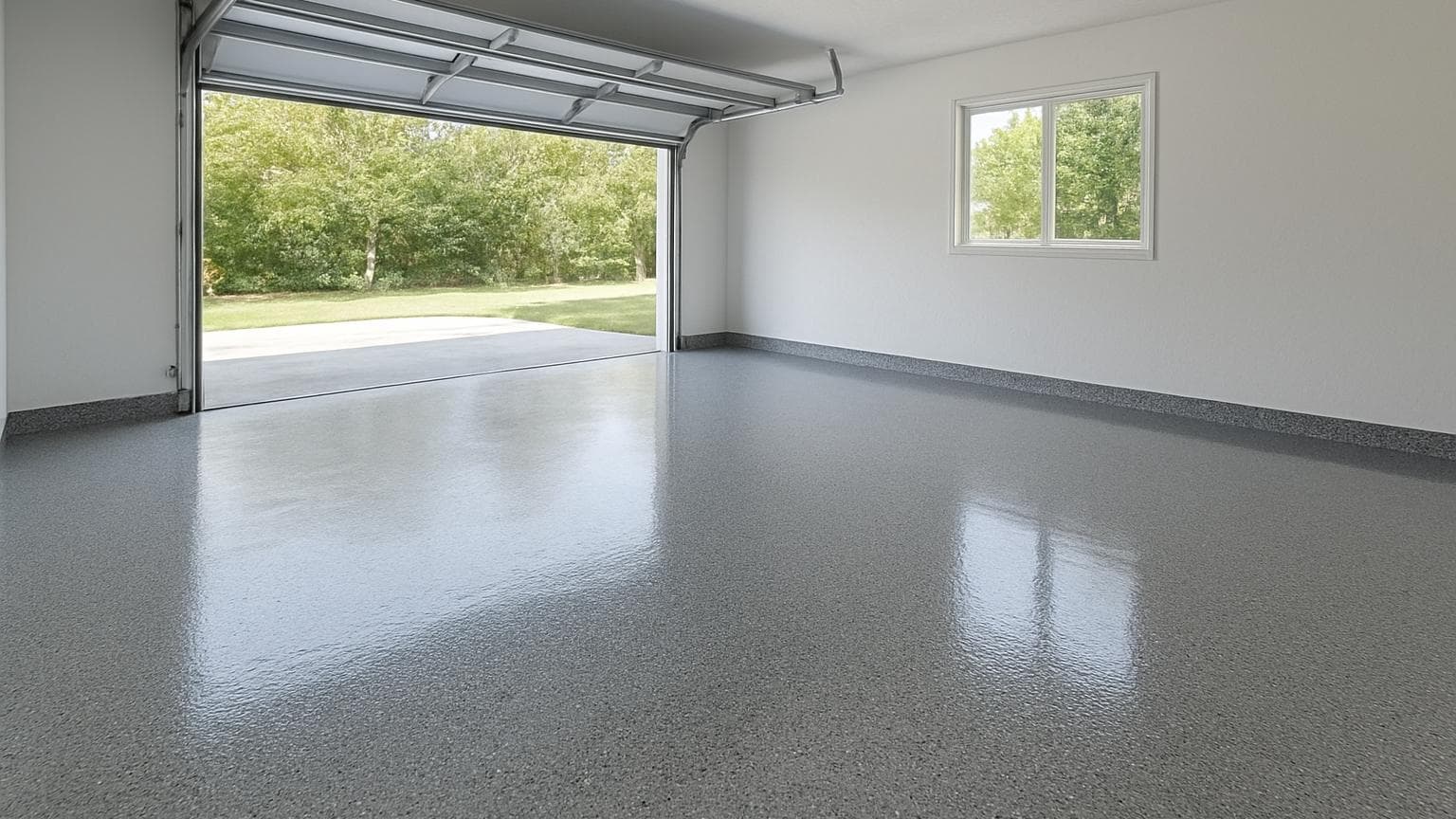
Garage floor coating cost runs about $4-10 a square foot installed, but the number that actually decides what you pay is the 20-year total, not the quote you sign today. A cheap epoxy you redo three times beats a one-and-done polyaspartic on the sticker and loses the long game badly. Here are the 8 numbers that sort a fair garage floor coating cost from an expensive mistake.
Key takeaways
- Over 20 years a $4-7/sq ft epoxy can cost roughly $11-22/sq ft because you redo it 2-4 times, while a $7-10/sq ft polyaspartic often lasts the whole 20 years on one coat.
- Per square foot: epoxy runs $4-7 (5-10 yr life), polyurea $6-9 (15-20 yr), polyaspartic $7-10 (20-25+ yr), per Cleveland Concrete Coatings.
- A 20x20 (400 sq ft) floor costs about $1,600-2,800 in epoxy and $2,800-4,000 in polyaspartic; a 2-car garage lands roughly $1,900-3,200 installed.
- Prep (grinding, crack repair, old coating removal, moisture testing) moves the price more than the coating brand does.
- Financing commonly runs about $41-78 a month, and ready-for-traffic is around 24 hours, per Shark Floor Coatings.
Start Here: Your Real Cost Is the 20-Year Number, Not the Quote
The number that matters is total dollars per square foot over 20 years, not the install price. The cheapest epoxy quote is usually the most expensive floor by year 20, because you tear it out and redo it more than once.
Four things decide what a coating really costs you: the upfront price, how long it lasts, how many times you redo it in 20 years, and what that all adds up to per square foot.
A thin epoxy at $4-7 a square foot looks cheap. But if it lasts 5-10 years, the range Cleveland Concrete Coatings gives epoxy, you redo it 2-4 times over 20 years, so the real cost lands around $11-22 a square foot. A polyaspartic at $7-10 that lasts the full 20 years on one coat stays at $7-10. The sticker loser wins.
The assumptions here are simple: life ranges each material actually holds, how many recoats fit inside 20 years, and all of it run on a 400 square foot garage so the math is easy to check.
| Material | Upfront per sq ft | Lifespan | Times redone in 20 yrs | Cost over 20 yrs per sq ft |
|---|---|---|---|---|
| Epoxy | $4-7 | 5-10 yrs | 2-4 | $11-22 |
| Polyurea | $6-9 | 15-20 yrs | 1-2 | $7-14 |
| Polyaspartic | $7-10 | 20-25+ yrs | 1 | $7-10 |
20-year cost of ownership per square foot, by coating material, on a 400 sq ft garage, built on Cleveland Concrete Coatings' per-square-foot and lifespan figures for each coating type.
Total dollars per square foot over 20 years, floating from the low to the high end of each range.
Polyurea and polyaspartic usually win the 20-year math despite the higher sticker. If you want to see how the cheap option stacks up year by year, the epoxy floor price guide breaks epoxy's own cost-per-year down.
Garage Floor Coating Cost Per Square Foot, by Material
Epoxy runs $4-7, polyurea $6-9, and polyaspartic $7-10 per square foot, with lifespans of 5-10, 15-20, and 20-25+ years, according to Cleveland Concrete Coatings. Polyurea is a fast-curing synthetic coating that flexes more and resists impact better than epoxy. Polyaspartic is a type of polyurea made to cure even faster and hold its color in sunlight, so it won't amber the way plain epoxy can. That same source puts polyurea at about 4 times stronger than epoxy, which is why it buys more years before a recoat.
These are coating-only prices. You're paying to put a finish on the concrete slab you already have, not to pour new concrete.
For a little history: back in 1999, the EPA (Environmental Protection Agency) listed an auto-shop epoxy floor seal at roughly $1.50-$2.00 a square foot. That's a marker of how far today's flake and hybrid systems have climbed past a plain seal coat.
| Material | Cost per sq ft | Lifespan | Note |
|---|---|---|---|
| Epoxy | $4-7 | 5-10 yrs | Cheapest upfront; can yellow and chip |
| Polyurea | $6-9 | 15-20 yrs | About 4x stronger than epoxy |
| Polyaspartic | $7-10 | 20-25+ yrs | UV-stable, longest-lasting |
Source: Cleveland Concrete Coatings' per-square-foot and lifespan figures
Coating cost per square foot and expected lifespan by material.
For the full spread on epoxy alone, from the bargain-bin kits to the loaded flake systems, see the epoxy garage floor cost guide and the breakdown in $1 to $18 a Square Foot.
Garage Floor Coating Cost by Size, 1 to 6 Cars
Read your own garage off the row below. The table reconciles two sets of numbers mygaragefloors.com publishes: its own installer quotes and the broader industry range it cites, so you don't have to juggle two sources.
| Size | Installer quote | Industry range |
|---|---|---|
| 1-car | $1,800-2,100 | ~$2,000 |
| 2-car | $1,900-2,300 | $2,400-3,200 |
| 3-car | $2,600-3,100 | $3,600-4,800 |
| 4-car | $3,700-4,300 | $4,800-6,400 |
| 5-car | $4,900-5,600 | $6,000-8,000 |
| 6-car | $5,500-6,300 | $7,200-9,600 |
Source: mygaragefloors.com's size-by-size pricing
Installed cost by garage size, installer quotes versus the wider industry range.
Bigger garages cost a little less per square foot, because mobilization and setup get spread over more area. But odd shapes, an extra bay, or a raised threshold at the door all nudge the garage flooring cost back up.
One caution from the field: a cheap per-bay number means almost nothing until you know the material and the prep behind it. I've seen $1,900 two-car quotes that were a thin roll-on epoxy over an unground slab, and that floor is peeling by the next winter.
What a 2-Car Garage, a 20x20, and 400 Square Feet Really Cost
A 20x20 garage is 400 square feet, and most 2-car garages run about 400-440 square feet. So these three searches are really one question.
The arithmetic is simple:
Area (square feet) × price per square foot = total.
Measure the length times the width to get your area. A 20-foot by 20-foot garage is 20 × 20 = 400 square feet. Then multiply by the coating's price. A polyurea floor at the middle of its range runs 400 × $7.50 = $3,000.
| Item | Amount |
|---|---|
| Formula | Area (sq ft) x price per sq ft = total |
| Epoxy, 400 sq ft x $4-7 | $1,600-2,800 |
| Polyurea, 400 sq ft x $6-9 | $2,400-3,600 |
| Polyaspartic, 400 sq ft x $7-10 | $2,800-4,000 |
What 400 square feet (a 20x20 garage) costs by coating material.
Measure your real garage before you trust any of these. If yours isn't a clean 20x20, run your own square footage through the epoxy flooring cost calculator guide to get your own total.
5 Things That Drive Your Price Up
Your price has less to do with which coating brand you pick and more to do with the slab it's going on and how well that slab gets prepped. Here are the five things that move the price most.
1. Concrete condition and prep. Diamond grinding costs more than acid etching, but it opens the concrete so the coating actually grabs. This is where concrete garage floor coating cost really moves. On every floor I've done, the finished coating only lasts as long as the prep under it, and prep decides adhesion far more than any logo on the bucket. The epoxy floor guide to concrete prep goes deeper into why the slab underneath, not the epoxy itself, is what decides how long the floor holds up.
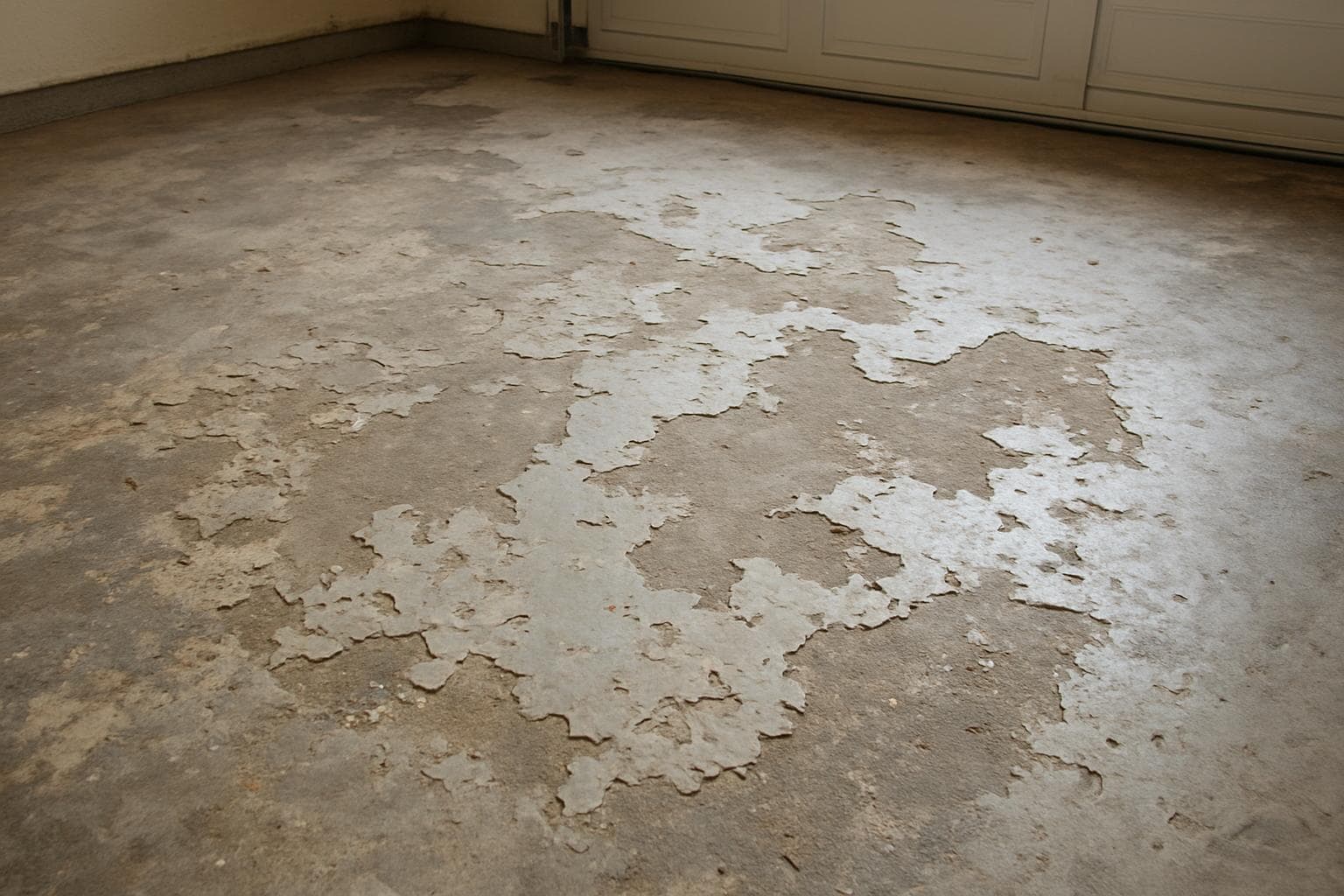
2. Cracks and old coating removal. Filling cracks and stripping a failing old coating is labor that happens before a drop of new coating goes down. A slab with a peeling old finish costs more because someone has to grind it off first.
3. Moisture. A slab that pushes moisture vapor up through it will lift a coating right off the concrete. A moisture test comes before any pricing or install, not after. I also walk the slab for low spots and wide cracks at the same time, because flatness and moisture problems both show up at the grinder.
4. Finish upgrades. A heavier flake broadcast or a metallic finish adds both material and labor. Metallic is the priciest look of the bunch because of the extra coats and the skill it takes to pour; the metallic epoxy floor cost guide explains why two quotes for it can be miles apart.
5. Garage shape and access. Extra bays, tight corners, a step-down, or a threshold at the door all add cut-in work and time. A plain open rectangle is the cheapest floor to coat.
Want this itemized? The per-square-foot price drivers guide walks through each one.
Why the Cheapest Epoxy Quote Often Costs the Most by Year 20
Epoxy's lifespan reads two ways depending on who you ask. Cleveland Concrete Coatings gives it a firm 5-10 years, while mygaragefloors.com calls it unpredictable. Both are right about different floors: a thin DIY roll-on epoxy over poor prep fails fast, while a properly ground, pro-installed epoxy lands near that 5-10 window.
That's also the DIY-versus-hire line. A DIY kit saves you the labor, but prep is exactly where DIY epoxy floors fail, and a coating wants a solid, properly ground slab to bond to. If you're grinding, crack-filling, and moisture-testing a garage yourself, you're doing the hard part. For most people that's the part worth hiring out.
Yellowing is the other catch. Epoxy ambers under sunlight, and mygaragefloors.com warns that a polyurea-base hybrid can still yellow underneath. A true UV-stable polyaspartic topcoat resists that. So the topcoat is really what you're paying extra for.
Then there's hot-tire pickup. A cheap coating lifts right where warm tires sit when you park, and that's the first spot a bargain floor starts peeling.
Spend on prep and a UV-stable topcoat, not the lowest sticker. Skip either one and you pay again inside a few years. If polyurea is the direction you're leaning, read up on polyurea garage floor coating cost before you commit.
Financing: What Monthly Payments Look Like
Financed garage coatings commonly run about $41-78 a month, according to Shark Floor Coatings, which also puts ready-for-traffic time at around 24 hours. On a lot of jobs you can park on the floor the next day and pay it off monthly instead of all at once.
Treat that monthly figure the way you'd treat any loan. A longer term lowers the payment but raises what you pay in total, and the real cost still comes back to the 20-year math up top. A $60-a-month polyaspartic that lasts 20 years is cheaper over its life than a $41-a-month epoxy you refinance twice.
Before you sign any financing, get the prep spelled out in the quote. A low monthly payment on a floor that peels in three years is the most expensive kind of cheap.
Sources
- EPA Floor Cleanup guidance (historical epoxy sealing cost baseline)
- Cleveland Concrete Coatings' per-square-foot and lifespan figures
- Mygaragefloors.com's size-by-size pricing