Professional polyurea garage floor coating costs about $7 to $12 per square foot installed, which puts a typical 2-car garage somewhere around $2,800 to $5,800. The confusing part is that one contractor quotes $6 and the next quotes $12 for what sounds like the same floor. Prep, brand, and your region move that number far more than the coating itself does.
Key takeaways
- Professional polyurea runs about $7-$12 per square foot installed; a 2-car garage lands roughly $2,800-$5,800.
- Published ranges disagree ($6-$12/sq ft, 15-30 year life) because of brand, prep, and region, not because anyone is lying.
- On cost per year of life, pro polyurea (around $200/yr) usually beats pro epoxy (around $350/yr) even though it costs more upfront.
- Epoxy is the cheaper, more DIY-friendly coating; polyurea is a fast-curing pro job that handles UV and road salt better.
- The quote only holds up if the slab is ground, moisture-tested, and flat first; prep is what the warranty quietly hinges on.
What Polyurea Garage Floor Coating Costs Per Square Foot
Professional polyurea garage floor coating runs about $7 to $12 per square foot installed. That already bakes in prep, materials, and labor for a pro crew, and on most jobs, labor for grinding and multiple coats eats the bigger share, with the polyurea material itself the smaller slice of that price. That's also higher than the roughly $4 to $10 you'll see quoted for general garage floor coatings elsewhere on this site, because that broader number folds in cheaper epoxy and DIY jobs too; polyurea sits at the premium end of it.
Quotes you'll find elsewhere spread wider than that. Different contractor sites and quote pages list anywhere from $6 on the low end to $12 on the high end, and none of them point back to one named source for those figures, the spread mostly reflects how much prep, brand, and region change the job. That's why $7 to $12 is the range I'd plan from instead of chasing one perfect number.
Several things move that number. The brand and grade of polyurea matter, so does how many coats go down, what shape your slab is in, and what labor costs where you live. A clean, flat garage in a low-cost market lands at the bottom. A pitted slab that needs grinding and a crew in a high-cost metro lands at the top.
Treat $7 to $12 per square foot as the number to plan around, then jump to the by-size section below for your actual total.
| Quote band | Range ($/sq ft) |
|---|---|
| Lower-end quotes | $6-$10 |
| Mid quotes | $7-$9 |
| Higher-end quotes | $7-$12 |
| Our working range | $7-$12 |
These quote bands come from the spread of contractor pricing pages we checked, not one named publisher, shown against the $7-$12 per square foot range to plan from.
Polyurea Cost by Garage Size
The math is simple: floor area in square feet times $7 to $12 equals your installed cost. Measure your garage length by width with a tape, don't guess from the number of cars, because real bays vary a lot. Labor for grinding and laying multiple coats usually makes up the bigger piece of that total, with materials the smaller share; where you land depends on your slab's condition and local labor rates.
| Garage size | Floor area | Installed cost at $7-$12/sq ft |
|---|---|---|
| 1-car (single bay) | ~250 sq ft | $1,750-$3,000 |
| 2-car | ~400-480 sq ft | $2,800-$5,800 |
| 3-car | ~600-720 sq ft | $4,200-$8,600 |
Polyurea installed cost by garage size, using the $7-$12 per square foot working range.
One thing the table won't show: a 1-car garage often lands toward the upper half of that $1,750-$3,000 range rather than the bottom, because crews charge a minimum no matter how small the floor is. Mobilizing a crew, grinding, and mixing material costs about the same whether the bay is tiny or not.
For a broader look at coating prices across every garage footprint, the breakdown in Garage Floor Coating Cost: 8 Numbers That Decide What You Pay Over 20 Years runs the sizes next to the long-term math.
Polyurea Cost for a 2-Car Garage
A standard 2-car garage runs about 400 to 480 square feet. At $7 to $12 a foot, that lands roughly $2,800 to $5,800 installed.
Where you fall in that spread comes down to prep. A newer slab that just needs a grind and two coats sits near the bottom. An older floor with oil stains, cracks, and an old peeling coating to remove pushes toward the top.
Polyurea Cost for a 3-Car Garage
A 3-car garage is usually 600 to 720 square feet, so plan for roughly $4,200 to $8,600 installed. Bigger floors sometimes earn a slightly better per-foot rate because the crew's setup cost gets spread over more area.
Don't count on that discount, though. If the extra bay has its own moisture issues or a stem wall to coat, those add labor and eat the savings.
What Drives Your Price Up or Down
Concrete prep is the biggest swing in the whole quote. Diamond grinding, a machine that opens the top of the slab so the coating can grip, costs more than acid etching, a chemical wash that does the same job but weaker. On anything serious, a pro will quote grinding, and that's the right call.
A moisture vapor barrier coat gets added when the slab tests damp. Vapor pushing up from below is one of the things that lifts a coating off the floor, so that extra coat is cheap insurance, not an upsell.
Labor adds up fast on the fussy stuff. Removing an old peeling coating, patching cracks and pitting, cleaning out oil stains, and coating stem walls or steps all take time, and time is what you're paying for.
Then there's the material itself. Aliphatic polyurea, the UV-stable kind that won't yellow in sunlight, costs more than aromatic polyurea, which yellows when the sun hits it. Extra chips, a thicker topcoat, or a custom color push the quote up too. If you're weighing a show-floor look, the premium finishes in Why One Metallic Epoxy Floor Quote Says $8 and the Next Says $18 explain where that extra money actually goes.
One rule I never bend on any garage job: I don't rush the recoat window to let someone park that night. Pulling tires onto a coating that hasn't cured leaves peel marks you can't fix, so the maker's cure schedule wins, not the customer's weekend plan.
Polyurea vs Epoxy: Settling the Conflicting Numbers
Epoxy is cheaper upfront and friendlier to a DIYer. Polyurea costs more but cures in hours, shrugs off UV, and lasts longer. That's the trade in one sentence. Either way, how long that epoxy actually holds up comes down to the slab underneath it, since epoxy floor lifespan depends on concrete condition.
The numbers people quote are all over the map. Guides put polyurea's life anywhere from 15 to 30 years and epoxy's from 3 to 10, so here are those real ranges instead of one marketing figure.
Those ranges swing for the same reasons the price does: brand, prep quality, region, and whether a pro or a weekend DIYer laid it down. A pro epoxy job with proper grinding can outlast a rushed DIY polyurea job, so the install matters as much as the chemistry. Epoxy pricing swings for its own set of reasons, which the rundown of five price drivers behind epoxy cost breaks down in more detail.
One more name to know: polyaspartic. It's a close cousin of polyurea, often used as the fast-setting topcoat in a polyurea system, and it's priced in the same neighborhood. When a quote says "polyurea/polyaspartic," that's usually a base coat and a topcoat working together.
| Factor | Polyurea | Epoxy |
|---|---|---|
| Installed cost | $7-$12/sq ft | $3-$10/sq ft |
| Typical lifespan | 15-30 years | 3-10 years |
| Return to use | hours | days |
| UV / yellowing | aliphatic resists yellowing | can yellow and chalk in sun |
| Best install route | hire a pro | DIY-friendly or pro |
Polyurea and epoxy garage floor coatings compared across cost, lifespan, cure time, UV behavior, and install route.
If epoxy is where your budget's pointing, the full picture in How Much Does an Epoxy Garage Floor Cost? and the DIY-versus-pro split in Epoxy Floor Installation Cost: DIY Kit vs Pro Install Compared are worth a read before you choose.
Cost Per Year: The Real Long-Term Math
Divide the installed cost by how many years it lasts, and polyurea's higher sticker price usually wins. A coating that costs more but lasts three times as long is cheaper per year, even though the quote looks scarier.
The formula is plain: installed cost divided by expected lifespan equals cost per year of life. Run a 2-car garage through it both ways and the gap shows up fast. Apply the same division to epoxy's own install price per square foot and you get the numbers an epoxy flooring cost calculator guide walks through in detail.
Pro polyurea at about $4,000 over a 20-year life works out to roughly $200 a year. Pro epoxy, using the $3 to $10 per square foot range given above for a 2-car garage, runs about $2,600 to $3,100 installed over a 7-year life, roughly $370 to $440 a year. The epoxy is cheaper to buy and still costs more to own. That per-square-foot-to-per-year math is exactly what the breakdown in epoxy floor price per square foot and per year walks through for epoxy on its own.
| Option | Installed | Expected life | Cost per year |
|---|---|---|---|
| Polyurea (pro) | $4,000 | 20 years | $200 |
| Epoxy (pro) | $2,600-$3,100 | 7 years | $370-$440 |
| DIY epoxy kit | $1,100 | 4 years | $275 |
Cost per year of life for a 2-car garage, dividing each option's installed cost by its expected lifespan.
Cost per year of life for each 2-car option; the cheapest coating to buy is not the cheapest to own.
Be straight about the DIY path, though. A cheap epoxy kit can land near $275 a year, but only if you accept a short life, a repeat weekend every few years, and downtime each time you redo it. The number looks fine on paper; the lost Saturdays and the garage you can't use don't. For the full kit-versus-pro accounting, the per-year breakdown in Epoxy Floor Installation Cost: DIY Kit vs Pro Install Compared goes deeper than this one table can.
Why Polyurea Shrugs Off Road Salt and Garage Chemicals
Polyurea's chemistry stands up to the acids, salts, and UV a garage floor actually sees, and that resistance is a big part of why it outlasts epoxy. This isn't a sales pitch, it's how the material behaves under exposure.
A study indexed in the EPA's HERO research database, the Environmental Protection Agency's searchable library of published research, looked at how exposure to sulfuric acid, sodium hydroxide, and sodium chloride affects polyurea's properties. Those three cover a lot of what ends up on a garage floor.
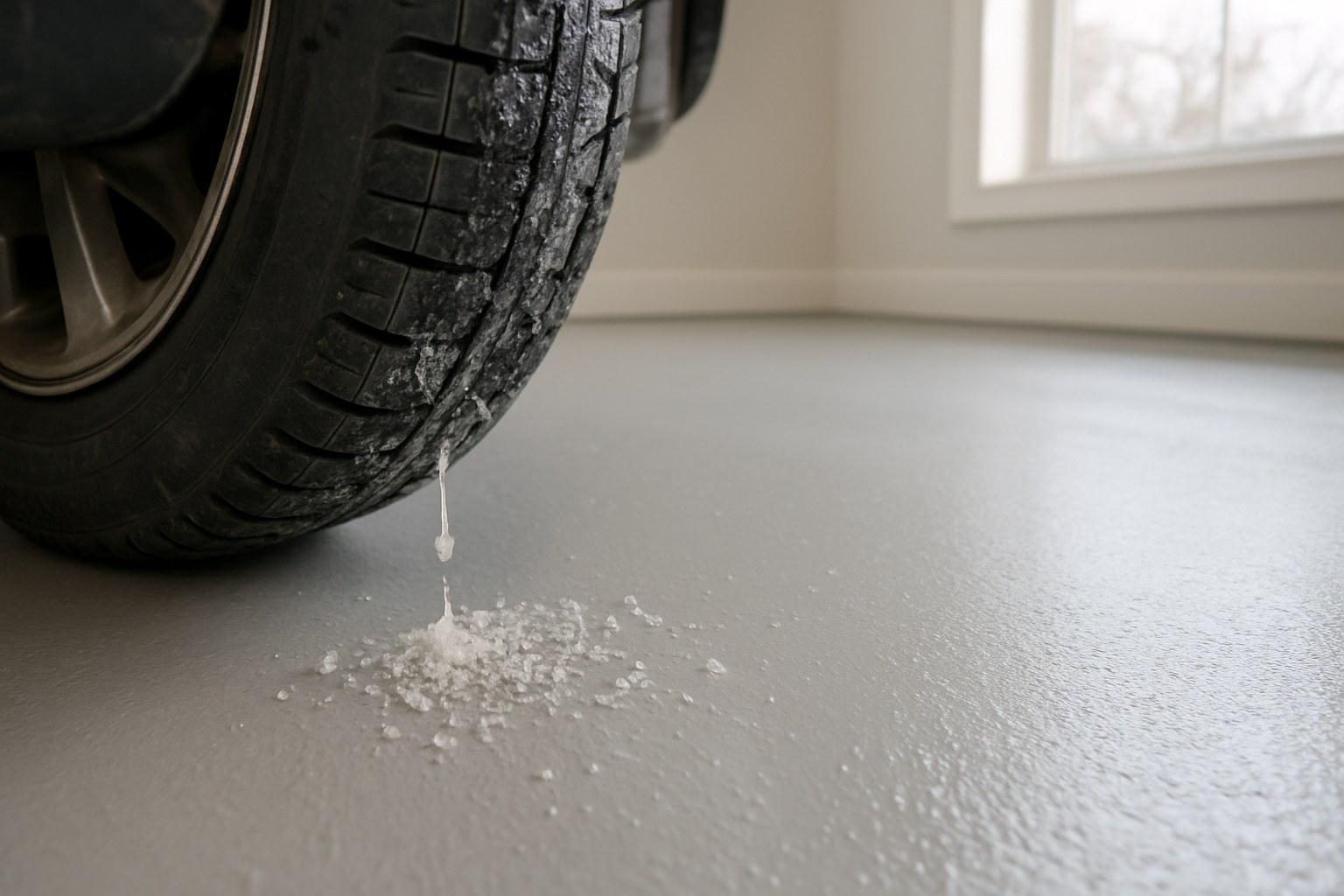
Translate that to your garage. Sodium chloride is road salt, the stuff that drips off your tires all winter and pools under the car. Polyurea's resistance there is why northern garages hold up through salt season when a lesser coating would blush and lift.
Then there's hot-tire pickup, where hot tires grab a weakly bonded coating and peel it right off the slab. A polyurea system that's ground in and properly bonded resists that because the base coat is flexible and gripped tight to the concrete.
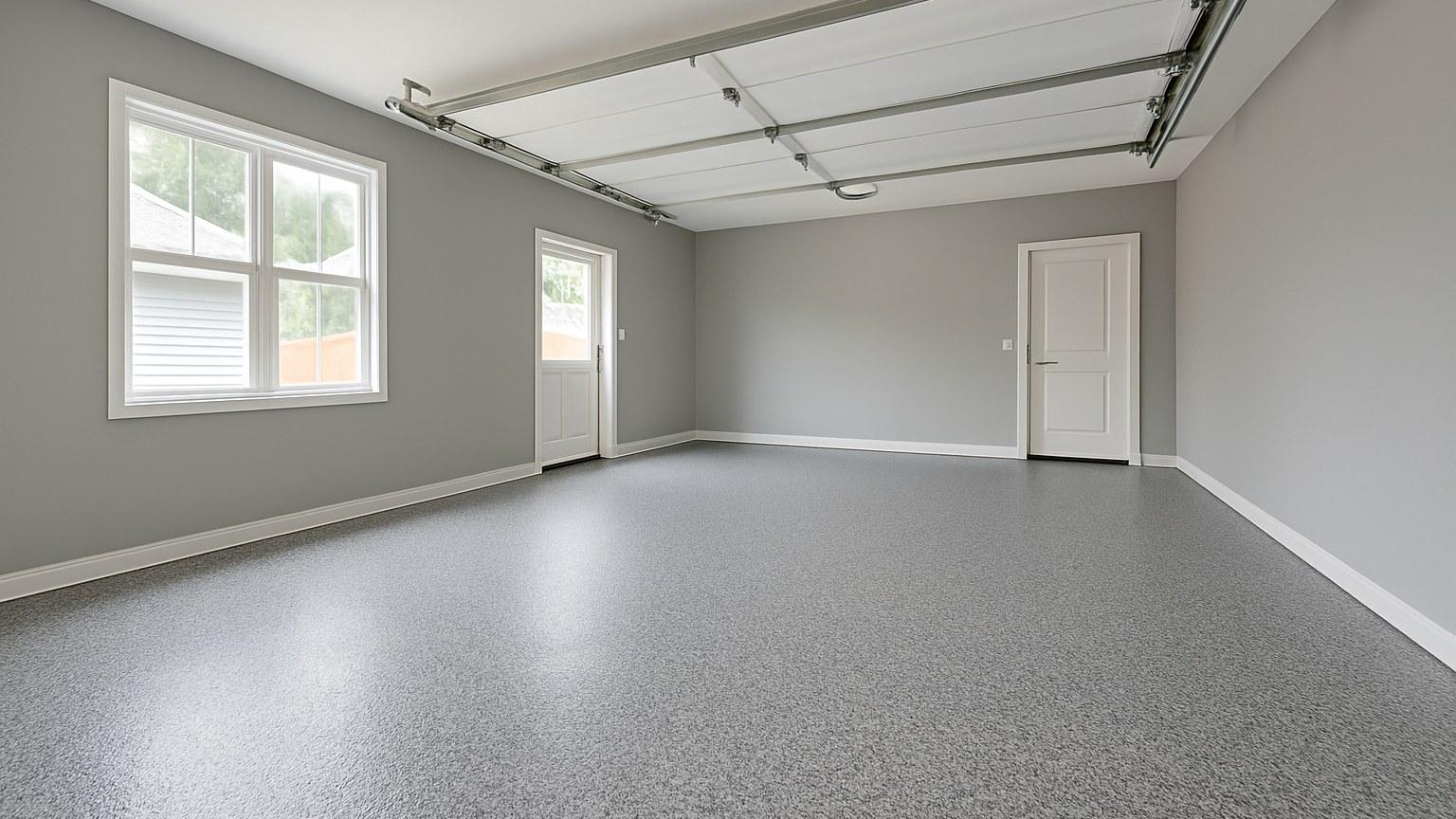
The layers work as a team. The primer or moisture coat grips the slab and slows vapor coming up, the polyurea base coat is the flexible wear layer, an optional vinyl chip broadcast adds grip and hides small flaws, and a UV-stable topcoat seals it and holds the color. None of that saves a floor laid over a dirty, untested slab, which is why flatness and a moisture test come before the first coat, not after.
For the longer view on how a coating's price per year plays out across two decades, Garage Floor Coating Cost: 8 Numbers That Decide What You Pay Over 20 Years is the companion read, because it frames the whole decision around the 20-year number instead of the quote.