
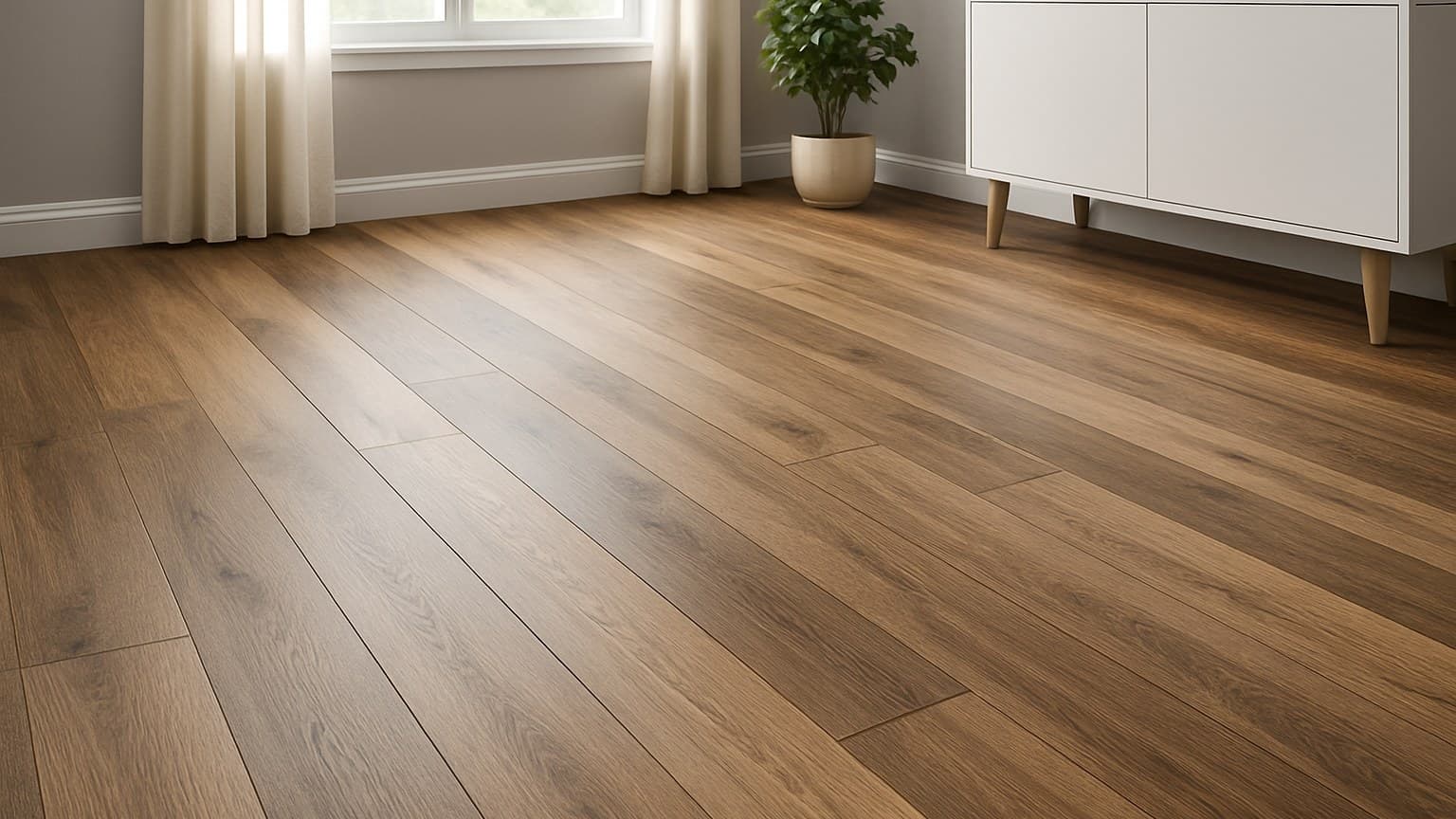
"Luxury" vinyl flooring is one of the most oversold words in the flooring aisle. There's no industry body that defines it, so any maker can print "luxury" on the box no matter how thin or flimsy the plank inside actually is. What really decides whether the floor lasts 20 years or dents and leaks in five comes down to three specs on the label: the wear-layer thickness in mils, the core type (SPC vs WPC), and the seam system that holds the planks together.
I've torn out my share of "luxury" floors that looked fine in the box and fell apart in two years. The premium name printed on that box never once explained why. The numbers next to it did. Here's how to read them so you don't overpay for a word.
Key takeaways
- No industry body defines "luxury" vinyl flooring — a $2 plank and a $6 plank can both carry the label, so the word itself guarantees nothing
- Three specs actually determine quality: wear-layer thickness in mils, core type (SPC vs WPC), and the seam system
- Wear layer guide: 6-12 mil for light-use rooms, 12-20 mil for busy homes with kids/pets, 20+ mil for heavy traffic or light-commercial use
- SPC core is harder and denser (resists dents, bridges subfloor bumps) while WPC is softer and warmer underfoot but dents more easily — neither is objectively better
- A waterproof core doesn't mean a waterproof floor: standing water gets past the seams to the subfloor, which is the source of most callbacks
- Budget roughly $2-7 per sq ft for materials and $1-4 per sq ft for installation, more for basements and stairs
"Luxury" Is a Marketing Word, Not a Grade
No industry standard defines "luxury" vinyl. There's no board, no rating, no test a plank has to pass before a maker can stamp the word on the carton. A $2 plank and a $6 plank can both call themselves luxury vinyl, and often do.
The label covers two shapes of the same product family. LVP is luxury vinyl plank, cut long and printed to look like wood boards. LVT is luxury vinyl tile, cut in squares to mimic stone or ceramic, and if you're leaning toward that square-cut option, my guide on picking the right luxury vinyl tile walks through matching the pattern and finish to your room, and if stone is the look you're chasing specifically, what separates real-looking stone LVT from the plasticky stuff covers the details that make the difference. The core and wear layer don't change. Only the shape and the printed picture do.
So if the word tells you nothing, what does? Three specs. The wear-layer thickness, the core type, and how the seams and edges are built. The rest of this article decodes each one, because that's where the money either buys you something real or just buys you a fancier box.
If you want the full ground-up walkthrough, my vinyl flooring buyer's guide covers the nine things that actually decide if vinyl lasts 5 years or 20. This piece zooms in on what "luxury" specifically does and doesn't buy.
Wear Layer: The One Number Worth Reading
The wear layer is the clear top coat sitting over the printed design. Its thickness, measured in mils (thousandths of an inch), is the single number that tracks how the floor takes traffic. Every maker publishes it per product, so you can read it right off the spec sheet.
The honest guidance I give people:
- 6-12 mil: fine for light-use bedrooms, closets, and guest rooms that don't see boots and dog nails all day.
- 12-20 mil: the sweet spot for busy homes with kids or pets, kitchens, and hallways.
- 20 mil and up: heavy traffic, entryways, or light-commercial use like a home office clients walk through or a rental.
That last tier is what "commercial-grade" LVP usually means. It's a thicker wear layer paired with a beefier warranty tier meant for foot traffic a house rarely sees. In a rental or a busy front entry, it earns its keep. In a spare bedroom, you're paying for protection you'll never use.
One warning. A thick wear layer protects the surface from scratches and scuffs. It does nothing for a soft core that dents or a loose seam that leaks. The mil number is one part of the equation, not the whole answer.
SPC vs WPC Core: The Part You Can't See
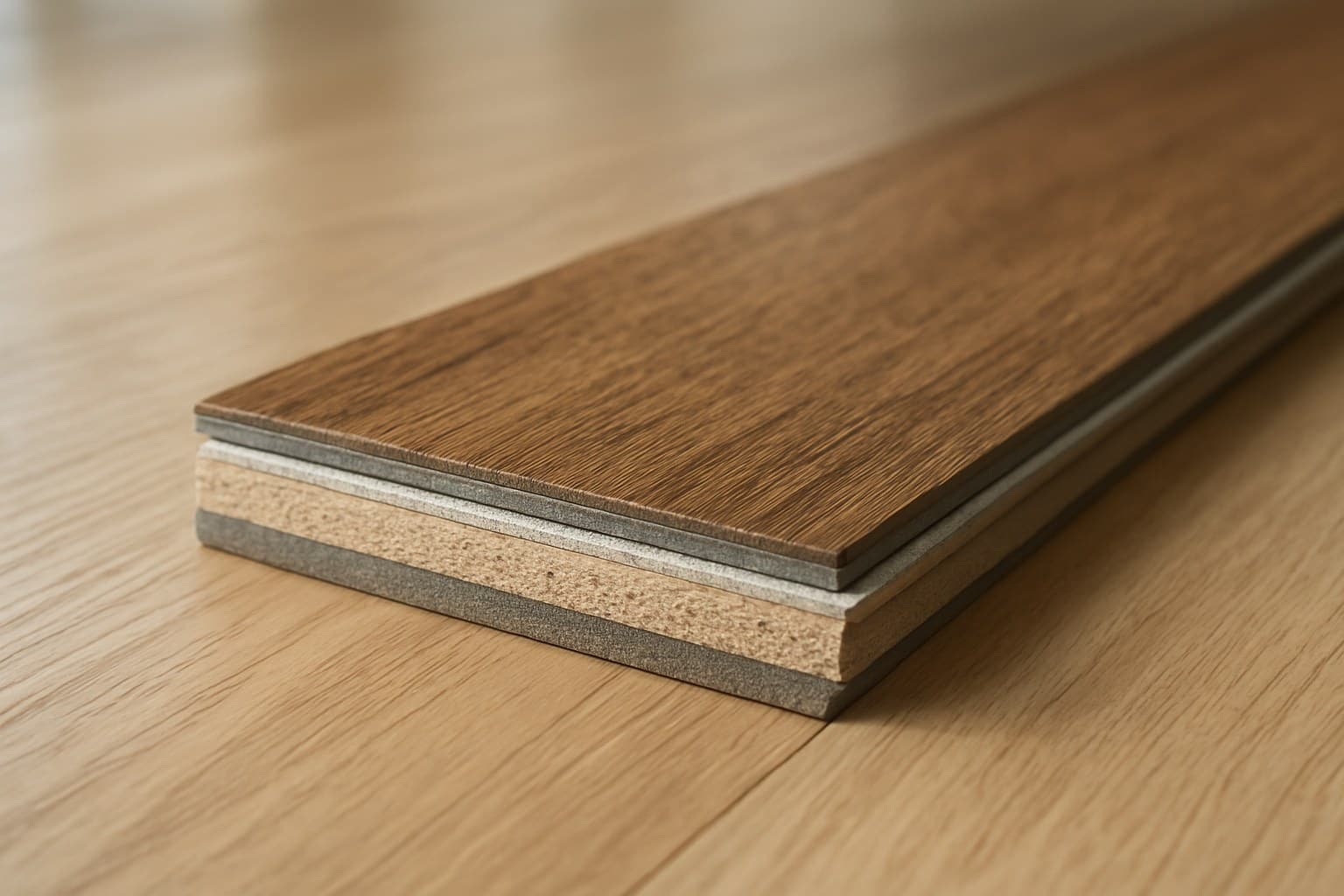
The core is the layer under the picture, and you'll never see it once the floor is down, but it decides how the plank feels and how it holds up. SPC (stone plastic composite) is the dense, hard, no-nonsense core. WPC (wood plastic composite) is the lighter, cushier one. Now the real tradeoff.
SPC is harder and denser. It dents less under heavy furniture, and because it's rigid, it bridges over small subfloor bumps better instead of telegraphing every flaw. The catch: it feels firmer underfoot and can sound a little louder, more of a click than a soft step.
WPC is the opposite. It feels warmer and softer to walk on and runs quieter, which people love in a bedroom or a living room. But that same softness means it dents easier. Drop a wrench or park a heavy couch leg on it and you're more likely to see a mark.
Neither one is "better." They trade off comfort against dent resistance, and the right pick depends on the room and how hard it gets used.
Here's the part the box won't tell you. Before I quote any job, I get down on the floor with a long straightedge and a light behind it, because the dips and humps I find there tell me more than the plank the customer already bought. A rigid SPC core forgives a small dip. It does not fix a bad one. A real low spot will still telegraph through either core, so the subfloor comes first no matter which core you land on.
Seams and Edges: Where "Waterproof" Floors Actually Fail
A waterproof core means the plank itself won't swell when it gets wet. It says nothing about the joints between planks, and nothing about the subfloor underneath. Those are two different promises, and the marketing blurs them on purpose.
Water doesn't attack the middle of a plank. It finds the seams. A pet accident left overnight, a slow dishwasher leak, an overflowing sink, that water works down through the joints between planks and pools on the subfloor. The vinyl on top looks fine. Below it, the subfloor is soaking. I pulled up a kitchen floor last year where the plank still looked showroom-new and the plywood underneath had gone soft and black.
Edge treatments change how hard the water has to work, but none of them make a true seal:
- Pressed or beveled edges look like real wood grooves but leave a small channel where water can sit.
- Tighter click-lock joints resist surface water longer than loose ones, which buys you time to wipe up a spill.
- Glue-down seals better against the subfloor than a floating floor, which is one reason I recommend it in wet rooms, but the seams still aren't watertight.
The takeaway: "waterproof core" is real, and it's useful. Just don't let it convince you the floor is a sealed tray. It isn't. For the full breakdown of where waterproof ends and water-resistant begins, plus which floor wins each room, see my guide on vinyl vs laminate flooring by room.
Cross-Brand Comparison: COREtec, ADURA, Ambient, Nucore, and House Lines
Standing in the aisle, brand names blur together. What separates them is core type, typical wear layer, VOC certification, and where they sit on price. Here's a rough map to judge by, not a scoreboard.
| Brand | Typical core | Wear layer range | Low-VOC certification | Phthalate-free claim | Price tier |
|---|---|---|---|---|---|
| COREtec | Rigid SPC (some WPC lines) | Varies by line, mid to thick | FloorScore certified lines | Claimed on some lines (verify per SKU) | Premium |
| Mannington ADURA | Flexible and rigid lines | Mid-range | FloorScore certified lines | Claimed on some lines (verify per SKU) | Mid to premium |
| Ambient | SPC (E-Zero core) | Mid to thick | GreenGuard Gold claimed on some lines (verify per SKU) | Claimed on some lines (verify per SKU) | Mid |
| Nucore (Floor & Decor) | Rigid SPC, attached pad | Mid-range | FloorScore certification varies by line | Claimed on some lines (verify per SKU) | Budget to mid |
| Duralux (Floor & Decor) | Rigid core, waterproof claim | Mid-range | FloorScore certification varies by line | Claimed on some lines (verify per SKU) | Budget |
This table shows how a few common brands stack up on the specs that predict quality, not a ranking of which to buy.
A few things to know. According to COREtec's own product pages, its lines are built primarily on rigid SPC cores. Mannington's ADURA collection, per Mannington's official ADURA site, spans both flexible and rigid constructions. Ambient markets an E-Zero core it describes as formaldehyde-free and advertises GreenGuard Gold certification on some lines; since that claim isn't independently verified here, and since certified brand lists change more often than shoppers expect, confirm current certification status directly with the manufacturer before you buy, especially if indoor air quality is high on your list. Nucore is Floor & Decor's house brand and usually ships with an attached pad, which saves a step on a floating install.
That house-line angle is worth naming. Store brands like Nucore and Duralux, or the equivalents at other big retailers, compete hard on price. The tradeoff versus a premium line is usually a thinner wear layer, a shorter warranty tier, or fewer plank styles, not a fundamentally broken floor. For a low-traffic room, a house line can be the smart money. For a kitchen with dogs, spend up.
Phthalate-free is another label claim worth decoding while you're reading the box, right alongside FloorScore and GreenGuard. Phthalates are the softening chemicals traditionally used in vinyl to keep it flexible, and many luxury vinyl makers now advertise their planks as phthalate-free as a separate health claim from low-VOC or formaldehyde-free certification. It is not the same thing as FloorScore or GreenGuard, and a floor can carry one without the other, so if it matters to your household, check the specific product's spec sheet or packaging for a phthalate-free statement rather than assuming a low-VOC certification covers it.
The caveat every retailer page skips: specs vary by the specific line inside a brand. Two floors under the same brand name can have very different wear layers and cores. Read the spec sheet for the exact product, not the logo.
What "Luxury" Vinyl Actually Costs, and Whether the Upgrade Pays
Split the cost in two, always. Materials run roughly $2-7 per square foot depending on the wear layer and core, and install labor adds about $1-4 per square foot on top. Anyone quoting you one flat number is hiding which half they marked up.
| Line item | Typical range (per sq ft) |
|---|---|
| Materials (planks) | $2-7 |
| Install labor | $1-4 |
Labor isn't flat, either. A simple square room is the cheap end. Basements add a moisture check and often a longer prep. Stairs are slow, fussy hand-cutting that costs more per step than open floor. Big open-plan rooms with moisture transitions between spaces need extra planning, and that shows up in the labor line.
So is the upgrade worth it? The jump from a 6 mil budget plank to a 20 mil floor over a solid core is usually worth every dollar in a kitchen or a pet home, because that's where thin floors fail first. Paying extra purely for the word "luxury" on the box, with no better mils or core behind it, is not.
On resale, be honest with yourself. A clean, current LVP floor absolutely helps a sale and reads well to buyers. But it does not carry hardwood's long-term value. Don't overspend on vinyl expecting it to appraise like solid wood, because it won't.
Where the Label Earns Its Name, Room by Room
Luxury vinyl earns its price in the rooms where water and traffic actually test it. Everywhere else, you're often paying for headroom you don't need.
Spend up here: kitchens, basements, bathrooms, and pet homes. These are the rooms where water tolerance and a thicker wear layer do real work. A 20 mil floor over an SPC core in a kitchen with dogs is money well spent.
Skip the premium here: low-traffic bedrooms, closets, and guest rooms. A mid-grade plank does the same job for less, and nobody's dragging a dishwasher across the closet floor.
On color, the light-and-wide plank trend is popular for a reason: it reads modern and opens up a room. Just know that light, wide planks show dust and pet hair more than a busy mid-tone, and they need more frequent sweeping to keep that clean look. Factor upkeep into the style you pick, not just the showroom photo.
Last call, DIY or hire. Floating click-lock LVP is realistic for most DIYers, and it's the most forgiving way in. Glue-down, stairs, and big open-plan rooms with moisture transitions are where hiring a pro pays off, because those are the jobs where a small mistake spreads across the whole floor. Whichever way you go, check subfloor flatness with a straightedge and run a moisture check first. I've stopped letting anyone talk me into skipping the moisture test on a slab to save a day, because the one time you skip it is the one time the floor cups on you.
If you're still weighing plank against tile against laminate before you commit, my explainer on how LVT differs from LVP and laminate sorts out which shape and build fits your room.
Sources
- COREtec Official Product Line
- Mannington ADURA Luxury Vinyl Collection
- Floor & Decor (retailer of Nucore and Duralux house brands)