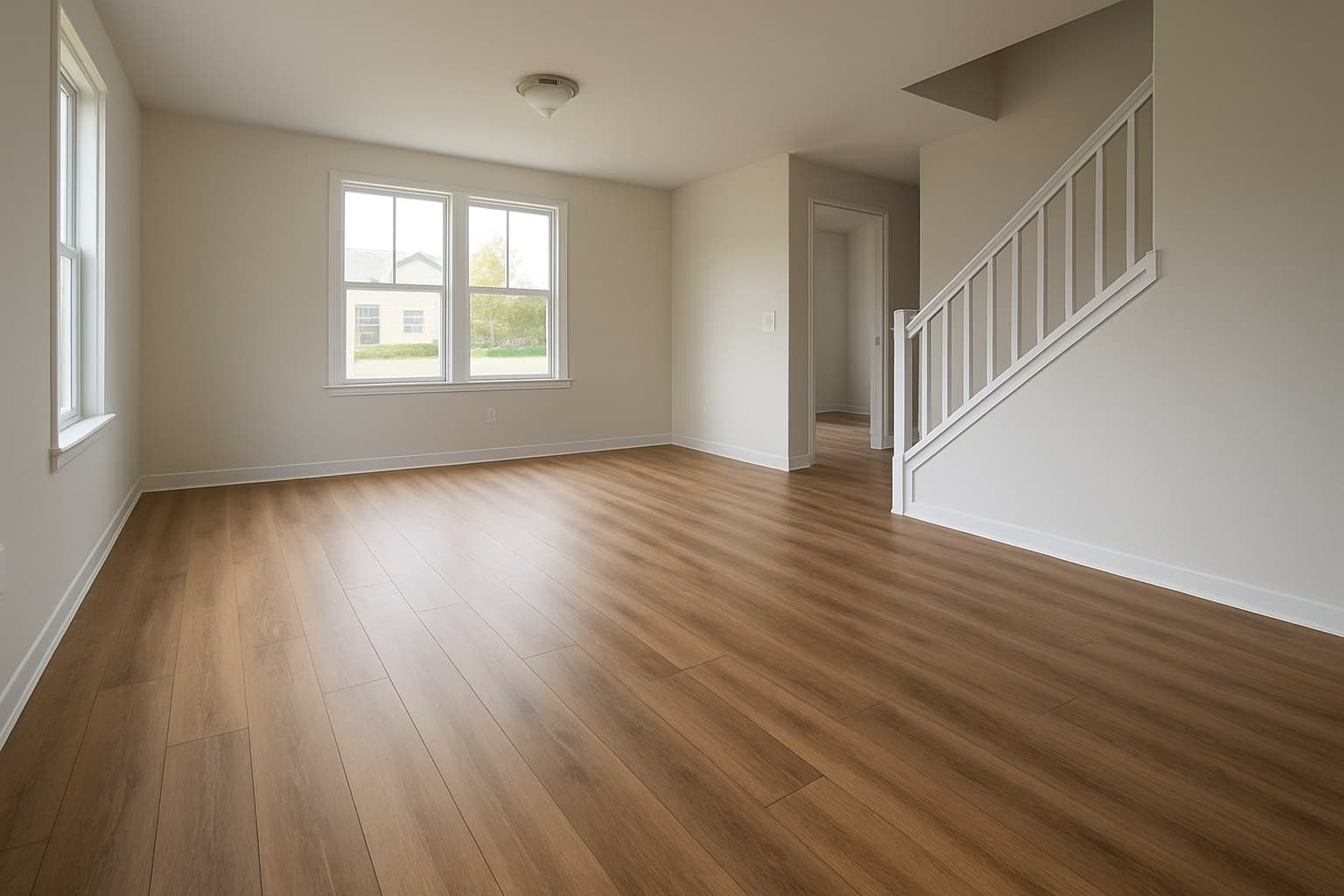
A plain go-or-no-go call for every room, tied to the two things that actually decide whether a laminate floor lasts: how much water hits it, and what's underneath.
Most laminate flooring failures I get called back to aren't about the plank the customer picked. They're about water reaching a room it can't handle, or a floor that went down over ground that was never checked and ready for it. Get those two calls right and laminate is one of the best-value floors you can buy, a case the North American Laminate Flooring Association (NALFA) makes in its rundown of laminate's cost and durability advantages. Get them wrong and you're paying to rip it out a year later. That said, the plank still matters at the margins, and it's worth seeing how quality varies across Mohawk's different laminate lines before you commit to one.
Key takeaways
- Bedrooms, living rooms, and dry hallways are laminate's best fit; full bathrooms and laundry rooms are almost always a no.
- Basements can work only after a moisture test on the slab; if it reads damp, switch to vinyl or an engineered floor rated for below grade.
- Kitchens and entryways are a yes only if you wipe spills fast and use mats at the sink and door.
- 1,000 sq ft runs roughly $3,000-$8,000 installed, split between about $1-6/sq ft materials and $2-5/sq ft labor, with stairs and basements costing more.
- Laminate rarely adds appraisal value the way real hardwood does, but clean, well-laid laminate won't drag a sale down.
The Quick Room-by-Room Verdict
Laminate works in dry, stable rooms and fails where water pools or sits. That's the whole rule in one line, and everything below is just detail on it.
Two things settle every verdict: how much water reaches the floor, and whether the subfloor under it is flat and dry. A room can pass on water and still fail on subfloor, so read this table as a starting point, not the final word.
| Room | Verdict | Why |
|---|---|---|
| Full bathroom | No | Standing water finds the seams and swells the edges |
| Half bath / powder room | Maybe | Low water, only if you wipe spills fast |
| Laundry room | Risky / No | One appliance leak can ruin a whole run |
| Basement | Maybe | Only after a slab moisture test passes |
| Kitchen | Yes, with care | Wipe spills at the sink and dishwasher fast |
| Entryway / mudroom | Yes, with care | Needs mats for snowmelt and grit |
| Living / family room | Yes | Dry and stable, laminate's best fit |
| Bedroom | Yes | Dry, low traffic, great value |
| Hallway | Yes | Handles traffic well |
| Stairs | Yes, but hard | Doable, but the toughest install in the house |
Source: My own install jobs, assuming a flat, dry subfloor Room-by-room go/no-go for laminate, assuming a flat, dry subfloor underneath.
Every "yes" above assumes one thing: a flat, dry subfloor. The next section is how you check that before a single plank goes down.
Check Your Subfloor and Moisture Before Any Room
Before you judge the room, judge what's under it. Flatness and moisture matter more to how a laminate floor holds up than the brand or the price does, and both are quick to check.
Start with flatness. Lay a long level or a straightedge across the floor and look for daylight under it. A hump makes the planks rock and slowly pushes the seams up into little peaks you feel with a sock. A dip does the opposite: the floor flexes over the empty space until the click joints work themselves apart and gap open.
Then check moisture. On a wood subfloor, use a moisture meter, a small handheld tool that reads how wet the material is. On a concrete slab, tape a plastic sheet down flat or run a calcium chloride test, a small sealed dish left on the concrete for at least 24 hours that measures how much moisture is escaping the slab, because concrete can look bone dry and still be pushing damp up from below.
Here's the part people skip: the exact flatness tolerance, and whether the floor even needs to sit in the room to acclimate, come from that product's own install sheet, not a number someone repeats online. Two laminates from the same store can ask for different things — even within one brand's lineup, like Pergo's waterproof laminate flooring, the acclimation and flatness specs can vary between product lines.
I'll be straight with you. On one job, a slab felt bone dry to my palm, but the calcium chloride test came back high, and we caught it before a single plank went down. On another, I eyeballed a hump as "close enough" and watched the seams peak up within a month. Skipping the ten-minute check almost always costs more than the check itself.
Where the straightedge touches, you have a hump; where light shows under it, you have a dip. Both need fixing before laminate goes down, not after.
Bathrooms and Laundry Rooms: Where Laminate Usually Fails
Full baths and laundry rooms are a no. These are the rooms where I see laminate fail most, and it's the same story every time: water sits somewhere long enough to reach a seam.
In a full bath, water pools around the tub and toilet and finds every joint on the floor. In a laundry room, the danger isn't a splash. It's a slow washer hose leak that runs behind the machine for days before anyone notices. One leak like that can swell a whole run of planks, and swollen laminate doesn't shrink back. You replace it.
Half baths and powder rooms are a maybe. There's no tub, no shower, so the only water is a sink splash you can wipe up. If you'll actually keep it dry, and the specific line you buy is sold as water resistant laminate flooring, you can get away with it. Check that claim on the product's own spec sheet, though. Water resistance isn't industry-wide; it belongs to the exact product that prints it.
And know what the claim really covers. As NALFA (the North American Laminate Flooring Association) explains in its overview of what laminate flooring is, a "waterproof core" means the inner board is built to resist swelling when it gets wet. It says nothing about the seams and edges, and the edges are where water gets in first — which is exactly why it pays to separate marketing claims about waterproof laminate flooring from what a spec sheet actually proves. Most failures I pull up started at a joint, not in the middle of a plank. So a waterproof-core rating and water-tight seams are two different promises, and only one of them stops a real leak.
For a room that actually gets wet, put down luxury vinyl plank or sheet vinyl instead. They're built to take standing water in a way laminate isn't, and you'll sleep better. Before you buy either one, it's worth knowing what makes vinyl flooring last for decades, since not every vinyl product is built to the same standard.
Basements: A Moisture Gamble Even With a Waterproof Core
Basements are a maybe, and only after a slab moisture test passes. Not a hand check, an actual test.
A basement floor sits below ground level, what the trade calls below grade, and a concrete slab down there wicks moisture up from the soil all year, even in dry weather. That damp has to go somewhere. Put a floor over it and the moisture can get trapped underneath, and a warm damp pad is exactly where mold gets started. A waterproof core doesn't save you here, because the problem is under the floor, not on top of it. That weak spot is exactly why basements so often tip toward vinyl instead, one of the clearest splits laid out among the differences between LVP and laminate flooring.
So before anything goes down, run a real slab moisture test. Tape a plastic sheet flat to the concrete and leave it 24 to 72 hours, then lift it and look for beads of water or a dark patch on the slab underneath. If it reads damp, don't force laminate. Switch to waterproof vinyl flooring or an engineered floor that's rated on its own sheet for below-grade use. And even when the slab passes, confirm the product you picked actually allows basement installs before you commit.
I learned this the expensive way. A customer once talked me out of the moisture test to save an afternoon, and I let her. The floor cupped, the plank edges curled up higher than the middle, before the season was out, and I relaid the whole thing on my own dime rather than argue about whose call it was. That afternoon we "saved" cost me a full reinstall.
Kitchens and Entryways: Yes, If You Handle Spills Fast
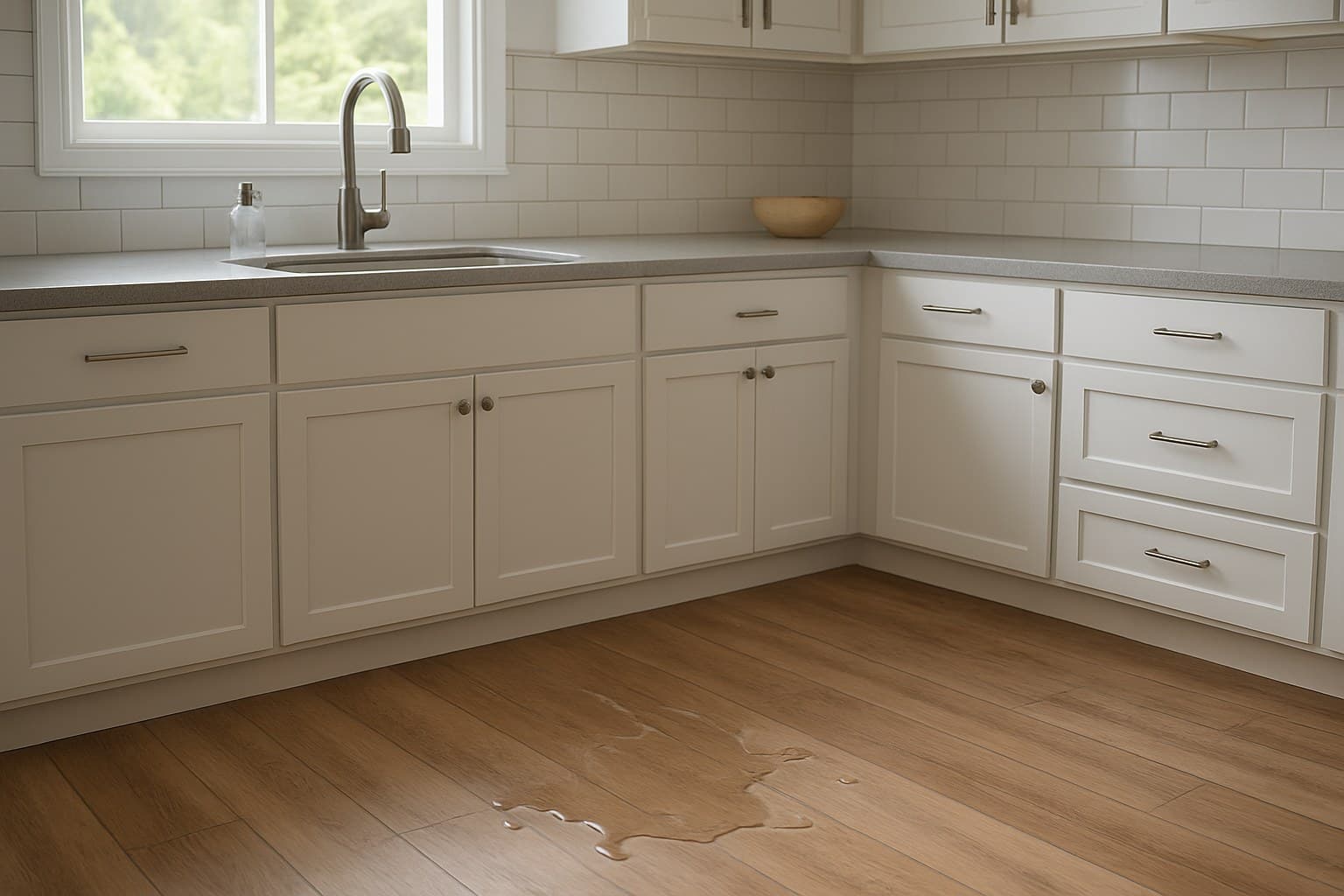
Kitchens and entryways are a yes, with care. Plenty of homeowners like stone look laminate flooring here for the tile-style look without cold tile underfoot, but the risk in a kitchen isn't cooking. It's a glass of water knocked over at the sink and left, or a dishwasher that seeps a little every cycle.
So handle water fast and seal the edges. Wipe spills before they sit, put a mat at the sink and in front of the dishwasher, and make sure the expansion gap where the floor meets the cabinets stays covered by trim so water can't run down into it. That gap is normal and necessary; you just don't want it open to spills.
Entryways and mudrooms take a different beating. The enemy there is grit. Sand and road salt tracked in on shoes act like sandpaper and wear through the top layer faster than plain foot traffic would. A good mat at every door catches most of it, and in snow country it also catches the meltwater before it reaches a seam.
One thing to keep straight: a line sold as water-resistant buys you time to catch a spill, not a free pass. It'll survive a wipe-it-up-in-ten-minutes accident. It won't survive a puddle left overnight. Match how tough the product is to how messy the room really gets.
Bedrooms, Living Rooms, and Hallways: Laminate's Best Fit
This is laminate's home turf, a clear yes. Dry, stable rooms with no plumbing are exactly what the material was built for, and it's where laminate beats vinyl and engineered wood on price for the wood look you get. That price edge narrows fast the moment a real wood veneer matters more than the savings, so it helps to know how engineered flooring construction differs from laminate before you settle on either one.
Because there's no standing water to reach the seams and the temperature stays steady, the planks don't move much, and a click-lock floor here is a realistic weekend job for most DIYers if you follow a solid laminate flooring installation guide. That combination, low cost per square foot plus an install you can actually do yourself, is why these rooms are laminate's strongest case.
Don't overbuy, though. Every laminate has an AC rating, an abrasion and traffic grade printed on the box, covered in more detail in NALFA's laminate flooring FAQs, and a quiet bedroom doesn't need the same tough rating as a busy hallway. Buy the traffic you actually have. Which ratings actually sit on the shelf in front of you often comes down to the kind of store you walk into, since big-box, specialty, and flooring-only retailers each lean toward a different slice of that range, a split laid out in the three kinds of laminate flooring stores.
Hallways are the exception on traffic. They take a real pounding, so match a higher rating there, and plan your plank direction and door transitions before you start the first row, because that's where a rushed hallway install goes crooked. If you're laying these rooms yourself, walk through how to install laminate flooring first so the layout and expansion gaps are right from row one.
Stairs: Possible but the Toughest Laminate Job in the House
Laminate does work on stairs, but it's the hardest install most homes will ever ask for. You can't just float click-lock planks over steps and hope. Every piece has to be cut tight and glued down solid.
Each step needs a stair nosing, the shaped edge piece that caps the front lip of the tread, plus adhesive and precise cuts on both the tread and the riser. There's no expansion gap to hide a bad measurement. If a cut's off, you see it.
This is where I tell people to hire out. Click-lock on an open floor is friendly to a careful beginner, but stairs are where DIY goes sideways, one bad nosing at a time. And because a pro charges per step, not per square foot, a staircase costs more per foot than the open room it leads into. Budget for that separately. Stairs are just one line item among several that can swing an installer's bid, a breakdown worth seeing in what sets laminate flooring installation cost.
How Laminate Affects Resale and Appraisal Value
Straight answer: laminate rarely adds appraisal value the way real hardwood does, and the store that sells it won't volunteer that. An appraiser looks at solid or engineered wood and adds dollars; they look at laminate and mostly note it as a serviceable floor. That gap in value is exactly why it's worth sorting out engineered hardwood versus solid hardwood by room before you decide laminate is the right tradeoff for a given space.
But that cuts both ways. Clean, well-laid laminate won't drag a sale down either. Buyers walking through don't dock a house for a good-looking laminate floor; they dock it for scratched, cupped, or peaking planks that scream "cheap job." The condition and the install matter more to a buyer than the material name. Laminate isn't the only floor judged this way at resale, either — engineered hardwood carries its own cost and lifespan tradeoffs worth weighing room by room, laid out in this engineered hardwood vs laminate costs and lifespan comparison.
So the honest way to think about laminate is as a floor that gives you a great daily look for the money, not as an investment you'll cash out at resale — which is exactly why picking from the best laminate flooring for your rooms matters more than chasing resale value. If return at sale is your goal, real wood is the play. If a good floor now at a price you can live with is the goal, laminate earns its spot in the right rooms.
One more resale note: consistency reads as quality. A house with laminate flowing through the bedrooms, living room, and hall looks intentional. A patchwork of three different floors, one per room, looks like corners were cut, whatever each one cost.