
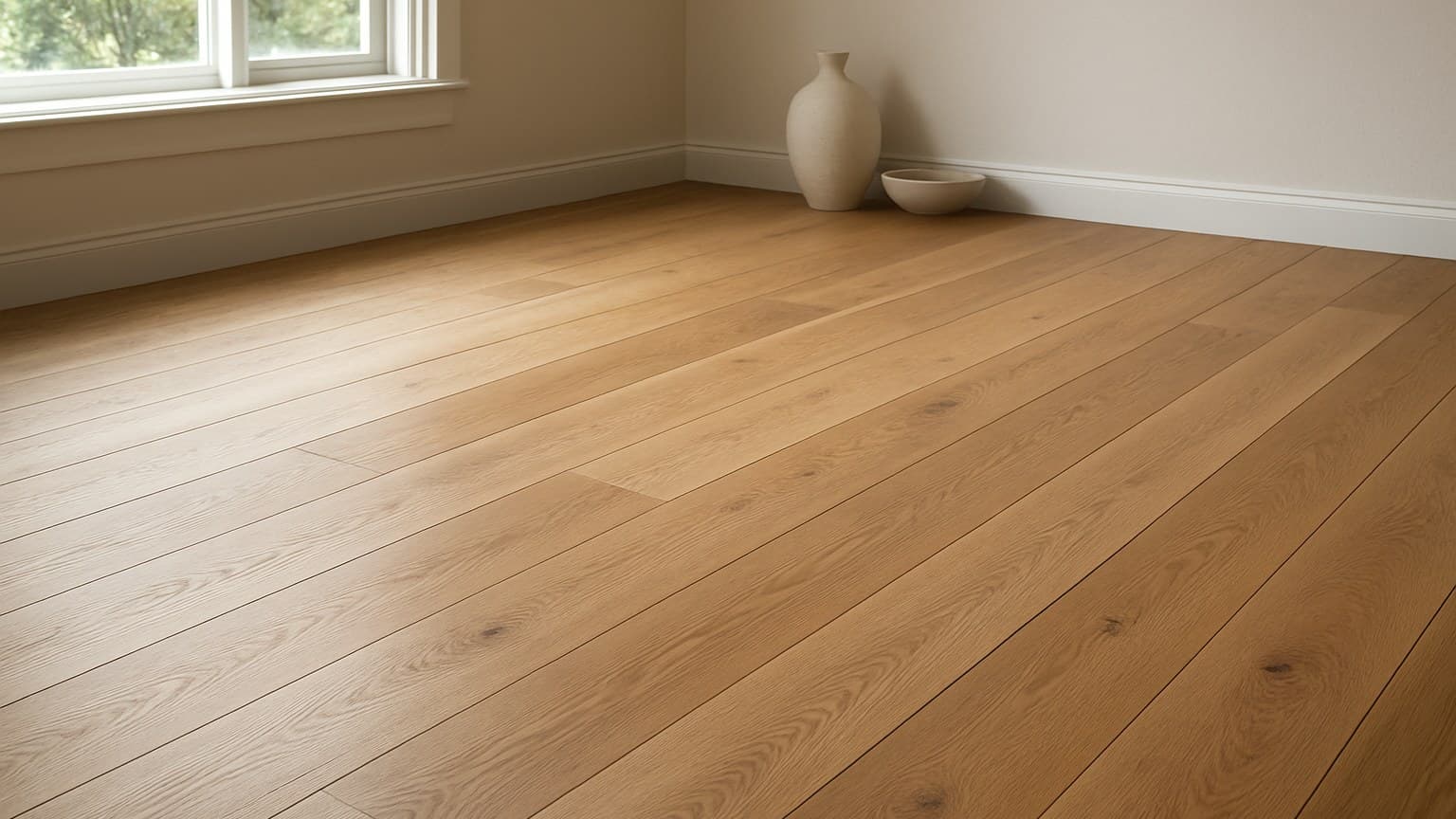
When I re-floored a 1920s bungalow for a customer in Portland, she wanted real wood but couldn't decide between solid and engineered for her sunroom addition over a slab. That's the real question with engineered hardwood vs solid: both are genuine wood, so what separates them is where the floor goes and how many times you can sand it down. Pick wrong and you're pulling up a cupped floor two winters later. Here's how I sort it out, room by room. Species choice matters just as much as the solid-versus-engineered call, and cherry is one wood owners often regret only after living with its softness and color shift for a while, which is why I put together a closer look at long-term cherry flooring regrets.
Key takeaways
- Engineered hardwood is 100% real wood by the NWFA definition; the only difference is a plywood or HDF core under the top veneer, not a fake printed surface.
- For damp basements, floors over concrete, and rooms over radiant heat, engineered wins on stability; solid is best kept to dry, above-grade rooms.
- Solid can usually be sanded and refinished 4-6 times over its life; engineered depends entirely on veneer thickness, and many thin-veneer boards can't be refinished at all.
- Budget roughly $4-10 per sq ft materials for solid and $3-9 for engineered, plus $2-8 per sq ft labor; basements and stairs cost more than open rooms.
- Check the NWFA Refinishable Certification list to confirm an engineered floor can actually be refinished before you buy, instead of trusting a marketing mm number.
Is Engineered Hardwood Even Real Wood? The Construction Difference
Yes. According to the National Wood Flooring Association's (NWFA) official definition of real wood flooring, engineered hardwood counts as 100% real wood because its wear layer is sawn hardwood, not a printed photo layer like laminate or luxury vinyl.
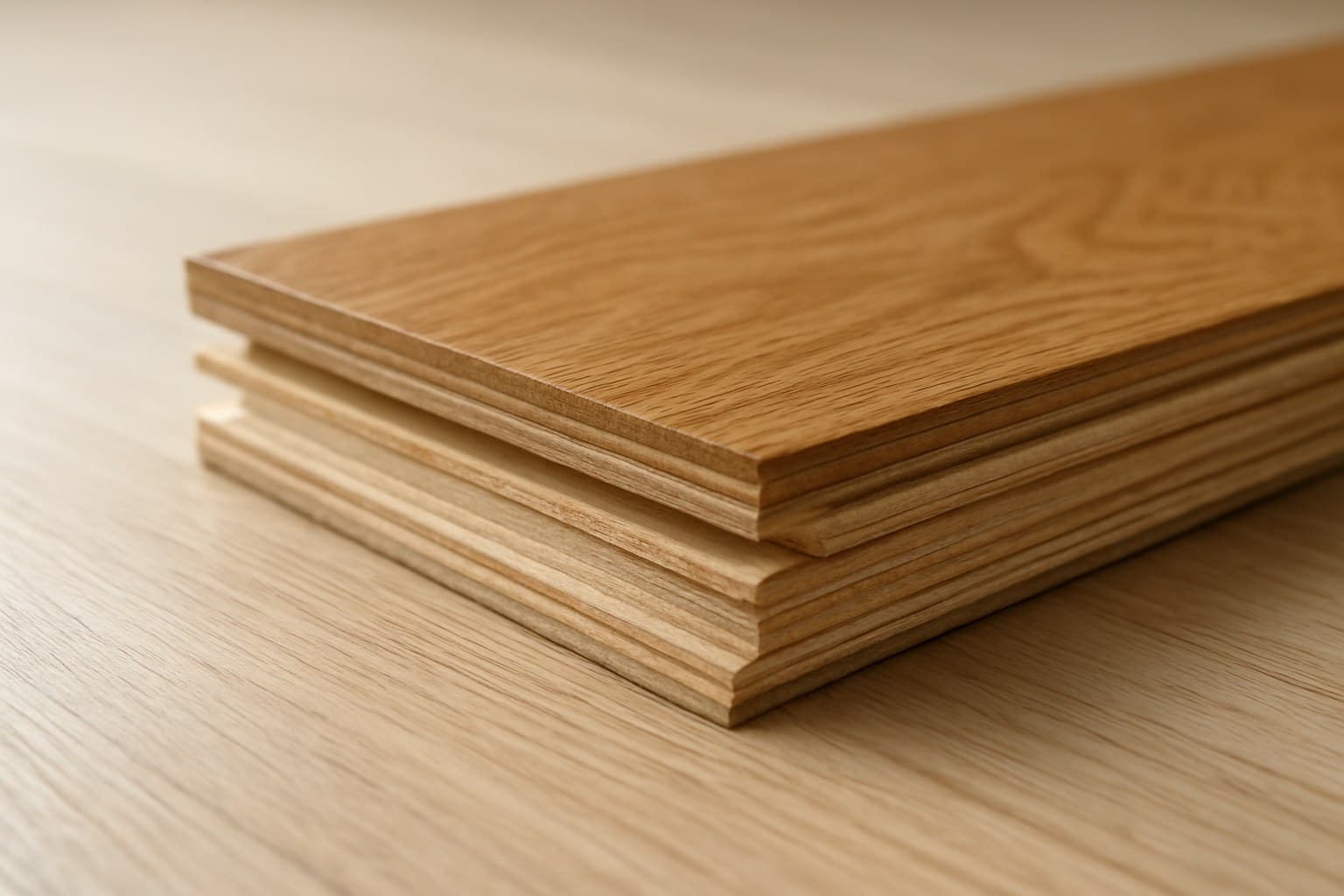
The real split is what sits under that surface. Solid hardwood is one piece of wood from top to bottom. Engineered wood flooring (also sold as manufactured hardwood) is a thin slice of real hardwood, called the veneer, glued over a core of crisscrossed plywood or HDF, which is high-density fiberboard, a dense pressed-wood board. If you're still weighing which construction and species actually suits your room, this deeper comparison of solid versus engineered hardwood floors walks through picking the right one room by room.
That crossed core is the whole point. Wood swells and shrinks with the seasons, and those crossed layers pull against each other so the board stays put instead of gapping and cupping. That's why engineered can go over concrete and into basements where solid can't.
One thing that won't help you tell them apart: the look. White oak is one of the most popular species in both right now, so a solid and an engineered white oak floor can look identical in the box. If you're leaning toward a warmer, reddish tone instead, there's a separate set of species-specific checks worth running before you buy Brazilian cherry engineered hardwood.
Cost Comparison: Is Engineered Cheaper Than Hardwood?
Engineered is often a little cheaper on materials, but not always. A thick-veneer engineered white oak can cost as much as a mid-grade solid, so the label on the box doesn't decide the price. Where you actually buy the boards moves that number just as much as the veneer spec does, which is why I now run the numbers through this Floor & Decor engineered hardwood pricing breakdown against LL Flooring and local suppliers before I quote a job.
Here's the split, broken into materials versus labor:
| Cost piece | Low | High |
|---|---|---|
| Engineered materials | $3 | $9 |
| Solid materials | $4 | $10 |
| Engineered labor | $2 | $7 |
| Solid labor | $3 | $8 |
These per-square-foot ranges come from typical residential jobs; your actual bid will shift with your region and with how much subfloor prep the room needs before install. Every contractor weighs those same variables differently, which is exactly why you'll run into wildly different installation cost estimates for what sounds like the identical job.
Two things move the price more than the label. First, the room: basements and stairs cost more than an open living room because of all the cut-heavy edges, transitions, and moisture prep, not because the plank is different. Second, watch the clearance bins. Engineered hardwood clearance lots and thin 3/8-inch boards are usually thin-veneer floors you can never refinish, so a low sticker price is really buying a shorter life. Laminate follows that same room logic for a different reason, since moisture tolerance rather than veneer thickness decides where it can go, and the rooms where laminate flooring works end up mapped out quite differently from the wood breakdown above.
Moisture and Room-by-Room Suitability
Before you commit to either, remember this: the floor only lasts as long as the prep under it. Check that the subfloor is flat and run a moisture check with a meter, which is a small tool that reads how much moisture is in the subfloor. Skip that and the best plank in the world will still fail.
With that done, here's where each one belongs:
| Room | Solid | Engineered | Best pick |
|---|---|---|---|
| Dry upstairs living room or bedroom | Great | Great | Either; solid if you want max refinishes |
| Over a concrete slab / below-grade basement | Not recommended | Stable and rated for it | Engineered |
| Kitchen | Risky at spills and seams | Better, but seal the seams | Engineered |
| Over radiant heat | Can gap and cup | Compatible (confirm on the maker's sheet) | Engineered |
| Full bathroom | No | No | Neither; use tile or LVP |
Source: which of these I've had come back as callbacks by room over the years
Room-by-room suitability for solid versus engineered hardwood, based on repair calls Marcus has tracked by room over the years.
One warning that saves kitchens: an engineered core handles humidity better than solid, but that doesn't make the floor waterproof. Water still gets in at the seams and edges, which is where failures start. Seal the joints no matter which you buy. If you want a floor built to shrug off standing water instead of just tolerating humidity, it's worth comparing true waterproof engineered hardwood options before you settle on a kitchen or bath plan.
For a full bath or a basement you're genuinely worried about water in, don't force wood at all. Go read the engineered hardwood vs LVP breakdown and use the moisture-tolerant option instead.
Refinishing and Lifespan, Reconciled
Solid can usually take 4 to 6 sandings over its life. Engineered ranges from zero to maybe two, set entirely by how thick the veneer is. That single fact is why the numbers online never agree.
| Type | Wear layer | Refinishes | Typical lifespan |
|---|---|---|---|
| Solid 3/4" hardwood | ~3/4" of usable wood | 4-6 (capped by depth to the tongue) | 50-100 years |
| Engineered, thin veneer (~0.6 mm) | About 1/40" | 0 (replace, don't refinish) | 20-30 years |
| Engineered, thick veneer (2 mm+) | 2-4 mm | 1-2 light sandings | 30-40+ years |
Source: the NWFA Refinishable Certification Program list, plus the oak floor I sanded to the tongue before I caught it
Refinish counts and lifespan by floor type, cross-checked against the NWFA refinishable certification list.
Those lifespan ranges aren't the only place a 75-year number shows up for engineered flooring. The NWFA's own Engineered Wood Flooring Environmental Product Declaration (EPD) scores the category's environmental impact against a declared functional unit of 1 square meter of engineered wood flooring in service for 75 years, and it reports cradle-to-grave figures across that span, raw material sourcing and manufacturing, transport and installation, the in-use maintenance period, and end-of-life disposal or reclamation. That 75-year assumption is a modeling benchmark for the industry average, not a promise on any single board, which is exactly why the veneer thickness in the table above still matters: a thin-veneer floor that gets torn out and landfilled at year 20 doesn't get anywhere near the full 75-year cycle the EPD models, while a thick-veneer floor that takes one or two refinishes has a real shot at reaching it.
Finish quality, foot traffic, and how deep the sander bites all shift the count, so any flat "refinish it X times" number is a guess without the veneer spec in hand. Instead of trusting a marketing millimeter figure on the box, check the NWFA Engineered Wood Flooring Refinishable Certification list to confirm a board actually survives a real sand-and-refinish. Somerset's own product claims deserve that same scrutiny, and I went through eight of them one by one in a Somerset engineered hardwood claims review.
Solid has a limit too. I once had a solid oak floor sand down to the tongue in one corner on a fourth pass before I caught it, and after that I check remaining thickness at the edges first. That same caution is what separates the better engineered hardwood flooring brands from the thin bargain stuff. That particular board happened to be red oak, and knowing the grade and width you're starting with matters just as much as veneer thickness, which is the whole focus of this red oak prefinished flooring grades and pricing guide.
Installation and Feel Underfoot
Solid is almost always nailed or stapled down to a wood subfloor. Engineered adds two more options, click-lock floating and glue-down, and that's what lets it go over a concrete slab where you can't sink a nail. Each of those four methods comes with its own prep work and failure points, and I break down the tools and technique for all of them in this step-by-step engineered hardwood installation guide.
Here's the honest DIY line. Click-lock floating engineered is realistic for most handy homeowners. Nail-down solid, glue-down over concrete, and stairs are where hiring a pro usually pays for itself.
If you've ever heard someone complain their engineered floors sound hollow and drummy underfoot, that noise almost always traces back to a subfloor that wasn't flattened first or an underlayment step that got skipped. Leveling the subfloor and installing the right underlayment before the first plank goes down is what fixes that feel for good. Concrete, plywood, and old tile each call for a different floating installation approach, and this floating engineered hardwood installation guide walks through matching the method to what's actually underfoot.
And nearly every floating floor needs an expansion gap around the whole perimeter so it can move with the seasons. The exact size is set by the manufacturer's own instructions, so look it up per product rather than guessing.