
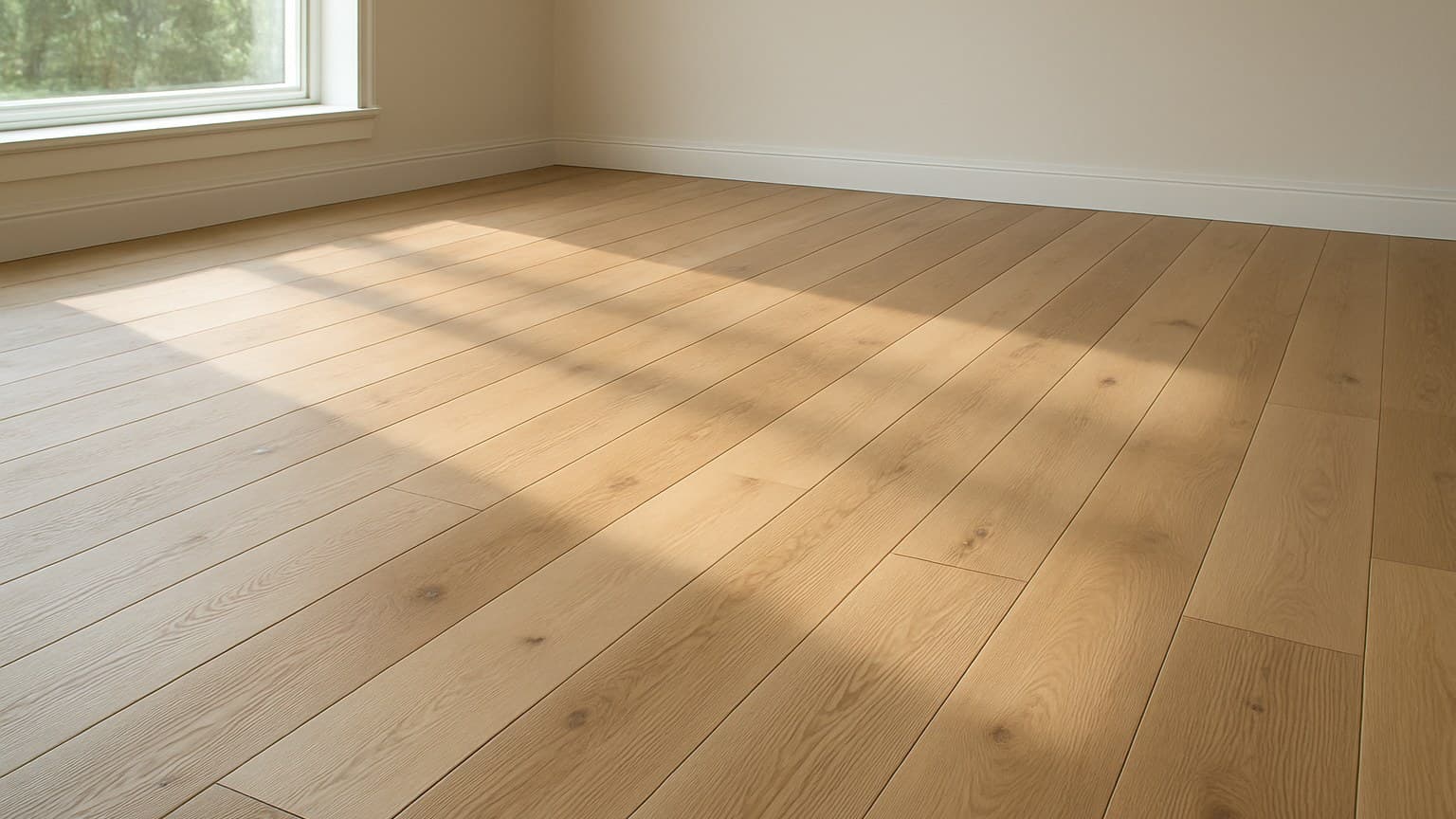
Somerset's site makes every plank look bulletproof, yet it never once says what the core underneath is made of. I ran into that gap on a job in Lexington, Kentucky, where the homeowner had already bought Somerset Solid*Plus oak based on nothing but the brand page. Here are eight of its claims, checked against real specs and what I found once I got the boxes open.
Key takeaways
- Somerset is a real US maker that mills Appalachian hardwood into prefinished engineered planks; it's a solid mid-tier brand, not a discount import or a luxury name.
- The Solid*Plus wear layer is a roughly 3mm sawn hardwood veneer, so you can usually refinish it once, maybe twice, not the 4-6 times a solid 3/4-inch board takes.
- Somerset's 50-year warranty is a residential, prorated finish-and-structure warranty, and wrong installs or moisture damage void it, so read the terms, not the headline.
- Expect materials around $4-9 per square foot and labor around $3-7 per square foot in an open room; stairs and basements cost more.
- 'Moisture resistant' is not waterproof: engineered's cross-layered core resists movement, but seams and edges are still the weak point, so keep it out of standing-water spots.
1. Who Makes Somerset, and Is It a Good Brand?
Yes, Somerset is a legit brand, and it sits solidly in the middle tier: not bargain-bin import, not high-dollar luxury name. Somerset Hardwood Flooring is a US manufacturer that mills its own Appalachian hardwood, so the wood in the box started as trees not far from the plant, not on a container ship.
That in-house US milling buys you two real things. Species stay consistent from box to box (their common three are oak, maple, and hickory), and the planks travel a shorter road than a lot of imported engineered lines, so there are fewer surprises when you open bundle number twelve. If you're weighing an imported exotic instead, our guide to Brazilian cherry engineered hardwood flooring walks through what changes once the species comes from further away.
A homeowner outside Knoxville once handed me a Somerset sample and the brand's spec page and asked if the floor was as good as the page claimed. Fair question. The page is built to sell: the products photograph beautifully, but it never verifies its own numbers. So the rest of this article checks each claim instead of taking it on faith.
If you're stacking Somerset against the top names, our roundup of the best engineered hardwood flooring is the better place to weigh brand against brand.
2. What "Solid*Plus" and the 3mm Wear Layer Really Mean
Solid*Plus is Somerset's name for a roughly 3mm layer of real, sawn hardwood glued on top of an engineered core, then sealed with a factory finish. The surface you walk on is actual wood, not a printed photo of wood.
Here's the gap the brand page skips: the core under that veneer is what really drives how the floor handles moisture and dents, and Somerset doesn't spell its core out clearly. A plywood-style cross-layered core behaves differently from a denser fiber core, so ask the retailer which one your exact line uses before you pay.
Why does 3mm matter? Many big-box engineered floors carry a veneer of just 0.6 to 1mm, thin as a business card. Somerset's thicker slice of wood is what leaves you something to sand later.
One thing to keep straight: the factory top coat is aluminum oxide, a hard, scratch-resisting finish. That coat protects the wood, but it isn't the wood. When you refinish, you sand through the coat and into the veneer, so the veneer's thickness is the number that counts.
Somerset's marketing also reaches for the word "eco-sensible," and that claim deserves the same scrutiny as the rest. Somerset doesn't publish its own environmental product declaration, so the closest primary data is the NWFA Engineered Wood Flooring EPD listed in the Sources below. It's worth being precise about what that document actually is: an industry-average, third-party-verified declaration developed under ISO 14025, covering engineered wood flooring produced by NWFA member mills as a category, not a Somerset-branded certification. It reports impacts on a cradle-to-gate basis, meaning raw material extraction through the factory gate, not installation, use, or disposal, and its declared unit is 1,000 square feet of finished flooring. That's a meaningful distinction for a reader trying to fact-check "eco-sensible": the EPD confirms the industry has real, audited environmental data behind engineered wood flooring in general, but it isn't a number Somerset has tied to the specific Solid*Plus line in your cart. The word isn't invented, but it's borrowed from an industry average rather than verified product-by-product.
3. Can You Really Refinish It? What the NWFA Program Confirms
Yes, you can refinish Somerset, but realistically once, maybe twice. You're sanding a roughly 3mm veneer, not a 3/4-inch solid board that can be taken down four to six times over its life.
Don't take the brochure's word for it. According to the NWFA's Engineered Refinishable Program, which lists manufacturers whose engineered products meet its sanding-and-refinishing criteria, the National Wood Flooring Association independently tracks which lines actually have veneer thick enough to sand. Check whether the specific Somerset line you want appears there, not just whether the box says "refinishable."
The warranty needs the same skepticism. Somerset's 50-year figure is a residential, prorated finish-and-structure warranty, meaning the coverage shrinks as the years pass. Moisture damage or an out-of-spec install voids it, so treat 50 years as a starting point, not a promise.
| Floor type | Refinishes over its life |
|---|---|
| TrafficMaster engineered oak (~1mm wear layer, a Home Depot house brand) | 0-1 |
| Somerset Solid*Plus (~3mm) | 1-2 |
| Bruce Dundee solid 3/4" oak | 4-6 |
Estimated refinishes over a floor's life by wear-layer thickness. These are ranges, not guarantees, and a bad sanding job can cost you one.
4. Moisture, Stability, and Radiant Heat: The Real Limits
"Moisture resistant" is not waterproof, and this is where people get burned. The cross-layered core resists swelling and movement, but the seams and edges between planks are still where water sneaks in and does its damage. The plank face holding up says nothing about the joints holding up. If you actually need a floor rated to handle standing water rather than just occasional splashes, our waterproof engineered hardwood guide walks through which products genuinely qualify.
Engineered has a real edge over concrete slabs and below grade, like a basement. The stable core rides out humidity swings that would cup or gap a solid floor. That's why engineered gets reached for in the first place. If you're also weighing plank against luxury vinyl for those damp spots, our engineered hardwood vs LVP comparison lays out the tradeoff.
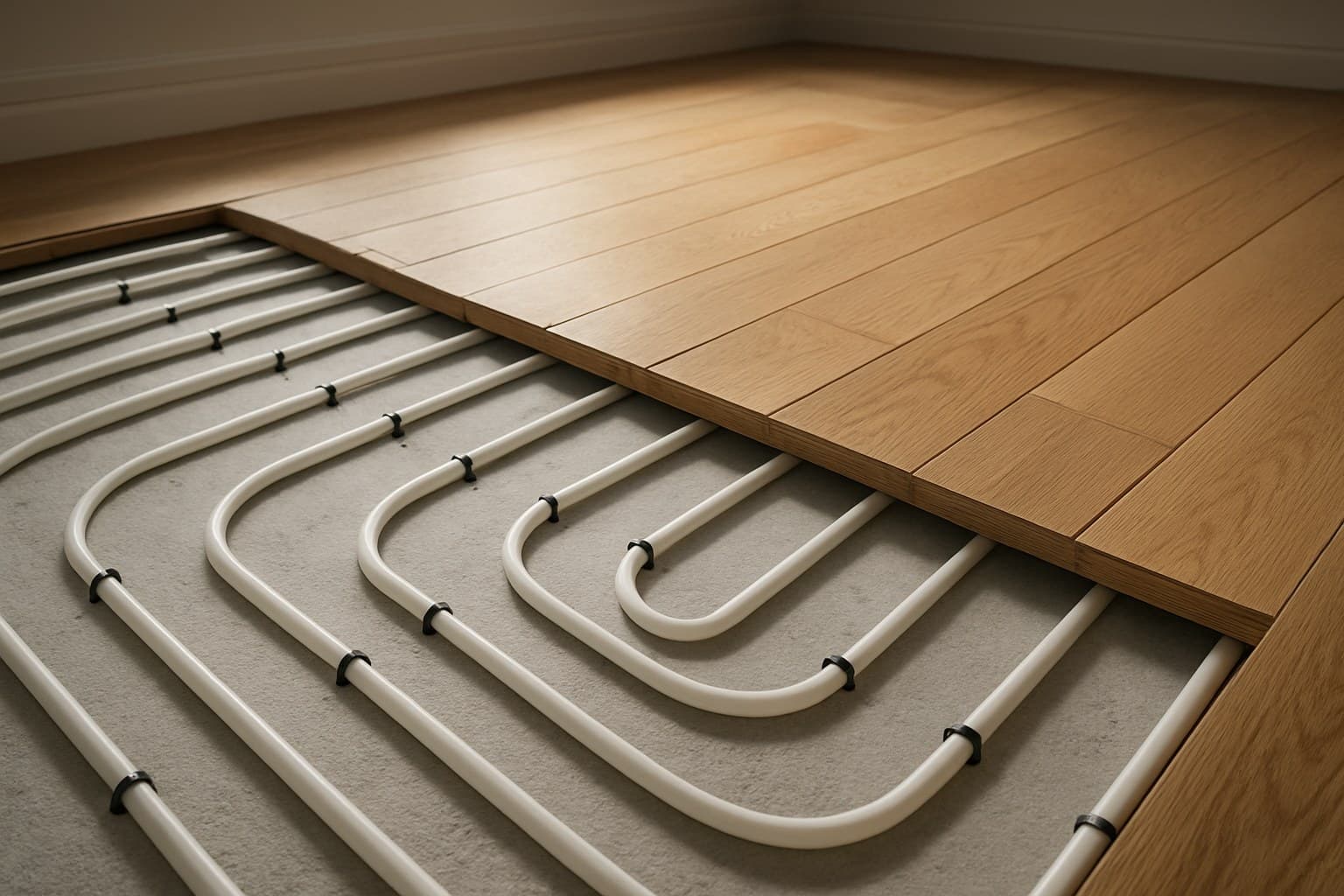
Radiant heat under the floor is generally fine with engineered, but "generally" isn't good enough to install on. Follow Somerset's own temperature limits and install sheet for the exact line, not a rule of thumb from a forum thread.
My own honest limit, from every floor I've torn out: I still won't put any wood floor where it takes standing water. Right at a tub apron or inside a shower splash zone, wood is the wrong tool no matter how good the core is.
5. Species, Collections, and Plank Sizes
Species is the choice that decides how the floor takes a beating. Hickory is the hardest of Somerset's common three and shrugs off dog nails and chair legs best. Maple sits in the middle. Oak is the everyday all-rounder that suits most rooms and hides wear well.
Widths and lengths vary by collection, and it all ships prefinished, meaning the finish is cured at the factory. That factory cure is harder than anything a crew can brush or roll on at your house, which is a genuine plus. For homeowners set on the widest planks a room can take, our guide to 12 inch wide engineered hardwood covers what changes at that scale.
The tradeoff with prefinished planks is the edge. Most carry a micro-bevel, a tiny angled groove where planks meet. It hides small height differences between boards, but those grooves also catch dust and need a vacuum, not just a mop. A sanded-flat site finish skips the grooves but costs more and takes days of dust. If you want that texture built into the surface itself rather than just at the seams, our guide to hand-scraped engineered hardwood flooring explains what to check before buying.
I'll keep the hardness numbers short here. If you want the full Janka breakdown by species, our guide on picking solid vs. engineered and the right species covers it without me repeating it.
6. Installation: Grade Level, and Nail vs Glue vs Float
Engineered's edge is where it can go: above grade, on grade, or below grade, including basements. Solid wood is really limited to on or above grade, so if your floor is going over a slab, engineered like Somerset is the safer call.
There are three ways to put it down. Nail or staple it over a wood subfloor, glue it down over concrete, or float it as click-together planks that lock edge to edge. Click-lock floating is a realistic weekend job for most handy homeowners. Glue-down and stairs are where I'd tell you to hire out, because a bad glue spread or a wrong stair cut is expensive to undo.
Before a single plank goes down, do the boring checks. Test the slab or wood subfloor for dampness with a moisture meter, a small handheld tool that reads how wet the material is. Then run a long straightedge across the floor to confirm it's flat, not just level, because a hump you talk yourself into ignoring is exactly what shows up later as gaps, squeaks, or a cupped board. Every problem floor I've pulled up traced back to a skipped moisture read or a dip nobody checked.
Last of all, leave the perimeter expansion gap Somerset's instructions call for so the floor can move with the seasons. The exact size comes off their sheet for your line, not a universal number someone quotes online. Match the method to the site, get the moisture and flatness right, honor the gap, and the install goes smoothly.
7. What Somerset Engineered Hardwood Costs (Materials vs Labor)
Somerset's brand page lists no prices at all, so here are the real ranges I quote, split the way they actually hit your wallet. Materials for Somerset engineered typically land around $4 to $9 per square foot. Installed labor adds roughly $3 to $7 per square foot in a straightforward open room.
The math is simple: multiply your square footage by the materials rate, then add square footage times the labor rate. For a 300-square-foot room at the middle of both ranges, that's about 300 x $6.50 in materials ($1,950) plus 300 x $5 in labor ($1,500), so roughly $3,450 installed.
Basement and stair jobs run higher than open rooms. Basements need extra moisture prep over the slab, and stairs mean slow going with a cut on nearly every tread, so budget a premium for both.
| Room size | Materials ($4-9/sq ft) | Labor ($3-7/sq ft) | Installed total |
|---|---|---|---|
| 150 sq ft (small bedroom) | $600-1,350 | $450-1,050 | $1,050-2,400 |
| 300 sq ft (average room) | $1,200-2,700 | $900-2,100 | $2,100-4,800 |
| 500 sq ft (great room) | $2,000-4,500 | $1,500-3,500 | $3,500-8,000 |
| 1,000 sq ft (main floor) | $4,000-9,000 | $3,000-7,000 | $7,000-16,000 |
Source: These are the ranges I quote on Somerset engineered jobs around central Kentucky
Installed cost by room size for Somerset engineered hardwood in an open room, materials and labor split. Stairs and basements land above these figures.
For the fuller picture, see our engineered hardwood flooring cost guide, and if you're price-shopping harder, the discount engineered hardwood options guide is worth a read.
8. Somerset vs the Alternatives Worth Considering
Somerset is worth its mid-tier price when you want a real US-milled wood floor you can refinish once or twice, and you're installing over a slab or below grade where solid wood can't go. It's not the pick if you need a truly waterproof surface or the cheapest floor in the store.
Floor & Decor's in-house engineered lines are the usual budget alternative. They can cost less per square foot, but you have to read the veneer thickness on the specific product, because a thin veneer means fewer or zero refinishes down the road. Compare the actual specs, not the brand names.
If moisture is your real driver, a good luxury vinyl plank may serve a wet mudroom or basement better than any wood, and the surface won't cup. That's a different material with a different tradeoff, and it comes down to whether you want real wood underfoot or a floor that laughs off a spill.
Sources
- NWFA: Leading Wood Flooring Manufacturers Embrace the Engineered Refinishable Program
- NWFA: Engineered Wood Flooring Environmental Product Declaration (EPD)
- NWFA Hardwood Floors Magazine: Feature on the Engineered Refinishable Program
- NWFA: Named Scholarship Honoring Industry Veteran Paul Stringer
- National Wood Flooring Association (NWFA)