
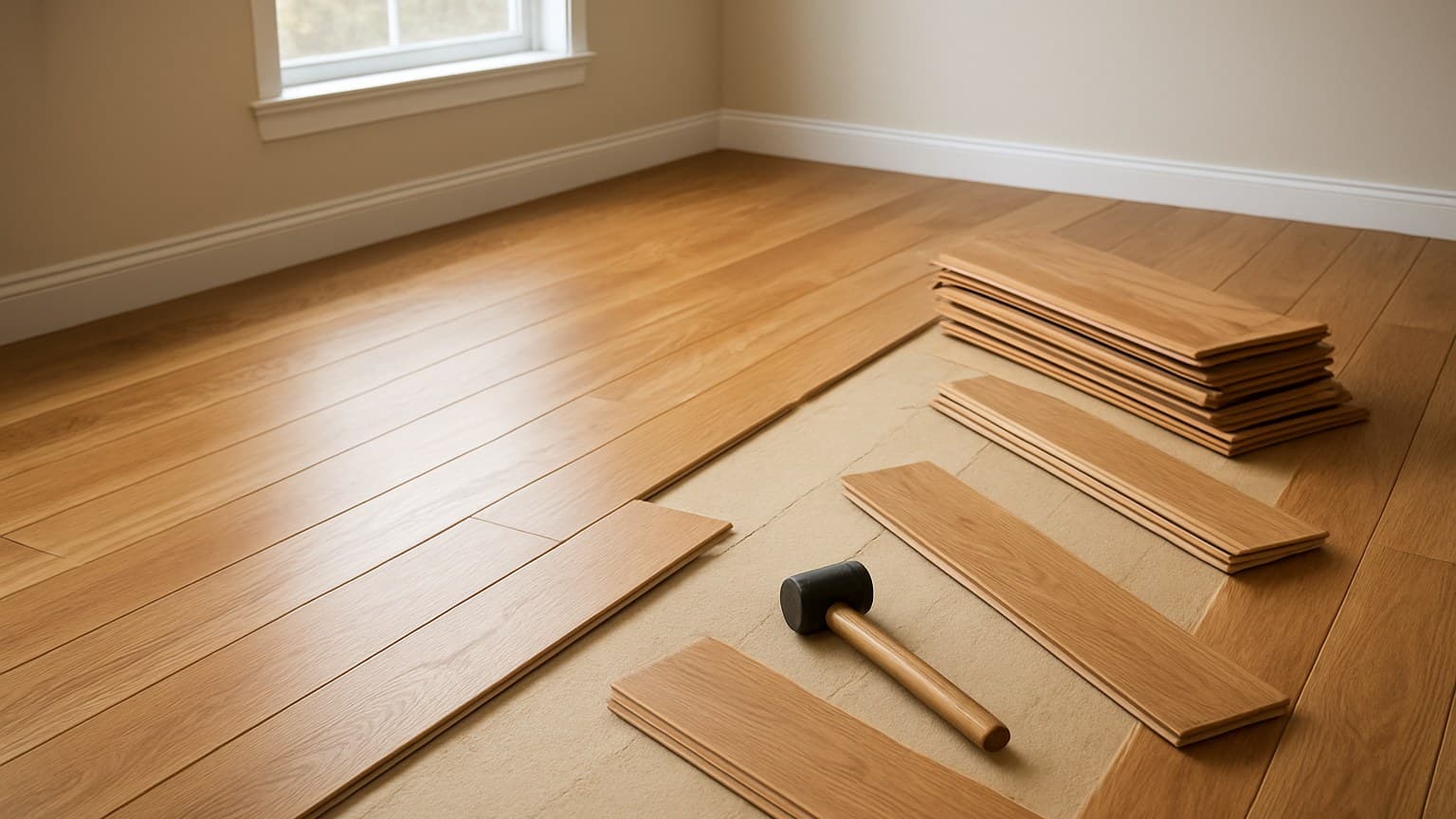
Every engineered hardwood flooring cost you see online is somebody's average, and averages hide the line items that blow up a real quote. When I bid the Alvarez job in Round Rock, Texas, a clean $9,000 estimate climbed past $13,000 once the old floor came up and the slab needed leveling. Installed, engineered hardwood runs about $6-25 per square foot, and these are the seven numbers I pin down before I sign anything.
Key takeaways
- Installed engineered hardwood runs roughly $6-25 per sq ft: material about $3-16 and labor about $3-10, with hidden prep costs on top.
- A 1,000 sq ft floor usually lands around $9,000-20,000 installed, depending on veneer tier and install method.
- Veneer thickness sets both price and refinish life: thin 0.6mm wear layers can't be sanded, while 2-4mm veneers can usually be refinished once or twice.
- Herringbone and glue-down labor costs roughly 2-3x a floating click-lock install of the same room.
- Cost per year, not the sticker price, is the honest comparison: solid can win over a 50-plus-year floor, but engineered wins where the slab or the budget rules solid out.
Number 1: The All-In Installed Price (What $6-25 Per Sq Ft Really Means)
Installed, engineered hardwood runs about $6-25 per square foot. That splits into material at roughly $3-16 and labor at roughly $3-10, and the hidden prep costs in Number 4 are what push the low end up fast.
So why do the ranking pages disagree? One says $8-18, another $6-25, another $9-20. They're bundling different hidden costs, and at least two are written by sellers quietly steering you toward their own tier. None of them is lying, exactly. They're just quoting the slice of the market they sell.
Jobs for a mid-tier floating floor tend to land near $11-16 per square foot all in. That's a click-lock floor (planks that snap together and "float" over the subfloor without glue or nails) in an open room with a decent subfloor under it. Basement and stair work run above that, because of the extra moisture testing, leveling, and slow hand-cutting those jobs demand.
| Cost line | Range ($/sq ft) |
|---|---|
| Labor only | $3-10 |
| Material only | $3-16 |
| Total installed | $6-25 |
Installed engineered hardwood price ranges per square foot, 2026, before hidden prep.
Number 2: Material Cost by Veneer Tier (Budget, Mid, Premium)
Material cost tracks one thing above all: the veneer, which is the real wood layer glued on top of the plank. The thicker that layer, the more you pay and the more refinish life you get. Everything below the veneer is a core (a stack of plywood or fiberboard) that mostly sets stability, not price.
What veneer thickness actually buys
Budget floors run $3-6 per square foot. Take a line like Mohawk's builder-grade engineered oak: it runs a thin 0.6-1mm veneer over an HDF core (high-density fiberboard, a pressed-wood board). That thin a top layer can't be sanded, so this is a replace-it-when-it-wears floor, not a refinish-it floor. If that's your lane, shop it right with a discount engineered hardwood buying guide so you don't overpay for the same board under a fancier name.
Mid tier runs $6-10. A line like Shaw's Repel engineered oak carries a 2-3mm veneer over a plywood core, and it can usually take one light sanding down the road. It survives a family and still leaves a refinish in reserve.
Premium runs $10-16. A line like Somerset's High Grade engineered collection carries a 3-4mm veneer, plus wider and longer boards, and either an exotic species or a hand-worked finish.
Where the money goes: species and finish
On premium boards, two upgrades drive the price. Species is one: a Brazilian cherry engineered floor costs more per foot than a domestic oak or a birch engineered plank. Finish and format are the other: a hand-scraped engineered floor or a 12-inch-wide plank both add cost because of the extra milling and the higher waste when you cut them in.
| Tier | Veneer & core (example line) | Material cost | Refinish life |
|---|---|---|---|
| Budget | Mohawk builder-grade oak: 0.6-1mm over HDF core | $3-6/sq ft | None, replace only |
| Mid | Shaw Repel oak: 2-3mm over plywood core | $6-10/sq ft | 1 light sanding |
| Premium | Somerset High Grade: 3-4mm, wide/long or exotic | $10-16/sq ft | 1-2 sandings |
Source: The tier splits come from the sample boards I bid new jobs off
Material-only cost by veneer tier, with the refinish life each tier buys.
Number 3: Labor Cost by Install Method
Labor runs about $3-10 per square foot, and the install method moves that number more than the room does. Pick the method first, then you know your labor line.
Floating click-lock is cheapest at $2-4. The planks snap together and sit loose over the subfloor, so it goes fast, and it's a method handy homeowners can pull off themselves.
Nail-down runs $3-6 and glue-down runs $4-8, and both really want a pro. Glue-down over a concrete slab also adds moisture-barrier work, because you're bonding wood straight to concrete that can push moisture up into it.
Herringbone and other patterns are the priciest labor line at $8-14. That zigzag layout means two to three times the cutting and fitting, plus more offcuts you pay for and throw away.
| Install method | Labor ($/sq ft) |
|---|---|
| Floating click-lock | $2-4 |
| Nail-down | $3-6 |
| Glue-down | $4-8 |
| Herringbone/pattern | $8-14 |
Labor-only cost per square foot by install method, 2026.
Number 4: The Hidden Costs Homeowners Forget
The hidden costs are where a lowball quote turns into a mid-project surprise. These are the line items I only add to a bid after the old floor comes up and I can see what I'm dealing with.
Old-floor removal and haul-away runs $1-2 per square foot. Carpet is cheap to pull; glued-down tile is a fight and lands at the top of that range. Subfloor leveling and prep runs $1-3 per square foot. You can't see a dip in the slab until the old floor is gone.
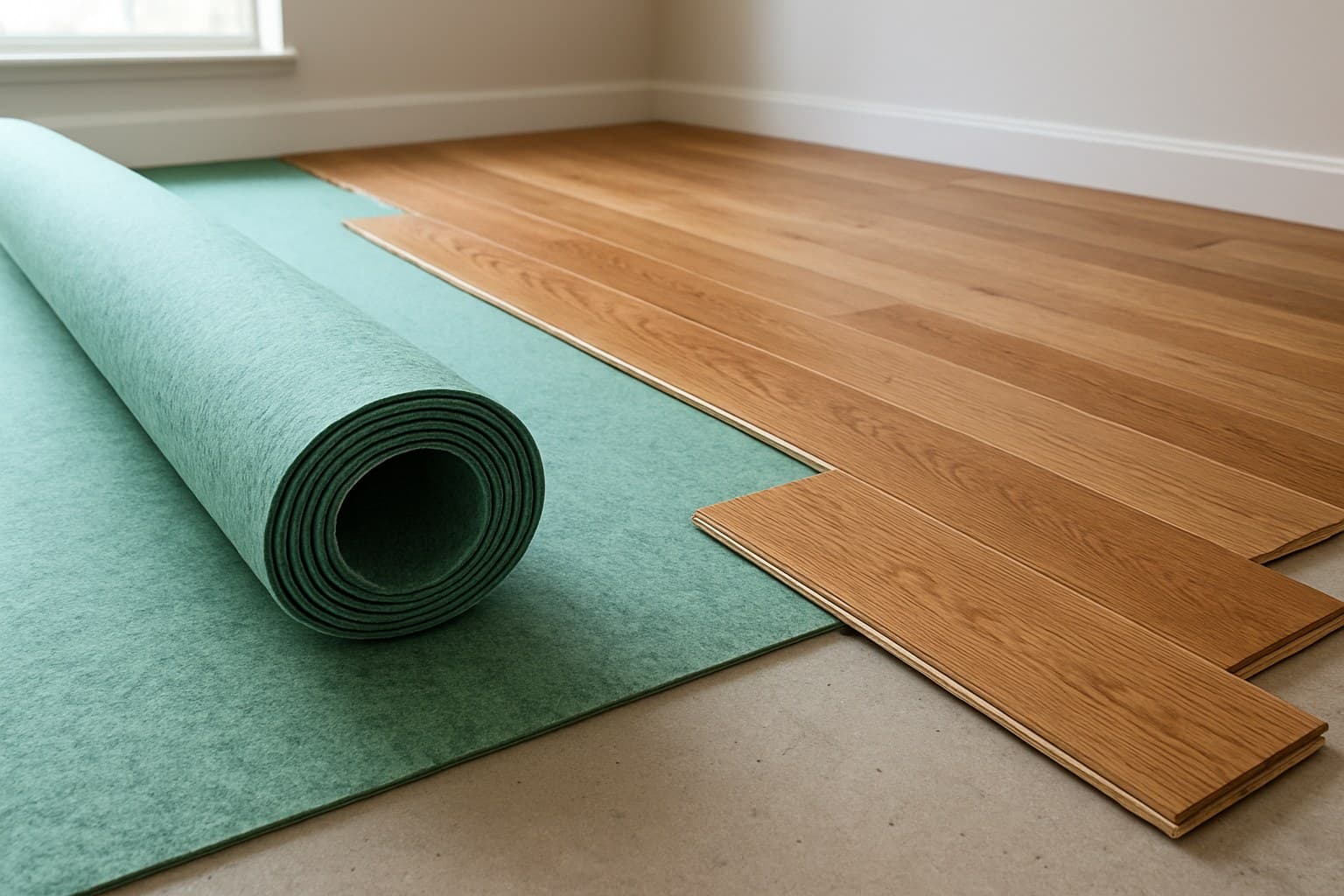
Underlayment or a vapor barrier (a thin sheet that blocks moisture and softens sound) adds $0.30-0.75 per square foot. Then there's waste: figure 5-10% extra material for offcuts, or up to 15% for herringbone because of all the angled cuts.
Stairs and transitions get billed separately. Budget about $40-75 per stair tread and $10-30 per transition strip (the piece that bridges two floors in a doorway). Basement jobs run above open-room rates, because the moisture testing and leveling a slab needs simply add hours.
That moisture check is the one line I never cut anymore. A homeowner named Denise in Plano talked me out of it on her kitchen remodel to save an afternoon, the floor cupped before the season turned, and I relaid it on my own dime. Cheaper to test first.
| Hidden cost | Typical add |
|---|---|
| Old-floor removal and haul-away | $1-2/sq ft |
| Subfloor leveling and prep | $1-3/sq ft |
| Underlayment / vapor barrier | $0.30-0.75/sq ft |
| Waste factor (offcuts) | add 5-10% (15% herringbone) |
| Stairs | $40-75 per tread |
| Transition strips | $10-30 each |
Source: These are the line items I add to a bid after the old floor comes up
The prep and finish-out line items to add on top of a base material-plus-labor quote.
Number 5: Total Installed Cost by Room Size
Here's the one table the seller pages skip: material plus labor plus hidden costs, run across real room sizes, so you can read your own case straight off it. The arithmetic is simple:
Total = (material + labor + hidden) x square feet x (1 + waste factor)
Say a 300 sq ft living room, mid tier. Material $8, labor $3, hidden costs about $2.50, so $13.50 per foot. Times 300 is $4,050. Add 7% waste and you're at about $4,330. That sits right inside the range below.
For the popular 1,000 sq ft search: a mid-tier floor lands around $11,000-18,000 installed, and can reach $20,000 once you add a lot of prep or a pattern layout.
| Room | Total installed (mid tier) |
|---|---|
| Entry or half-bath (~50 sq ft) | $550-900 |
| Bedroom (~150 sq ft) | $1,650-2,700 |
| Living room (~300 sq ft) | $3,300-5,400 |
| Open main floor (~700 sq ft) | $7,700-12,600 |
| Whole floor (1,000 sq ft) | $11,000-18,000 |
Source: I built this from the per-square-foot rates I bill, run across real room sizes
Total installed cost by room size at a mid-tier all-in rate of roughly $11-18 per square foot.
Two notes on that table. Basements run above these figures, because of the extra moisture testing and slab leveling. And small rooms carry a higher per-foot rate than big open ones, since the setup, cutting, and trim time barely shrinks when the room does.
Number 6: Cost Per Year, Engineered vs. Solid Over the Floor's Life
Vendors argue engineered versus solid on hype. Settle it with math instead. The honest number isn't the sticker price, it's cost per year: what you paid, divided by how long the floor lasts, plus refinishing along the way.
The formula, worked out
Cost per year = installed cost ÷ lifespan.
According to the National Wood Flooring Association (NWFA) and Tile Council of North America's joint Life Cycle Cost Analysis, engineered wood flooring is typically classified with a service life of roughly 25-40 years, while solid hardwood is classified with a service life of roughly 50-100 years when refinished periodically. Run that through the cost-per-year math: engineered, mid tier, at about $12 per square foot over that 25-40 year window works out to roughly $0.30-0.48 per square foot per year. Solid at about $14 per square foot, over that 50-100 year window with refinishes along the way, works out to roughly $0.14-0.28 per square foot per year.
Refinishing is the extra cost that keeps solid alive that long. Each refinish adds about $3-5 per square foot, split as material around $1 and labor $2-4. Solid can take that sanding many times; engineered can take it once or twice at best, and a thin budget veneer can't take it at all.
| Floor | Installed | Lifespan | Cost per year |
|---|---|---|---|
| Engineered (mid) | ~$12/sq ft | 25-40 yrs | $0.30-0.48/sq ft |
| Solid | ~$14/sq ft | 50-100 yrs (with refinishes) | $0.14-0.28/sq ft |
Source: Install cost divided by the lifespans in the NWFA/TCNA 75-year life cycle study
Cost per year is installed cost divided by service life, using industry life-cycle lifespans for each floor type.
What the EPD adds beyond the price tag
The lifespan numbers above only tell you what the floor costs to own. The NWFA's Engineered Wood Flooring Environmental Product Declaration (EPD), the second document in the Sources list, and one worth reading rather than skipping, covers what it costs to make. An EPD like this one is verified to ISO 14025 and EN 15804 standards and reports a product's life-cycle impact (global warming potential, resource use, and other standard impact categories) per functional unit of flooring, across the manufacturing stages from raw material supply through the factory gate. Two points from that scope matter for a buying decision beyond the price: engineered flooring's wood core stores biogenic carbon that the tree captured while it grew, which offsets part of the manufacturing footprint before the product ever leaves the mill; and the EPD's figures apply only to product manufactured within the scope it declares, so a floor traceable to a certified, responsibly managed supply chain is the one actually backed by that data, not a board bought on price alone from an unverified importer. If sustainability is part of your decision alongside cost per year, that EPD's own results tables are the place to read the specific numbers rather than taking a vendor's marketing claim about it.
When each one actually wins
Solid wins cost per year on a floor you'll genuinely keep 50 years or more and refinish along the way. Engineered wins where solid simply doesn't belong: over a concrete slab, in a basement, or where the budget rules solid out today. In a basement, my call almost always comes down to the moisture reading on the slab, not the material. I've steered people off solid down there more times than I can count. For those moisture-prone spaces, it's worth understanding what a waterproof engineered hardwood guide covers before you commit to a product.
If you're deciding between the two, the full solid vs. engineered hardwood comparison walks the tradeoff room by room. And if the real fight in your house is wood versus vinyl, the engineered hardwood vs. LVP guide covers that head to head.
Number 7: DIY vs. Hiring Out (Where the Labor Line Disappears)
Labor is a third to half of your quote, so the biggest single way to cut cost is to do it yourself, but only on the right job. Be honest about which one you have.
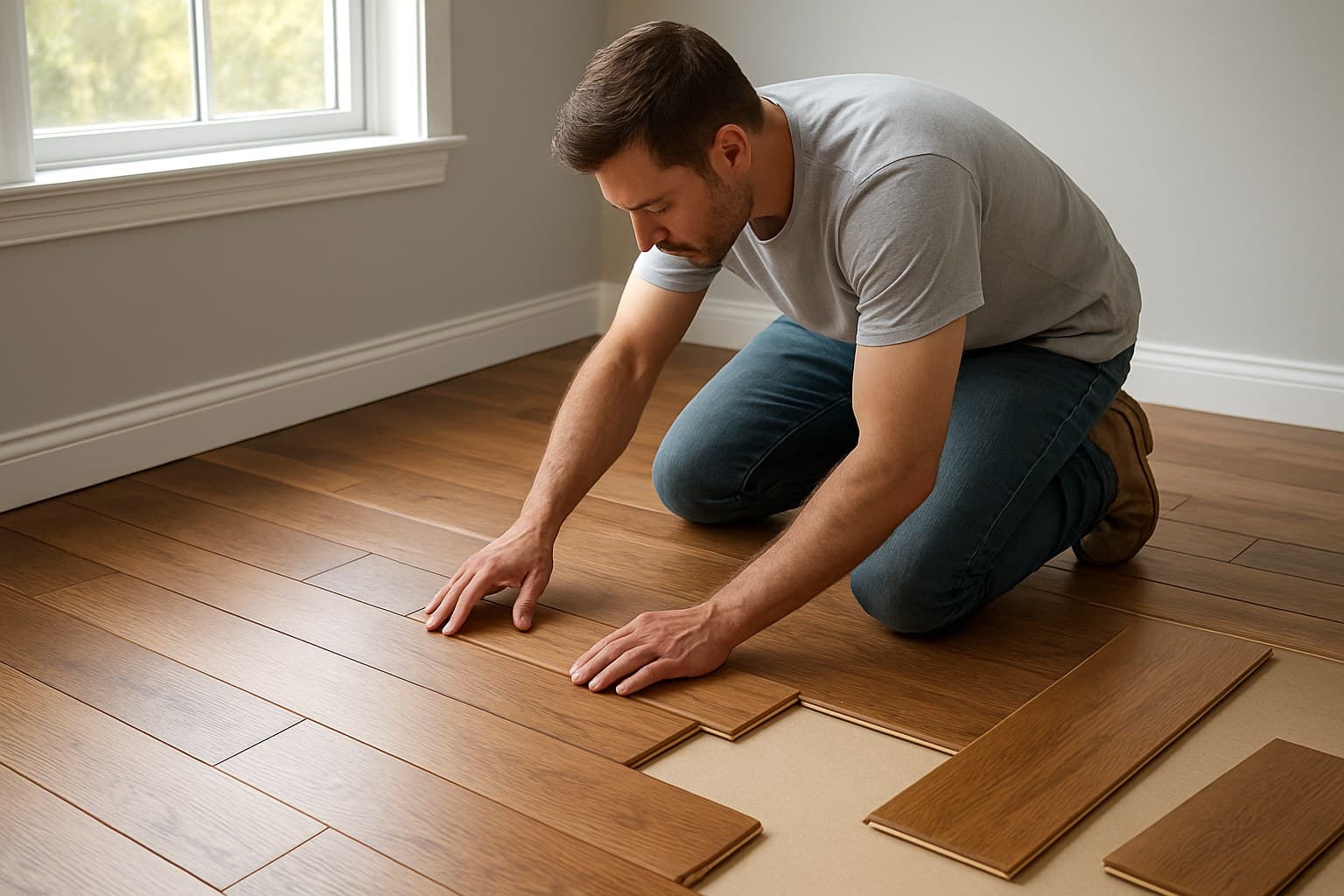
A floating click-lock floor in a square, open room is realistic for most careful DIYers. If your subfloor is flat and dry, that's the job where you can erase the $2-4 per square foot labor line and keep it. That's real money on 700 square feet.
Where I'd hire out: glue-down and nail-down floors, stairs, and any herringbone or pattern layout. Glue-down over concrete lives or dies on moisture prep, stairs are slow hand-fitting where a bad tread shows every day, and patterns punish a first-timer with waste. Those are the jobs where a pro's labor is cheaper than your mistakes.
Whichever way you go, do the subfloor first. Check that it's flat (a long straightedge across the floor shows the dips) and check moisture with a meter, a small tool that reads how wet the subfloor is, before a single plank goes down. Skip that and even a good DIY install can cup or gap on you.
Two more ways to protect the budget: buy smart, and buy the right brand. A solid best engineered hardwood roundup helps you match tier to room, and it's worth knowing the engineered hardwood brands to avoid so a cheap veneer doesn't cost you a callback.
If you're leaning toward wood over vinyl, read the engineered hardwood vs. LVP guide next, since it settles the material question that decides half of these budgets before cost even enters the room.
Sources
- NWFA/TCNA 2023 Life Cycle Cost Analysis (full report)
- NWFA Life Cycle Cost Analysis (LCCA) overview
- NWFA/TCNA LCCA Sales Sheet, 2024 TISE
- NWFA event: "The Truth About the Cost of Premium Hardwood Flooring" (Sheoga Hardwood Flooring)
- NWFA Engineered Wood Flooring Environmental Product Declaration (EPD)