
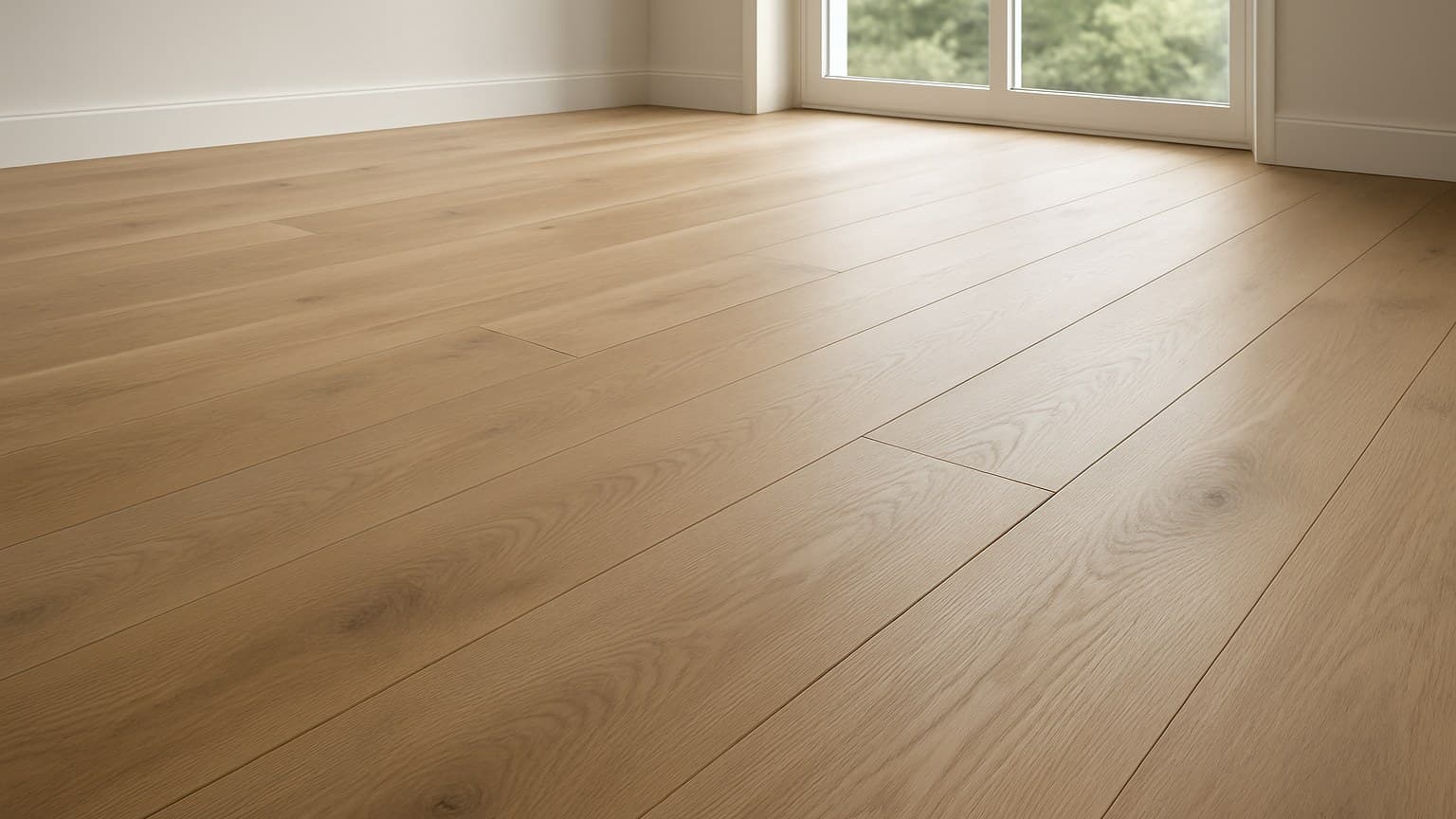
When Denise in Cincinnati asked me to install "12 inch wide engineered hardwood flooring" from a big-box order, the boards that showed up measured 7 inches, tops. That's the trap: the label gets slapped on boards that don't come close to true 12-inch width, and if you miss the real width, the veneer, or the subfloor prep, a wide floor punishes you fast. Here are the nine things I check before anyone puts money down on a 12-inch engineered floor. Big-box chains like Floor & Decor are notorious for this exact labeling gap, so I put together a separate Floor & Decor engineered hardwood guide that digs into their specific product lines.
Key takeaways
- True 12-inch engineered is a specialty item; some lines labeled 'wide plank' top out at 7-10 inches, so confirm the real board width before you fall for a sample.
- Wider boards move more, so a thicker plywood core with more plies and a stable species matter more at 12 inches than at 5.
- Your refinish count comes from the wear layer (the real wood on top), not total thickness; a thin 0.6mm veneer usually can't be sanded at all.
- Split cost as materials vs labor; 12-inch engineered materials run higher than standard widths, and stairs or basements cost more than open rooms.
- Flatten and moisture-test the subfloor first, because wide planks telegraph every dip and are far less forgiving than narrow strips.
1. Confirm the Board Is Actually 12 Inches Wide
Read the spec sheet, not the collection name. True 12-inch engineered is a narrow specialty market. Plenty of lines sold as "wide plank" top out at 5 to 7.5 inches of face width, and only a few boutique makers go all the way to 12. Some manufacturers lean on this vague labeling more than others, which is why I keep a running list of engineered hardwood flooring brands to avoid for exactly this reason.
I had a customer in Dayton, Ron, fall for a gorgeous showroom sample only to learn the "wide" line maxed out at 7 inches. So before you order a single sample, ask for the exact face width in the spec sheet. If the salesperson only quotes the collection name, that's your cue to dig.
Twelve-inch board is also hard to find at one showroom, so it pays to shop around, including discount engineered hardwood channels, rather than getting stuck with whatever one store stocks.
| Source | Widest engineered board | Note |
|---|---|---|
| Vermont Plank Flooring | up to 12 in | genuine 12-inch face width available |
| Superior Hardwoods | 7-10 in | widest engineered stops short of 12 in |
| Typical big-box wide-plank lines | 5-7.5 in | labeled "wide" but not 12 in |
Source: Compiled from Vermont Plank and Superior Hardwoods current product spec sheets
What the widest engineered board actually measures across three common source types.
2. Look at the Core and What Sits Under the Veneer
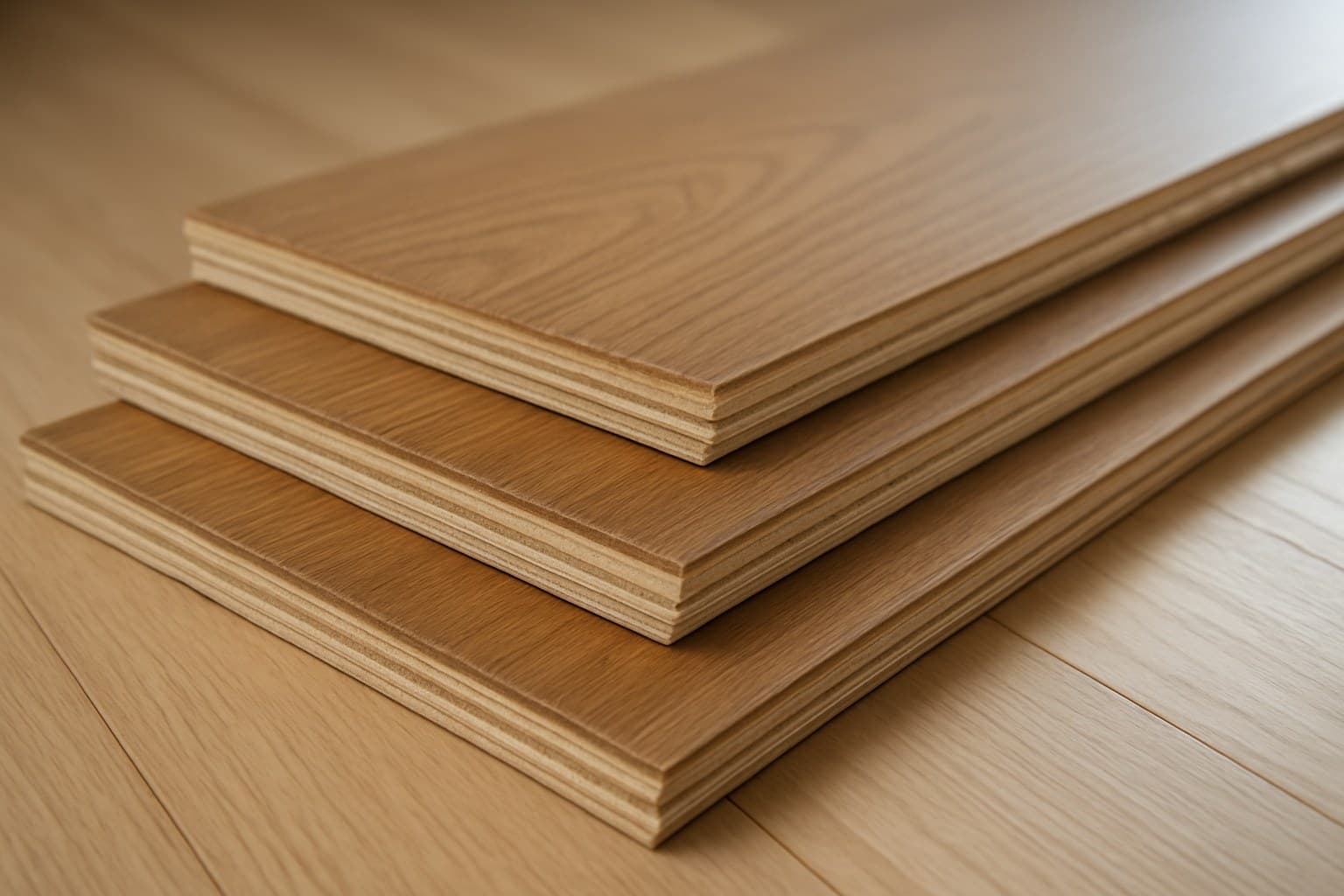
The core is the part that fights the movement solid wood can't, so at 12 inches it matters more than the pretty face on top. An engineered board is a real hardwood veneer glued over a cross-layered core, where each layer's grain runs opposite the last to hold the plank flat. If you're still weighing whether engineered is even the right call for your room in the first place, this solid vs. engineered hardwood comparison breaks down when each construction actually makes more sense.
At this width, a true plywood core with more plies beats a thin HDF core. HDF stands for high-density fiberboard, a compressed wood-fiber board. It's cheaper, but it doesn't push back against a 12-inch board the way stacked plywood plies do.
Ask two questions: how many plies, and is the core plywood or fiberboard. Also make sure there's a balancing layer on the bottom. That backing ply is what stops a wide plank from curling, and a board built without one can bow over time. Somerset is one of the few mills that publishes its ply counts openly, which is why I point people toward this Somerset engineered hardwood flooring guide when they want a benchmark to compare against.
3. Check the Wear Layer, Because It Sets Your Refinish Count
The wear layer, that top slice of real wood called the lamella, decides how many times your floor can be sanded, not the total plank thickness. I've watched people pay for a thick 3/4-inch plank and assume they were buying decades of sanding, when the veneer on top was barely thicker than a coat of paint.
A 0.6mm veneer usually can't be sanded at all; you get a light buff and recoat and nothing more. Thicker veneers earn you real refinish cycles. According to the National Wood Flooring Association (NWFA), whose Engineered Refinishable Program now counts more than 20 manufacturer partners, that program is the credible line I use for what actually qualifies as refinishable. NWFA's own Environmental Product Declaration for engineered wood flooring also models a 75-year service life for the category under the ISO 21930 standard, which is part of why getting real refinish cycles out of the wear layer matters so much over a floor's lifetime.
These aren't secondhand numbers, the manufacturer-partner count comes straight off NWFA's Engineered Refinishable Program page, and the 75-year figure and ISO 21930 methodology are stated in NWFA's own Environmental Product Declaration document (dated June 3, 2025, per the file itself, linked in Sources below). Worth noting: that EPD is a life-cycle document, not a product spec sheet, so it doesn't publish a single universal mm cutoff for what qualifies as "refinishable", that's decided per manufacturer and product line, which is exactly why I still tell people to get the veneer thickness in millimeters in writing rather than assume a threshold.
Get the veneer thickness in millimeters in writing before you buy. It's the single spec that protects your floor's long-term value.
| Wear layer | Typical grade | Realistic refinishes | Note |
|---|---|---|---|
| 0.6 mm | Entry-level / budget engineered lines | 0 | light screen and recoat only, no sanding |
| 1-2 mm | Mid-grade engineered collections | about 1 light sand | one careful refinish at most |
| 3 mm | Premium engineered lines | 1-2 | often meets NWFA's refinishable criteria |
| 4 mm+ | Top-tier / specialty wide-plank boards | 2-3 | closest an engineered board gets to solid |
Source: NWFA Engineered Refinishable Program criteria for refinishable wear layers
Typical wear layer thickness tiers, checked against how many times each can realistically be sanded under NWFA's refinishable criteria.
4. Pick a Species That Holds Up at Width
At 12 inches, a stable species matters as much as a hard one. Every species swells and shrinks with humidity, and a wide board magnifies that movement, so the wood that stays calm through seasonal swings is worth more here than the wood that just resists dents.
White oak is my default for wide board because it's both reasonably hard and steady. Hickory is harder but moves more. On the Janka Hardness Scale, the industry-standard test for how much force it takes to embed a steel ball halfway into a wood sample, which is how "hardness" gets a real number instead of a guess, white oak measures around 1,360 lbf and hickory around 1,820 lbf. Hickory wins on raw dent resistance by a wide margin, but that same density is part of why it moves more than white oak with humidity swings, and movement is exactly what a 12-inch board can least afford to ignore. Whatever you pick, remember the veneer species and the core are two separate things. A beautiful hard face over a weak core still moves, so don't let the species alone sell you.
If you want to match a species to collections that actually offer wide board, it's worth comparing the best engineered hardwood lines rather than guessing from a chip sample.
5. Decide on Total Thickness: 5/8 vs 3/4 Inch
Overall plank thickness, usually 5/8 or 3/4 inch, is about how your floor meets doors, transitions, and the floors in the next room, not about refinishing. Keep this separate from the wear layer. A thicker plank does not automatically buy you more sandings; that's the veneer's job.
A 3/4-inch board does tend to feel more solid underfoot and can bridge minor subfloor dips a little better. But if you're going over an existing floor or fighting tight door clearances, that extra height can force you to undercut jambs or shave doors.
Measure your subfloor height and door clearances first, then pick the thickness that fits without a fight.
6. Ask the Cupping and Moisture Question Head-On
Cross-layered engineered board stays flatter than solid wood, which is exactly why it's the safer bet for wide planks. That's the good news, and it's real. But engineered isn't immune, and at 12 inches any movement it does make shows up big.
Wide boards still cup or gap when a room's humidity swings hard between seasons. The fix isn't complicated: hold your indoor humidity inside the maker's stated range year-round, and follow that specific product's acclimation sheet instead of some rule of thumb you read online. Acclimation varies by product, and the box's own sheet is the one that governs the warranty.
If you want the full picture on why wide boards move, I laid out how wide planks cup and gap in detail using maple as the example.
7. Check Subfloor Flatness and Moisture Before Anything
Flatten and moisture-test the subfloor before a single board goes down. Wide planks telegraph every dip and hump far worse than narrow strips do. A 3-inch strip rides over a small low spot. A 12-inch board sits across it and rocks, and you'll hear it every time you walk past.
Grind down the humps and fill the lows to the maker's flatness tolerance. Then test moisture with a meter, a handheld tool that reads how wet the wood or slab is, everywhere the floor is going.
Over concrete or below grade, this isn't optional. Skip this prep and the maker can deny your floating floor's warranty claim outright, not because of the plank you chose, but because of what's underneath it. Skipped moisture testing is where wide engineered fails in a basement. If that room fights you on moisture no matter how much prep you do, it's worth looking at waterproof engineered hardwood options built for exactly that situation instead of gambling on the subfloor every season.
8. Choose Glue-Down or Float, and Know Which You Can DIY
Glue-down holds a wide plank tight and quiet, but it needs the right trowel, a clean surface, and a subfloor that's already flat and dry. It's the harder, messier method, and there's no easy do-over once the adhesive grabs.
Floating goes faster and suits a weekend DIYer, but a wide board over a floor that isn't dead flat can feel hollow or shift underfoot. Both methods need a perimeter expansion gap, and the size comes from that product's own instructions, not a universal number.
Here's my honest DIY line: click-lock floating is realistic for a lot of homeowners who take their time on prep. Glue-down, stairs, and large open-plan floors with moisture transitions are where I'd hire a pro. That's where the callbacks come from when people push past their skill level.
9. Split the Cost: Materials vs Labor, Plus the Stair and Basement Premium
Don't trust a single flat number for a wide engineered floor; split it into materials and labor, because they move for different reasons. Twelve-inch engineered materials sit at the high end of the engineered range simply because it's a specialty product. Labor then swings with the method and the room.
The open middle of a room is never where the time goes. On a job for the Hendersons in Columbus, the closets, doorways, and a bay window ate a whole extra day of labor. Stairs and basements carry a premium: stairs are slow, fussy cut work, and basements add moisture testing and often more subfloor prep.
| Job area | Materials | Labor |
|---|---|---|
| Open room, floating | $8-15 / sq ft | $2-4 / sq ft |
| Open room, glue-down | $8-15 / sq ft | $3-6 / sq ft |
| Basement over concrete | $8-15 / sq ft | $4-7 / sq ft |
| Stairs | $12-20 / step | $40-75 / step |
Cost ranges for 12-inch engineered split into materials and labor, with the stair and basement premium called out. These are starting ranges to confirm with local quotes.
For a fuller breakdown across widths and grades, see the engineered hardwood flooring cost guide and get two local quotes before you commit.
Sources
- NWFA Engineered Wood Flooring Environmental Product Declaration (2025)
- NWFA Engineered Wood Flooring Environmental Product Declaration (2023)
- NWFA Homeowner's Handbook to Real Wood Floors
- NWFA: Leading Manufacturers Embrace the Engineered Refinishable Program
- NWFA Life Cycle Cost Analysis (LCCA) Sales Sheet