I've handed homeowners quotes for white oak wide plank flooring that ranged from $6.50 to $28 a square foot for what looked like the same board. The phrase "wide plank" explains almost none of that gap. Grade and cut move the price far more than width does, and that's the knob to watch.
Key takeaways
- The National Wood Flooring Association (NWFA) counts anything over 5 inches wide as 'wide plank'; 3 to 5 inches is just 'plank,' and under 3 inches is 'strip.'
- Unfinished solid white oak runs about $6.50-$6.90 per sq ft at a budget mill selling one width, and $13-$28 per sq ft at a premium wide-plank mill; width alone doesn't explain the gap, grade and cut do.
- Finish path adds up fast: on one mill's published list, finish-ready adds about $2 per sq ft and prefinished about $6 per sq ft over unfinished.
- Budget roughly $3-$8 per sq ft for install labor on top of material; wide boards, prep, and prefinished edges push it to the high end.
- White oak's Janka hardness is about 1,360 lbf, harder than red oak at 1,290, which is part of why it holds up in busy rooms.
What Actually Counts as "Wide Plank" White Oak
Wide plank has a real definition, and most vendor pages ignore it. According to the NWFA Installation Guidelines, the trade's main standards group draws the line at over 5 inches wide: anything 3 to 5 inches is just "plank," and under 3 inches is "strip."
So when one shop sells a 6-inch board as wide plank and another sells true 12-inch boards under the same words, they're not selling the same product.
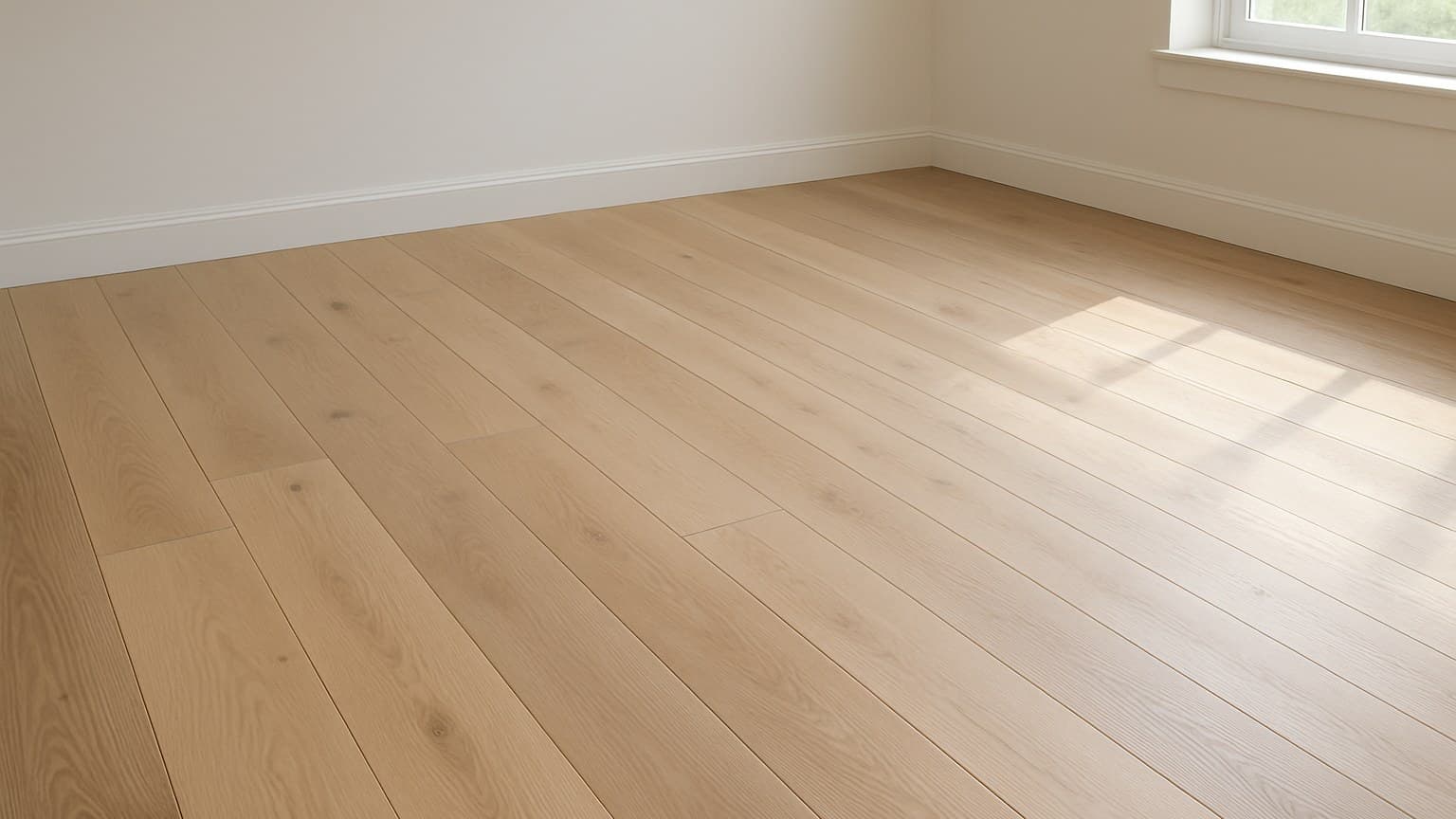
White oak itself is the species Quercus alba. Installers reach for it because of its tight grain and a warmer, browner tone than red oak. You'll find white oak flooring in wide plank from about 4 inches up to 12 or even 15 inches.
Here's the part that matters later: the wider the board, the more wood movement you have to plan for. A 9-inch board swells and shrinks across its face far more than a strip does. Keep that in mind when we hit solid versus engineered and radiant heat.
| Category | Width | What it is |
|---|---|---|
| Strip | Under 3 inches | Narrow classic board, common in older homes |
| Plank | 3 to 5 inches | Standard modern width |
| Wide plank | Over 5 inches | The real threshold; 7-9 inches common, 12-15 inches premium |
Source: the NWFA installation guidelines' width definitions
How the NWFA sizes oak flooring by board width.
Why One Quote Says $6.50 and Another Says $28
The short answer: the cheap quote is usually one mill's single fixed-width board in a lower grade, and the pricey one is a premium mill letting you pick cut, grade, and long board lengths. Both can be 3/4-inch solid white oak.
Real market anchors I see right now: about $6.50 to $6.90 per square foot for one mill's single 9-inch unfinished solid board, versus $13 to $28 per square foot at a mill that runs 4 to 15 inches wide. That's material only, before labor.
Grade, cut, board length, finish path, and the mill's tier drive the spread. Width by itself is a small piece of it. That's the real answer to "white oak flooring wide plank cost," and it lines up with the full hardwood pricing picture across the category.
| Price | Example | What's typical |
|---|---|---|
| $6.50-$6.90/sq ft | One mill's single 9-inch solid, unfinished | Shorter boards (1-12 ft), one fixed width, Character-leaning grade |
| $13-$28/sq ft | A premium mill, 4-15 inch, unfinished | Long boards (14+ ft), choice of cut and grade, live sawn options |
| Tier | Price per sq ft (unfinished solid) |
|---|---|
| Budget mill, single 9-inch board | $6.50-$6.90 |
| Premium mill, 4-15 inch | $13-$28 |
This table shows the material-only price range for unfinished solid white oak, comparing a budget mill's single board to a premium mill's wider lineup.
Does a Wider Board Always Cost More?
No. Width is one lever, not the whole machine. A 9-inch Character board can run well under half the price of a 7-inch rift-sawn Select board. Grade and cut outweigh the extra inches often enough that you shouldn't assume the biggest plank on the shelf is the priciest one.
Grades and Cuts: Where Half the Price Lives
Grade and cut are where a lot of your dollars go, more than width does. In plain terms, grade is about how clean the wood looks, and cut is about how the log was sliced.
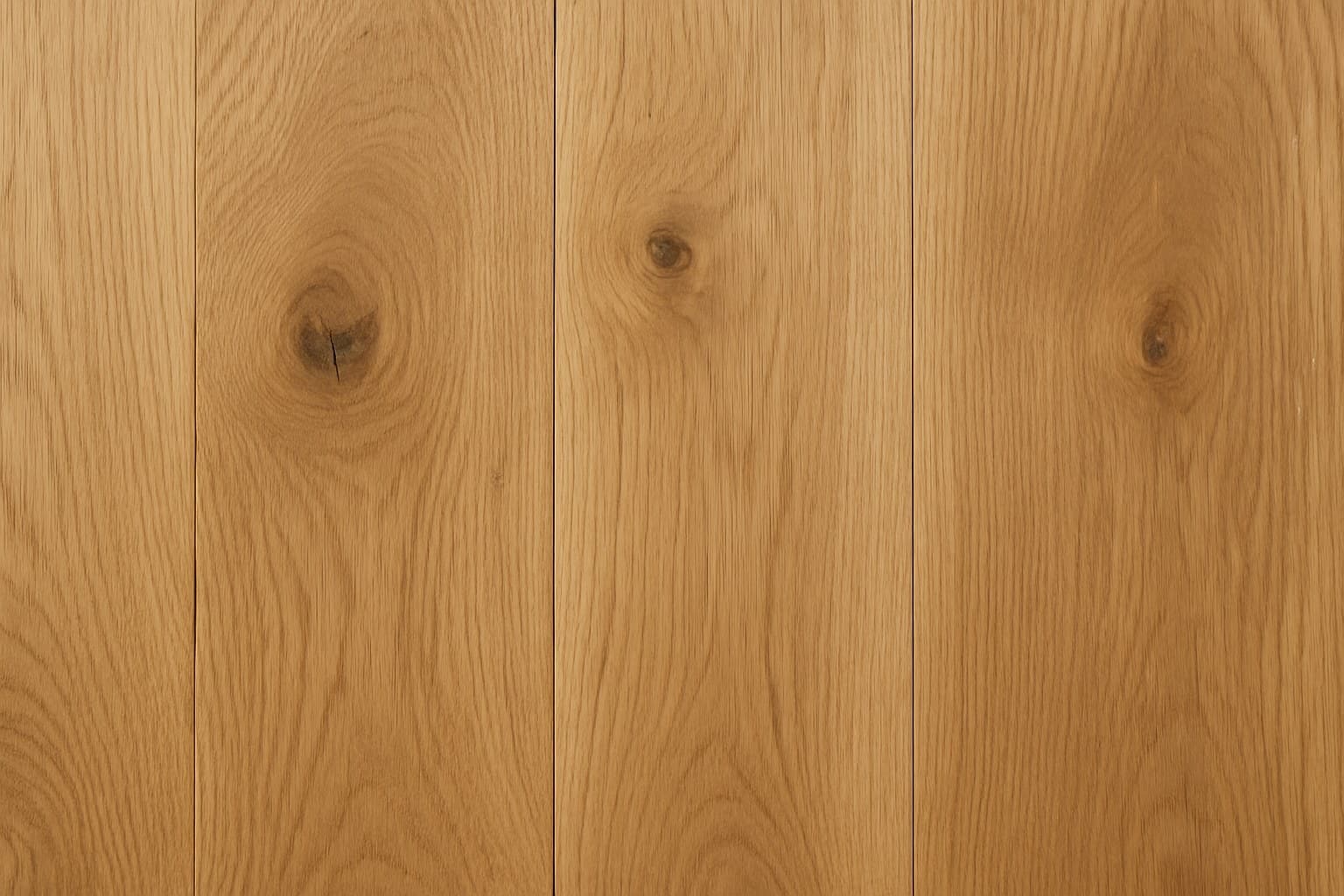
Select grade is clean and uniform, with few knots and little color swing. It costs more because more of the log gets thrown out to hit that look. Character grade keeps the knots, mineral streaks, and color variation, so more of the log is usable and the price drops. Neither is "better." Select suits a calm, formal room; Character hides scuffs and reads more rustic. If that worn-in, lived-on look is what you're chasing, rustic hardwood flooring digs into getting that character right without it looking shabby.
The cut changes both the look and the stability. Plain sawn gives you the classic cathedral grain, those arching lines, at the lowest price. Rift and quarter sawn give straight, tight lines and run at a premium, and they're stable cuts. Live sawn, often called the European style, shows all three looks in one wide board.
If you've been searching European white oak flooring in wide plank, live sawn is almost always the look you're chasing. It's also the cut a lot of French oak flooring is built on. For a deeper walk through oak flooring grades, cuts, and red versus white oak, that guide breaks each one down board by board.
Cut matters again in the next decision, because the straighter and tighter the grain, the less a wide board tends to move.
Solid vs. Engineered for Wide Boards
For a wide white oak floor, solid gives you the most refinishing life, and engineered gives you the most stability. That's the real tradeoff. If you're still weighing that tradeoff for your specific room and species, our guide on solid vs. engineered hardwood floors walks through how to choose between the two.
Solid white oak is all wood top to bottom, so you can sand and refinish it many times over decades. The catch is movement. A wide solid board swells and shrinks across its face with the seasons, and the wider you go, the more that shows up as gaps in winter or cupping in a humid summer.
Engineered white oak uses a plywood-style core under a real white oak veneer. That core stays flatter over concrete and below grade, like a basement, where I'd rarely put solid wide plank. The limit is refinishing: an engineered floor can only be sanded as many times as its veneer is thick, and that thickness is published by the maker. So "can I sand it later" is a spec question, not a yes or no. If vinyl is also on your shortlist for that same basement, our comparison of engineered hardwood vs LVP lays out how the two hold up below grade.
On the floors I've done, wide plus solid raises the stakes on acclimation and moisture more than any other combination. If you're leaning engineered, engineered hardwood breakdown and the best engineered hardwood brands are worth a look before you pick a core.
How Hard White Oak Is, and Whether It Suits Radiant Heat
According to the NWFA Homeowner's Handbook to Real Wood Floors, white oak rates about 1,360 pounds of force (lbf) on the Janka hardness scale, a test that presses a steel ball into the wood to measure how well it resists dents. That puts it above red oak at 1,290 and below hard maple and hickory.
In real life, that hardness handles kids, dogs, and a busy kitchen well. But no oak is dent-proof. Drop a cast-iron pan on it and you'll leave a mark, same as you would on maple.
Radiant heat deserves a straight answer: engineered white oak is usually the safer pick over a heated slab. Any solid wide plank over radiant needs the maker's written blessing plus tight humidity control, because a heated slab dries wood out and a wide solid board reacts to that by gapping. Width and heat pull in the same bad direction, so this is one place I push people toward engineered.
| Wood | Janka hardness (pounds of force) |
|---|---|
| Eastern white pine | 380 |
| American walnut | 1,010 |
| Red oak | 1,290 |
| White oak | 1,360 |
| Hard maple | 1,450 |
| Hickory | 1,820 |
This chart compares the Janka hardness of white oak against common flooring woods, where a higher number means more dent resistance.
Finish Paths and Texture Upcharges
You have three finish paths, and each one changes both your price and your install timeline. Unfinished wood gets sanded and sealed on site. Finish-ready wood is milled smooth but still finished on site. Prefinished wood arrives with a factory finish graded under NWFA/NOFMA factory-finished flooring standards and installs fastest.
On one mill's published list, finish-ready adds about $2 per square foot over unfinished, and prefinished adds about $6 per square foot. Texture is a separate line: wire-brushed, hand-scraped, and distressed surfaces add roughly $1 to $5 per square foot on that same list, and one premium mill advertises more than 100 color and texture combinations.
Site finishing lets you match a stain to the exact room, but it adds labor days and a lot of dust. That dust is where color choice bites back. I once put a near-black stain on site-finished red oak for a homeowner near Dayton, and that dark color showed every speck of dust and every swirl mark. I recoated a section twice before she was happy. White oak's tighter grain behaves a little better under dark stain, but the lesson holds: the darker you go, the more a site finish shows.
If you're after a pale, driftwood look instead, that's easier to pull off, and our driftwood oak guide covers how to get there without the floor looking gray and flat.
Working the Cost for Your Own Room
Here's the arithmetic an installer runs, so you can price your own room instead of guessing at a quote.
The formula is: total cost = floor area x (1 + waste) x material price per sq ft, plus area x labor price per sq ft.
- Area is your room's square footage (length times width).
- Waste is the extra you buy for cuts and board defects. Budget about 10% for a straight-laid wide plank room, more for diagonals or lots of corners.
- Material price is the per-square-foot numbers above, roughly $6.70 at the budget end and $20 for a mid-premium board.
- Labor for wide plank installs usually runs $3 to $8 per square foot. Wide boards, heavy subfloor prep, and prefinished edges push you to the high end; basements and stairs cost more than an open room.
Worked example: a 300-square-foot living room, a $14 board, $5 labor, 10% waste. You buy 330 square feet of wood (300 x 1.10), so material is 330 x $14 = $4,620. Labor runs on the real area, 300 x $5 = $1,500. Total about $6,120, or roughly $20 per square foot installed.
| Room size | Wood to buy (+10% waste) | Material at $6.70 | Material at $20 | Labor at $5 |
|---|---|---|---|---|
| 150 sq ft | 165 sq ft | $1,106 | $3,300 | $750 |
| 300 sq ft | 330 sq ft | $2,211 | $6,600 | $1,500 |
| 600 sq ft | 660 sq ft | $4,422 | $13,200 | $3,000 |
Source: install labor from white oak floors I've laid, against published material pricing
This table splits material and labor costs across three room sizes, comparing budget and premium white oak pricing.
To nail your own square footage and waste factor before you order, our guide on how to figure out how much flooring you need walks through the measuring step by step.
Before You Lay a Board: Subfloor, Moisture, and DIY vs. Hire
Two checks decide whether a wide plank floor stays flat: subfloor flatness and moisture. Skip either one and the floor fails no matter how good the wood is.
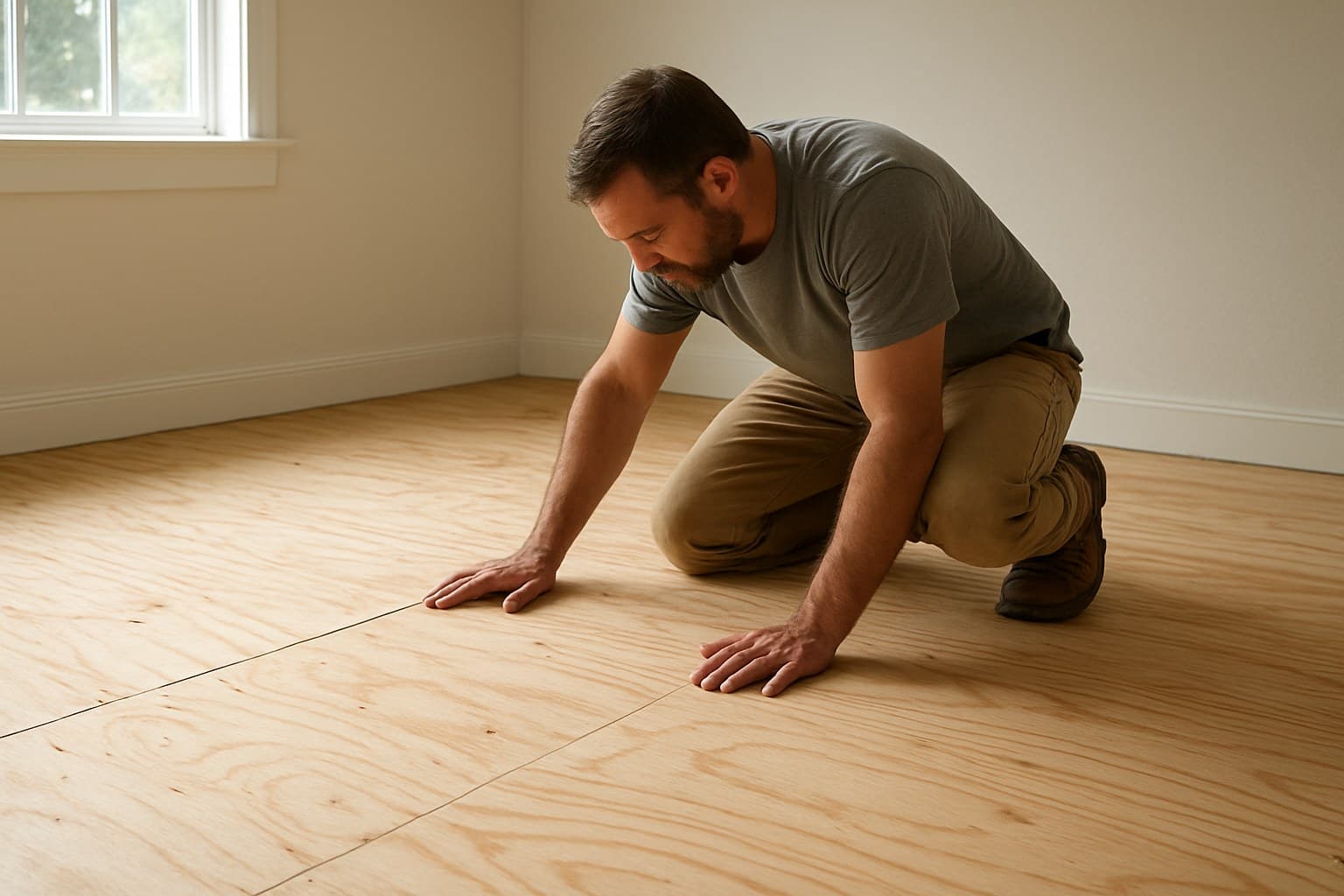
Flatness first. Most makers want the subfloor flat within a published tolerance, commonly cited as around 3/16 inch over 10 feet, though it varies by manufacturer, and a wide board telegraphs every high and low spot. Lay a long straightedge across the floor and shim or grind down what doesn't meet the spec. The NWFA Installation Guidelines cover subfloor prep and moisture testing in more detail than any single mill's spec sheet.
Moisture second. Both the subfloor and the wood need to be in the right moisture range before anything gets fastened, measured with a meter, not by eye. Whether the boards need acclimation time first depends on the product, so read the box's own sheet instead of a rule of thumb. And nearly every wide plank floor needs an expansion gap around the perimeter; the exact size is set by the maker, so look it up rather than guessing.
On the DIY question, I'll be straight. A prefinished click or nail-down white oak floor in a simple rectangular room is doable for a patient homeowner with a rented nailer. Glue-down wide plank, stairs, and a big open-plan floor that crosses a moisture transition are where I'd hire a pro. Those are the jobs where a small prep mistake turns into a floor you pull back up.
One last bit of hard-won advice: clear the room fully before install day. I once had a crew stand around moving a piano and a china cabinet on the clock because a homeowner swore the room would be empty and it wasn't. Empty the space yourself and you keep that labor money in the floor.