
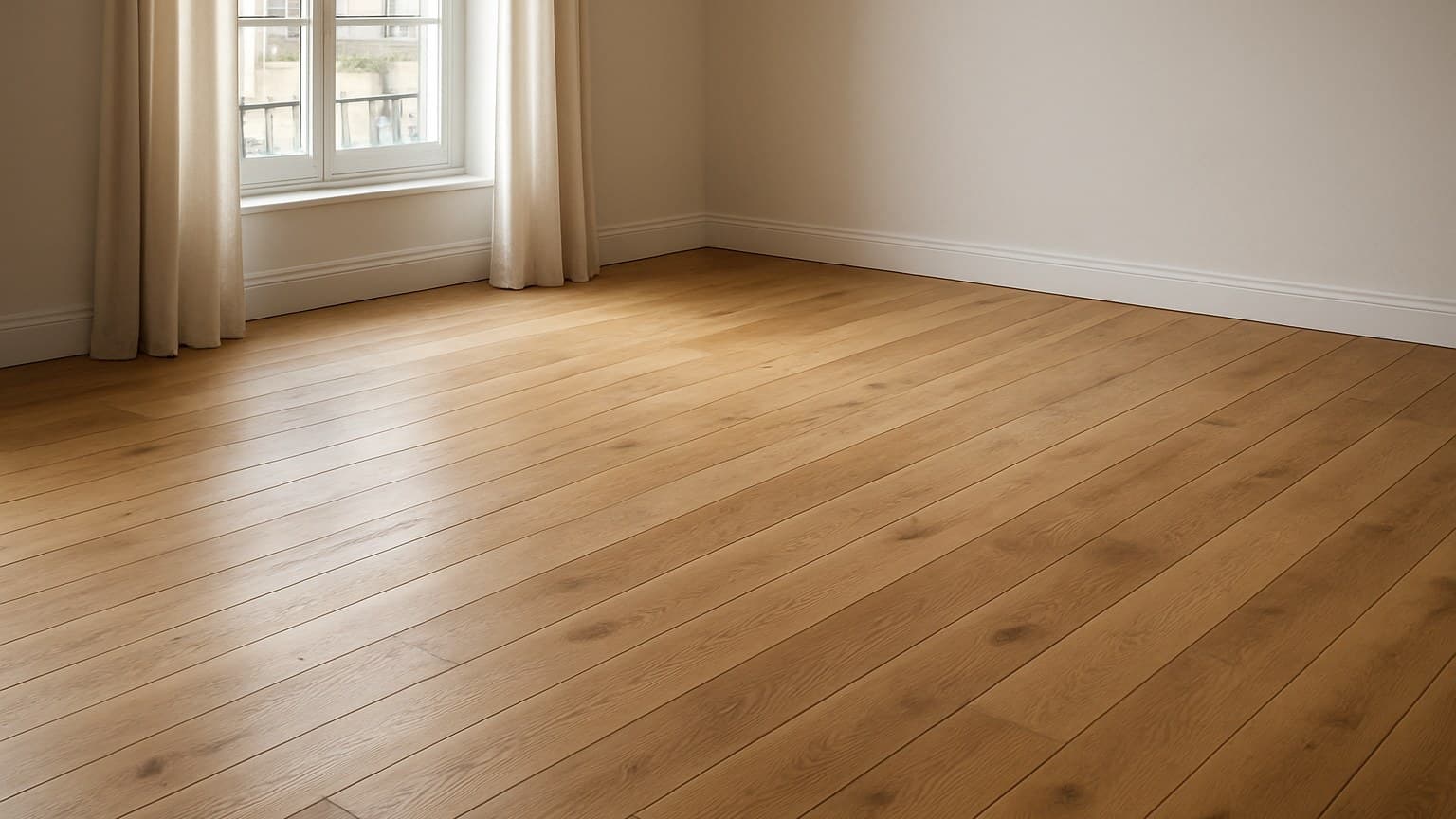
Last month I quoted a French oak job for a customer in Round Rock, Texas, and she showed me two quotes labeled "French oak", one priced at $6 a square foot, one at $25. Same words, completely different floors. Here's how to work through the choice in order, step by step, so you know exactly what you're paying for.
I've laid a lot of white oak over the years, and homeowners like that Round Rock customer almost always skip the first step and jump straight to color. Slow down. The decisions below stack on each other, and getting the early ones right saves you money on the later ones.
Key takeaways
- "French oak" is not a legal or botanical category. It is European white oak (Quercus robur or petraea) milled in France, so check the supplier's stated region, not just the word on the label.
- Grade controls how many knots and color streaks you get, not quality. Prime and Select run clean and uniform; Character and Rustic show more knots and movement. It is the same wood.
- Engineered French oak with a 4-6mm real-oak veneer works over concrete and below grade and can be refinished about 2-3 times. Solid needs a wood subfloor above grade.
- Plan on roughly $6-15 per sq ft in material for engineered plank, $12-25+ for wide plank or herringbone, plus $3-6 labor for straight-lay and $6-12 for herringbone or chevron.
- Check subfloor flatness with a long straightedge and moisture with a meter before laying one plank. Basement and stair jobs cost more than open rooms.
Step 1: Decode the Sourcing Label (French vs European vs American White Oak)
French oak flooring is European white oak, milled in France. It's not a separate species. The botanical name is Quercus robur or Quercus petraea, the same white oak that grows across Europe. So the word "French" on a box tells you where the log was cut and milled, not that you're getting a different tree.
That matters because the premium you pay is for region and milling, not for some rarer wood.
Is "French Oak" a Real Category or Just Marketing?
Here's the conflict buyers run into. Some sellers use "French" and "European" oak as the same thing. Others draw a line and reserve "French" for oak grown in northern France, where slower growth can mean tighter grain. Both are selling white oak. Neither is lying, exactly, but the gap is where overpaying happens.
Protect yourself by asking for the country of origin in writing. If a supplier can't or won't put it on the invoice or spec sheet, treat the French claim as marketing and price it like plain European oak.
French Oak vs European Oak vs American White Oak
American white oak (Quercus alba) is the look-alike most people compare it to. It's the same family, but the grain usually runs tighter and more uniform, with less of the wild movement French oak fans pay for. It also tends to cost less. If you love a calm, even floor, American white oak may get you close to the same look for a good bit less money. If it's bold grain and hardness you're after instead of a calmer look, hickory is the other species buyers bring up most, and I cover how to choose it without cupping or gapping in my hickory flooring guide.
| Type | Species | Origin | What it means for you |
|---|---|---|---|
| French oak | White oak (Quercus robur / petraea) | France, often northern | Same family as other European oak; the premium is region plus milling |
| European oak | Same white oak species | France, Germany, England and more | "French" is a subset of this; ask which country |
| American white oak | Quercus alba | United States | Tighter, more uniform grain; usually the cheaper look-alike |
Source: cross-checking supplier origin claims against their own spec sheets
The one question to ask any supplier: "Where was this milled, and what species is on the spec sheet?" A straight answer means you know what you're buying. A dodge means you don't.
Step 2: Pick a Grade (What NWFA Grading Actually Tells You)
According to NWFA/NOFMA grading standards, grade describes how a floor looks, not how tough it is. A Rustic board is exactly as hard as a Select board cut from the same log. Knots and color streaks don't weaken white oak. So when a sales rep hints that a cleaner grade is "higher quality," what they really mean is fewer knots, not a stronger floor.
Many US sellers base their grading language on standards set by the National Wood Flooring Association (NWFA) and its NOFMA grading program, though the exact trade names and cutoffs used by any given manufacturer can vary. Here's what the common trade names typically describe:
- Prime or Select: very few, tiny knots and even color. A calm, formal look.
- Character: a moderate number of knots, often filled, with mixed tones. Natural movement.
- Rustic: large, frequent knots and high color swing. Busy and farmhouse.
Match the grade to the room, not to a quality myth. A formal dining room or a quiet bedroom suits Prime or Select. A busy family room, an entry, or a farmhouse kitchen does better with Character or Rustic, because all that grain and color hides scuffs, dents, and dirt that a clean floor would show off.
| Grade | Knots | Color | Look | Hides wear? |
|---|---|---|---|---|
| Prime / Select | Few, small | Uniform | Formal, calm | No |
| Character | Moderate, filled | Mixed tones | Natural movement | Somewhat |
| Rustic | Large, frequent | High variation | Busy, farmhouse | Best |
Source: the NWFA's oak grading definitions
One thing to check in the same breath: the edge. A micro-bevel edge is a tiny groove milled along each plank. It gives every board its own line and hides small height differences between planks. A square edge looks seamless, almost like one sheet of wood, but it demands a flatter subfloor, because any dip between two boards will catch your eye and your bare foot.
Step 3: Choose Solid or Engineered by Where the Floor Is Going
The room decides this, not the look. Engineered French oak stays put over concrete and below grade, like a basement. Solid oak is for a wood subfloor above grade. Get this wrong and no finish choice will save you. That same room-first logic holds across every species, and I map out the full decision tree in my guide to choosing solid vs. engineered hardwood flooring.
Engineered is still real French oak. The top is a solid slice of oak, called the veneer or wear layer, glued over a core of cross-layered plywood or dense board. Those crossed layers fight the swelling and shrinking that wreck a solid floor over concrete. Once it's down, you cannot tell it from solid by looking, because the surface you see and walk on is the same oak.
Refinishing is where the two really split. Solid oak can be sanded many times over its life. An engineered floor can only be sanded until you'd cut through the veneer, so the maker's published veneer thickness sets your limit. As a general rule of thumb in the flooring trade, a thicker veneer (roughly 4-6mm) can typically support two to three sandings, while a thin veneer (1-2mm), common on budget engineered boards, usually can't be sanded at all. Always confirm the exact veneer thickness and sanding allowance on your specific product's spec sheet before you buy.
Radiant floor heat is another room-driven call buyers forget to make this early. Engineered French oak is generally the safer bet over an in-floor radiant system, because its cross-layered core resists the constant expansion and contraction that heat cycling causes, and many manufacturers will only honor their warranty on engineered product installed over radiant heat. Solid oak can be installed over radiant heat, but it's a riskier pairing, and it typically demands stricter limits on water or slab temperature plus a slower, staged warm-up the first time the system runs. If radiant heat is in the subfloor, get the manufacturer's written radiant-heat approval for that specific product before you buy, not after the floor is down.
On concrete jobs, the failures I've seen almost always trace to someone installing solid oak where engineered belonged, not to a bad batch of wood. Get the solid-versus-engineered call right for the room and you sidestep that problem entirely. If you want to see how the same call plays out in a denser, moodier species, my breakdown of why Brazilian cherry floors keep getting darker walks through the same logic on a wood that behaves very differently.
Step 4: Set Width, Thickness, and Wear Layer
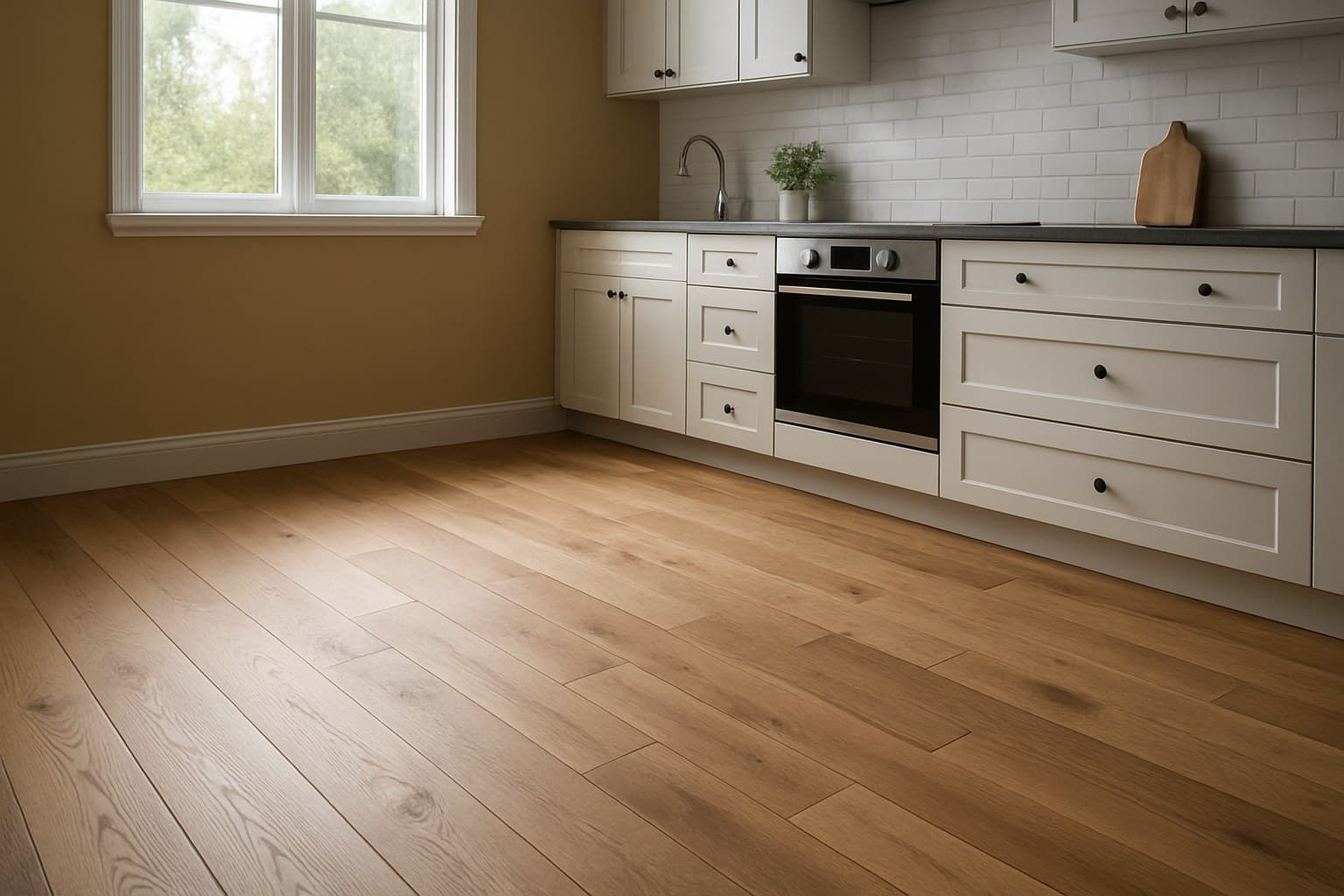
Start with the working ranges. Widths of 5-7 inches are the common sweet spot for French oak. Wide plank runs 8-10 inches and up. Solid boards are typically 3/4 inch thick. Engineered runs anywhere from 3/8 to 3/4 inch thick, and the total thickness isn't the number that matters most.
Wear Layer: The Spec That Decides Refinishing
On engineered French oak, the real-oak veneer thickness is the headline spec, not the total board thickness. A 1/2 inch board can have a paper-thin 1mm veneer or a solid 4mm one, and they refinish nothing alike. Ask for the veneer number in millimeters before you buy. If the seller only quotes total thickness, they're hiding the spec that decides how long the floor lasts.
| Board type | Thickness | Real-oak wear layer | Refinishes | Best for |
|---|---|---|---|---|
| Solid | 3/4 in (about 18mm) | Full board | Many | Wood subfloor, above grade |
| Engineered, thick veneer | 5/8-3/4 in | 4-6 mm | 2-3 | Concrete, below grade, wide plank |
| Engineered, thin veneer | 3/8-1/2 in | 1-2 mm | 0-1 | Budget, low-traffic rooms |
Source: the veneer thickness makers publish on engineered boards
General ranges based on typical engineered-flooring veneer thickness across the industry; always confirm the exact sanding allowance on your specific product's spec sheet.
French Oak Wide Plank: What Changes Above 7 Inches
Go wider than 7 inches and three things change at once. You see more grain movement and color across each board, which is a big part of the wide-plank appeal. You have a stronger case for engineered, because a wide solid board moves more with the seasons. And you need a flatter subfloor, because long, wide boards telegraph every dip and hump underneath. Pine takes those wide-plank tradeoffs to another level entirely, since its softness changes the whole equation, which I dig into in my wide plank pine flooring guide.
Width behaves differently across species, and it's worth seeing how before you commit. My guides to wide plank walnut flooring, wide plank hickory flooring, and maple wide plank flooring show how the same width choice plays out on woods that move and mark in their own ways.
Step 5: Choose Finish and Texture
The finish words trip up more buyers than the wood ever does, so here's what they mean in plain terms. Brushed means a wire brush was dragged across the board to scoop out the soft grain, leaving texture you can feel with your hand. Aged or fumed means the color was darkened by a chemical reaction, not just a coat of stain on top. Deep wire brushed is heavier texture that hides scuffs well but also holds dirt in the grooves, so it needs more careful cleaning. That fumed, deeply toned look overlaps heavily with what most homeowners picture when they say dark oak, and I walk through how to shop for it in my dark oak flooring guide.
On color, natural French oak reads light golden-brown to honey. A lot of what sells today is blonde or lightly finished to keep that pale, airy look. Before you commit to blonde, it's worth knowing whether the trend is holding up, which I cover in whether blonde floors are in style. If you're drawn more to a cooler, weathered gray-brown than a warm blonde, driftwood oak is worth comparing side by side, and I cover how to pick the right one for each room in my driftwood oak flooring guide.
Then there's the coating itself:
- Oil finish, matte: soaks into the wood, hides wear, and lets you spot-repair a scratch without redoing the whole floor. It needs re-oiling over time.
- Polyurethane, gloss: sits on top as a hard shell that takes daily abuse well, but shows every scratch, and fixing a worn spot usually means recoating the whole area.
If you want to control the color yourself, you can buy the floor raw and finish it in place. That's more work and more mess, but it lets you dial in the exact tone. I lay out the process in my guide to sanding and finishing unfinished hardwood. For most buyers, though, a good factory finish on engineered French oak is tougher and less hassle.
Step 6: Pick a Pattern (Straight, Herringbone, or Chevron)
Pattern drives your labor cost more than almost any other choice. A straight-lay floor, where planks run in parallel rows, is the cheapest to install. Herringbone and chevron cost more because they're slower and less forgiving.
Herringbone lays rectangular boards at a 90-degree angle, so each plank end meets the side of the next in a staggered zig-zag. Chevron cuts the board ends at an angle so they meet point to point in a clean V. Chevron usually costs a touch more because every board is angle-cut, and there's more waste.
Both patterns demand a flat subfloor and a careful installer, because a small error repeats and grows across the room. This is also where French oak's price can jump fast, since patterned floors often come in the pricier wide-plank and premium lines.
If your French oak will meet tile at a kitchen or bathroom doorway, plan that seam before you set the pattern. The way the two floors line up decides which transition piece works, and I break that down in wood to tile transition ideas.
Step 7: Check the Subfloor Before You Buy One Plank
Do this before you spend a dollar on wood. On floating and glue-down floors, the finished result only lasts as long as the prep underneath, and a bad subfloor can void the maker's warranty outright. Two checks, every time.
First, flatness. Lay a long straightedge, an 8-10 foot level or straight board, across the floor in several directions and look for gaps under it. Most makers spell out how flat the subfloor must be in their install guide. Dips and humps get worse under wide and square-edge boards, so grind down highs and fill lows before anything goes down.
Second, moisture. Use a moisture meter, a small tool that reads how wet the subfloor is, especially on concrete. Concrete can feel dry to your hand and still read far too wet for wood. On a basement job for a customer in Cedar Park, the slab felt bone-dry to my hand but the meter read almost double what the engineered oak maker allowed, finding that out after the floor's already down is a far worse day than the check ever costs.
Two more prep rules that live on the box, not in a rule of thumb. Almost every floating floor needs an expansion gap around the walls so the wood can move, and the exact size comes from that product's instructions. And acclimation, letting the wood sit in the room before install, varies by product. Some ask for it, some say skip it. The sheet in the box governs, not advice online. The NWFA's own Homeowner's Handbook to Real Wood Floors covers these same fundamentals, flatness, moisture testing, expansion gaps, and acclimation, as baseline steps for any solid or engineered wood installation, though your product's own instructions always take precedence.
Basement and stair jobs cost more than open rooms. Basements often need moisture barriers and more slab prep, and stairs are slow, fussy handwork with a lot of cuts.
What French Oak Flooring Costs
Here's the real money question, split the way it actually lands on your invoice: materials in one column, labor in another. French oak sits at the higher end of oak because of the import and milling premium, and the pattern you pick swings the labor hard.
| Scope | Material ($/sq ft) | Labor ($/sq ft) |
|---|---|---|
| Engineered plank, straight-lay | $6-15 | $3-6 |
| Wide plank (8 in and up), straight-lay | $12-25+ | $3-6 |
| Herringbone or chevron | $12-25+ | $6-12 |
Cost ranges for material vs labor on French oak; labor swings with pattern and prep.
A few things to add on top. Wide plank and patterns often mean more waste, so buy 10-15 percent extra. Subfloor prep, grinding, filling, or a moisture barrier, is a separate line. And as noted above, basements and stairs run higher than a simple open room. Always get the quote itemized so you can see where the money goes and cut what you don't need.