
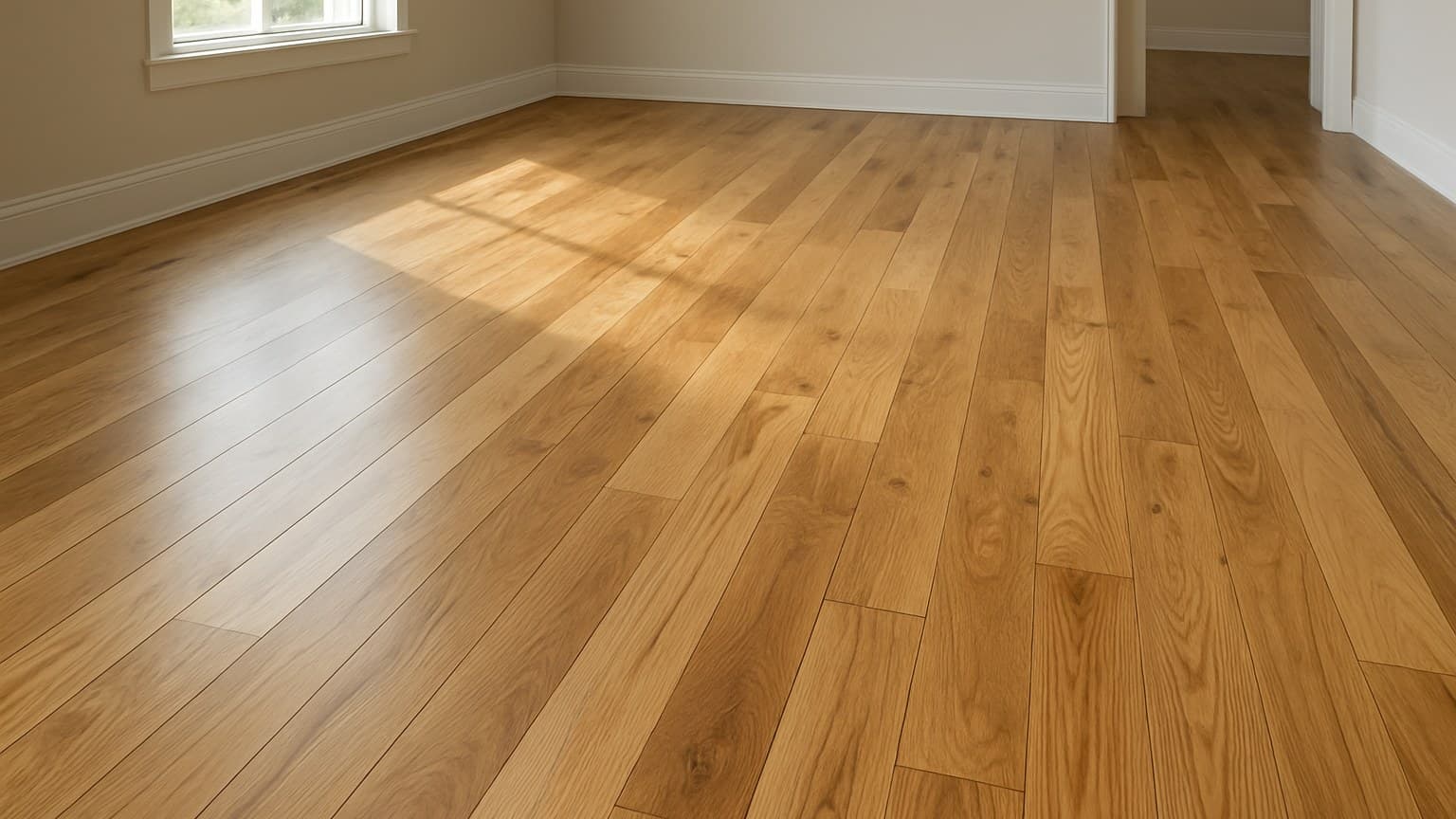
Hickory is the toughest wood most people put on a floor, but that same toughness comes with the widest color swing and more movement than oak. Pick the wrong grade or width, or skip the subfloor prep, and hickory flooring cups, gaps, or looks nothing like the sample. Here's the order I check on the job.
Key takeaways
- Check subfloor moisture and flatness first. Hickory moves more than oak, so bad prep, not the wood, is what causes cupping and gaps.
- For basements or radiant heat, pick engineered hickory. Solid hickory isn't recommended below grade.
- Grade is a look-and-price call: NWFA/NOFMA Select is near-clear and pricier; Character keeps the knots and bold color and costs less.
- Hickory's Janka hardness runs about 1820, harder than red oak (about 1290) and hard maple (about 1450), so it shrugs off dents from pets and kids.
- Budget material and labor apart: solid prefinished often runs about $4-$8/sf material plus $3-$8/sf labor, with stairs and basements costing more.
First, Know What Hickory Actually Gets You
Hickory is the hardest common domestic wood, so it takes a beating better than almost anything else. It swings the widest on color and moves more than oak, and those two things surprise people after the boxes show up. If you want the full picture on that baseline, my complete guide to oak flooring covers why it remains the industry standard for comparison.
The hardness that handles pets and kids
Hardness is measured on the Janka scale, a test that presses a steel ball into the wood and records the force it takes. Hickory lands around 1820, well above red oak at about 1290. That gap is why hickory shrugs off dog claws, dropped toys, and dragged chairs that would dent softer floors. That same benchmark is why people comparing hickory to other premium options often check my French oak flooring guide before deciding.
| Species | Janka hardness | Note |
|---|---|---|
| Hickory | 1820 | Hardest common domestic species; resists dents but harder to sand |
| Hard maple | 1450 | Uniform look, mid-range hardness |
| Red oak | 1290 | The baseline most floors are compared to |
| Black walnut | 1010 | Softer, dents more easily |
Source: Janka hardness scale values published for each species
What color hickory flooring typically is
Hickory runs from pale blond sapwood to deep chocolate-brown heartwood, and you often get both in the same box. That light-to-dark mix is the whole appeal for some people and too busy for others. Unlike a wood such as Brazilian cherry that keeps darkening for years after it's down, hickory's color is mostly what you see on day one, so a small sample never shows the full range. That pale sapwood end of the range is also why so many buyers now ask whether blonde floors are still in style before committing to a lighter grade.
One more tradeoff from that hardness: hickory is tough to sand and refinish. The dents you avoid are the same reason a sander fights the wood.
Step 1: Check the Subfloor Before You Fall for a Sample
The finished floor only lasts as long as the prep under it, and hickory punishes a bad subfloor faster than oak because it moves more. Before I look at a single sample, I check the subfloor two ways. These same checks apply no matter what species you're installing, which is why I walk through them in more detail in my general wood flooring guide.
Moisture comes first. I read the slab or wood subfloor with a moisture meter, a handheld tool that shows how wet the material is. A floor laid over a damp subfloor is exactly what cups and gaps a season later, no matter how good the wood is.
Flatness comes second. I lay a long straightedge across the floor and look for daylight under it. According to the National Wood Flooring Association's homeowner guidance, subfloors should be relatively flat before installation, tolerances are commonly cited as roughly 3/16 inch over 10 feet, though the exact spec varies by product and installer. High spots get ground down, low spots get filled with leveler.
I learned this the hard way. A homeowner in Dayton, Ohio, named Carol talked me out of a moisture test to save an afternoon, and I let her. That floor cupped before the season was out, and I relaid it on my own dime rather than argue about whose call it was. Now the test is never optional.
Step 2: Solid or Engineered? Let the Room Decide
For basements, concrete slabs, or radiant heat, choose engineered hickory. Solid hickory is generally not recommended below grade because it moves too much with moisture.
Engineered wins in those spots because its plywood-style layered core stays more stable when humidity swings. Solid is one thick piece of wood, so it expands and contracts more across the seasons.
Solid still has its place. It can be sanded and refinished more times over its life, so for a main-floor living room you plan to keep for decades, solid can be the better long-term pick. Wide planks in a humid climate lean toward engineered, and an above-grade room with steady humidity and a tight budget can take either one. If you're weighing this same solid-versus-engineered call for other rooms or other wood species entirely, my guide to picking solid vs engineered hardwood walks through that decision room by room.
This is a room-and-moisture question, not a quality question. On a basement remodel I did for a family in Aurora, Illinois, the moisture reading, not the price tag, is what picked the material.
Step 3: Pick the Grade, Select vs Character
Grade is about looks and price, not durability. The same tree makes both grades, and both are equally hard underfoot. This is the part the sales pages skip.
Under the NWFA/NOFMA grading standard (NOFMA, short for the National Oak Flooring Manufacturers Association, set the original grade names most mills still use), Select grade is defined as "practically free of defects," with minimal color variation and few knots. Character grade (sometimes called Rustic) keeps the knots, streaks, and the wide light-to-dark color swing hickory is known for.
| Grade | Look | Best for | Relative price |
|---|---|---|---|
| Select | Practically free of defects, minimal color variation, few knots | Clean, uniform floors | Higher |
| Character (Rustic) | Knots, streaks, wide light-to-dark color swing | Rustic look, hiding scratches, pets and kids | Lower |
Source: NWFA/NOFMA hardwood grading definitions
NWFA/NOFMA hickory grade definitions and what each grade suits.
Match the grade to your goal. Character hides scratches and dents better because the floor already looks busy, which is why I steer pet-and-kid homes toward it. Select suits a cleaner, more uniform room. And because more of each board gets culled to make Select, it costs more, so choosing Character is one of the easiest ways to cut your material bill.
Step 4: Choose Width and Respect the Movement
Boards 3 to 5 inches wide are the safe, forgiving choice. The 6 to 8 inch wide planks look great, but they move more, so each seam has more room to gap in dry winter air.
Wider boards shrink and swell more across their width. That means gaps and small cupping show up sooner if the humidity isn't controlled or the acclimation step gets skipped. The wood didn't fail; the width just gave the movement more room to show.
Follow the maker's acclimation and expansion-gap instructions for the exact product you buy. Those numbers vary by board and are not one universal figure, so look them up rather than trust a rule of thumb. If you're leaning toward the big boards, I break down the width choices and the movement math in my wide plank hickory flooring guide.
Step 5: Finish, Prefinished vs Unfinished vs Hand-Scraped
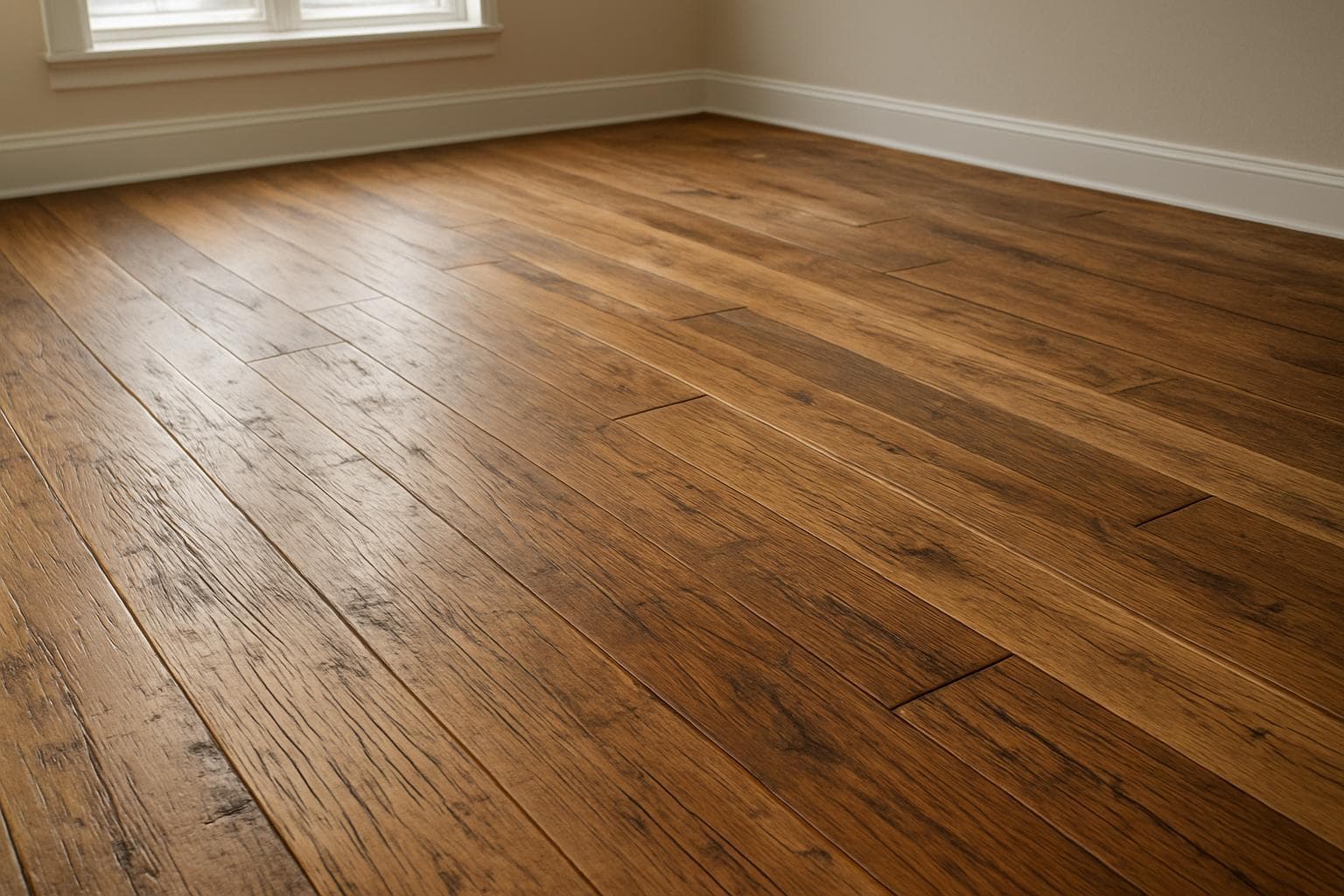
Prefinished hickory is factory-sealed to the NWFA/NOFMA factory-finished standard, so there's no dust, no fumes, and you can walk on it the day it goes down. Unfinished hickory gets sanded and coated after install, which lets you match a stain exactly and get seamless edges, but it's a dirtier, slower job. Hand-scraped hickory has a textured, wavy surface that hides wear and looks rustic.
The factory coating on most prefinished hickory is a UV-cured urethane with aluminum oxide mixed into the top layer, not the site-applied oil-based polyurethane a refinisher would brush on. Aluminum oxide is a hard mineral abrasive, and blending it into the wear layer is what lets mills back these floors with the long scratch-resistance warranties you see on prefinished lines, commonly well beyond what a site-finished coat carries. On a wood already at the top of the Janka scale, that pairing is why prefinished hickory shows fewer surface scratches under rolling chairs and dog nails than the wood's hardness alone would suggest; the finish, not just the hickory underneath it, is doing a lot of that work. It's also why a scuffed factory finish can't just be spot-buffed the way a site-applied coat can, the abrasive layer wears as a sealed unit, so deep scratches usually mean recoating or refinishing rather than a quick touch-up.
Here's where hickory's hardness matters again. It's tough to sand, so site-finishing hickory is more work than oak and usually means hiring a pro. For most homeowners, prefinished Character-grade hickory is the practical pick: it looks good, hides scuffs, and skips the messiest step.
What Hickory Flooring Actually Costs
Budget material and labor as two separate lines, because lumping them into one national number hides where your money really goes. Solid prefinished hickory often runs about $4 to $8 per square foot for material, plus roughly $3 to $8 per square foot for install labor. Engineered hickory material lands in a similar band, sometimes higher for thick-veneer products.
Those labor numbers assume open rooms. Stairs, closets, and tight basement layouts cost more per square foot because there's more cutting and fitting, and basement slabs often need extra moisture prep before anything goes down. Site-finishing unfinished hickory adds sanding and coating labor on top, so factor that in if you skip prefinished.
Get two or three local quotes with the material and labor split out. If a bid shows one blended number, ask them to break it apart so you can compare fairly.