
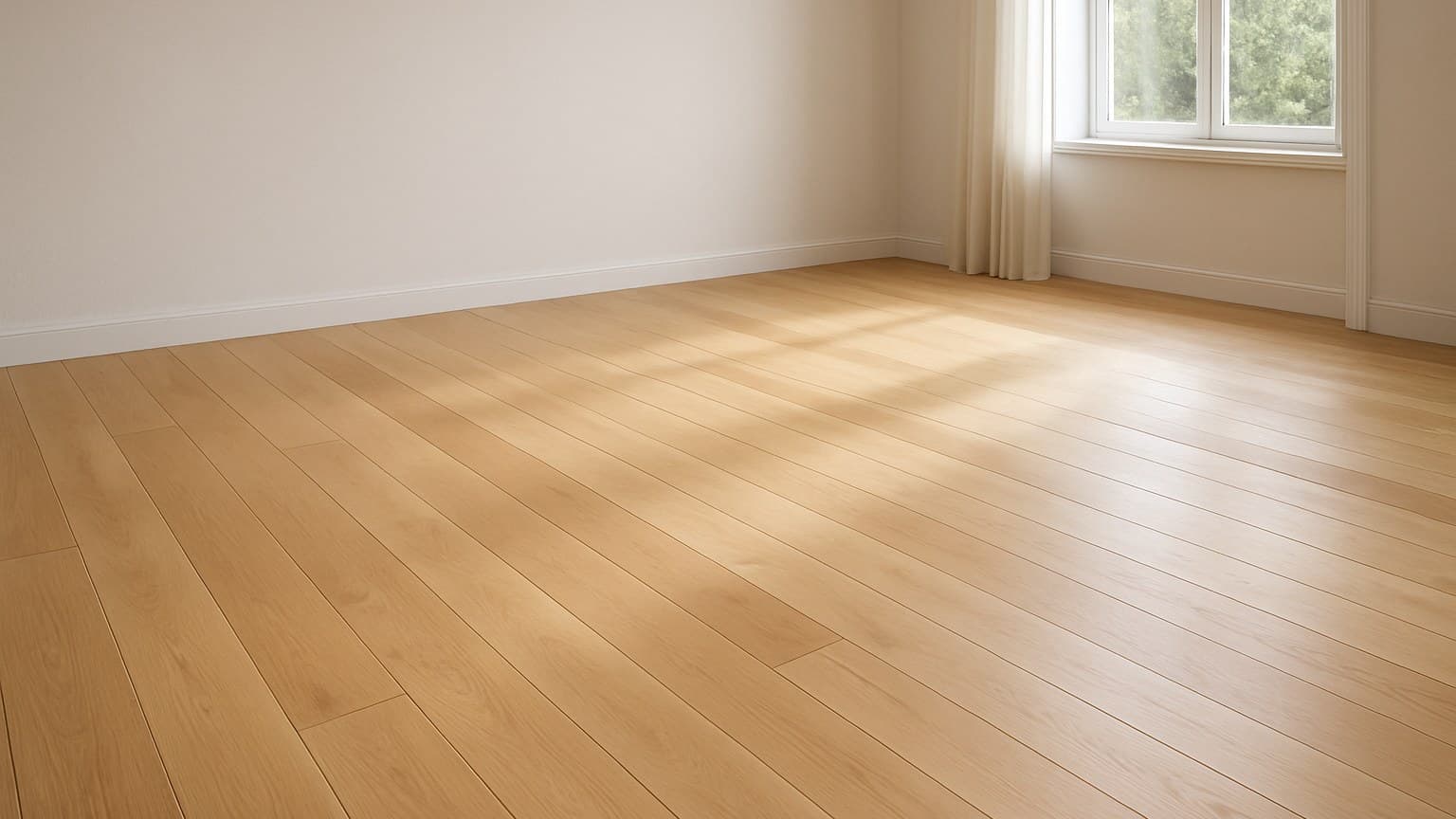
Yes, blonde floors are in style in 2026, that part's easy. The hard part is that two samples can look nearly identical in the store and then age ten years apart once they're down and catching daylight. A customer in Columbus once handed me a light maple sample and a white oak sample side by side and asked which one I'd put down in my own house. One keeps reading like real wood; the other yellows.
I've spent the last dozen years installing and refinishing hardwood floors for homeowners across central Ohio, which is where the Columbus and Dayton examples in this piece come from, not showroom talk, but jobs I've gone back into years later to see how the finish actually held up. Most of what I know about installing hardwood flooring correctly came from fixing jobs that skipped a step.
Key takeaways
- Yes, blonde floors are in style in 2026, and natural, unstained tones have real staying power, not just a passing trend.
- White oak with a matte oil or hardwax finish ages best; clear-coated (lacquer) light maple carries a real yellowing risk over the years.
- Cool gray-blonde undertones date fastest since the gray trend is already fading; true natural blonde is the safer 10-year bet.
- Blonde hardwood costs more but can be refinished; blonde LVP and laminate won't yellow but can't be sanded back.
- Rough installed cost: blonde white oak runs $7-17 per sq ft, blonde LVP $4-9, blonde laminate $3-8, before any basement or stair premium.
The Short Answer: Yes, But Which Blonde Matters More Than You Think
Yes, blonde floors are in style in 2026, and this isn't a one-season fad. Natural, unstained wood tones have held on for several years now, which is the opposite of how a quick trend behaves.
The industry signal backs it up, not just showroom chatter. According to the National Wood Flooring Association (NWFA), the main trade group for wood floors, its Wood Floor of the Year program has repeatedly recognized natural and textured finishes in recent years, and NWFA's own consumer research indicates most homeowners say they want real wood floors in their home.
Here's the catch vendor posts bury: the wrong blonde dates fast. Clear-coated light maple can yellow over the years, and cheap blonde vinyl can look flat within a few seasons.
So if you want one safe answer, it's white oak with a matte oil finish, the kind you typically get by starting with unfinished hardwood flooring sanded on site rather than a factory pre-finished board. That's the blonde that ages best, and it protects you where it counts, resale in ten years, not just the photo you take the week it goes in.
What Counts as a Blonde Floor (and Why the Undertone Decides Everything)
Blonde isn't one color. It runs from pale honey all the way to near-white, so the first thing to do is pin down where your sample actually sits before you hand over a deposit.
The split that matters is cool versus warm. Cool blondes carry a gray or white undertone and read modern or Scandinavian. Warm blondes lean honey and read farmhouse or coastal.
That undertone is what dates or lasts. Cool gray-blonde is tied to the gray floor wave that's already on its way out, while a true natural tone reads more timeless. If you want to see where the color market is leaning right now, this breakdown of the most popular floor color right now lines up with what I'm getting asked for on jobs.
One more thing people miss: blonde is a color-and-finish choice, not a species. You can get it in real wood, solid or engineered, and some of the best engineered hardwood flooring comes in blonde tones, vinyl plank, or laminate, and each of those ages in a completely different way, which is the whole point of the next section.
The Real Decider: Which Blonde Ages Well and Which One Yellows
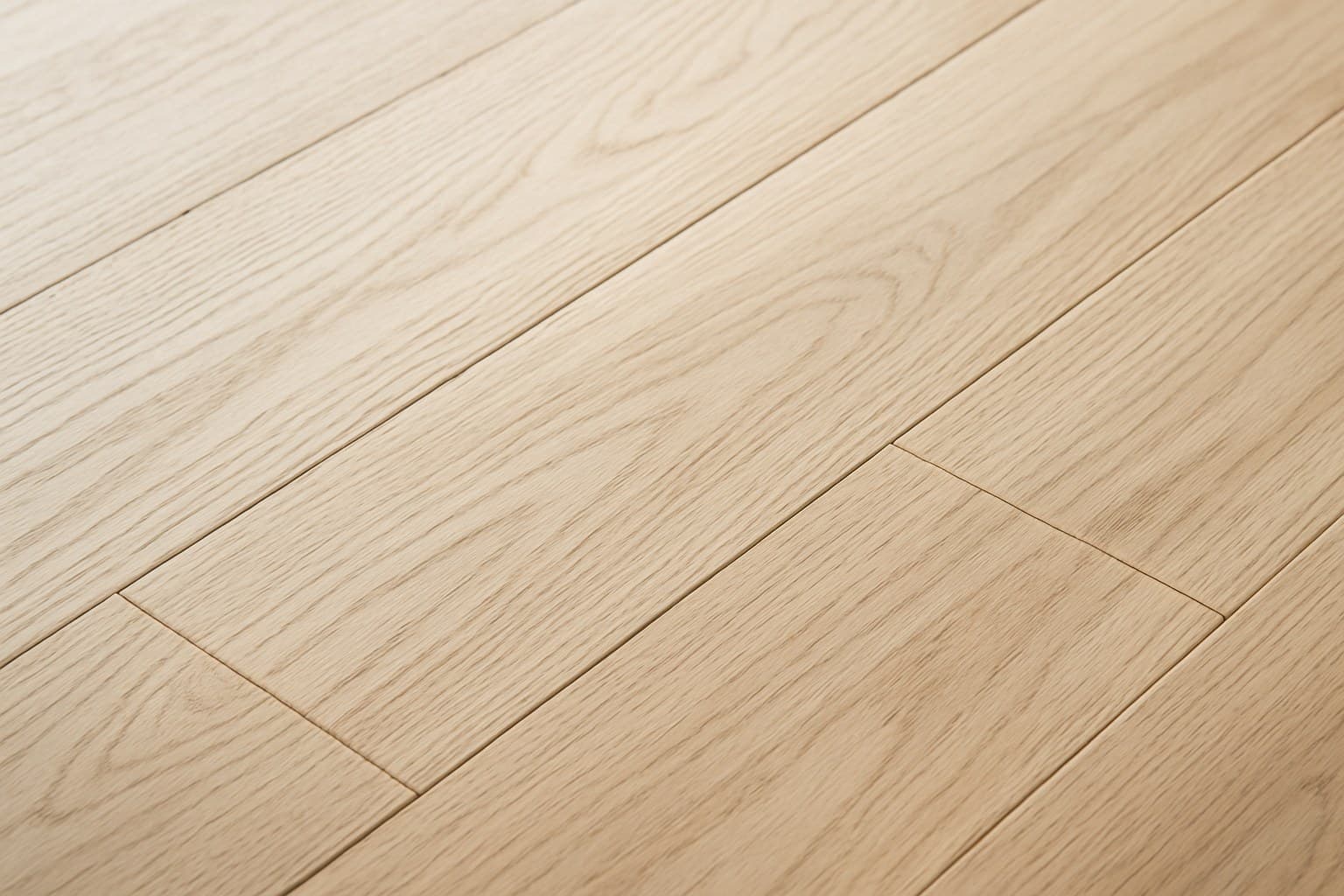
White oak with a matte oil or hardwax finish, hardwax is a hard wax-oil blend that soaks into the wood grain instead of sitting on top like a plastic coating, ages slowest and most evenly, and when it finally does shift, you can sand it back and refinish it. That's the blonde I'd put in my own house. If you're still deciding how to buy it, this guide to choosing solid vs. engineered hardwood floors covers the species and construction tradeoffs worth knowing before you order.
Light maple is the trap. A clear lacquer coat over maple has a real yellowing risk from UV light and plain oxidation over the years. I pulled up a maple living room floor in a Dayton home a while back that had gone the color of weak tea near the window, and no amount of cleaning was ever going to fix that, because the color shift was in the finish and the wood, not on top of it. Most trend posts skip this entirely.
Ash is the underrated pick. It has open grain like oak, it's naturally pale, and it ages evenly. The downside is it's harder to find and price can jump around.
Pine is the species most of these trend posts leave out entirely, and it's arguably the biggest yellowing risk of the bunch. It's one of the most common pale, blonde-adjacent floors around, plenty of older homes and budget builds have it under a clear coat, and it's notorious for ambering hard with age and UV exposure. A clear-finished pine floor can drift from pale straw to deep honey-amber in a sunny room, often faster and more noticeably than maple does. If pine is what you're working with or pricing out, plan for that color shift up front instead of being surprised by it later.
Blonde LVP and laminate won't yellow at all, which is a genuine edge. The trade is that they can't be refinished, and the cheap ones show repeat printed patterns and a flat, plasticky look surprisingly fast. If you're weighing the vinyl side specifically, this comparison of blonde maple vs. blonde oak vinyl plank breaks down which light wood look holds up best over time.
| Option | Typical finish | Aging / yellowing risk | Refinishable | Best for |
|---|---|---|---|---|
| White oak | Matte oil / hardwax | Slow, even amber shift; low yellowing | Yes, several times | Long-term, resale-safe |
| Light maple | Clear lacquer coat | Real yellowing risk from UV + oxidation | Yes, but tight grain shows sanding marks | Only in low-UV rooms |
| Ash | Matte oil | Ages evenly, stays pale | Yes | Oak look, harder to find |
| Pine | Clear or wax finish | High, ambers/yellows significantly with age and UV | Yes, but soft wood dents easily | Rustic look, tight budgets, low-UV rooms |
| Blonde LVP / laminate | Printed wear layer | No yellowing; can fade or scuff | No | Wet rooms, tight budgets |
Source: From pulling up light maple and white oak floors on ten-year-old refinish jobs
How four blonde options shift over a decade or more of daily use.
Will Blonde Go Out of Style? The Trend Cycle, Honestly
Look at the cycle and you can judge this yourself. Dark espresso stains ran the early 2010s, gray and gray-wash took over mid-to-late 2010s, and natural blonde leads now.
The honest caution: gray is already fading, so a cool gray-blonde could follow it down the same hole. A natural, near-unstained blonde tracks much closer to plain wood being itself, and plain wood has outlasted every stain trend so far.
According to the NWFA's Wood Floor of the Year categories, the shift toward natural and textured finishes is a real, documented signal that this isn't just a showroom fashion.
| Era | The look |
|---|---|
| Early 2010s | Dark espresso and walnut stains |
| Mid-to-late 2010s | Gray and gray-wash finishes |
| 2020s to now | Natural and blonde, matte finishes |
| Where it's heading | Warm-natural over cool-gray; texture over gloss |
Source: NWFA Wood Floor of the Year categories, matched to what customers asked me for each year
How mainstream wood floor color has moved from dark to gray to blonde.
For resale, the verdict is simple: pick the tone that looks like wood doing its own thing, not the tone chasing this year's color.
Blonde in Hardwood vs Vinyl vs Laminate: Cost and Tradeoffs
Blonde costs different money in each material, and a single flat number hides where it goes. Blonde white oak runs roughly $4-10 per sq ft in material plus $3-7 in labor. Blonde LVP is about $2-5 material plus $2-4 labor. Blonde laminate is about $1-4 material plus $2-4 labor.
| Blonde floor | Material ($/sq ft) | Labor ($/sq ft) | Installed total ($/sq ft) |
|---|---|---|---|
| Laminate | $1-4 | $2-4 | $3-8 |
| LVP | $2-5 | $2-4 | $4-9 |
| White oak | $4-10 | $3-7 | $7-17 |
Rough installed cost ranges, material plus labor, before any basement or stair premium. Not to scale of exact quotes.
On LVP versus laminate, neither wins outright. Laminate usually gives a more realistic wood look for less money, while LVP tolerates water better, so the room decides. If you're shopping the vinyl side, what color LVP is trending in 2026 is worth a look before you pick a blonde plank.
Keep the waterproof talk honest, too. A waterproof core doesn't mean waterproof seams. The water failures I get called back for happen at the edges and joints where the planks meet, not on the plank face.
And watch the room premium. Basement jobs cost more than an open living room, because the slab needs moisture testing and often more leveling, and stairs cost more again for all the cutting and nosing. DIY click-lock LVP is realistic for handy homeowners, but glue-down, stairs, and big open-plan moisture transitions are where hiring a pro pays off.
Pairing Blonde Floors With Cabinets and Walls
Match the tone to the look you're after. White or cream cabinets over a cool blonde read Scandinavian, while wood or sage-green cabinets over a warm blonde read farmhouse.
The mistake I see most is matching the cabinet wood tone too closely to the floor. When they're that close, the whole room blurs into one flat mush with no definition. Contrast the cabinet tone against the floor on purpose so each reads as its own deliberate choice.
Wall color pulls the undertone, too. Cool grays and soft whites keep a blonde floor from looking yellow, while heavy beige walls can push it that way. Whatever you're leaning toward, tape a sample down and look at it in your own room's light across a full day before you commit, daylight can shift a floor's color over time more than people expect.
Sources
- NWFA Homeowners Handbook to Real Wood Floors
- NWFA Wood Flooring Styles & Trends Guide
- NWFA Wood Floor of the Year Program
- NWFA Consumer Study: Industry Reports
- TCNA 2026 Report: Tile, The Natural Choice