
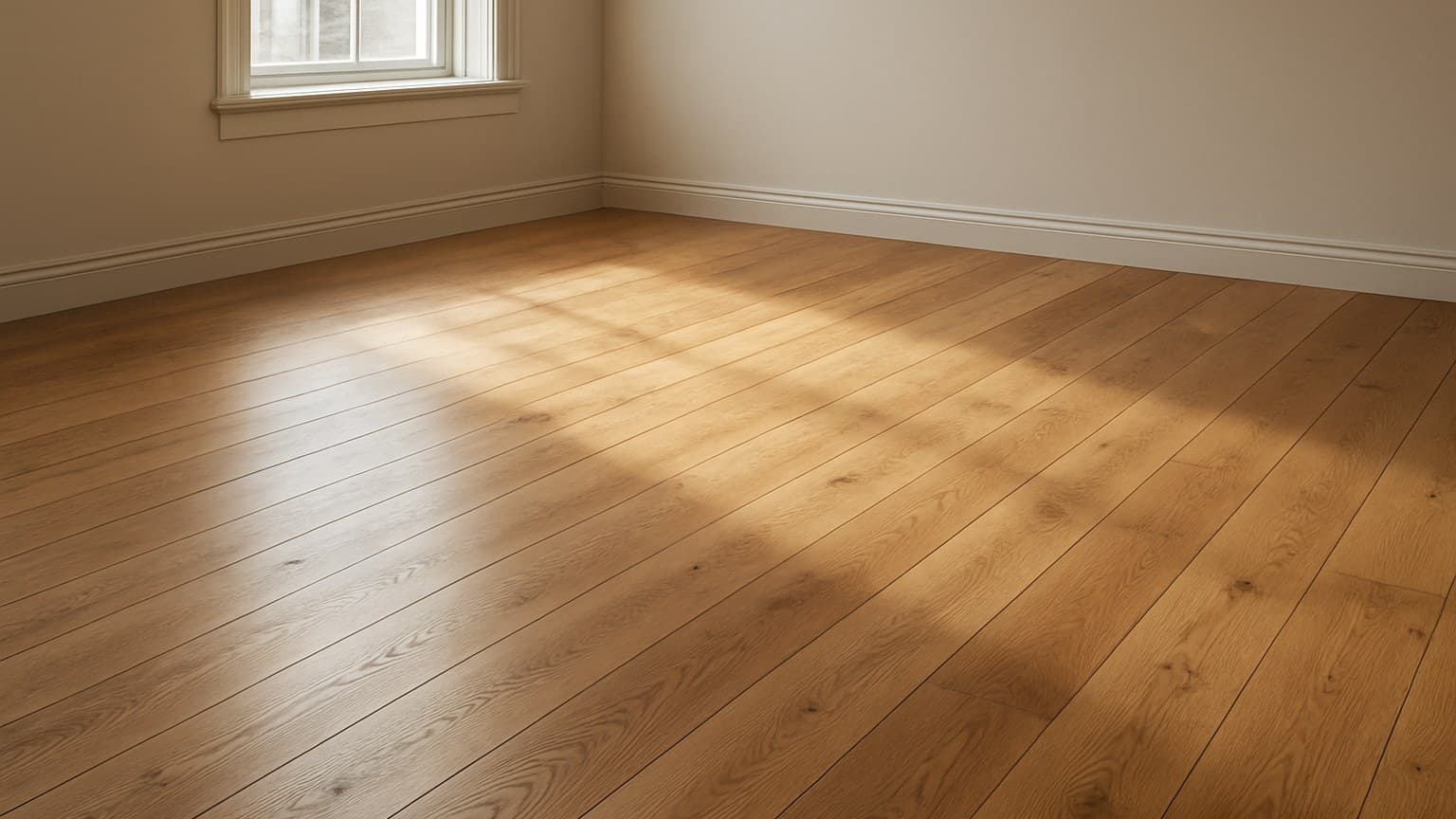
A few weeks back in Cincinnati I ripped out a gray plank floor a couple installed in 2017, back when it was the safe pick. That's the trap with 2026 flooring trends: today's must-have becomes next decade's tear-out. The real answer: warm wood tones, matte finishes, wide planks, herringbone, large-format tile, a bedroom carpet comeback, and low-VOC materials are in for 2026, while cool gray and high-gloss are out. I ranked each trend below by how it ages, not by how it photographs.
Key takeaways
- Warm, natural wood tones and matte finishes are the safe long-term buys for 2026; cool gray planks and high-gloss are what I'm now paid to tear out.
- Herringbone and wide straight planks age well; bold graphic tile is the trendy risk, so keep it to small rooms you can redo cheaply.
- Real 2026 costs split materials vs labor: engineered oak runs about $4-9 a square foot in material plus $3-6 to install, and herringbone or large-format tile adds a labor premium.
- For low-VOC, look for a FloorScore or GREENGUARD Gold stamp on the actual spec sheet, not vague 'eco-friendly' marketing.
- The floor only lasts as long as the prep beneath it, so subfloor flatness and moisture checks decide longevity more than the trend you pick.
First, the 2026 In-vs-Out List at a Glance
Here's the short answer: for 2026 the money is moving to warm wood tones, matte finishes, wide planks, herringbone, large-format tile, a bedroom carpet comeback, and low-VOC materials. Cool gray and high-gloss are on the way out.
Skim this before you read the rest.
| Category | In for 2026 | On the way out |
|---|---|---|
| Wood tone | Warm oak, natural brown, soft honey | Cool gray, heavy whitewash |
| Finish | Matte, low-sheen, hand-scraped | High-gloss |
| Layout | Herringbone, wide straight planks | Narrow strip in one flat run |
| Tile | Large-format, warm stone looks | Tiny glossy squares, busy patterns everywhere |
| Soft surfaces | Wall-to-wall in bedrooms, wool blends | Builder-beige plush in every room |
| Material values | Low-VOC, durable LVP, real wood | Thin cheap vinyl, off-gassing glue |
Source: the gray-plank floors I now get paid to tear out and what homeowners replace them with
What's gaining ground versus fading for 2026, based on the floors homeowners are asking me to install and the ones they're asking me to remove — if you want the full rundown, I break down what's the most trending flooring right now in a separate piece.
One thing to keep straight as you read: "trendy" and "safe long-term" are not the same word. A few picks below are hot right now but will date fast, and I'll flag those separately so you don't confuse the two.
1. Warm, Natural Wood Tones (Safe Long-Term)
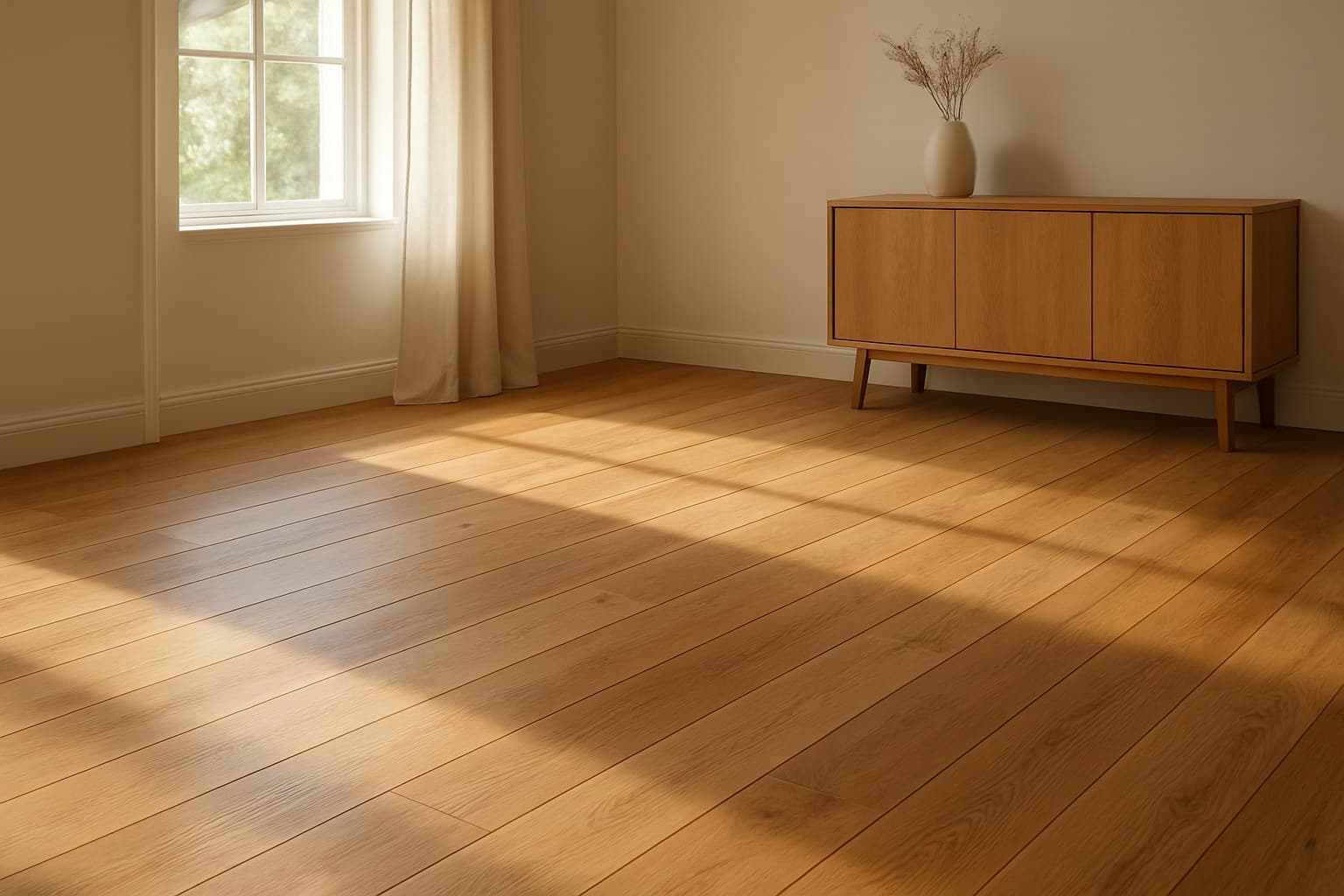
Warm oak and natural brown tones are the safest buy on this whole list. A honey or mid-brown oak floor looked good in 1995 and it'll look good in 2036.
Here's the gray story in plain terms. Cool gray and heavy whitewash spiked hard from about 2015 to 2020, and now it dates a room the second you walk in. Gray wood was the safe pick for roughly five years and the regret pick ever since, and I'd rather your floor not be the next one I'm paid to pull.
I don't say this on brand hype. According to the National Wood Flooring Association (NWFA), the trade group behind the annual Wood Floor of the Year program, honored floors in recent cycles have generally leaned toward natural, warm wood tones rather than cool gray, worth a look yourself before you commit to a color. If you want more character, look at reclaimed wide plank flooring, which brings warmth and grain without chasing a color that ages badly. Keep it simple: pick a tone you'd be happy seeing every morning for fifteen years, not one that's all over Instagram this quarter.
2. Herringbone and Chevron Layouts (Mostly Safe)
Herringbone ages well because it predates the modern trend cycle, and chevron is a little more of-the-moment. Both look sharp, but herringbone is the safer of the two if you want it to still feel right in a decade.
The difference is easy to see once you know it. Herringbone planks are rectangles that meet at a right angle in a staggered zigzag. Chevron planks are cut at an angle on the ends, so the boards line up into a continuous V with a clean seam down the middle.
Now the honest part. A pattern layout eats labor time. There's more cutting, more layout math, and more waste, so it costs more to install than a plain straight run, and it's usually a hire-out job rather than your first DIY floor. If you want a pattern but want to spend less, put it in one feature space.
And the trendy risk on this trend: bold graphic tile and loud statement patterns are fun, but they date fast. Keep those to a small powder room you can redo cheaply, not a main floor you'll live with for years.
3. Wide Planks and Large-Format Tile (Safe, With One Catch)
Wide planks and large-format tile both read current and calm, and both age well because they show off the material itself instead of a busy pattern. Fewer seams, more wood or stone in view, less that can look dated. If you're leaning toward the wider end, extra wide plank flooring is worth a closer look before you order.
The catch is the prep underneath. The wider the plank or the bigger the tile, the more an uneven subfloor shows up as gaps, hollow spots, or lippage, which is when one tile edge sits higher than the one next to it and you catch it with your toe. On a narrow strip floor you can hide a lot; on a 9-inch plank or a 24-inch tile you can't. Flatness and moisture checks matter more here than on any other floor on this list, so get those right before anyone starts laying. This matters even more with wide plank hickory, one of the most dimensionally active species, so it's worth checking wide plank hickory flooring cost and movement before you settle on species and width.
If you're weighing width, it's worth reading whether wide plank floors are still in style and the real downsides of wide plank flooring before you commit, plus the practical tradeoffs at 12 inch wide plank flooring if you're going really wide.
On cost, large-format tile carries a labor premium. It needs a flatter base and slower, more careful setting, so install runs higher than standard field tile even when the tile itself isn't pricey.
4. Matte and Hand-Scraped Finishes (Safe)
Matte and low-sheen finishes are a practical pick because they scatter light instead of bouncing it back at you. That hides the micro-scratches, dust, and paw prints that make a floor look tired between cleanings.
The loser here is clear: high-gloss wood is on the way out. A mirror finish shows every scratch, swirl, and footprint, and it now reads dated in most homes. I still see it in older builds and it's often the first thing clients want gone.
Oil versus urethane is a tradeoff, not a winner. An oil-style finish soaks into the wood and gives that natural, dead-matte look, but it needs re-oiling over time to stay protected. A urethane finish sits on top as a harder shell, so it's lower-maintenance and more scratch-resistant, but it can look a touch more like a coating. If you like the matte look without the upkeep, many prefinished lines now offer a matte UV-cured finish, which is cured hard at the factory and still low-sheen.
5. Wall-to-Wall Carpet's Quiet Comeback (Depends)
It depends on the room. Wall-to-wall carpet is genuinely back for bedrooms and cozy spaces, but running it through the whole house is the builder-beige mistake that dated homes the last time around.
What's different now is the fiber. Instead of the flat "plush" carpet everyone remembers (a soft, even pile that mats down and shows every footprint), the better lines use wool blends and solution-dyed synthetics. Solution-dyed just means the color is baked into the fiber as it's made, so it resists stains and fading far better than carpet that's dyed on the surface.
For cost, split it out. Decent bedroom carpet runs about $4-9 a square foot in materials, plus roughly $1-3 a square foot for labor and standard padding on an open floor. Stairs are a different animal: each step is a separate hand-fit piece, so expect a higher labor rate there than on an open bedroom, and basement rooms cost more than open rooms too because of the extra moisture prep on a slab.
Where it works: bedrooms, nurseries, and cozy dens. Where it's a maybe: stairs and hallways, which look great but cost more to do right. Where it's a no: kitchens, bathrooms, entryways, and anywhere you'd be tempted to beige the whole house again.
6. Sustainable, Low-VOC Materials (Safe and Here to Stay)
Low-VOC and durable materials are a lasting shift in how floors are made, not a look that dates. VOCs are volatile organic compounds, the gases some floors and glues release into your air, and buyers keep asking about them, so makers keep cutting them.
Cut through the marketing first. "Eco-friendly" printed on a box means nothing on its own. What means something is a real certification stamp on the actual spec sheet, so that's what I check before I'll back any low-VOC claim.
| Label | What it actually means |
|---|---|
| FloorScore | Product passed indoor air-quality testing for low VOC emissions |
| GREENGUARD Gold | Stricter emissions limits, aimed at schools and bedrooms |
| FSC (Forest Stewardship Council) | Wood came from responsibly managed forests |
| CARB2 (California Air Resources Board Phase 2) / TSCA Title VI (Toxic Substances Control Act Title VI) | Composite cores meet formaldehyde limits |
Source: the certification stamps I check on a spec sheet before I'll back a low-VOC claim
These are the certification stamps to look for on a spec sheet, and what each one actually verifies.
According to the Tile Council of North America (TCNA), sustainability was a headline theme of its Q1 2026 U.S. Ceramic Tile Market Report, and the group's 2026 Flooring Sustainability Summit brought flooring industry and government leaders together specifically to focus on the topic, so this isn't a one-season fad. It matters most where people spend hours breathing close to the floor: bedrooms and kids' rooms. For those, I lean toward a FloorScore or GREENGUARD Gold stamp over any vague green wording.
Which 2026 Trends Actually Survive 5 Years (and What They Cost)
Straight answer to the real worry: warm tones, matte finishes, wide straight planks, and low-VOC materials are the picks that will still look right in five years. Herringbone is close behind. Bold graphic tile and anything trend-chasing is where you take your risk, so keep that cheap and small.
Here's what the safe picks actually cost, split into materials and labor so you can price your own room.
| Floor and layout | Material ($/sq ft) | Labor to install ($/sq ft) | Installed total |
|---|---|---|---|
| Click-lock LVP, straight | $2-5 | $2-4 | $4-9 |
| Wool-blend carpet, bedroom | $4-9 | $1-3 | $5-12 |
| Engineered oak, wide straight plank | $4-9 | $3-6 | $7-15 |
| Engineered oak, herringbone | $4-9 | $6-12 | $10-21 |
| Large-format tile | $3-8 | $8-15 | $11-23 |
Typical 2026 installed cost ranges for the safe-picks above, split by material and labor for an open room; pattern layouts and tile carry the labor premium.
Two things move these numbers up fast. Pattern layouts (herringbone, chevron) and large-format tile both add labor because of the cutting and the flatter base they need. And the room itself matters: stairs and basements cost more than an open rectangle every time, from the extra fitting on stairs and the moisture prep on a slab. For a full worked example on a small room, see how much it costs to hardwood a 12x12 room.
Sources
- NWFA Wood Floor of the Year Program
- TCNA Q1 2026 U.S. Ceramic Tile Market Report
- TCNA: Tile, the Natural Choice (2026)
- TCNA Flooring Sustainability Summit Program Announcement
- TCNA: Summit Brings Flooring Industry and Government Leaders Together on Sustainability