
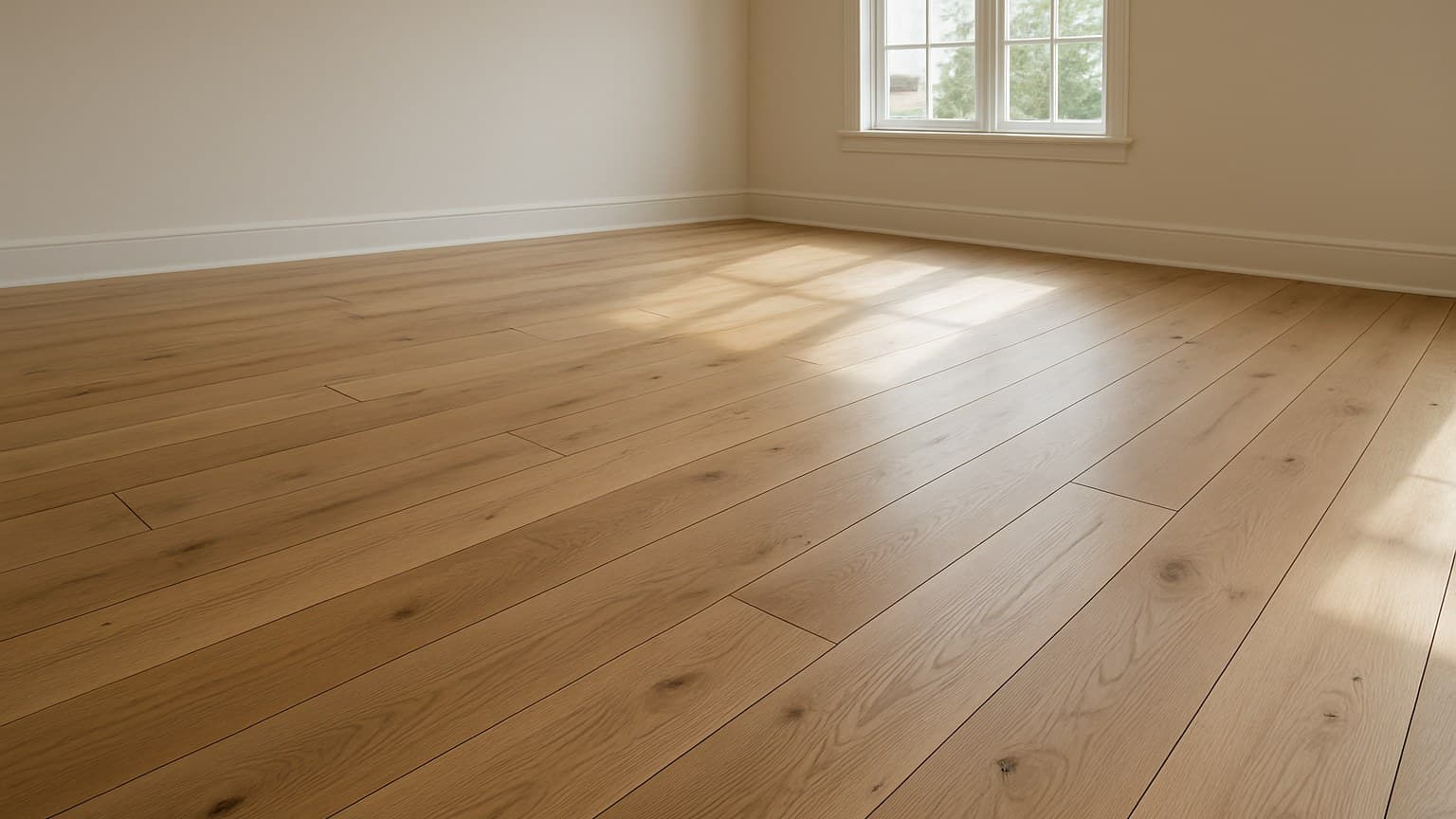
Last month a customer in Naperville, Illinois asked me straight up: is wide plank flooring still in style, or is she about to bet five figures on a look that reads dated in ten years? Short answer: yes, wide plank is still the current look, not a fad on its way out. But there's a split hiding under that yes. Board width holds up fine for decades; the stain color you put on top is the piece that actually burns a floor's resale value down the line.
Key takeaways
- Yes: wood floors are still the most-requested flooring in homeowner demand surveys, and wide boards are the current default, not a passing fad.
- "Wide" isn't a fixed number: mills and the NWFA treat 5 inches and up as wide, 4-5 inches as medium, and 2.25-3.25 inches as narrow strip.
- Widths age slowly; finishes age fast. A calm matte white oak dates far slower than a heavy gray or dark stain.
- Budget materials at roughly $4-14 per square foot plus $3-8 per square foot for install, with stairs and basements costing more than open rooms.
- Wide planks move more with humidity, so subfloor flatness and a moisture check matter more than which plank you pick.
So, Are Wide Plank Floors Still in Style?
Yes. Wide plank wood floors are the current default look, not a fading trend, and buying wide today means buying the direction the whole category is already moving.
But the real question underneath the search is usually quieter: will this look dated and hurt my resale in ten years? Here's the honest short answer. The width itself is the safe, timeless part. The finish color is the only piece that carries real fad risk.
That split matters because it's where most people get scared off for the wrong reason. A wide board in a calm, neutral tone will still read current long after a heavy gray or orange stain looks stuck in its decade.
Wood flooring keeps topping homeowner flooring-preference surveys, including National Association of Home Builders (NAHB) research cited by the National Wood Flooring Association (NWFA), and wide widths are where those wood sales have been heading for years.
The rest of this article walks through what "wide" even means, why wide boards aren't a gimmick, whether they hurt resale, and what they actually cost to put down.
What Actually Counts as "Wide Plank"?
There's no legal number for "wide," which is exactly why competing guides disagree. Depending on who's selling, "wide" floats anywhere from 5 inches to 14 inches and beyond — sellers pushing boards at the top of that range often market them specifically as 12 inch wide plank flooring.
The trade does use working bands, though. According to the NWFA's wood flooring styles and trends guide, the trade generally groups narrow strip as roughly 2.25 to 3.25 inches, medium as around 4 to 5 inches, wide plank as 5 inches and up, and extra-wide as 8 inches and beyond — if you're leaning toward that top tier, extra wide plank flooring is worth reading up on before you commit.
In real homes right now, 7 to 8 inch boards are the mainstream "wide." Ten inches and up is the statement look, not the everyday choice. One thing worth parking here for later: engineered construction lets you safely go wider than solid wood does, because its plywood-style core moves less — if you're still weighing the two, this solid vs. engineered hardwood floors guide breaks down which fits your room best.
| Category | Typical width | How it reads on the floor |
|---|---|---|
| Narrow / strip | 2.25-3.25 in | Classic, busy seam lines, very forgiving of movement |
| Medium | 4-5 in | The safe middle ground, reads modern without going bold |
| Wide plank | 5-8 in | Today's mainstream "wide," fewer seams, shows off grain |
| Extra-wide | 8-14 in+ | Statement look, moves the most, engineered strongly favored |
Source: NWFA width guidance cross-checked against the mill spec sheets I order from
How the trade groups plank widths, narrow strip through extra-wide.
Why Wide Plank Isn't a Passing Fad
Wide boards aren't new. The oldest floors in old houses were wide, because that's simply how lumber was milled before narrow strip became the cheap, mass-market cut. What we call a trend today is really a return.
Here's the difference that matters. A fad is a color or a gimmick that spikes and then dies fast. A trend is a slow, steady move in one direction. Wide widths have crept upward for years, not spiked, and that slow climb is the signature of a durable shift rather than a bubble.
The industry read backs this up. According to the NWFA's industry outlook reporting, the wood flooring trade has shown steady optimism, and NAHB-sourced consumer research cited by the NWFA shows wood continuing to rank among homeowners' most wanted flooring types.
So the verdict is simple: buying wide today isn't betting against the market. It's buying where the whole category is already headed. The fad risk lives in the finish color you pick on top of those boards, which is a separate decision entirely.
Does Wide Plank Hurt Your Resale Value?
No, not the width. Real wood floors are a demand driver at resale, and wide plank sits inside that demand, not against it. That holds even in rooms buyers weigh differently than living spaces — a look at whether hardwood in bedrooms increases home value shows the same wood-over-carpet preference plays out there too. A heavy trend stain, though, can date a room.
Keep those two risks apart in your head. The board width rarely dates a floor. The stain color does. An orange-toned finish or a very dark, cool gray can pin a floor to the year it went in, while the exact same wide boards in a neutral tone still look fresh.
So the practical move is to pick a neutral species and a calm finish. Do that, and the floor still reads current in ten years even if styling swings around it.
For a nervous buyer, the safest bet is wide plank in white oak with a matte or natural finish. Keep the boards wide and the finish calm, and you've taken the resale worry off the table.
The Real Trade-Offs and What They Cost
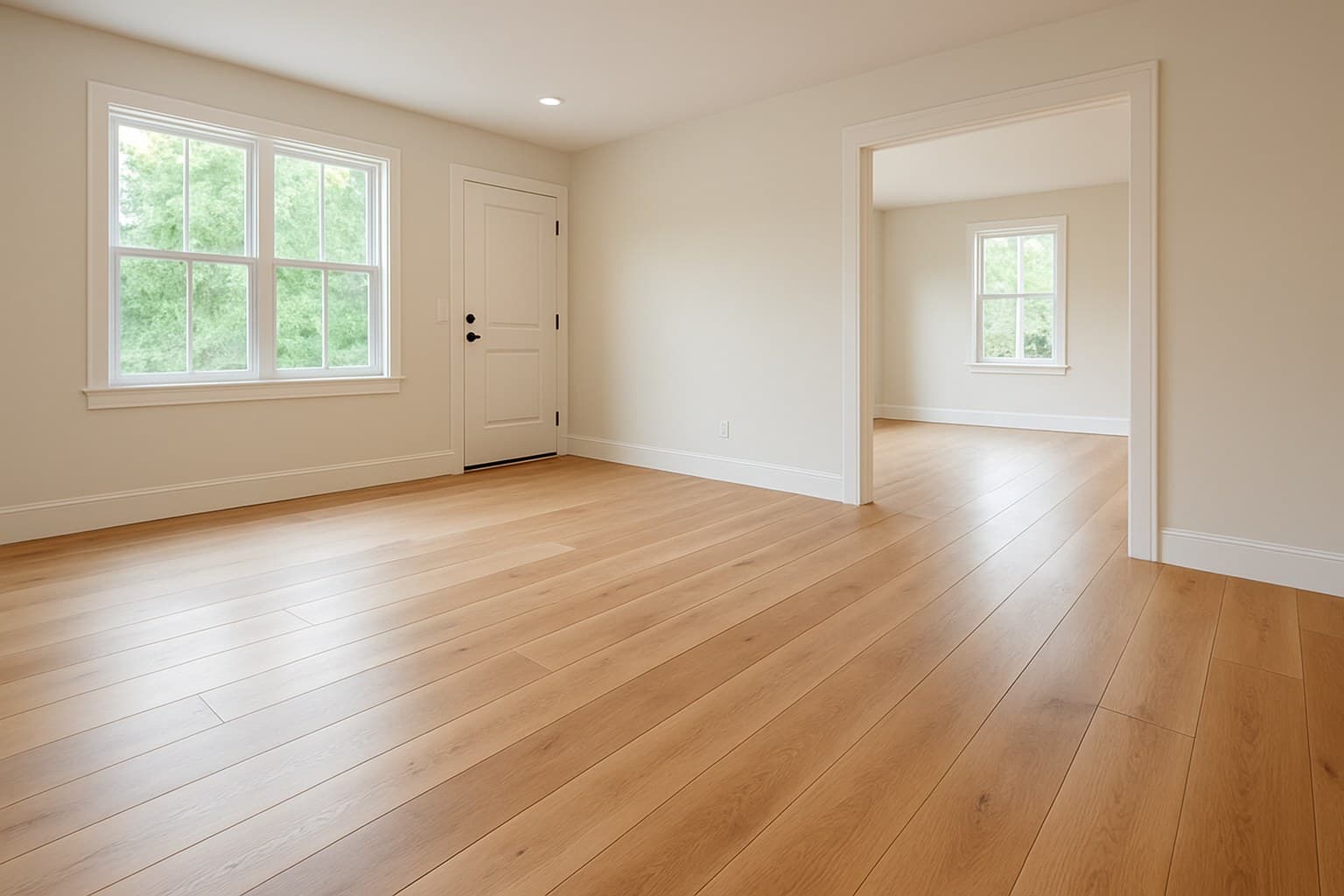
Wide plank costs more than narrow strip, and anyone quoting you one flat national number is guessing. Here's how it actually splits.
Wide plank costs more than narrow strip, and anyone quoting you one flat national number is guessing. Materials price out differently depending on whether you go solid, engineered, or wood-look luxury vinyl plank (LVP), and professional install adds its own cost on top of that, see the breakdown by category in the table below. If you want to see those numbers applied to an actual space, the cost breakdown for a 12x12 room walks through the math line by line. Stairs and basements cost more than open rooms because of the cutting, fitting, and moisture handling involved. Cut-heavy spaces like closets, doorways, and bay windows quietly eat labor hours. I used to quote flat rate until a job full of closets and a bay window ate a whole extra day. Now I count those areas separately, because the open middle of a room is never where the time goes.
The real cons of going wide are physical. A wider board expands and contracts more across its width than a narrow strip does. That means gapping in a dry winter or cupping in a damp room shows up faster and looks bigger if the humidity isn't controlled.
That's also why prep matters more here than with narrow strip. Subfloor flatness and a moisture check decide whether the floor stays tight over time, and most manufacturer warranties spell out that exact prep as a condition of coverage. Skip it, and the repair bill lands on you, not the mill. For the full rundown of the physical compromises, read what are the downsides of wide plank flooring? before you commit.
| What you're paying for | Cost range ($ per sq ft) |
|---|---|
| Wood-look LVP (materials) | $2-7 |
| Professional install (labor) | $3-8 |
| Engineered wide plank (materials) | $4-12 |
| Solid wide plank (materials) | $6-14 |
Cost ranges per square foot, split into materials and labor. Chart is not to scale on the dollar axis. Labor is the same $3-8 range whatever material sits on top.
Finishes and Widths Trending Into 2026
The current look is calm and light. Matte and oiled finishes, white oak, and whitewashed or natural tones have taken over from the dark and gray-heavy stains that peaked a few years back. "Oiled" just means a finish that soaks into the wood for a low-sheen, natural feel rather than a glossy plastic-looking coat on top.
Character-grade wood is also winning over clean prime-grade. Character-grade means you can see knots and color variation board to board, which reads as lived-in and warm instead of showroom-perfect — species like hickory lean hardest into that look, which is why wide plank hickory flooring has become such a popular character-grade choice.
Here's the safe-versus-trendy split. White oak in a neutral matte ages slowly and is a low-risk pick for the long haul. Heavy stains and extreme extra-wide widths (think 10 inches and up) are the riskier bets, the first to look dated when styling shifts.
If you want the bigger picture on colors and materials beyond wood, what flooring is on trend in 2026? covers where the rest of the market is heading and is the natural next read before you lock in a look.