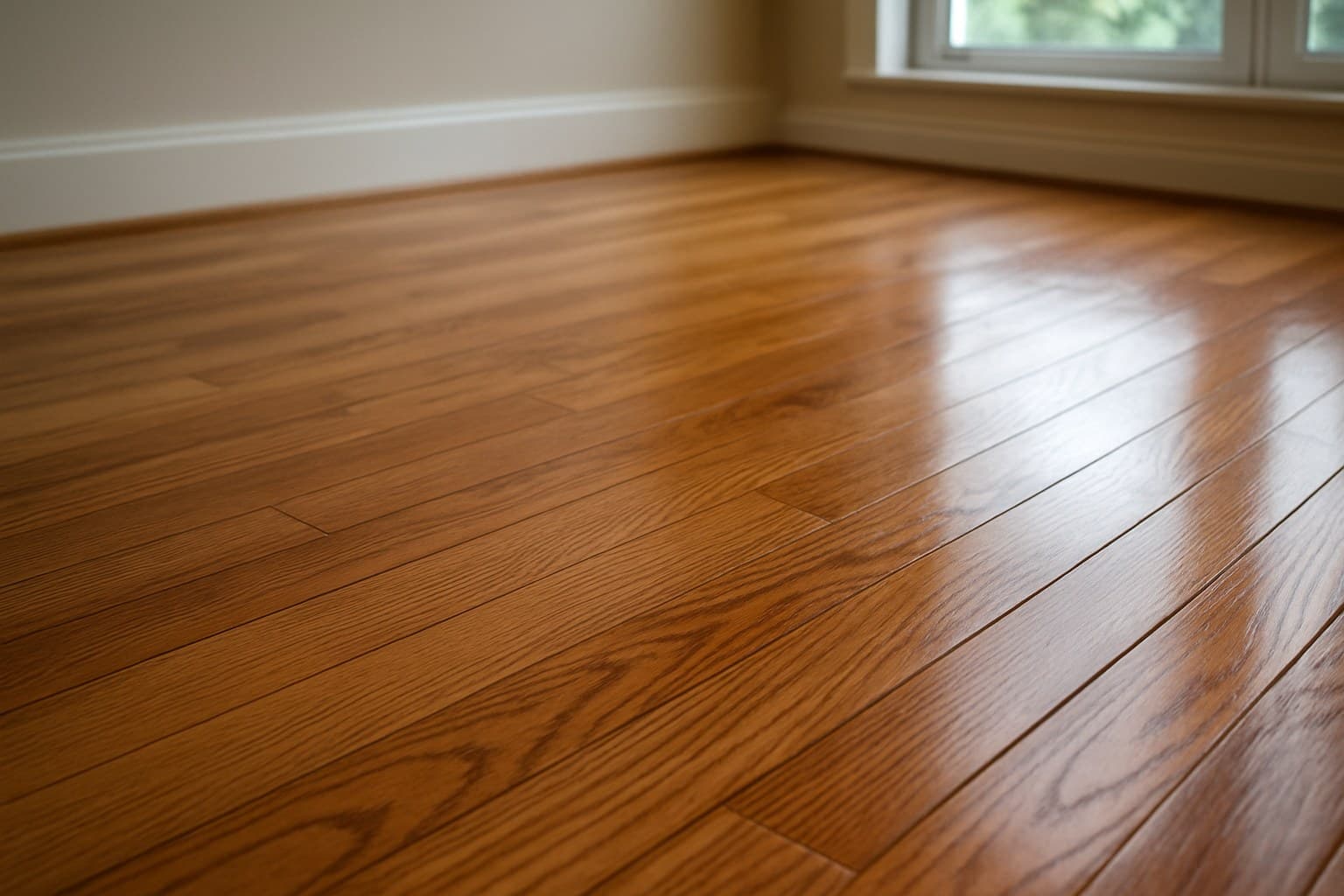
When Maria Delgado called me about refinishing the red oak in her 1920s bungalow in Dayton, Ohio, her real question wasn't the stain color or what flooring is on trend in 2026, it was whether the job would pay off at resale. The honest answer: expect roughly 70-80% of what you spend back, plus a modest bump in sale price, not the double-digit jump some sites promise. That 70-80% is just one of seven different hardwood-and-value numbers floating around, and each one measures something different. Mixing them up is how homeowners overspend on a floor.
Key takeaways
- Hardwood typically recovers about 70-80% of its install cost at resale, while NAR-style data points to only a ~2.5% bump in the actual sale price. Those are two different measurements, not a contradiction.
- Agent surveys report value jumps up to ~10% because they measure how buyers perceive a home, not an appraiser's line-item value.
- NWFA's Life Cycle Cost Analysis found roughly 80% of homeowners believe wood adds the most value of any floor, and about 66% rate it 'excellent' for adding value.
- Installed hardwood runs roughly $6-25 per square foot split into materials and labor; a 2,000 sq ft solid oak job lands around $16,000-$30,000, with basement and stair work costing more than open rooms.
- Spending far above your neighborhood's norm (over-improving) can shrink or erase the return no matter how nice the floor is.
1. 2.5%: The Sale-Price Bump the NAR (National Association of Realtors)-Style Data Points To
This number is grounded in real dollars, because it measures the actual price a home sold for at closing. When you strip out perception and count only what changed hands, one flooring feature moves the final sale total by a couple of percent, not double digits.
Why so small? Buyers price the whole house, not one feature. Even a full-house wood upgrade competes against the kitchen, the roof, the neighborhood, and the price ceiling everyone in that block is bumping against. Wood helps. It's one line in a long ledger.
If you want a conservative, defensible estimate to plan around, use this one.
2. 10%: The Value Bump Agents Report (and Why It Runs So High)
This figure comes from real estate agent surveys, and it measures buyer appeal, not an appraised line item. Agents fold in something the closing price can't isolate: homes with wood floors tend to sell faster and pull stronger offers, particularly when the style lines up with the most trending flooring right now.
That's real value to a seller, just not the kind an appraiser writes down. A floor that gets three offers instead of one can lift the final price, but it does it through demand, not a fixed dollar credit.
Don't expect a full 10% to show up on the appraisal or at the closing table. It's a signal about how the house sells, not a number you can bank.
3. 70-80%: How Much of Your Install Cost Actually Comes Back
This is cost recovery, or return on the project, and it's the one most people misread. It doesn't mean your home value goes up 70-80%. It means for every dollar you spend installing wood, you get roughly 70 to 80 cents back at resale.
Refinishing existing wood usually recovers a higher share, sometimes more than the cost, because the money going in is so low to start with. You're paying for sanding and finish, not new material.
That recovery rate swings with your region, the wood species — red oak pays back differently than something like wide plank hickory flooring — and how much subfloor prep the job needs. A floor over a flat, dry slab pays back better than one that needed leveling and a moisture barrier first.
Zoom into the National Association of Realtors' own Remodeling Impact Report, though, and the number jumps well past that range: NAR has pegged hardwood floor refinishing and new hardwood installs at recouping roughly 118% of project cost, one of the higher figures it tracks across any remodeling category. That's not a contradiction of the 70-80% above, it's a different measuring stick. The 70-80% here is a broad, blended cost-recovery estimate across regions and install types; NAR's 118% comes from REALTORS® surveyed on value added by that specific project type at sale. Treat 118% as the ceiling a well-matched, well-executed hardwood job can reach, and 70-80% as the more conservative number to plan a budget around.
4. 80%: Homeowners Who Believe Wood Adds the Most Value
The National Wood Flooring Association's Life Cycle Cost Analysis found that roughly 80% of homeowners believe wood floors add more value than any other flooring type. That's a belief, not a dollar figure, but belief is exactly what moves offers.
Resale runs on demand. If four out of five buyers walk in wanting wood, the house with wood competes for a bigger pool of motivated people. That pressure is what turns a nicer floor into a faster, higher sale.
Read this as a demand signal, not money you can deposit.
5. 66%: Buyers Who Rate Wood 'Excellent' for Value
The same NWFA consumer research found about 66% of people rated wood "excellent" for adding value, higher than carpet, vinyl, or tile scored. If you've wondered whether buyers really prefer wood over carpet or luxury vinyl plank, this answers it directly: on perceived value, wood wins.
It's worth separating what this measures. It's confidence in the material, how buyers judge it, not the resale dollars it returns. A floor can score high on preference and still recover only part of its cost. Both things are true at once.
6. The Joy Score: The One Number That Isn't About Dollars
The Joy Score is a 1-to-10 rating from remodeling-industry survey data that measures how happy homeowners are living with a project, not how much money it returns. New wood floors typically sit near the top of that list.
It measures satisfaction, not resale gain. A floor can score a 9 or 10 for daily happiness and still return only 70% of its cost. Those are different questions.
Use this number when you're staying put and the floor is for you. Ignore it when the only goal is resale dollars, because it doesn't measure money at all.
7. $6 to $25 a Square Foot: What You Spend Before Any Return
Before any of those returns kick in, this is what leaves your pocket. Installed hardwood runs roughly $6 to $25 per square foot. The honest way to read it is split into materials and labor, because labor is where surprises live.
| Type | Materials (per sq ft) | Labor (per sq ft) | Installed total |
|---|---|---|---|
| Engineered | $3-7 | $3-5 | $6-12 |
| New solid oak | $5-10 | $3-6 | $8-15 |
| Premium (walnut, wide plank) | $8-15 | $4-8 | $12-25 |
| Refinish existing wood | finish only, ~$0-2 | $3-6 | $3-8 |
Installed cost by hardwood type, split into materials versus labor, per square foot.
Installed cost range per square foot, low to high, by hardwood type.
Take a real 2,000 square foot job in new solid oak, using the installed range from the table above: that lands around $16,000 to $30,000 total, split roughly $10,000 to $20,000 for materials and $6,000 to $12,000 for labor. Run your own square footage against whichever installed tier matches your material to get your number, or for a single-room scale, see the cost to hardwood a 12x12 room.
Two things push those numbers up. Basement and stair work costs more than open rooms, because stairs are slow, fussy handwork and basements sit below grade. And before any plank goes down, the subfloor has to be flat and the moisture checked with a meter, a tool that reads how much water is in the slab or wood below. Skip that and the callback costs more than the check ever would.
One more cost fork: engineered wood, with its plywood-style core, handles concrete and below-grade rooms that solid oak generally isn't rated for. That changes where you can install it, not just the price, so it's worth working through how to pick solid vs. engineered hardwood before you settle on a room-by-room plan.
The Bottom Line: One Honest Number, and What Shrinks It
If you want a single figure to plan around, expect roughly 70-80% of your install cost back, plus a modest lift in sale price, not the full 10% agents cite. The high numbers measure appeal and demand; the honest one measures dollars recovered.
The fastest way to shrink that return is over-improving. Put the nicest floor on the block into a house the block won't support, and you cap or erase the payback no matter how good the wood looks. Match the floor to the neighborhood, recover most of the cost, and let buyer demand do the rest.
Your plank choice moves buyer appeal too, so it's worth knowing whether wide plank floors are still in style and weighing the downsides of wide plank flooring before you commit a whole house to a look.
| Number | What it measures | Type of metric | Trust it for |
|---|---|---|---|
| ~2.5% | Actual sale-price lift at closing | Real dollars paid | Conservative resale estimate |
| up to 10% | Agent-estimated value / buyer appeal | Perception | Selling speed and offer strength |
| 70-80% | Share of install cost recovered | ROI on the project | Whether the spend pays back |
| 80% | Homeowners who say wood adds most value | Demand signal (NWFA LCCA) | Gauging buyer demand |
| 66% | Buyers rating wood 'excellent' for value | Preference vs. other floors | Wood vs. carpet/LVP appeal |
| Joy Score | Owner happiness, 1-10 | Satisfaction, not money | How much you'll enjoy it |
Source: NAR's Cost vs; Value data, NWFA's Life Cycle Cost Analysis, and published agent surveys
The demand-related figures (80%, 66%) are drawn from NWFA's Life Cycle Cost Analysis and consumer research, see Sources below. The sale-price, ROI, and agent-appeal percentages are compiled from general industry cost-recovery and agent-survey data and should be treated as broad estimates rather than fixed figures.
What each hardwood value stat actually measures, so you stop comparing apples to oranges.