
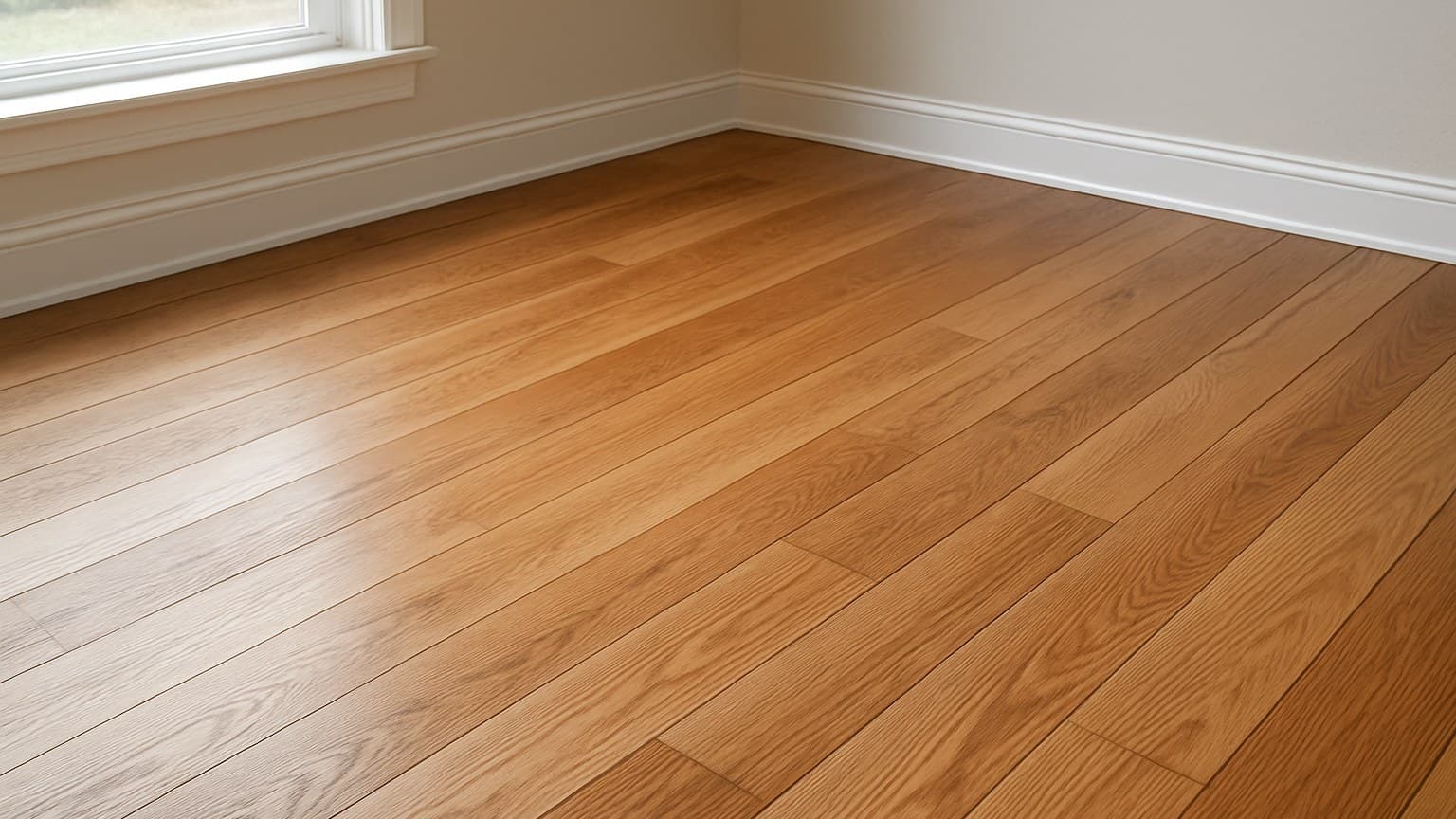
What sits under your floor decides solid versus engineered hardwood before you ever argue oak versus hickory. If you're going over a concrete slab or into a basement, that alone points you to engineered; a plywood subfloor on an upstairs level lets you use solid. Get that call right first, then pick the species and hardness that fit your traffic, your pets, and your budget.
Here's how to read all of it without spending thousands on a floor you can't undo.
Key takeaways
- What's under the floor comes first: below-grade basements and concrete slabs push you to engineered; a plywood subfloor upstairs lets you use solid.
- Solid hardwood is usually 3/4 inch and sands 3-5 times over its life; engineered only takes 1-2 sandings, and only if its wear layer is thick enough.
- Janka hardness ranks the dent resistance: Pine ~650, Red Oak 1290, White Oak 1350, Hard Maple ~1450, Hickory ~1820, Brazilian Cherry ~2350.
- Budget in two parts: materials often run about $3-10 per square foot and install another $3-8, with stairs and slab prep costing more.
- Steam mops and standing water, not foot traffic, are what wreck most hardwood floors I get called back to look at.
Start With What's Under the Floor, Not the Species
The grade level and the subfloor decide solid versus engineered before species matters at all. When someone asks me engineered or solid, my first question back is always the same: what's under it, and what floor of the house is it on. A slab or a basement quietly makes the choice for them.
Solid wood is one thick piece of a tree, and it reacts hard to moisture and humidity swings. Put it over a concrete slab or below grade, where damp rises up through the floor, and it cups and gaps on you. That movement gets worse as boards get wider, which is why I point people toward this breakdown of wide plank flooring's real drawbacks before they commit to anything over five or six inches. I've stopped letting people talk me out of a moisture check on a slab to save a day, because the one time you skip it is the time the floor cups.
That's why I run a calcium chloride kit or an RH meter on any slab before I even look at plank samples, and I check the reading against the flooring maker's own moisture limit on the install sheet, not a number I remember from another job. Skip that test and the floor makes the engineered-versus-solid call for you within a year, usually with a cupped board in the middle of the room — and the wider the board, the faster that cupping shows up, which is why anyone eyeing boards past 5 or 6 inches should read this extra wide plank flooring cupping guide before ordering.
Solid vs. Engineered Hardwood: The Real Tradeoff
Solid gives you the longest refinishing life; engineered gives you moisture tolerance and stability. That's the honest tradeoff, and neither one is simply "better."
Solid hardwood is one piece of wood, usually 3/4 inch thick, and it can be sanded and refinished 3-5 times over decades. That's its whole appeal: you can bring a beat-up floor back to new more than once. It's also why so many solid floors get installed unfinished and then sanded and finished right there in the house — if you're weighing that route, this guide to sanding and finishing unfinished hardwood on site walks through what the process actually involves. I've pulled the gray top layer off old oak everyone assumed was trash and found beautiful wood underneath, so I always check remaining thickness before writing a floor off.
Engineered is a real-wood wear layer glued over a plywood or HDF core. How many times you can refinish it depends entirely on that wear layer's thickness, and that number is different for every product. Many mid-tier engineered oak products carry a wear layer somewhere in the 2-3mm range, enough for one or two light sandings if the floor is still in good shape; entry-level lines can run closer to 0.6mm, thin enough that they can't be sanded at all. Exact depth varies by manufacturer and product line, so read the spec sheet, not the sticker on the box.
Where engineered wins is stability. The layered core handles damp and radiant heat better, and many engineered floors can float over a slab. Solid can't do that safely.
Species and Hardness: A Janka Table for the Most Common Choices
Janka hardness measures how well a wood resists dents and scratches. Higher number, tougher surface. That matters most for pets, kids, dropped pans, and heavy foot traffic. Oak is the popular, affordable domestic pick; hickory and the exotics are harder but cost more and show a busier grain. Pine sits at the other end of that scale, and if you're weighing that softness as a tradeoff, this wide plank pine flooring guide walks through why some buyers choose it anyway.
Here's how eight of the most common species compare, softest to hardest. Janka figures are widely published but can vary slightly by source and test sample, so treat these as reliable approximations rather than exact lab results for your specific board.
| Species | Janka hardness | Hardness vs. red oak | Notes |
|---|---|---|---|
| Pine | 650 | 50% softer | Soft, dents easily, budget/rustic look |
| Black Walnut | 1010 | 22% softer | Rich dark tone, softer than oak |
| Red Oak | 1290 | baseline | Popular, affordable, takes stain well |
| Ash | 1320 | 2% harder | Light, strong, similar feel to oak |
| White Oak | 1350 | 5% harder | Slightly harder than red oak, on-trend |
| Hard Maple | 1450 | 12% harder | Pale, uniform, resists dents well |
| Hickory | 1820 | 41% harder | Very hard, busy grain, good for pets/traffic |
| Brazilian Cherry | 2350 | 82% harder | Extremely hard, darkens over time after install |
One number stays the same across every species here: solid 3/4-inch boards in any of these woods can be sanded and refinished 3-5 times, since that count comes from board thickness, not hardness.
Janka hardness by species, higher numbers resist denting better.
One warning on Brazilian cherry. It keeps darkening for months after it's down, so the sample in your hand won't match the floor in a year. I tell buyers that up front, and I never lay a rug on a fresh one until the color settles evenly, or you'll get a bright patch where the rug was.
Room-by-Room: Which Hardwood for Where
The right wood changes room to room, mostly because of moisture and traffic.
Basement or anywhere below grade: engineered only. Slab moisture cups and warps solid wood, and no finish stops that from underneath. If you still want that same light, pale wood look with zero moisture risk, this blonde maple vs. blonde oak vinyl plank comparison walks through which shade suits a below-grade room.
Kitchen: engineered, or a hard species with a tight factory finish. Hardwood and standing water don't mix, so the real fix is wiping spills fast, not the plank you chose.
Bedroom or any above-grade room over a plywood subfloor: solid is fine, and it buys you the most refinishes down the road.
High traffic and pets: lean on Janka. Hickory and oak take the abuse better than soft pine or walnut. Pair that with a tough factory finish like aluminum oxide. Hickory in particular holds up so well that wide-plank cuts have become a popular pick for busy households — worth checking this wide plank hickory flooring cost and grades guide before you commit to plank width. If the room has radiant heat under the floor, go engineered, since solid doesn't like the heat cycling.
What Hardwood Floors Actually Cost
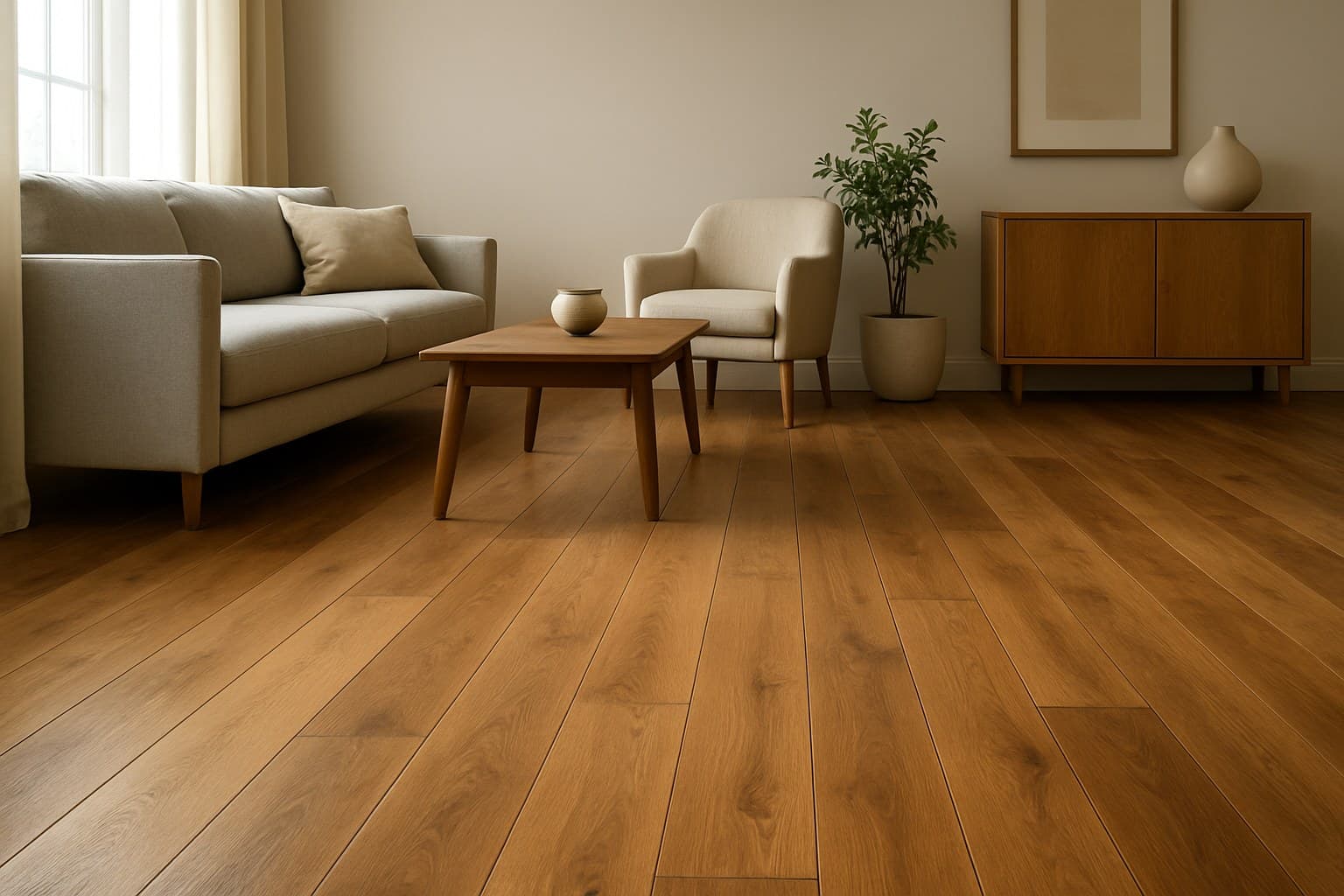
There's no single flat number for hardwood, so split it in two. Materials typically run about $3-10 per square foot, and install adds roughly another $3-8. Exotics and wide planks push the material price up, and demand for those wider boards hasn't slowed down — the data in this wide plank flooring style trends breakdown shows why they still command a premium. Stairs, tricky layouts, and slab prep push the labor up.
| Cost piece | Typical range (USD per sq ft) |
|---|---|
| Materials | $3-$10 |
| Install labor | $3-$8 |
| Refinishing (later) | $3-$5 |
Hardwood cost split into materials, install labor, and later refinishing, per square foot.
Refinishing later runs roughly $3-5 per square foot, depending on square footage, how many coats, and whether you add stain. That's a starting point to confirm with a local pro, not a fixed rate.
On resale, real estate agents in my area routinely tell sellers hardwood helps a house move faster and for more money, but the exact dollar figure swings by market and appraiser. Treat any number you see as a rough estimate, not a promise. Buy the floor because you want to live on it, not because a chart says it pays back.
Installation, Grades, and the Care Mistakes That Ruin Floors
Install methods and grades
Solid over plywood gets nailed or stapled down. Engineered is usually glued down or clicked and floated, which is why it works over a slab where you can't nail.
Every floating floor also needs an expansion gap around the room's edge, because the wood moves with temperature and humidity. Go wider than the standard 5-inch strip and that movement gets more noticeable board by board, which is exactly why I send people to this 12-inch wide plank flooring guide on cupping and gapping before they commit to those oversized boards. The exact gap is on that product's install sheet, not a rule of thumb, so check it.
Grades are about looks, not strength. Select or prime grade is clean and uniform with little color swing — it's the grade most people land on when they're chasing that pale, blonde look, and if that's the plan, this guide to blonde hardwood floors and preventing yellowing is worth a look before you pick a finish. Character or rustic grade shows knots and darker streaks and usually costs less. Neither wears out faster; you're paying for a look.
Care and subfloor checks
Before anyone lays a board, I get down on the floor with a long straightedge and a light behind it. The high and low spots I find there tell me more about the job than the box the customer already bought. I check flatness and moisture against the maker's own sheet, because those numbers govern, not a generic figure.
Once it's down, hardwood usually doesn't get wrecked by foot traffic. Steam mops and standing water do the damage. Steam drives moisture into the seams and under the finish, and I get called back to floors ruined that way more than any other cause. Damp-mop, don't soak, and skip the steam entirely.
On doing it yourself: floating engineered is realistic for a lot of DIYers. Nail-down solid, stairs, and big open rooms with a moisture transition to a slab are where hiring a pro usually pays for itself.