
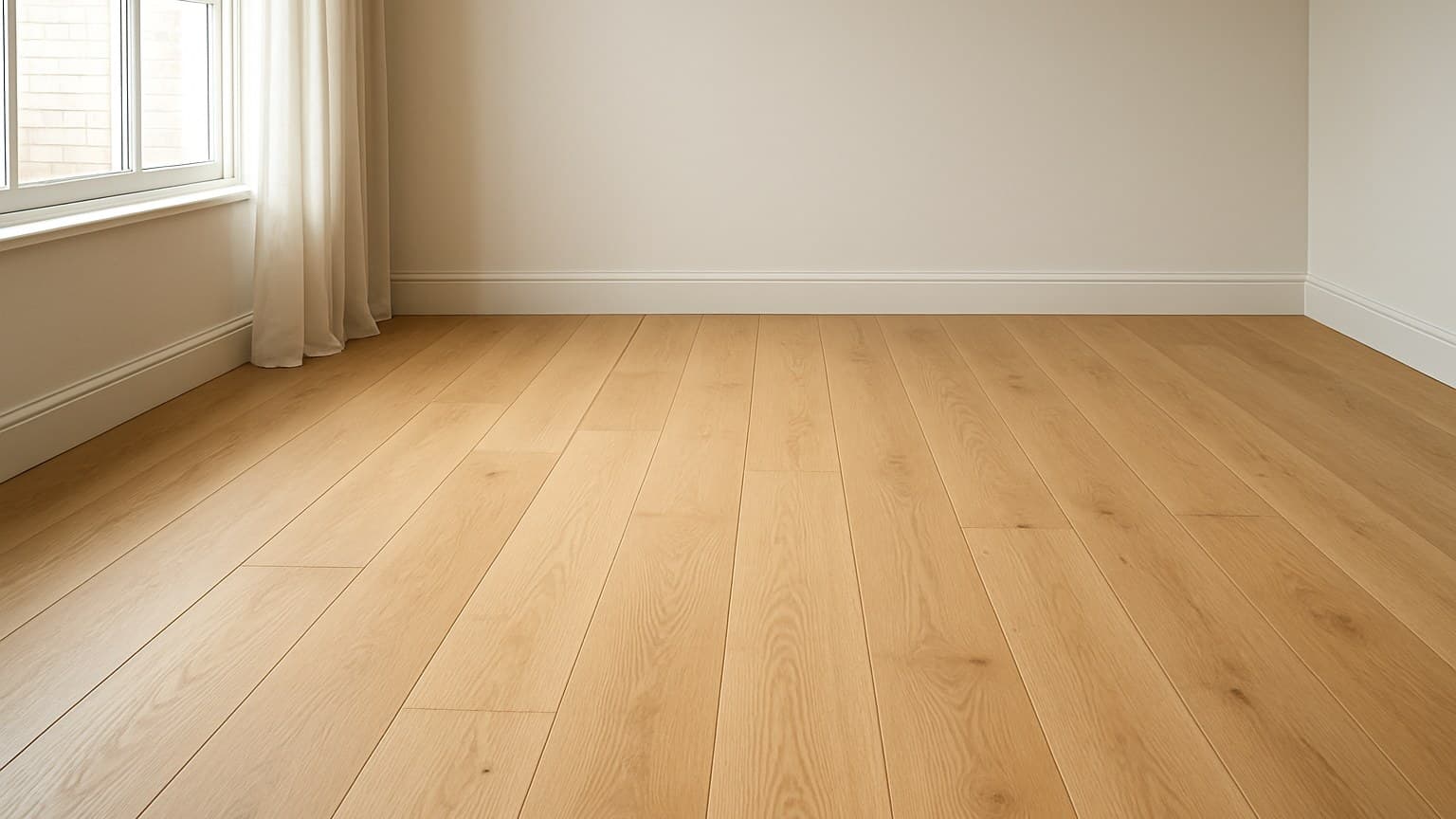
When Sarah Voss called me out to her kitchen remodel in Leander, she had two vinyl plank samples on the counter, blonde maple and blonde oak, and swore they looked identical under the store lights. They didn't read the same once I set them on her floor next to her cabinets. The gap isn't the name on the box, it's undertone and the light in your room. Get it wrong and cool maple can turn gray and cold in the wrong space.
Key takeaways
- Blonde maple reads cooler with a tight, subtle grain; blonde oak reads warmer with an open, busy grain that hides crumbs and pet hair better.
- Pick maple for modern, well-lit, lower-traffic rooms; pick oak for busy kitchens, north-facing rooms, and homes with kids or pets.
- Plan on materials around $2-5 per square foot, with click-lock labor $2-4 and glue-down or stair work $3-6 per square foot.
- Neither color survives a bad subfloor. A flat, dry base decides lifespan more than which light wood you chose.
- Maple pairs cleanest with cool whites and gray; oak forgives warm whites, greige, and mixed wood tones.
The Quick Verdict: Which Light Wood Wins for You
Pick blonde maple for cool, modern, well-lit rooms that don't take heavy daily traffic. Pick blonde oak for warm, busy family spaces, dim rooms, and homes with kids or pets. That's the whole call in one line.
The factor most people miss isn't the plank at all. It's your lighting and your cabinet undertone. A cool creamy maple next to warm cream cabinets can read dirty, while a honey oak in a north-facing room holds its glow when maple would go flat.
Both of these are wood-look LVP (luxury vinyl plank), and they come in the same core and wear-layer choices. At the same quality, they last the same. This is a choice about look and how much everyday mess each one forgives, not a stand-in for the real thing — if you'd rather weigh actual wood instead, our guide to hardwood floors, solid vs. engineered covers picking the right species and construction for your room.
The rest of this article covers grain, undertone, scuff-hiding, cabinet pairings, and cost.
Grain and Undertone: Maple vs Oak Side by Side
Maple's grain is tight and quiet. Oak's grain is open and strong. An oak plank shows more visible lines and swirls. A maple plank looks smoother and more even across the board, and if that clean, quiet look appeals to you, maple vinyl plank flooring guide breaks down the finish options in more depth.
Undertone is where they really split. Blonde maple leans cool and creamy. Blonde oak leans warm and honey. That difference gets bigger under different bulbs. A warm bulb pushes oak toward gold, and a cool bulb can make maple look almost gray.
Showroom lighting flatters both. Don't trust it. Bring a real sample home, set it on the floor, and look at it in the morning and again at night before you spend a dime.
One more thing from floors I've laid: a quiet maple grain can look flat and "printed" in cheap LVP, because there's less pattern to hide the repeat. Oak's busier grain does a better job masking where the same plank photo shows up again across the room.
| Trait | Blonde Maple | Blonde Oak |
|---|---|---|
| Grain busyness | Tight, subtle, few lines | Open, busy, strong lines |
| Undertone | Cool, creamy | Warm, honey |
| Hides scuffs and dust | Less forgiving, shows crumbs | More forgiving, masks mess |
| Repeat-pattern giveaway | Easier to spot in cheap LVP | Busy grain hides repeats |
| Best room feel | Modern, clean, formal | Warm, casual, lived-in |
Source: comparing both light-wood LVP looks side by side in rooms I've floored
Blonde maple and blonde oak LVP compared on look, not durability.
Which Hides Scuffs, Dust, and Pet Hair Better
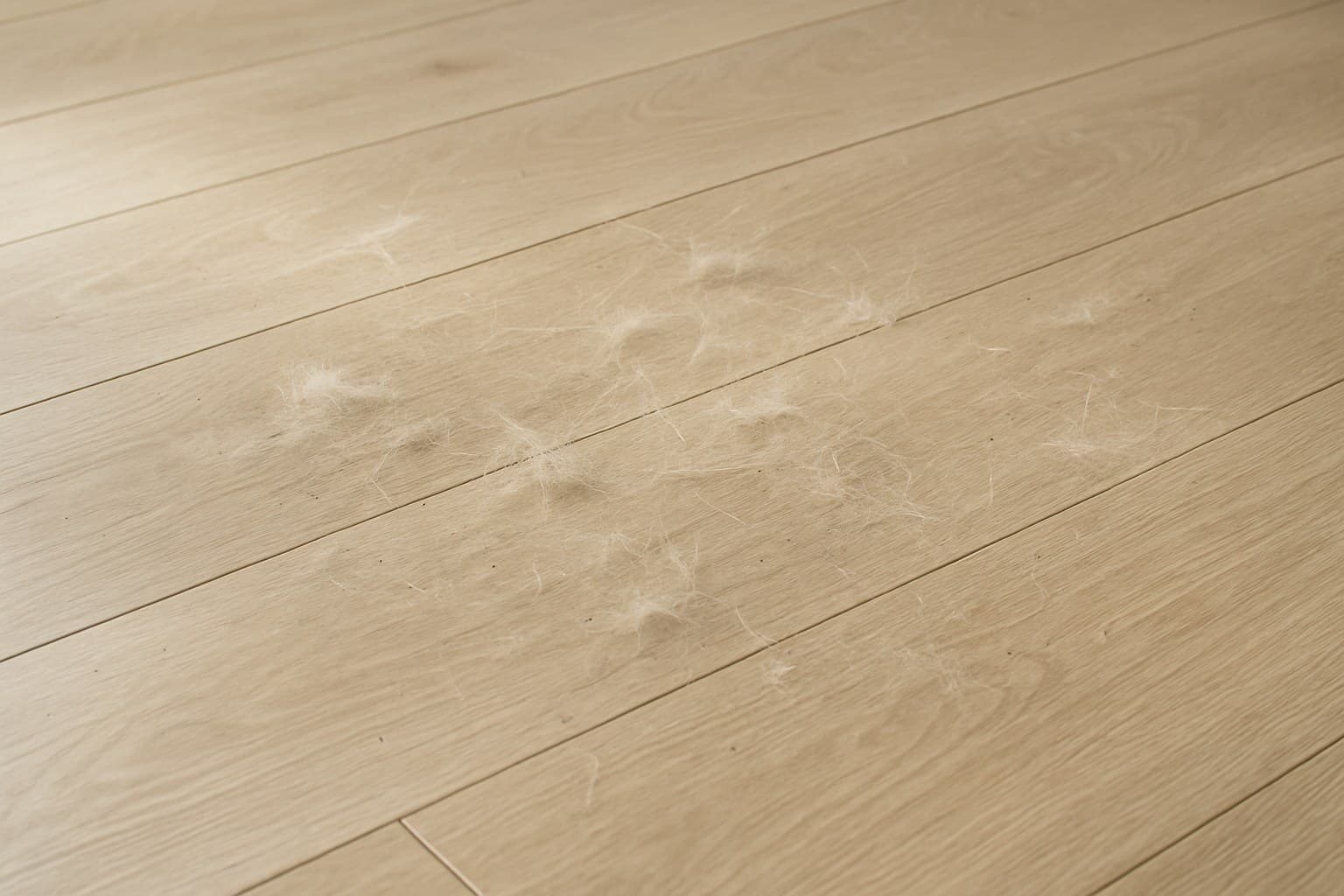
Oak wins this one. Its busier grain and warmer tone hide crumbs, dust, light scratches, and pet hair better than maple's clean cream surface.
Maple shows more because there's nowhere for a crumb or a hair to blend in. A quiet, even surface reads every speck, and it's worst in bright side light coming across the floor from a low window. If you want maple and you have a shedding dog, plan on sweeping more often.
Care is the same for both. Dry sweep or vacuum first, then damp mop. No steam mops. And here's the part that matters more than color: scratch resistance comes from the wear layer, the clear top coat over the print, not from whether you chose maple or oak.
Watch the seams, too. The SPC core (stone plastic composite, a rigid core built to resist water) found in many quality LVP lines shrugs off water, but that's not the same as the floor being sealed. Standing water still finds click seams and cut edges before it ever soaks the plank body. Wipe spills fast and you'll never test that.
- Dry sweep or vacuum before mopping so grit doesn't scratch the wear layer
- Damp mop only, and skip steam mops on any LVP seam
- Wipe spills fast; seams and edges leak water before the plank surface does
- Add felt pads under chairs; light floors show drag marks worst in side light
- Put a walk-off mat at doors to cut the dust maple tends to reveal
Basic upkeep that keeps either light floor from looking dirty between cleans.
Pairing Each With Cabinets, Walls, and Trim
Match undertone to undertone and you can't go far wrong. Cool goes with cool, warm goes with warm.
Match undertone to undertone and you can't go far wrong. Cool goes with cool, warm goes with warm. Blonde maple pairs cleanest with cool and true whites, soft grays, and crisp black or white trim. That combo gives you a modern, gallery kind of feel. Blonde oak pairs with warm whites, greige (a gray-beige mix), tan, and even other wood tones, because oak's warmth blends in instead of fighting. Whichever undertone you land on, going with wide plank flooring styles instead of narrow strips will push that modern or cozy feel even further.
The mistake I see most is mixing the two temperatures. Cool maple next to warm cream cabinets reads dirty, like the floor is a little yellow-gray. Warm oak next to a stark cool gray reads muddy and dull.
Easy test: hold your paint chip and the plank together in the room's real light. If one looks like it has a faint green, gray, or orange cast next to the other, they're clashing undertones. Swap one until they sit quiet side by side.
| Element | Blonde Maple | Blonde Oak |
|---|---|---|
| Cabinets | Cool white, gray, matte black | Warm white, greige, natural wood |
| Wall paint | Crisp white, cool gray-blue | Cream, warm beige, sage |
| Trim | Bright white or black | Soft white or wood-tone |
| Avoid | Warm cream, orange-brown accents | Stark cool gray, blue-white |
Source: the paint-and-cabinet combos that actually landed in kitchens I've floored
Safe cabinet, wall, and trim pairings grouped by each floor's undertone.
What Blonde Maple and Oak LVP Cost to Install
Color doesn't move the price. Maple-look and oak-look LVP cost the same at the same wear layer. What moves the price is quality and how hard the install is. If you're weighing solid wood instead of vinyl, our wide plank hickory flooring guide breaks down what that cost jump, the grading differences, and seasonal movement actually look like.
Plan on materials around $2-5 per square foot for a decent wood-look LVP. Labor is separate. Click-lock in an open room runs about $2-4 per square foot to install, because it floats down fast with few cuts. Glue-down, stairs, and basement moisture transitions push labor to about $3-6, since those take more prep, more adhesive, and more careful edge work. Basement and stair jobs almost always land at the top of that range.
Before any of that, the subfloor decides the outcome. It has to be flat and dry. Terri Vance in Cedar Park talked me out of a moisture test on her slab to save an afternoon, and her floor cupped before the season was out. I relaid it on my own dime. Neither maple nor oak survives a wet or wavy base, so I test moisture and check flatness every time now — and if you're weighing solid wood instead, know that wide plank flooring downsides like cupping and gapping hit even harder than they do with LVP.
If you want to understand how the wear layer and core decide how long the floor lasts, read the deeper vinyl flooring buyer's guide before you shop.
| Cost piece | Range ($/sq ft) |
|---|---|
| Click-lock labor, open room | $2-4 |
| Materials (both looks) | $2-5 |
| Glue-down / stairs / basement labor | $3-6 |
Total cost estimate for a 200 square foot room, scaled from the per-square-foot materials and labor ranges above, with glue-down, stair, and basement work at the top end.
Which One for Whom: By Room and Lighting
Go room by room and lighting makes the call for you. Blonde maple shines in bright, modern living rooms and bedrooms with strong daylight. Blonde oak is the safer pick for kitchens, entries, and dim north-facing rooms where warmth matters. For a busy mudroom or entry that needs even more grain to hide scuffs, it's worth comparing hickory vinyl plank flooring against either blonde option.
Lighting is the whole game. In low or north light, cool maple can drift gray and cold, and it looks a little lifeless. Warm oak holds its honey glow in that exact same spot. If your room only gets weak, blue-ish daylight, oak is the forgiving choice.
On DIY versus hiring out, be honest with yourself. Click-lock LVP in an open room is realistic for most DIYers who can measure, cut, and stay patient. Stairs, glue-down, and open-plan rooms with moisture transitions are where I'd hire a pro, because that's where small mistakes turn into big callbacks — and those same moisture swings are exactly what decides whether 12-inch wide plank flooring stays flat or starts cupping and gapping if you go with solid wood instead of vinyl.
Want something even lighter and knottier than maple? Look at pine vinyl plank flooring. Leaning warmer and richer instead? A dark walnut vinyl plank reads deep and cozy where blonde would feel too stark.
| Room | Pick | Why |
|---|---|---|
| Bright, south-facing living room | Blonde maple | Clean cream reads modern in strong light |
| Dim, north-facing room | Blonde oak | Warmth keeps maple from going gray |
| Busy kitchen or entry | Blonde oak | Busy grain hides crumbs and grit |
| Formal or adult bedroom | Blonde maple | Quiet grain looks calm and tidy |
| Home with pets or kids | Blonde oak | Warm tone and busy grain hide hair and scratches |
Source: how each light look held up across the rooms I've installed them in
Best light-wood pick by room and available light.