
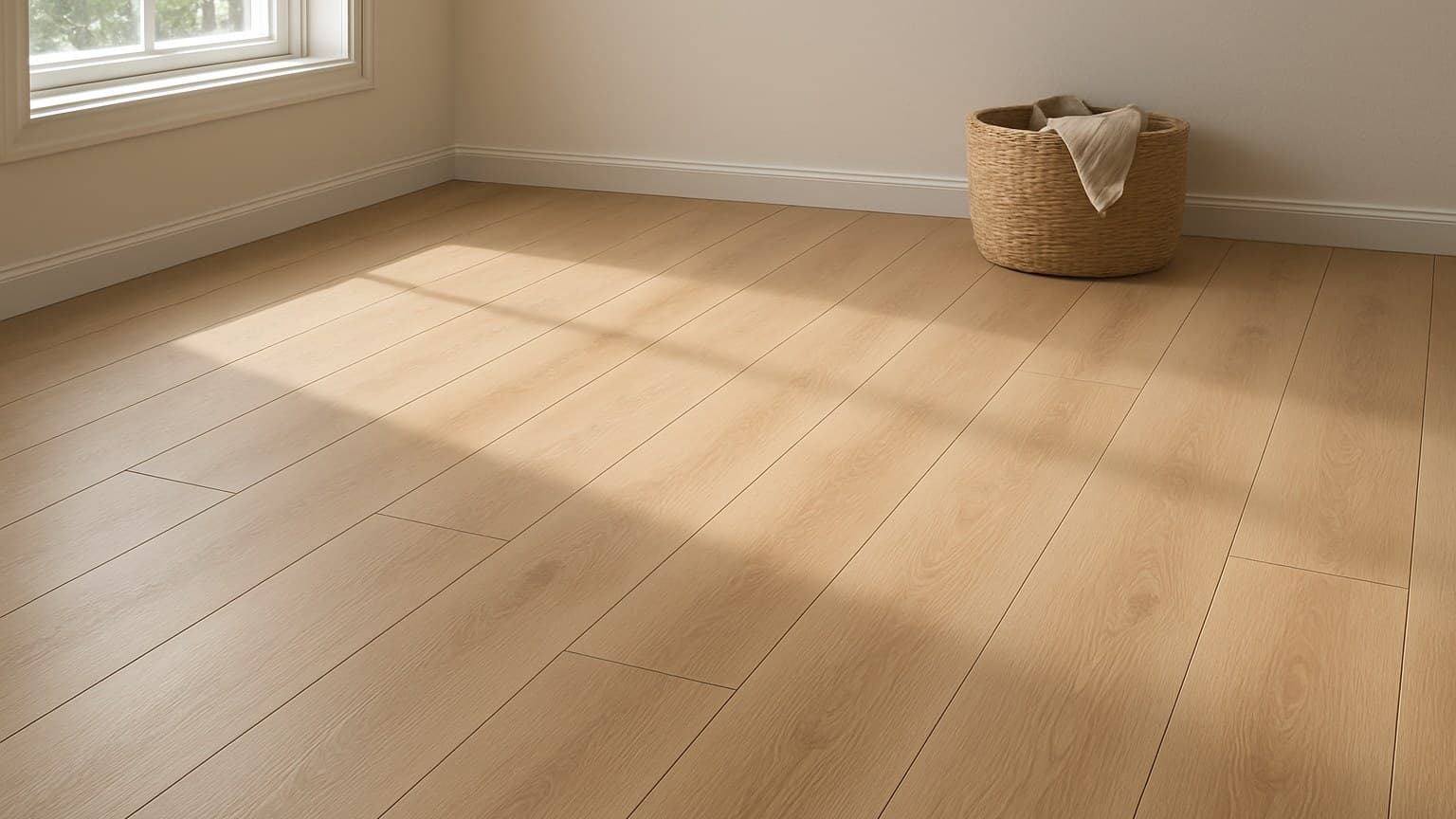
When Dana Whitfield in Boise, Idaho asked me to install maple-look vinyl plank through her kitchen and mudroom, she loved the clean, pale look in the showroom sample. Once it was down, that same pale tone hid the seams in her kitchen but showed every crumb in the mudroom next door, and she still wasn't sure if she'd bought vinyl or real maple hardwood. Here are 7 things to sort out before you buy.
Key takeaways
- Maple-look LVP runs roughly $2-6 per sq ft for materials plus $2-5 per sq ft for labor, well under the installed cost of real maple hardwood.
- Maple's tight, pale grain hides less dirt than dark walnut-look planks; a matte or textured finish hides scuffs and grit far better than gloss.
- Real maple can be sanded and refinished; maple-look vinyl can't, but vinyl handles water, pets, and below-grade rooms where solid maple shouldn't go.
- Bright, sun-soaked rooms fade pale maple vinyl unevenly over time; a UV-stable wear layer and blinds slow it but never fully stop it.
- Click-lock maple LVP is a realistic DIY for most homeowners; glue-down, stairs, and open-plan moisture transitions are usually worth hiring out.
1. Maple's Grain Is Tighter and Subtler Than Oak, Hickory, or Walnut
Maple reads calm. The print shows a fine, close, mostly straight grain with very little of the big arching "cathedral" figure you see in oak, so a maple-look plank sits quiet and modern next to a busy oak or hickory board. That quieter, more contemporary look is a big reason it keeps showing up whenever clients ask me about the most trending flooring styles right now.
The undertone is what sets it apart. Maple runs pale and warm, somewhere between creamy and light honey. Oak leans golden-brown, hickory jumps from light to dark inside a single board, and walnut is deep and cool, close to chocolate. Homeowners chasing that deep, cool chocolate tone in vinyl instead of solid wood should start with our walnut vinyl plank flooring guide, which covers the shade range and how it photographs in different light.
I laid all four side by side for the Whitfield job in Boise, matching her new kitchen floor to the hickory stairs already in the house. Maple tended to make her small kitchen feel bigger because the low contrast hid the seams. If you want a light, uniform floor that recedes, maple is the pick. If you love a busy, mixed look, you'll be happier with hickory. Since her stairs were solid hickory rather than vinyl, I later pointed her to our wide plank hickory flooring guide to check how much those wide boards would move with the season.
| Visual | Grain | Undertone | Board variation | Hides scuffs |
|---|---|---|---|---|
| Maple | Fine, tight, mostly straight | Pale, warm cream to light honey | Low, very uniform | Poor (pale shows grit) |
| Oak | Open, some cathedral figure | Golden to medium brown | Moderate | Moderate |
| Hickory | Busy, high contrast | Light to dark within a board | High | Good (variation masks marks) |
| Walnut | Straight to wavy, rich | Deep, cool chocolate | Moderate | Poor (dark shows dust) |
Source: from setting maple planks next to oak and hickory on the same jobs
How maple-look LVP compares with other common wood-look planks on grain, color, and how well each hides wear.
Maple vs. Oak Vinyl
Pick maple over oak when you want a cleaner, flatter look with less pattern. Oak's grain gives you more to look at, which some people love and others find busy. Maple is the safer choice for a modern, low-fuss room. If you're leaning toward something with more rustic knots and character instead, choosing pine vinyl plank flooring that reads real and holds up over years of traffic is worth working through before you commit to a species.
Maple vs. Hickory Vinyl
Hickory hides scuffs and dropped crumbs better because of its high contrast. Maple shows them more. If your floor takes heavy traffic and you don't want to see every mark, hickory earns its keep here. If you're curious whether hickory-look vinyl plank can pass for the real wood grain, the hickory vinyl plank flooring guide breaks down how close the look really gets.
Maple vs. Walnut Vinyl
Maple and walnut sit at opposite ends. Maple is pale and airy, walnut is dark and moody. Both show dirt, just different dirt: maple shows grit and crumbs, walnut shows dust and pet hair. If you're drawn to the wide, dark look, read up on wide plank walnut flooring before you commit, since walnut carries its own soft-wood tradeoffs. For a lighter take on the same pale family, blonde maple vinyl plank is worth a look. Anyone leaning that dark direction still has to sort out finish and wear-layer tradeoffs specific to walnut's color, which is exactly what the guide on choosing dark walnut vinyl plank walks through before you commit to a product.
2. The Pale Warm Tone Only Flatters Some Rooms and Lighting
Maple vinyl shines in north-facing or dim rooms and in kitchens and entries where you want a bright, open feel. In a very bright, warm-lit room it can look washed out and flat.
Pairings matter more than most guides admit. Light maple works with white, gray, and sage cabinets and cool wall colors. It fights orange-toned oak trim and heavy dark cabinets, which drag it toward looking yellow.
Lighting pushes it too. Warm 2700K bulbs (the soft yellow ones) tip maple yellow, while cooler 3500-4000K bulbs keep it clean. Before you buy a whole floor, set a plank against your own trim and cabinets in the room's real light, morning and evening both.
A few rooms disappoint. Bright sunrooms and south-facing living rooms fade the pale tone unevenly over time (more on that below), and rooms with lots of dark furniture show every crumb against the light floor.
3. Maple-Look Vinyl vs. Real Maple Hardwood: Cost, Durability, Resale
Maple LVP costs roughly half the installed price of real maple, and it holds up better against water and pets. Real maple wins on two fronts: you can sand and refinish it, and buyers pay more for real wood. If you go that real-wood route and start looking at salvaged stock to save money, knowing how to verify reclaimed wide plank flooring before you buy will save you from boards that warp or hide rot under a nice patina.
The Real Cost Split, Materials vs. Labor
Maple-look LVP runs cheaper on both materials and labor than real maple hardwood, see the exact per-square-foot split in the table below. Basement and stair jobs cost more per square foot than an open room, because the cuts, transitions, and tricky spots eat the hours. I used to quote flat by the square foot until a job full of closets, doorways, and a bay window ate a whole extra day. The open middle of a room is never where the time goes.
| Factor | Real maple | Maple-look LVP |
|---|---|---|
| Refinishing | Can be sanded (limited by thickness) | Cannot be refinished; replace worn planks |
| Water tolerance | Poor; not for baths or below grade | Waterproof core on many products; seams still the weak point |
| Scratch behavior | Finish scratches and dents show | Wear layer resists; deep gouges can't be sanded out |
| Resale appeal | Higher; buyers value real wood | Lower, but clean and neutral |
| Lifespan | Decades with refinishing | Often 10-25 years depending on wear layer |
What actually differs between real maple hardwood and maple-look vinyl, from refinishing to resale.
Where Vinyl Wins and Where Hardwood Wins
Real maple is hard, about 1450 on the Janka scale (a standard dent test), but the finish still scratches and the boards dent under heavy furniture. A good LVP wear layer resists scratches better, but once it wears through, you can't sand it back. Vinyl is a rip-and-replace floor, not a refinish floor.
And "refinish later" is a spec question, not a promise. Ruth Kowalski in Dayton, Ohio wanted her solid oak sanded a fourth time, and it went down to the tongue in one corner before I caught it. Maple is the same story: the solid or veneer thickness caps how many times you get. Put engineered or solid maple in main living floors you want for the long haul, and put maple LVP in kitchens, basements, and below-grade rooms where real maple shouldn't go. If you're deciding between solid and engineered boards for those long-term rooms, the hardwood floors solid vs engineered guide walks through picking the right construction and species for each space.
| Cost line | Range ($ per sq ft) |
|---|---|
| Maple LVP, labor | 2 - 5 |
| Maple LVP, materials | 2 - 6 |
| Real maple, labor | 3 - 8 |
| Real maple, materials | 6 - 12 |
4. Wear Layer, Mil, and Finish Decide How Long Maple LVP Lasts
Match the wear layer to your traffic. The wear layer is the clear top skin, measured in mil (thousandths of an inch), and it's the part that actually takes the beating. Thin layers belong in closets and light rooms, thicker ones in kitchens, entries, and homes with pets or kids.
Don't treat any mil number or "waterproof" rating as a whole-industry fact. Every number belongs to a specific product's own spec sheet, so read the box. And keep two claims apart: a waterproof core keeps the plank body from swelling, but the seams and edges are where water usually gets in. Failures I see tend to start at the joints, not the surface.
Finish matters extra on pale maple. Matte and lightly textured surfaces hide scuffs and grit. High-gloss maple shows every footprint and scratch, and on a light floor that's twice as obvious. For the deeper breakdown of what makes any plank last, the vinyl flooring buyer's guide covers the full checklist so this section can stay on maple.
| Wear layer | Best for | Pets and kids |
|---|---|---|
| 6-8 mil | Closets, guest bedrooms, low traffic | Not ideal |
| 12 mil | Bedrooms, light living areas | Okay with care |
| 20 mil | Kitchens, hallways, family rooms | Good |
| 28 mil+ | Busy entries, high-traffic homes | Best |
Source: wear-layer numbers off the LVP spec sheets I install from
A rough guide for matching maple LVP flooring wear layer to the room; confirm the exact rating on the product's own spec sheet.
5. Bright, Sun-Soaked Rooms Fade Pale Maple Vinyl Unevenly
Strong sun fades pale maple vinyl, and it does it unevenly. The spots under a rug or a couch stay lighter while the open, sunlit lanes shift, so after a couple of years you can see the furniture's shadow printed into the floor.
A UV-stable wear layer slows this down, and it's worth asking whether a product lists UV protection before you buy for a sun room. But no vinyl is fully fade-proof in direct, all-day sun.
The cheap fixes work. Blinds or sheer shades during peak hours, and moving rugs and furniture around now and then so the floor ages evenly. Maple's pale tone hides fading better than a dark walnut-look would, since there's less color to lose, but it still shows in a bright south-facing room.
6. Where Maple LVP Actually Belongs, Room by Room
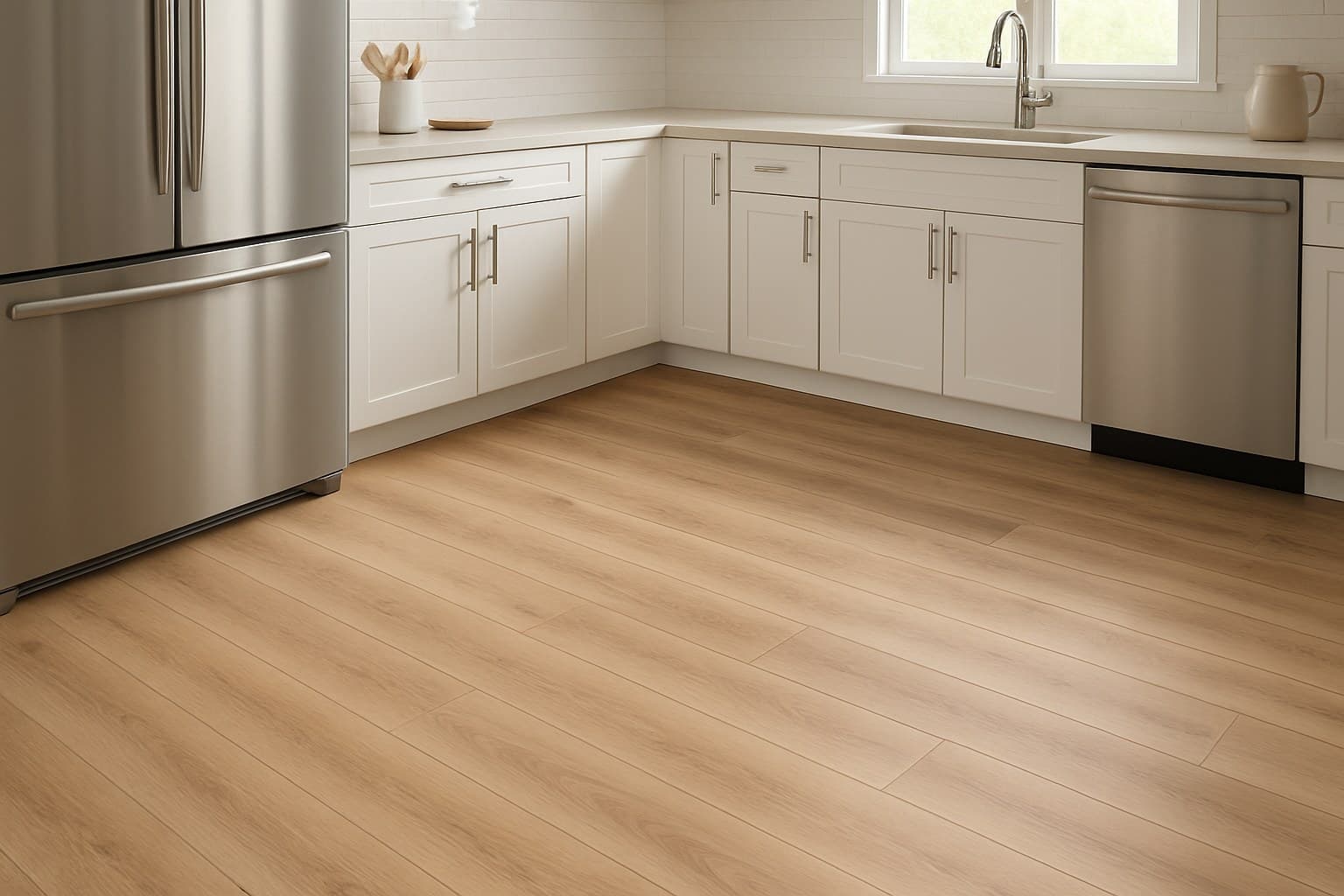
Maple LVP earns its spot in the wet and busy rooms where real wood struggles. Kitchens, entries, mudrooms, laundry rooms, and basements are its home turf, since the waterproof core handles spills and the below-grade damp that would ruin solid maple.
It's a solid pick for bedrooms and living rooms too, especially if you want one light floor to run through the whole main level. The uniform look helps small and dim rooms feel open.
Where I'd pause is a bright sunroom, for the fade reason above, and any room packed with dark furniture where the pale floor will show every crumb. In a busy family kitchen, spend up for the thicker wear layer and a matte finish. That combination takes the daily grit without showing it.
7. Installing Maple LVP: When to DIY and When to Hire
Before any plank goes down, check two things: is the subfloor flat, and is it dry. A floating floor is only as good as the prep under it, and the maker's warranty depends on both, whether the installer checks or not. Run a straightedge across the floor to find high and low spots, and grind or fill anything outside the product's flatness limit. On concrete, check for moisture, since a slab that reads damp will haunt the floor later. Skip these and the floor telegraphs every bump and cups at the seams.
Click-lock maple LVP is a realistic weekend job for most homeowners. The planks snap together, you leave the expansion gap the instructions call for around the edges, and you work board by board.
Hire out the harder cases. Glue-down installs, stairs, and big open-plan floors with moisture transitions between rooms are where a pro pays for themselves. Stairs in particular are slow, fussy, and easy to get wrong, and a basement job with a dodgy slab is not the place to learn. If you're weighing DIY against a quote, count the cut-heavy areas separately, because the closets and doorways are what eat the day, not the open middle.