
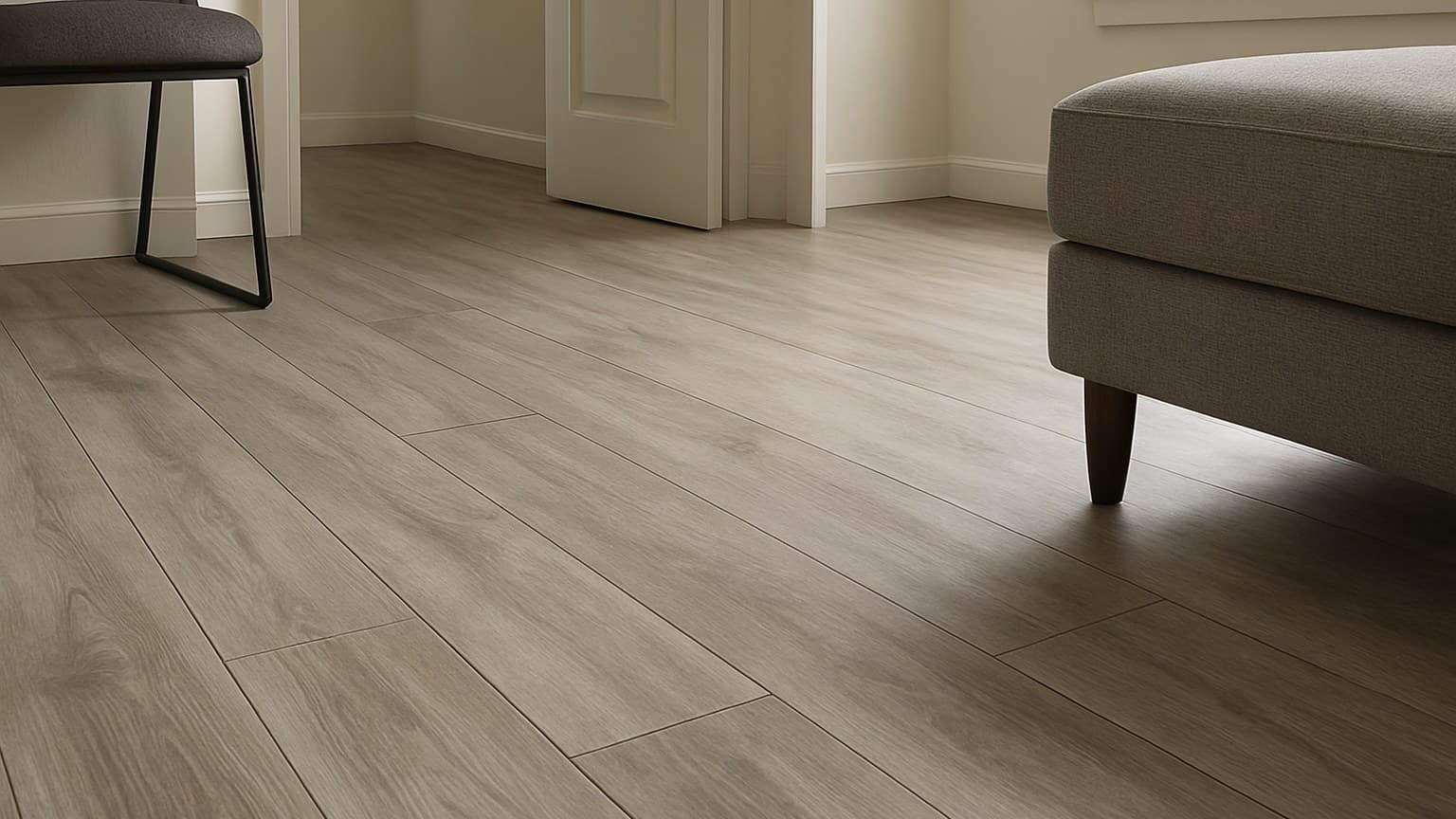
Lifeproof vinyl flooring is easy to grab off the shelf at Home Depot, but the name hides a few things that only show up once it's down. The core, the seams, and the sound underfoot don't all behave the same way. Pick the wrong line for your room and that's where the regret starts.
Key takeaways
- Lifeproof is a private label sold only at Home Depot, not a standalone flooring maker, so you can't shop it anywhere else and discontinued colors are hard to match later.
- The rigid core is waterproof, but water still fails at the seams and edges, so standing water in a bathroom or basement can still cause trouble if the perimeter isn't sealed and the subfloor was never moisture-tested.
- Budget roughly $2.50-$5.50 per square foot for the planks themselves, plus $1.50-$4 per square foot for labor in an open room, with stairs and basements costing more.
- Click-lock Lifeproof is a realistic DIY job for most homeowners; stairs, glue-down, and big open-plan moisture transitions are where hiring a pro usually pays off.
- Its two real weak spots are furniture denting on softer lines and a hollow, hard sound underfoot, both of which good underlayment and thick planks reduce but don't erase.
What Lifeproof Vinyl Flooring Actually Is
Lifeproof is a store brand. It's sold only at Home Depot and homedepot.com, and there is no separate "Lifeproof" factory you can call or shop around. Home Depot puts the name on rigid-core luxury vinyl plank (LVP) made for them.
That "only at one store" part matters more than most buyers think. You can't price-shop it against another retailer, and if a color gets discontinued, matching a room a few years later gets hard. I've seen people stuck buying a whole extra box of the wrong shade because the exact plank they wanted was gone.
The flooring itself is rigid-core LVP, which means each plank clicks into the next and floats over the subfloor without glue or nails. If you're still deciding whether vinyl is even the right material for your space, start with the bigger picture in this vinyl flooring buyer's guide before you get stuck on one brand.
The collections are all wood-look, across species like oak, hickory, walnut, and maple. They're sold in boxes by the square foot, and every plank has its own spec sheet on the Home Depot listing. That spec sheet is the only place I trust for the real numbers on a given plank. A side-by-side breakdown of those spec sheets across every collection, matched to the rooms they suit best, lives in this Lifeproof collection comparison by room.
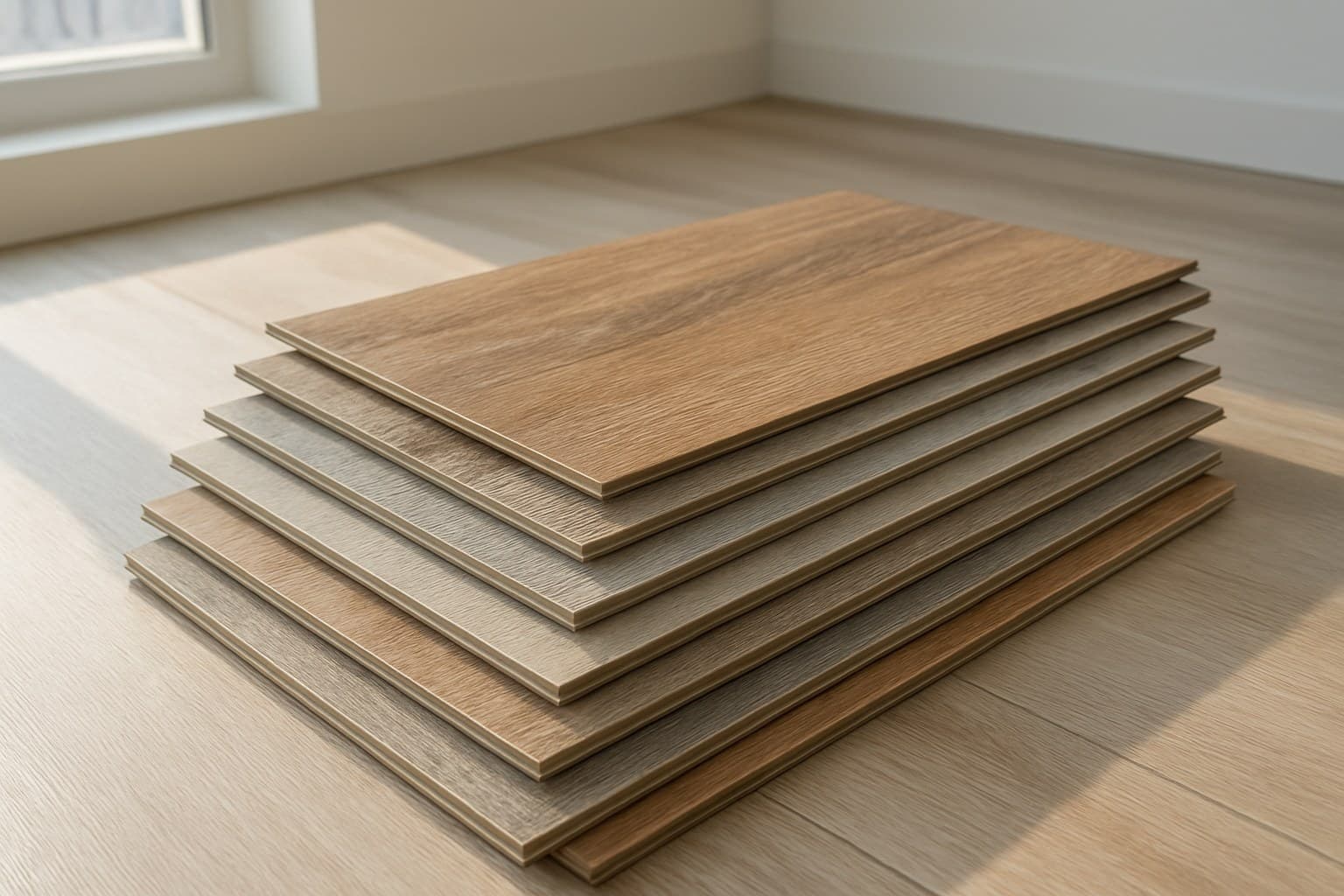
WPC vs SPC vs Standard: Which Lifeproof Core Fits Your Room
The short answer: SPC (stone plastic composite) for hard use, WPC (wood plastic composite) for comfort, standard for tight budgets. The core is the part that decides how the floor feels and how well it fights dents, and Lifeproof sells more than one kind.
Here's what those three mean in plain words. Standard flexible LVP is thin and cheap and copies every flaw in the subfloor below it. WPC stands for wood-plastic core, which is a bit softer and warmer to walk on. SPC stands for stone-plastic core, which is denser and harder, so it shrugs off dents better.
Match the core to the room, not the other way around. SPC belongs in kitchens, entries, and any room with heavy furniture. WPC is nicer in bedrooms and living rooms where quiet and give matter more. Standard is fine for a low-traffic guest room where you're watching the budget.
One rule worth saying once: over a concrete slab or in a basement, a denser rigid core plus a real moisture check matters more than which wood look you picked. A pretty floor over a damp slab is a callback waiting to happen.
Lifeproof marketing leans hard on the phrase "rigid core" without always making the WPC-versus-SPC difference clear. So check the SKU's own spec sheet for the exact core type and the wear layer, listed in mils (a mil is one thousandth of an inch). Don't guess from the box photo. For context, wear layers on rigid-core LVP as a category generally run from around 6 mil on the thinnest budget-grade planks up to 20 mil or more on heavy-duty commercial-grade planks; Lifeproof's residential lines typically land somewhere in that middle band, but the exact figure is SKU-specific and only shows up on that plank's own spec sheet, not in general marketing copy or on the box.
| Core type | How it feels | Dent resistance | Sound | Best for |
|---|---|---|---|---|
| Standard flexible LVP | Thin, firm, shows subfloor flaws | Lowest | Can feel hard | Low-traffic, tight budget |
| WPC (wood-plastic) | Softer, warmer, more give | Moderate | Quieter underfoot | Bedrooms, living areas, comfort |
| SPC (stone-plastic) | Dense, hard, very stable | Highest | Can sound hollow without pad | Kitchens, entries, heavy furniture, slabs |
How the three core types compare on feel, dent resistance, sound, and best use.
The Three Fears: Waterproof Seams, Denting, and Sound
Almost every worry I hear about Lifeproof lands on one of three things: does water get in, does it dent, and does it sound cheap. Here's the honest read on each.
When Lifeproof's waterproof claim actually holds
The rigid core does not swell when it meets water. That part of the "waterproof" claim is real. But a waterproof core is not the same as waterproof seams and edges, and that difference is where most trouble starts.
Water doesn't attack the middle of a plank. It finds the seam lines between planks and the perimeter around the room, then works its way down. For everyday life, splashes, mopping, a spilled glass, Lifeproof handles it fine. Where I'd think twice is a bathroom that can actually flood or a basement slab that was never tested for moisture.
Once water sits underneath a floating floor, it has nowhere to go, and that's when cupping and lifting begin. A customer once talked me out of a moisture test to save an afternoon. The floor cupped before the season was out, and I relaid it on my own dime. That's the day I stopped treating the test as optional.
The drawing below shows where water actually gets in.
Why some floors dent and how to avoid it
Softer, thinner Lifeproof lines can hold a dent under a heavy couch leg or a fridge. A denser SPC line with a higher-mil wear layer fights that off much better. The fix is cheap either way: put felt pads under every furniture leg and wide coasters under the heavy stuff, no matter which line you buy.
Sound is the last fear. A floating vinyl floor over a hard subfloor can sound hollow and hard, a bit of click-clack when you walk. Attached or added underlayment (the soft pad layer under the plank) cuts most of that noise. If you want to know how it actually feels day to day, real Lifeproof owner reviews tell you more than any spec sheet will.
What Lifeproof Costs: Materials vs Labor
The planks themselves typically run somewhere in the $2.50 to $5.50 per square foot range, depending on the line, the wear layer, and current pricing at your local Home Depot, treat this as a general planning range rather than a fixed quote. Labor is separate. Don't trust a single all-in number, because the two move for different reasons.
For install, click-lock LVP typically runs somewhere around $1.50 to $4 per square foot in an open room, though labor rates vary a lot by region and installer. Stairs and basements cost more, sometimes a lot more, because of the extra cuts, the transitions, and the moisture prep a slab needs. If you're doing it yourself, a step-by-step Lifeproof install walkthrough is worth reading before you open a single box.
Then there are the extras buyers forget. You may need a moisture barrier or underlayment where the SKU doesn't already include one, transition strips between rooms, and subfloor leveling if the slab isn't flat. Those add up fast and rarely show in the sticker price.
Here's the honest framing on labor: the open middle of a room is never where the time goes. I used to quote a flat rate by the square foot until a job full of closets, doorways, and a bay window ate a whole extra day. Now I count the cut-heavy areas separately, because that's where the hours hide.
| Cost piece | Low ($/sq ft) | High ($/sq ft) |
|---|---|---|
| Underlayment / moisture barrier | 0.30 | 1.00 |
| Labor, open room | 1.50 | 4.00 |
| Lifeproof planks (materials) | 2.50 | 5.50 |
| Labor, stairs / basement | 3.00 | 7.00 |
General cost ranges per square foot for planks, labor, and the extras buyers often forget, actual pricing varies by region, retailer, and installer, so use these as planning estimates rather than a quote.
Click-lock Lifeproof is a realistic DIY job for most homeowners with patience and a few tools. Where I'd hire out is stairs, any glue-down install, and big open-plan floors that cross from a dry room onto a slab, because that's where a small mistake turns into a whole-floor problem.
Lifeproof vs Pergo vs COREtec vs TrafficMaster
Quick verdict: Lifeproof sits in the middle. It's cheaper and easier to buy than COREtec, better built than TrafficMaster, and it competes with Pergo on a real trade-off rather than being flatly better or worse. Shaw plays a different game entirely, selling through flooring dealers instead of one big-box aisle, and figuring out which of its many collections you're actually looking at is its own separate puzzle, one this Shaw vinyl plank buying guide untangles.
Here's what actually separates them. TrafficMaster is the cheaper Home Depot budget line, with thinner wear layers, fine for a rental or a low-traffic room. Pergo is mostly laminate and its strength is a very realistic wood look. And COREtec is the premium rigid-core benchmark, known for cork underlayment already attached to the plank.
The Pergo comparison is the one people get wrong. It's LVP versus laminate, and neither wins outright. Laminate can look and feel more like real wood for less money, while vinyl tolerates water better. If your room stays dry and you want the most convincing wood grain per dollar, laminate is a fair call. If water is a real risk, vinyl earns its place.
| Brand | Sold at | Type | Price band | Known for |
|---|---|---|---|---|
| Lifeproof | Home Depot only | Rigid-core LVP (WPC/SPC) | Mid | Certain SPC lines: waterproof core per that SKU's spec sheet; DIY click-lock; lifetime residential warranty listed on Lifeproof's SPC collection pages |
| TrafficMaster | Home Depot only | Budget LVP / peel-and-stick | Low | Cheapest entry, thinner wear layers |
| Pergo | Widely sold | Laminate (and some vinyl) | Low-mid | Realistic wood look, water-resistant not always waterproof |
| COREtec | Flooring dealers | Premium rigid-core LVP | Mid-high | Attached cork underlayment, benchmark rigid core |
How Lifeproof compares to three common rivals on where it's sold, core type, price band, and reputation. Warranty and wear-layer specifics above are as listed on Home Depot's individual Lifeproof product pages and Lifeproof's SPC collection pages at homedepot.com; because coverage and pricing can change and vary by collection, confirm the current terms on that exact SKU's page before buying rather than relying on this table alone.
If you want the full range and line-by-line breakdown of the premium option before you decide, the deeper COREtec line comparison shows which of its collections holds up in which room.