
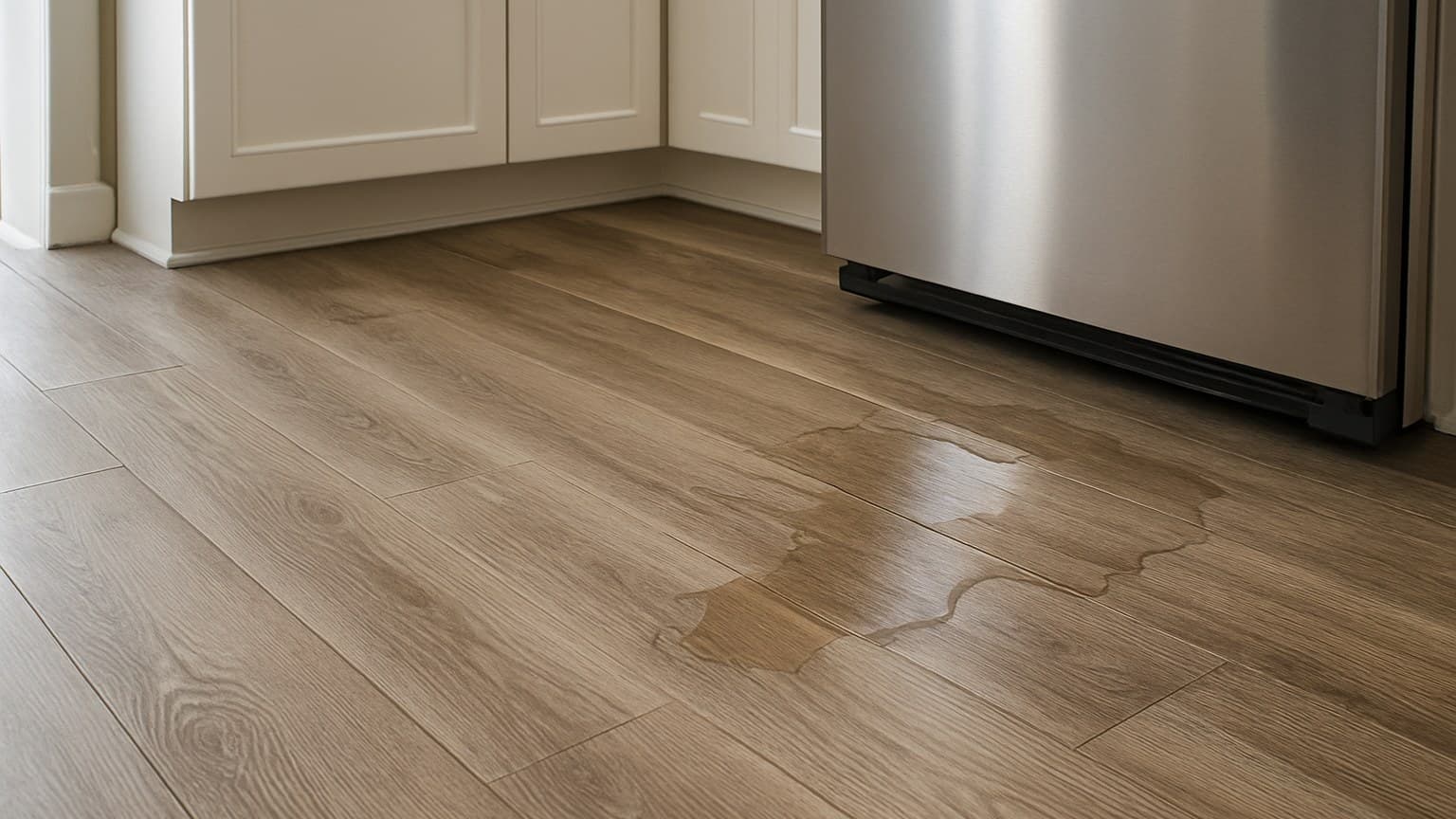
Most Mohawk vinyl plank flooring callbacks I get trace back to a customer who picked a color online, then found out on install day that the sample they loved wasn't the same product sitting in their cart. Mohawk sells that same wood look across several different lines, and the wrong pick shows up as a failure months later, not on day one. Here are nine lessons from putting it down in real homes.
Key takeaways
- Mohawk sells vinyl plank under several SolidTech tiers (Essentials, Select, Plus) plus RigidRoc and the commercial Mohawk Group line, and the box name matters more than the color you picked.
- A stiff SPC-style core resists the static weight of a fridge or range far better than a softer, thicker plank, but point loads from bar stool and chair legs still leave dents on any vinyl.
- A waterproof core is not the same as a waterproof floor: water gets in at the seams and edges, so the core rating on the box does not protect the subfloor underneath.
- Expect materials around $2-5 per sq ft and click-lock labor around $1-3 per sq ft, with basement and stair jobs costing more than open rooms.
- Click-lock Mohawk vinyl is a realistic DIY job in a flat, dry, open room; glue-down, stairs, and basement moisture transitions are where hiring a pro usually pays off.
Mohawk Sells One Wood Look Across Several Different Products
"Mohawk vinyl plank" is not one product. It's a family of lines at different price and quality tiers, and the color you fell for tells you nothing about which tier you're holding.
As of this writing, the main vinyl lines include SolidTech Essentials, SolidTech Select, and SolidTech Plus, plus RigidRoc, plus the commercial Mohawk Group LVT (luxury vinyl tile) you'll sometimes see cross-listed, though Mohawk's exact lineup and line names shift over time, so always confirm the current names and specs against the line's own spec sheet before you buy. Each has its own core build, its own wear layer, and its own warranty. Most of these use what's called an SPC core, short for stone plastic composite, a rigid, waterproof-core build that's stiffer than older flexible vinyl. The store display name and the swatch almost never spell out the tier, so before you buy, find the exact line name on the back of the box or the sample, then pull that specific line's spec sheet. That one habit prevents most of the mismatches I fix.
One more trap: Mohawk also owns Pergo and sells RevWood, which is its laminate, not vinyl. They sit on the same aisle and share wood looks, so people grab a laminate thinking it's the waterproof vinyl, or the reverse. This same store-shelf problem shows up with other big brands too, and I broke it down in my guide to which Shaw vinyl plank line you're really buying.
| Line | Core | Attached pad | Wear layer (typical, mil) | Best use | Price tier |
|---|---|---|---|---|---|
| SolidTech Essentials | Rigid SPC-style | Usually yes | ~12 mil | Budget bedrooms, low-traffic rooms | Entry |
| SolidTech Select | Rigid SPC-style | Usually yes | ~20 mil | Whole-home, kitchens, mid traffic | Mid |
| SolidTech Plus | Rigid SPC-style, thicker build | Yes | ~28 mil | High traffic, heavier looks | Upper |
| RigidRoc | Rigid core | Varies by SKU | ~12-20 mil, varies by SKU | Value rigid option | Entry to mid |
| Mohawk Group LVT | Commercial-grade | Varies | Varies by collection | Heavy-duty (commercial) | Varies |
Source: Mohawk SolidTech product-line pages and my own install jobs
How Mohawk's main vinyl plank lines compare on core, attached pad, wear layer, and where each one fits.
The Core Decides Whether a Fridge Leaves Dents
A stiff rigid core, the SPC-style build in the SolidTech lines, handles the steady weight of a fridge, a range, or a loaded cabinet far better than a softer or thicker-feeling plank. If a kitchen appliance sits in one place, the core is what keeps it from leaving a permanent shadow. Check the core wording on your exact SolidTech line's spec sheet before you buy, because the tiers are not identical.
Here's the lesson I learned the slow way. A softer plank under a fridge that never moves for a year holds the outline of those feet even after you pull it. It doesn't spring back. That's why I steer kitchen customers toward the stiffer SolidTech tiers instead of the thinnest box on the clearance rack.
The easy prevention is a set of wide floor protectors or appliance glides under the fridge and range feet. They spread the weight over more surface so you never get that ring-shaped dent.
Watch the box wording, too. "Thicker" and "stiffer" are not the same thing. A thick plank that feels a little cushiony underfoot is not a rigid core, and that's exactly where shoppers get misled into buying the wrong tier for a heavy room.
Match the Core to the Room, Not Just the Color
Pick the core for the room before you pick the color. A concrete slab or any below-grade room — basements, most simply — needs a rigid SPC core like SolidTech. Never put RevWood laminate on a slab or in a wet room: its wood-fiber core and moisture don't get along, a pattern that shows up across Mohawk laminate flooring reviews from buyers who learned it the hard way.
Rigid SPC shrugs off temperature swings and damp far better, so it earns its keep in kitchens, baths, and basements. A bedroom or a living room that stays dry doesn't need to pay for that, and Mohawk Home's budget rigid vinyl is a fine call there — my guide to Mohawk laminate flooring covers that softer-core side of the lineup in more depth.
One thing worth keeping separate in your head while you shop: a waterproof core is not a waterproof floor. The plank body can shrug off a spill, but water still gets in at the seams and edges — the next section gets into exactly how.
A Waterproof Core Doesn't Mean Waterproof Seams
Mohawk markets a waterproof core on its SolidTech lines, and that claim is about the plank body, not the joints between planks. The plank can shrug off water all day. The seams and the edges around the room are where water actually gets through.
Standing water finds the beveled seam tops and the perimeter gap, runs down the joint, and pools on the subfloor underneath. The plank looks fine. The subfloor rots or the pad stays wet, and that's the callback. I've pulled up planks that were perfect and found a swollen subfloor an inch below them.
So treat the floor, not just the plank. Wipe spills fast, don't wet-mop a puddle and walk away, and in a real wet zone like a mudroom or a full bath, think about sealing the perimeter gap or going with a glue-down install for a tighter system. And read the warranty language: a "waterproof core" on the box is a core spec, so check how long standing water is actually covered before you count on it.
The water passes the plank and does its damage where the core rating never reached.
The Attached Pad Can Hide a Bad Subfloor
Most Mohawk SolidTech planks come with an attached pad, and it feels great underfoot. It also does not level the floor, and it can hide a hump or a dip on install day that comes back to bite you.
Here's the pattern behind these callbacks. The pad squishes down over a high spot and everything looks flat when you finish. Months later the pad packs down, the plank starts to telegraph the hump, and a seam near it clicks apart. The floor was never flat. The pad just borrowed you a few weeks.
So do the prep first, every time. Lay a long straightedge, at least six feet, across the floor in several directions and look for daylight under it. Grind the high spots and fill the low ones to the tolerance on your line's install guide. Then check moisture with a meter, the tool that reads how wet the slab or subfloor is, before a single plank goes down. On a concrete slab or in a basement, that moisture reading is the deciding factor for whether a floating floor survives at all.
I let a customer talk me out of a moisture test once to save an afternoon. The floor cupped before the season turned and I relaid it on my own dime. That was the day the test stopped being optional. For the wider picture on subfloors, moisture, and rooms like basements, see my vinyl flooring buyer's guide on what decides if it lasts 5 years or 20.
The straightedge rides the high spot while the voids beside it wait to fail.
Bar Stools and Chair Legs Are What Actually Dent It
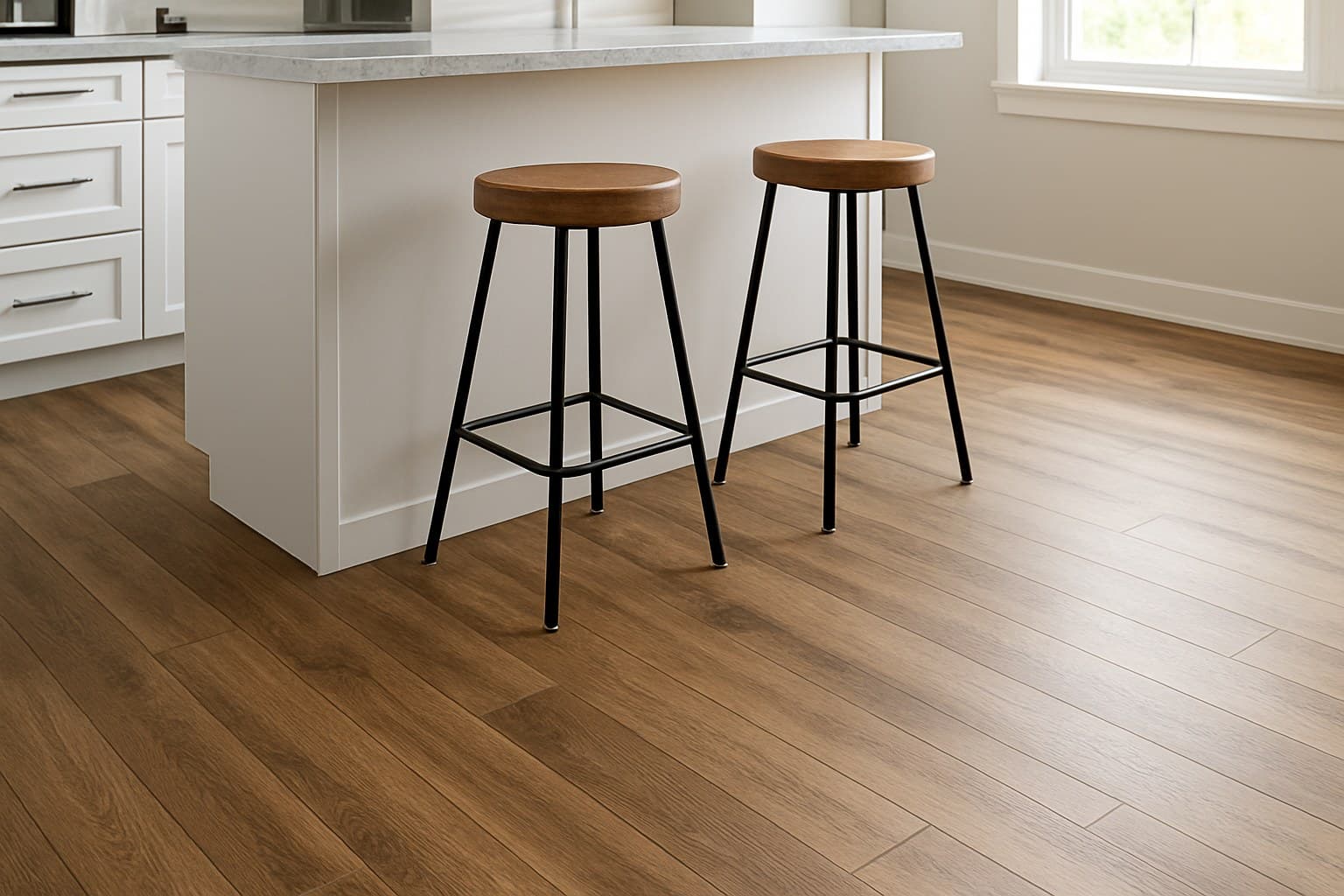
A fridge is a static load the core handles. The marks I get called back for come from point loads, meaning weight squeezed onto a tiny spot, like a bar stool leg, a dropped can, or a chair dragged across the room. That concentrated pressure is what dents vinyl plank, on any tier.
The wear layer helps here, but not the way people think. The wear layer is the clear top coat that fights scratches and scuffs, and it does nothing against a sharp downward point load. Its thickness also changes between SolidTech tiers, so check the wear-layer figure on your exact line's spec sheet instead of assuming the budget box and the upper box match. In practice, that means going from roughly 12 mil on Essentials to around 20 mil on Select and 28 mil on Plus, and none of those numbers do much against a stool leg pressed into the surface, dent resistance is a core and point-load story, not a wear-layer one.
Most of these callbacks don't happen if the customer protects the legs. Put felt pads under every chair, stool, and table leg, and replace them once a year, because grit works into an old felt pad and turns it into sandpaper that grinds the finish. Slide wide glides under the fridge and range feet. Roll office chairs on a mat, since those little hard casters are point loads too, and so are pet claws. And when you move furniture, lift it, never drag it. Those cheap habits save the floor more than any tier upgrade.
When Mohawk's Click-Lock Is a Real DIY Job (and When to Hire Out)
On the jobs I've seen homeowners take on themselves, click-lock Mohawk vinyl in a flat, dry, open room usually turns out fine once they slow down on layout and cuts. The planks snap together, you cut them with a utility knife and a square, and a spare bedroom or a living room without much cutting is a good first project. Labor there runs roughly $1-3 per square foot if you hired it out, so doing it yourself is real savings.
Where I earn my money is the hard stuff. Glue-down installs need a flat subfloor and clean trowel work, and a mistake there is bonded down for good. Stairs are slow, cut-heavy, and each tread is its own fit, so stair jobs cost more per square foot than any open room. Basements bring moisture transitions and slab readings that decide the whole job, and a large open-plan floor needs expansion planning and transition strips done right. Those are the times hiring out pays for itself.
I stopped quoting flat rate by the square foot after a job full of closets, doorways, and a bay window ate an extra day. The open middle of a room is never where the time goes. It's the cuts. So if your room is all corners and jogs, price your time honestly before you decide to DIY it.
What Mohawk Vinyl Costs, and How It Stacks Up
Plan on Mohawk vinyl plank materials in the range of about $2-5 per square foot, depending on the tier, with SolidTech Essentials at the low end and Plus at the top. Add labor around $1-3 per square foot for a click-lock floating install. Glue-down, stairs, and basements run higher, and you'll usually pay a premium there over an open room.
| Cost piece | Typical range | Notes |
|---|---|---|
| Materials (Essentials to Plus) | $2-5 / sq ft | Higher tier = thicker build, longer warranty |
| Click-lock labor | $1-3 / sq ft | Flat, dry, open rooms |
| Glue-down / stairs / basement | Add to the above | More cuts, prep, and moisture control |
Source: my own install quotes
Cost ranges from my own residential jobs; your local labor and the line you choose move the numbers.
Against other brands, Mohawk's SolidTech sits in the mainstream rigid-core group with Shaw, Pergo, and TrafficMaster, and it competes on price and looks. COREtec built its name on attached cork backing and a wide range of WPC (wood plastic composite, a thicker, slightly softer core) and SPC cores, and it often prices higher than an equivalent SolidTech line. None of that decides the floor. The core you picked for the room, the flatness under it, and the moisture reading do. COREtec itself splits into several tiers with their own core builds and warranties, something I walk through in which COREtec line holds up best.
Here's how the tiers line up head-to-head on the three numbers that actually vary by brand and collection:
| Brand / line | Residential warranty (typical) | Wear layer (typical, mil) | Material price / sq ft |
|---|---|---|---|
| Mohawk SolidTech (Essentials-Plus) | ~10-25 yr limited, tier-dependent | ~12-28 mil, tier-dependent | $2-5 |
| COREtec (Pro/Plus-tier lines) | Often lifetime limited (residential) | Commonly ~12-30 mil | $3-7 |
| Shaw Floorte (comparable rigid-core lines) | ~10 yr to lifetime limited, tier-dependent | Commonly ~12-28 mil | $2-6 |
| LifeProof (Home Depot house brand) | Often lifetime limited (residential) | Commonly ~12-20 mil | $2-4 |
Figures above are the typical published ranges for each brand's mainstream rigid-core lineup as of this writing, not a quote for any single SKU. Warranty length, wear-layer mil, and price all move by specific collection and retailer, so before you buy, pull the current spec sheet for the exact line on both sides of the comparison, that's the only way to know which one actually wins for your room.
For a room-by-room look at those tradeoffs across the whole vinyl category, read Vinyl Flooring: 9 Things That Decide If It Lasts 5 Years or 20 before you commit to a tier.
Read the Warranty and Known Issues Before You Buy
Find the warranty document for your exact line, not the brand's general promise — SolidTech Plus, SolidTech Select, and Mohawk Home each carry their own terms, and residential coverage reads differently from commercial. As a baseline, SolidTech-tier vinyl typically carries a limited lifetime warranty in a residential home, while Mohawk Home's budget-tier coverage runs shorter. If the document you pull up promises less than that for a straightforward residential install on a SolidTech line, ask the retailer why. And watch the waterproof wording here too: it covers the plank body, not water that gets in through the seams or edges.
On known issues, this isn't off a spec sheet, it's what shows up on the same paying jobs I priced out above, a few years after handoff: finish wear in the main traffic path, and a slight color mismatch between planks pulled from different boxes. Check for color and finish consistency and any chipped edges at delivery, before a single plank goes down. Mixing lot numbers (the batch code that tells you which production run the planks came from) or installing damaged planks is an easy way to void your own coverage.
If you ever need to file a claim, keep your receipt, the lot numbers, and proof the subfloor was flat, dry, and prepped to spec — the maker will ask you to show the prep was done right before they honor anything.