
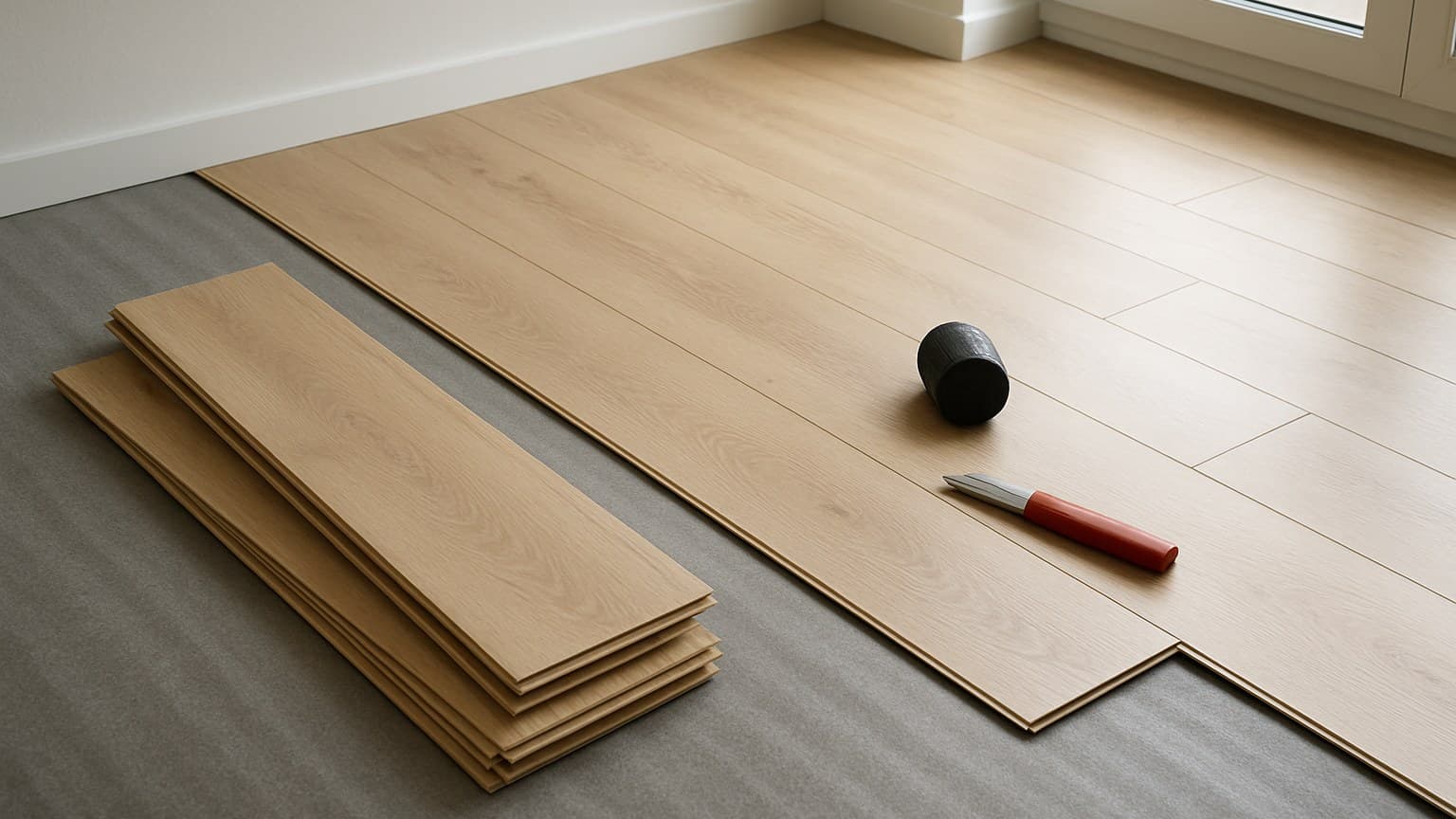
Search mohawk laminate flooring and you'll find two different floors wearing one name: Mohawk Home SplashDefense, sold only at Costco, and mainline RevWood, sold through MohawkFlooring.com dealers and independent flooring stores. They carry different AC wear ratings and different price points even though both say "Mohawk" on the box. Read a review of the wrong one and you learn too late they share almost nothing but the logo, so find the collection name printed on your box before you compare specs or price. Lowe's plays the same naming game with its own store-exclusive line, so anyone shopping there should look into AquaGuard's laminate flooring lineup before assuming it matches a big-box competitor spec for spec.
Key takeaways
- "Mohawk laminate" is really two things: the Costco-exclusive Mohawk Home SplashDefense line and the mainline RevWood and store laminate sold through MohawkFlooring.com dealers.
- Check the AC wear rating on the exact line (AC3 is fine for bedrooms, AC4 or higher for busy rooms); SplashDefense is water-resistant at the surface, not a waterproof core, and the seams are where laminate fails first.
- Mohawk was the first laminate maker to earn NALFA LF-02 certification (2023) and reached LF-02 Platinum, the top tier (2024); any laminate sold in the US must meet EPA TSCA Title VI formaldehyde limits.
- Budget laminate materials run about $1-4 per sq ft and install labor about $2-4 per sq ft in open rooms, for an all-in near $3-8; stairs and basements push labor to roughly $4-8.
- Click-lock Mohawk laminate is realistic to DIY in a square room; glue-down, stairs, and big open-plan moisture transitions are worth hiring out.
Step 1: Figure Out Which Mohawk Laminate You're Even Looking At
Start here: "Mohawk laminate" is two separate products, and which one you have decides every spec, price, and store that follows. Sort this before you read a single review.
I've had customers show me a glowing online review and a sample box that didn't match it at all, because they were looking at two different lines. A review of the Costco floor tells you nothing about a store-bought RevWood plank, and the reverse is just as true. Find the collection name printed on the box or the back of the sample first. That name, not the word "Mohawk," is what you cross-check.
Mohawk Home laminate (the Costco line)
Mohawk Home SplashDefense is a Costco-exclusive line. It shows up under named collections like Kinderston Oak, Forest View Hickory, Brindle Walnut, and Russet Creek Oak. If you bought it at Costco or saw it on Costco's site, this is your floor, and the Costco specs are the ones that apply. Costco's warehouse shelves rotate other laminate lines beyond this one too, so it's worth browsing the full range of Costco laminate flooring options before you settle on a collection.
RevWood and store-sold Mohawk laminate
The mainline RevWood and RevWood Plus sell through MohawkFlooring.com dealers, Lowe's, and independent flooring shops, not Costco. Lowe's is the big-box option most people run into first, since it carries a wide RevWood selection on the shelf and online, alongside the smaller independent dealers. Mohawk Industries also rolls laminate into its larger Flooring North America business, which is why the corporate site and the Costco storefront never quite line up for a regular shopper. If you want the full breakdown of that family, RevWood line guide walks through what each tier is built for. For a closer look at how those retailer types actually differ, guide to the three kinds of laminate flooring stores breaks down what each one is actually best for.
| Line | Sold through | Look | Install |
|---|---|---|---|
| Mohawk Home SplashDefense | Costco (exclusive) | Named oak, hickory, and walnut collections like Kinderston Oak and Forest View Hickory | Click-lock, DIY-friendly |
| Mohawk RevWood / RevWood Plus | MohawkFlooring.com dealers, Lowe's, and flooring stores | Wood-look laminate, water-resistance-marketed lines | Click-lock, DIY-friendly |
| Mohawk store laminate (Flooring North America) | Independent flooring retailers | Broad retail selection beyond the Costco range | Click-lock or dealer install |
The two Mohawk laminate lines and where each one is sold.
Step 2: Check the AC Wear Rating and the Real Water Claim for That Line
The AC rating is the wear number that actually matters. AC3 is fine for bedrooms and light-traffic rooms, AC4 handles a busy household with kids and dogs, and AC5 is built for heavy or commercial use. Read the rating on the exact line you're buying. Don't assume the family name covers it, different collections under one brand can carry different ratings.
Now the water claim, stated plainly. SplashDefense and RevWood water-resistance is surface and edge resistance, not a waterproof core. A spill you wipe up fast is fine. Standing water is not.
Laminate actually fails at the seams and edges, not the plank face. Laminate is a wood-fiber core under a printed photo layer. Once water works into the join between two planks and reaches that core, the core swells and the edges lift. I had a customer in a Dayton suburb mop their new laminate like it was tile, soaking wet, every week. By the end of winter the boards near the mudroom had swelled and chipped. Now I give everyone the same talk at handoff: damp mop only, never a wet mop.
One more trap. Plank thickness, like 12mm, changes how solid and quiet the floor feels underfoot. It does not make the floor waterproof. Don't let a thickness number stand in for a water rating. Thickness and water tolerance both matter more once you start matching a floor to a specific room, which is exactly what our guide to which rooms laminate flooring works in walks through room by room.
Step 3: Verify the Safety and Sustainability Certs
Mohawk's safety story is one you can actually check, which is rare for brand copy. According to the North American Laminate Flooring Association (NALFA), Mohawk was the first laminate maker to earn its LF-02 certification in 2023, then reached LF-02 Platinum, the certification's highest level, in 2024.
That LF-02 mark tests a laminate across a batch of performance and safety measures at once, so it's a useful shortcut when you're comparing lines.
A couple of acronyms to know. Any laminate sold in the US has to meet the U.S. Environmental Protection Agency's (EPA) formaldehyde emission limits under TSCA Title VI, the EPA publishes the specific standards laminate flooring must meet. That isn't Mohawk-only, so don't treat it as a brand selling point, but do confirm it's printed on the spec sheet for your line. Mohawk also runs a flooring-education partnership with the National Wood Flooring Association (NWFA). That's installer-training backing, not a product spec, so weigh it as support rather than proof the plank is tough.
| Cert to confirm | Why it matters |
|---|---|
| NALFA LF-02 certification | Mohawk first earned it in 2023 and reached LF-02 Platinum, the highest level, in 2024, per NALFA |
| EPA TSCA Title VI formaldehyde compliance | Required for any laminate sold in the US; confirm it's printed on the spec sheet |
| NWFA education partnership | Installer-training backing, a support signal rather than a product rating |
Source: NALFA and EPA certification records
The certifications to look for on the specific Mohawk line you're buying.
Step 4: Get a Materials-vs-Labor Price Split
Budget laminate materials typically run roughly $1-4 per square foot, and install labor runs roughly $2-4 per square foot in an open room. That puts an open-room floor somewhere near $3-8 per square foot all in.
Basements and stairs cost more. Labor there lands closer to $4-8 per square foot because of the extra cuts, the transitions, and the moisture prep that an open bedroom just doesn't need. A straight run across a square room is fast; a staircase is slow, fussy work.
Neither the Costco page nor the Mohawk dealer page lists a firm price, so judge value by the AC rating and the specific line, not the sticker alone. Work the numbers against your own square footage before you commit.
| Scenario | Materials / sq ft | Labor / sq ft | All-in / sq ft |
|---|---|---|---|
| 200 sq ft bedroom (open) | $1-4 | $2-4 | $3-8 |
| 1,000 sq ft main floor | $1-4 | $2-4 | $3-8 |
| Basement or stairs | $1-4 | $4-8 | $5-12 |
Source: the laminate jobs I bid around Dayton and Columbus
If the price on a Mohawk line doesn't fit your budget, it's worth pricing out cheaper bulk laminate before you settle, as long as the AC rating still matches your room.
Step 5: Decide DIY vs. Hire (and How It Installs)
Before any planks go down, do two checks. Run a straightedge across the subfloor and measure the high and low spots against the maker's flatness spec, and on concrete, run a moisture test. This isn't optional busywork. A floating floor only lasts as long as the prep under it, and skipping that prep is what voids the warranty, not the plank you picked.
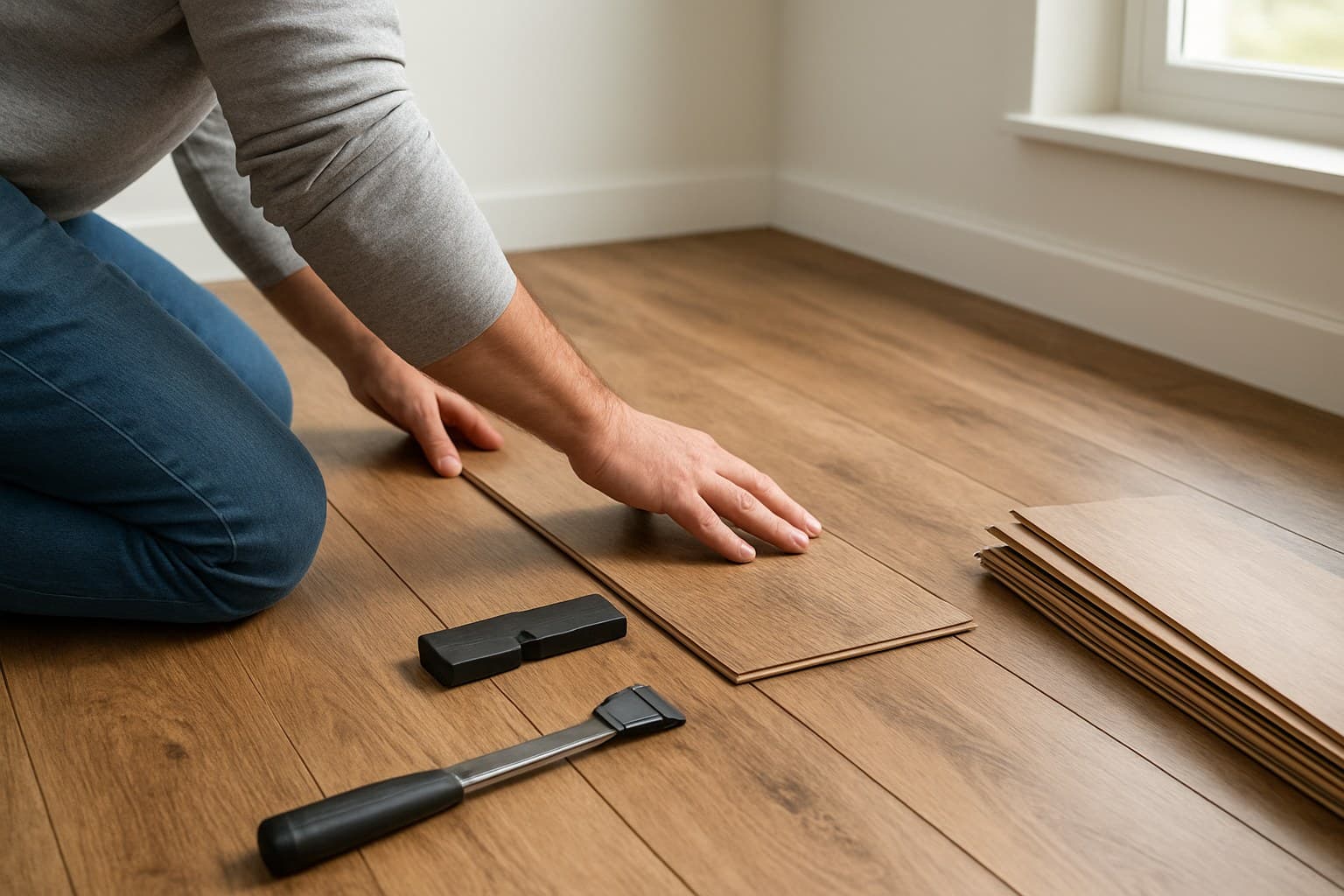
Click-lock Mohawk laminate is realistic for most DIYers in a square, open room. The planks snap together, you leave an expansion gap around the whole perimeter, and you work your way across. The exact gap size comes from the manufacturer's instructions for your line, so look it up rather than guessing at a number.
Where I tell people to hire out: glue-down installs, stairs, and big open-plan floors that cross a moisture transition. Stairs alone eat a day of careful cutting. Those are the jobs that come back to bite a first-timer.
A few setup details that trip people up. Some RevWood planks ship with underlayment already attached, and doubling up a second pad under them can void the warranty, so follow the sheet for your exact product. The RevWood underlayment and install specifics vary by tier. Acclimation is the same story: some lines ask you to let the boxes sit in the room first, some say it's unnecessary, so the sheet in the box governs, not a rule of thumb you read online.
One last piece of hard-won advice. Get the room fully empty before install day. I once had half my crew standing around moving a piano and a china cabinet on the clock because a room wasn't cleared. Now it's in writing on every estimate: empty room, or we reschedule.
Sources
- NALFA: Mohawk First to Attain LF-02 Sustainability Certification
- NALFA: Mohawk's LF-02 Platinum Level Sustainability Certification
- NWFA: New Partnership with Mohawk Flooring
- EPA: Questions and Answers Regarding Laminate Flooring
- EPA: Formaldehyde Questions and Answers (PDF)