
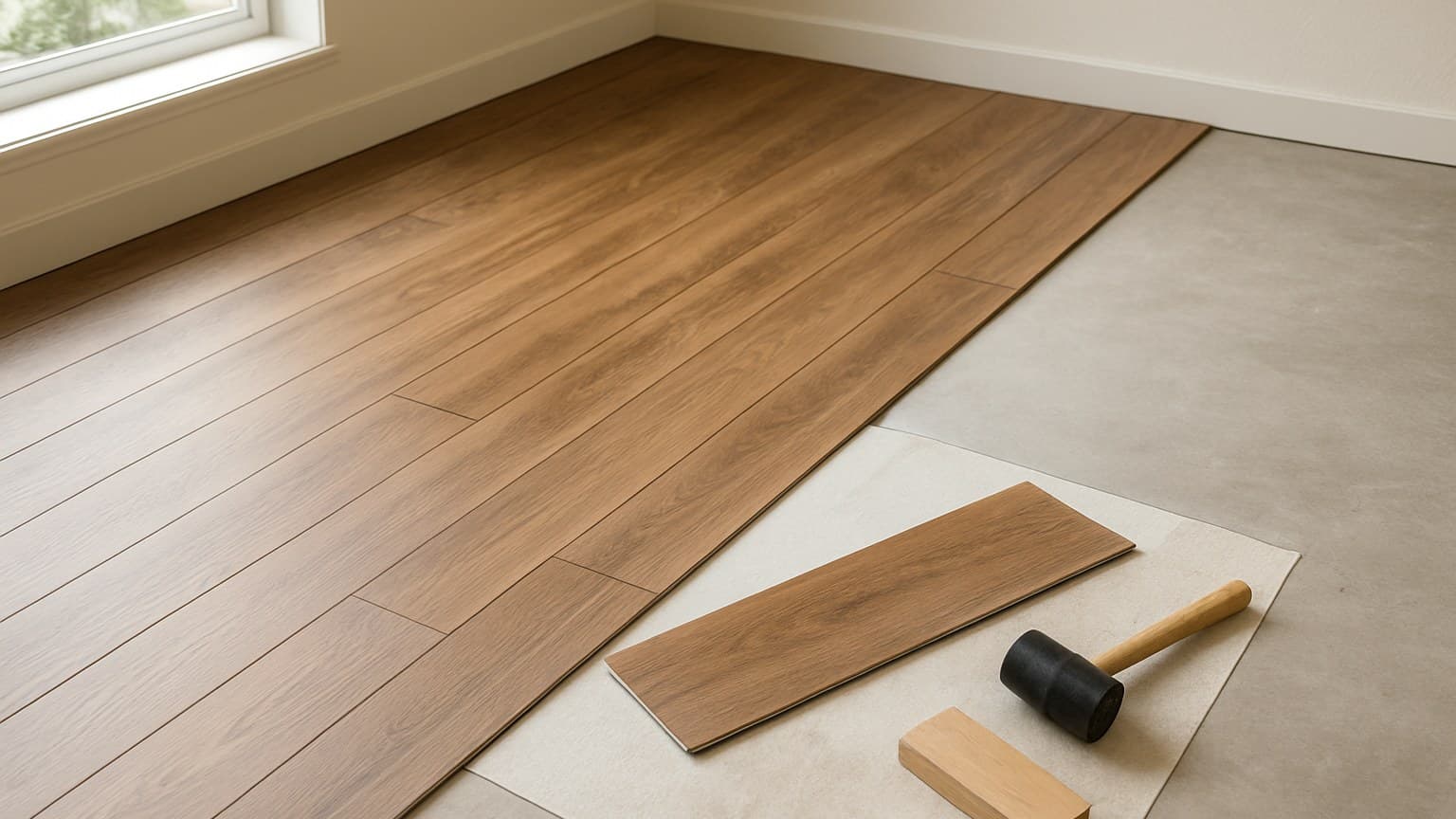
Most LVP vs laminate guides hand you one tidy winner, then the floor fails anyway. The real tradeoff is simple: LVP's plastic core shrugs off standing water, while laminate's wood-fiber core gives you a more realistic wood look and usually costs less upfront. Which one wins depends on the room, the price tier, and what gets spilled on it, so I've ranked nine differences by what actually wrecks each floor in the homes I've torn them out of.
Key takeaways
- The price tier and the room decide the winner far more than the LVP-or-laminate label does.
- Both floors fail at the seams, not the surface: laminate's wood-fiber core swells when water sits in a seam, while LVP's plastic core does not, but a leak can still ruin the subfloor under either one.
- Laminate takes scratches better and looks more like real wood; LVP shrugs off water and feels softer and quieter underfoot.
- Budget roughly $4-9 per square foot installed (materials $1-6, labor $2-5), with basements and stairs costing more than open rooms.
- Click-lock versions of both are realistic for a DIYer; glue-down, stairs, and big open-plan moisture transitions are usually worth hiring out.
1. What's Inside: Plastic Core vs. Wood-Fiber Core
LVP is a solid plastic plank. Laminate is compressed wood fiber with a picture printed on top. Almost every difference that follows traces back to that one fact.
So, is LVP the same as laminate? No. They look alike on a showroom rack, but they're built from different stuff. LVP (luxury vinyl plank) has a core of PVC, either rigid SPC (stone-plastic composite) or softer WPC (wood-plastic composite, which despite the name is mostly plastic). Laminate has a core of HDF, which is high-density fiberboard, basically sawdust and glue pressed hard. According to the North American Laminate Flooring Association (NALFA), laminate flooring is defined by this engineered wood-fiber core topped with a printed design layer and a hard protective overlay, a format NALFA notes has over 30 years of manufacturing history behind it. The luxury vinyl plank flooring vs laminate question comes down to plastic core against wood core.
On thickness, LVP usually runs about 4-8 mm and laminate about 7-12 mm. Don't read thickness as durability. A thick plank with a thin wear layer still scuffs, and a thin SPC plank can outlast a fat laminate in a wet room. Thickness mostly changes how solid the floor feels and how well it bridges small subfloor flaws.
How to tell the two apart by eye and sound
Flip a plank over. A vinyl back is smooth and plastic, often with a foam pad attached; a laminate back is bare brown fiberboard. Tap two planks together: laminate gives a sharp, hollow click, while LVP sounds duller and softer. On a cut edge, laminate shows that pressed-sawdust core right away.
Where SPC and hybrid planks fit in
SPC is the rigid end of LVP, and it's what most people mean now when they say "waterproof vinyl." It's dense, dent-resistant for vinyl, and dead flat, which helps over imperfect subfloors. Some products blur the line entirely; if you're weighing those, my hybrid flooring breakdown walks through what a hybrid plank actually is versus the marketing name.
| Feature | LVP | Laminate |
|---|---|---|
| Core material | Solid plastic (PVC); rigid SPC or softer WPC | Compressed wood fiber (HDF) |
| What the top is | Printed vinyl film under a clear wear layer | Printed paper under a hard melamine wear layer (a tough plastic coating fused on top for scratch resistance) |
| Reaction to standing water | Core won't swell | Core can swell if water reaches a seam |
| Typical thickness | About 4-8 mm | About 7-12 mm |
| Feel underfoot | Softer, warmer, quieter | Harder, more hollow without good underlayment |
What's inside each plank type, compared across the features that drive how the floor performs.
2. Water: Both Floors Fail at the Seams, Not the Surface
Here's the part the box never spells out: a "waterproof core" only means the plank body won't swell. Water-resistant seams and edges are a separate claim, and the seams are where real floors die.
I've pulled up a lot of "water damaged" laminate, and the swelling almost always starts at a seam near a dishwasher or a fridge water line, not across the middle of a plank. Water finds the click joint, soaks into the exposed fiberboard edge, and the plank puffs up and peaks. The printed face looks fine right up until the edge lifts.
LVP earns a real edge here. Its plastic core shrugs off standing water, so a plank that sits in a puddle won't swell the way laminate does. That's why I reach for vinyl first in kitchens, baths, and laundry rooms.
But don't hear "waterproof" and stop reading. A leak that sits under either floor can still rot or warp the subfloor below. The plank survives; the plywood or OSB under it doesn't. I've lifted perfectly intact SPC off a subfloor that a slow supply line leak had rotted soft underneath, with no sign of trouble on top.
If you want the marketing-versus-reality version in detail, I broke down what a waterproof laminate claim actually covers and, for the lighter claim, what water-resistant laminate really holds up to. Read the specific product's sheet, not the category.
3. Scratch vs. Dent, and the Lifespan Question Guides Won't Settle
Trade-off in one line: laminate resists surface scratches better, LVP resists dents and gouges worse. Laminate's hard melamine top is tough against scuffs and claw marks. LVP's softer plastic can take a dent from a dropped cast-iron pan or a gouge from dragging a fridge across it.
The lifespan contradiction, settled
Guides fight over which one "lasts longer" because they're comparing different price tiers and pretending it's a material fact. The honest answer: lifespan tracks the price tier and the room far more than the LVP-or-laminate label. A cheap version of either is landfill in five years in a busy house.
In a dry, high-traffic room, laminate wins on wear because its surface is harder. In a wet room, LVP outlives it, because laminate fails on water long before it wears out. The rough ranges below assume a mid-tier product installed over decent prep.
| Floor | Typical lifespan |
|---|---|
| LVP | 10-15 years |
| Laminate | 15-20 years |
Typical service life for a mid-tier plank over good prep; cheaper lines on either side fall short of these ranges.
Claws scratch and bowls tip over, so the right pick depends on the animal. If a dog drives your choice, I ranked the floors that survive claws and accidents in my guide to the best flooring for dogs.
4. Looks: Which One Really Passes for Wood
Plain verdict: at the same mid-tier price, good laminate usually reads more like real wood than vinyl does. The best laminate uses embossed-in-register texture, meaning the grain you feel lines up with the grain you see. NALFA's laminate flooring FAQ describes this embossing process as aligning the surface texture with the printed wood grain pattern so the two match by both feel and sight. Pair that with sharp printing and it fools people in daylight.
Why does laminate win the look at the middle of the market? Deeper grain registration and better photo layers. Vinyl at the same price often has a shallower, more repetitive texture, and your eye catches the pattern repeating across the room.
Spend more and the gap nearly closes. Premium LVP with realistic embossing and longer plank runs looks convincing, so the laminate plank vs vinyl plank look difference shrinks as the budget climbs. The gap is a mid-tier story, not a law.
If realism is your whole reason for choosing, don't shop blind. My best laminate flooring brands breakdown names which lines actually nail the wood look, and if you're chasing a tile or stone face instead of wood, I covered what I check before laying tile-look laminate.
5. Feel and Sound Underfoot
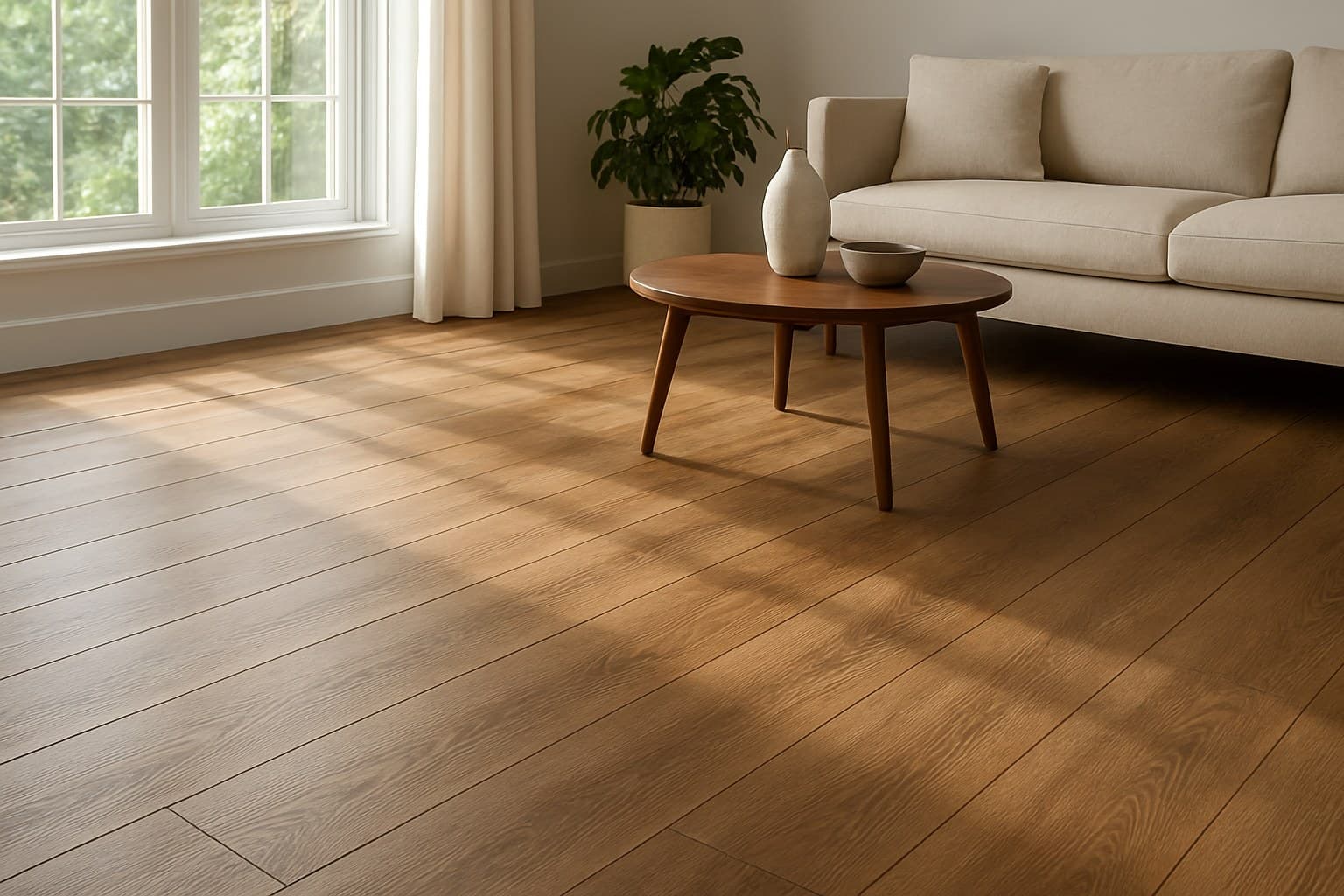
LVP feels softer, warmer, and quieter. Laminate feels harder and can sound hollow if the underlayment is thin or wrong.
This isn't vague comfort talk; you feel it the moment you walk the room. On a concrete basement slab, LVP feels less cold and less loud than laminate laid over the same slab. Drop a toy on laminate over concrete and the whole room hears it. I've had clients in Columbus basements swear the room was warmer after we switched from laminate to a WPC vinyl, and really it was just the softer plastic core.
The right underlayment closes most of that gap on both floors. A good pad quiets laminate a lot and adds a little give. One hard rule, though: don't double up underlayment to chase comfort. If the plank already has a pad attached, adding another one under it can void the warranty, because the extra bounce stresses the locking joints. The product's own sheet decides what's allowed. For picking a pad, see my underlayment guide.
6. Installation and the Subfloor Nobody Checks
Before a single plank goes down, do the two checks that decide whether the floor lives: flatness and moisture. Lay a 6-10 foot straightedge across the subfloor and look for dips and humps; grind the highs and fill the lows to the maker's spec. Run a moisture check on the subfloor, especially over concrete. Skip either check and the floor pays for it fast, planks peak, pop, and pull apart at the seams no matter what the box promised.
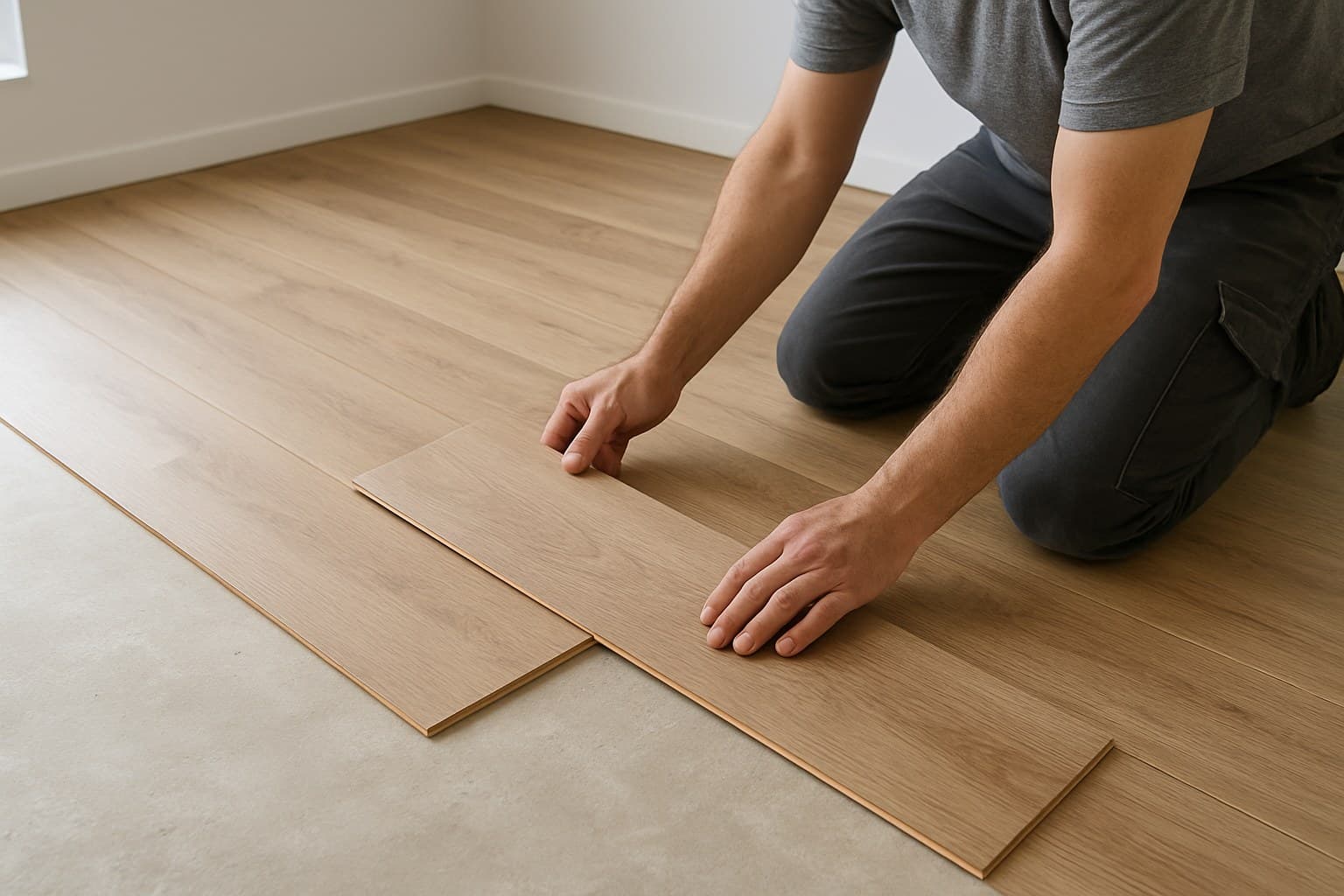
On method, be honest with yourself. Click-lock floating floors, in both LVP and laminate, are realistic for most DIYers with patience and a tapping block. Glue-down vinyl, stairs, and large open-plan jobs with a moisture transition between rooms are where I'd hire out. Glue-down is unforgiving, stairs demand clean nosings and zero movement, and big open spans need the expansion and transitions planned right or the whole field buckles.
A couple of shared rules trip people up. Leave the expansion gap the product's own instructions call for around the perimeter; it's not a universal number, so look it up per plank. And follow the box's acclimation sheet instead of some rule of thumb you read online, because some products want days of acclimation and some say none at all, NALFA's retailer guidance echoes this, urging buyers to confirm the manufacturer's specific acclimation and expansion-gap requirements rather than assume one rule covers every product. One more from experience: schedule your tear-out haul-off before you lift the old floor, or you'll be living with a pile of ripped carpet for a week.
When you're ready to lay your own, my step-by-step laminate installation guide covers the sequence the box leaves out.
7. Everyday Cleaning and Maintenance
Same core rule for both: wipe spills fast at the seams, damp mop, and never soak the floor. The seam is the weak point on either plank, so standing water is the enemy no matter which you bought.
Laminate has one extra risk worth repeating: skip the steam mop. Steam forces hot water down into the seams under pressure, which is exactly where laminate's wood-fiber core swells. Even a line marketed as water-resistant isn't built to take forced steam. LVP tolerates a steam mop better, but I still keep them off both, because there's no upside to driving moisture into any seam.
Day to day, both wipe clean with a microfiber mop and a splash of pH-neutral cleaner. Skip wax, oil soaps, and abrasive pads; none of them belong on a printed wear layer. Felt pads under furniture and a doormat at the door do more for the floor's life than any cleaner.
8. What Each Floor Really Costs, Split Materials vs. Labor
Expect most jobs to land around $4-9 per square foot installed. Materials run roughly $1-5 per square foot and labor roughly $3-4, which is how you get to that all-in range. Those are ballpark figures, not a flat national price; your market, your subfloor, and your room shape all move them.
Basements and stairs cost more than open rooms. Stairs are slow, precise work billed per tread, and a basement usually needs moisture prep, sometimes a leveling pass, before anything gets laid. An open living room is the cheapest square footage you'll buy because the installer just runs long, clean rows.
| Line item | LVP | Laminate |
|---|---|---|
| Materials, per sq ft | $1-5 | $1-4 |
| Labor, per sq ft | $3-4 | $2-4 |
| Typical installed, per sq ft | $4-9 | $3-8 |
| Stairs | Add cost, priced per tread | Add cost, priced per tread |
| Basement over slab | Add moisture prep / leveling | Add moisture prep / leveling |
Source: the material-and-labor splits I write into my own LVP and laminate bids
Cost bands I see on residential jobs, split so you can see where the money goes; wet or complex rooms push toward the high end.
Laminate often prices a touch lower on materials at the budget end, but don't let a dollar decide a wet room. If you want a more independent total-cost-of-ownership view rather than just install price, the National Wood Flooring Association's Life Cycle Cost Analysis weighs laminate against roughly 18 other flooring types over their service life, a useful cross-check against any single installer's numbers, including mine. For a full line-item breakdown of what sets your number, see my 9 things that set your laminate flooring cost.
9. The Room-by-Room Pick: Where Each One Wins
The fastest way to decide is to stop asking which floor is better and ask what each room does to a floor. Water rooms go to LVP; dry, high-traffic rooms where looks matter lean laminate.
Kitchens, bathrooms, laundry rooms, and basements: LVP, for its plastic core and water tolerance. These are the rooms where laminate's seam-swelling turns into a redo job a few months later, so I won't put laminate in them unless a client insists and understands the risk.
Living rooms, bedrooms, hallways, and dining rooms on upper floors: laminate is a strong, often cheaper pick, and it tends to look more like real wood at a mid-tier price. These rooms stay dry, so laminate's one real weakness never gets tested. For the full room-by-room rundown, I lay out which rooms laminate flooring actually works in.
Whole-house with a mudroom-to-living-room flow: pick one floor that handles the wettest room on the run, which usually means LVP for visual continuity, or plan a clean transition between a vinyl wet zone and a laminate dry zone. If you're still torn after all nine rounds, my deeper head-to-head on whether laminate or vinyl is better for your situation is the next read, because it walks the decision room by room with more scenarios than I can fit here.