
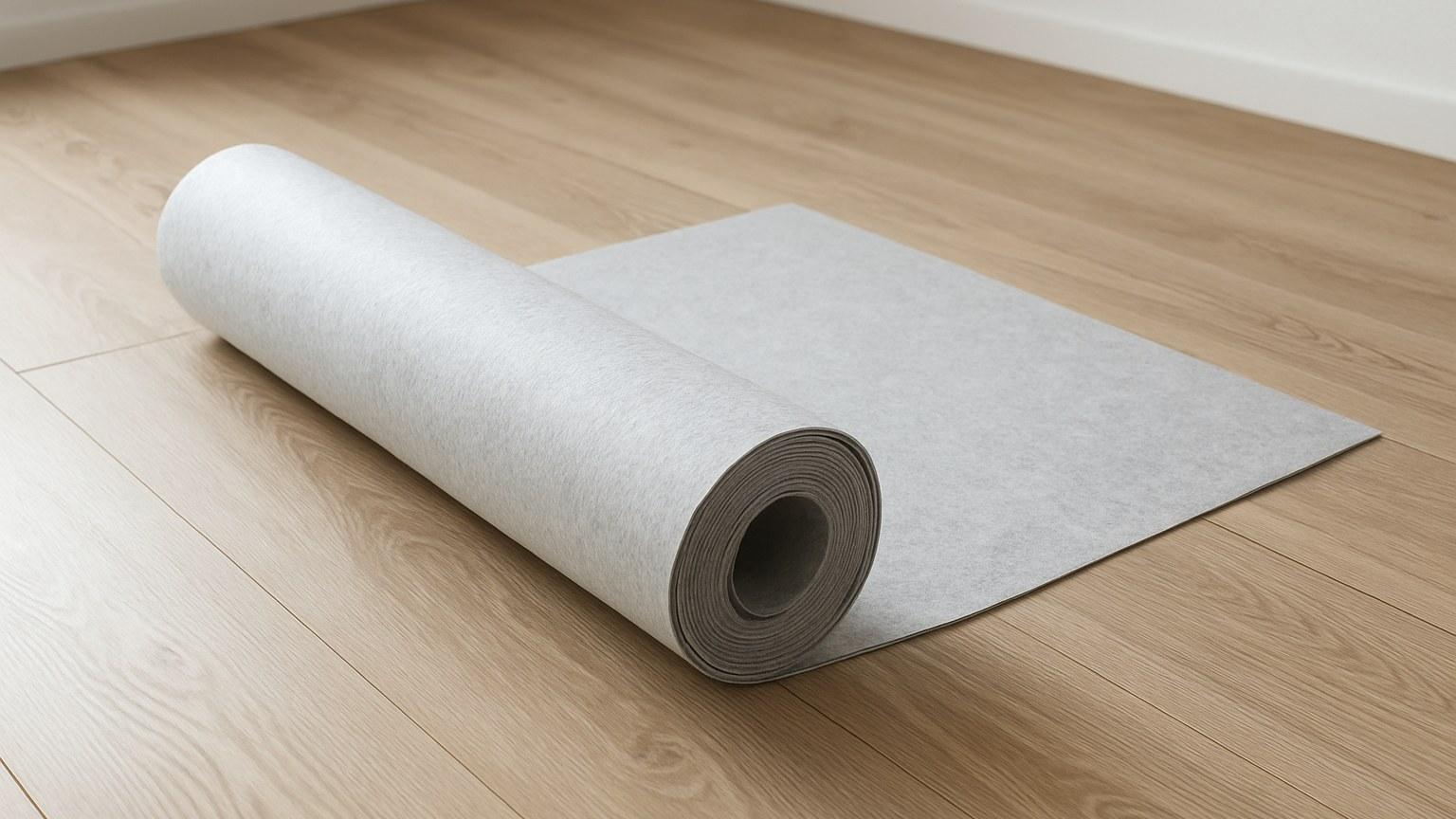
When your laminate needs an underlayment, the right pick is set by your subfloor: a foam-plus-vapor-barrier combo over concrete or in a basement, plain foam over a dry wood subfloor. The confusing part is that many planks already ship with a pad attached, so the best underlayment for laminate flooring is sometimes none at all. Guess wrong and you either double up and flex the joints or skip the moisture layer and swell the boards.
Below are five underlayments, matched to the subfloor and room each one actually suits, plus cost ranges and the one check to run before you buy anything.
Key takeaways
- Over a concrete slab or basement, use a foam-plus-vapor-barrier combo; yard-compass.com puts it at $0.50-$0.75 per sq ft.
- Over a plywood or wood subfloor above grade, plain foam is usually enough; yard-compass.com lists standard foam at $0.30-$0.50 per sq ft.
- If your laminate already has a pad attached, don't add more underlayment; doubling the cushion flexes the joints and usually voids the warranty.
- Underlayment won't level an uneven subfloor or make laminate waterproof; it blocks moisture from below and softens sound, nothing more.
- thebestlaminateflooring.com puts underlayment materials at $0.25-$1 per sq ft; homewyse.com lists install labor at $4.38-$5.27 per sq ft for 2026.
First, Check Whether Your Laminate Already Has a Pad
Flip a plank over and read the box spec sheet before you spend a dollar. A lot of laminate ships as attached-pad planks, with a thin foam already bonded to the back.
If the pad is attached, don't add a separate foam underlayment. Two soft layers let the locking joints rock and flex, and your plank's own installation sheet is what spells out whether doubling the cushion voids the warranty, check that specific document before you add anything.
There's one exception. Even attached-pad laminate over concrete still needs a separate vapor barrier, because that attached foam only pads the plank, it doesn't stop moisture coming up from below.
So the quick rule goes like this: pad attached plus a dry wood subfloor means you're done. Pad attached plus concrete means add only a thin vapor barrier, nothing thicker.
#1. Foam and Vapor Barrier Combo: Best Over Concrete and in Basements
For concrete slabs and basements, use a foam-plus-vapor-barrier combo. yard-compass.com puts it at $0.50-$0.75 per sq ft.
Concrete passes moisture up through itself, and below-grade basement slabs pass even more. Combo foam has a thin plastic sheet built in to block it. Overlap and tape the seams the way the product's own instructions say, or the barrier has a gap right where you don't want one. That's a separate job from whatever the package's waterproofing claims promise, so it's worth knowing what waterproof laminate flooring claims actually mean before you count on either one.
Keep two jobs separate in your head. A vapor barrier stops moisture coming from below. It does nothing about spills from above, and laminate's seams still swell if water sits on top. Before you trust the surface, read what actually counts as water-resistant laminate flooring.
I had a customer near a Dayton mudroom who wet-mopped her new laminate every week like it was ceramic tile. By that first winter the board edges had swelled and chipped, and no underlayment stops water that lands on top of the floor. For a basement that takes on real standing water, laminate's wood-fiber core still fails, so weigh LVP (luxury vinyl plank) against laminate before you commit down there.
#2. Standard Foam: Best Over Plywood and Wood Subfloors
For plywood and wood subfloors above grade, plain standard foam is usually all you need. yard-compass.com lists it at $0.30-$0.50 per sq ft.
A dry wood subfloor on an upper or main floor usually doesn't need a vapor barrier. Still, check your plank maker's sheet and look at what sits below. A vented crawlspace can change the answer.
Over an unheated crawlspace, or any floor where you don't know the moisture story, step up to a combo with a barrier or run a moisture test first. That same moisture judgment call matters even more in a bathroom, where laminate bathroom flooring factors decide whether the floor survives or swells.
And don't lay foam over an old floor blind. The existing floor has to be solid, flat, and dry, or the laminate telegraphs every dip and squeak right through to your feet.
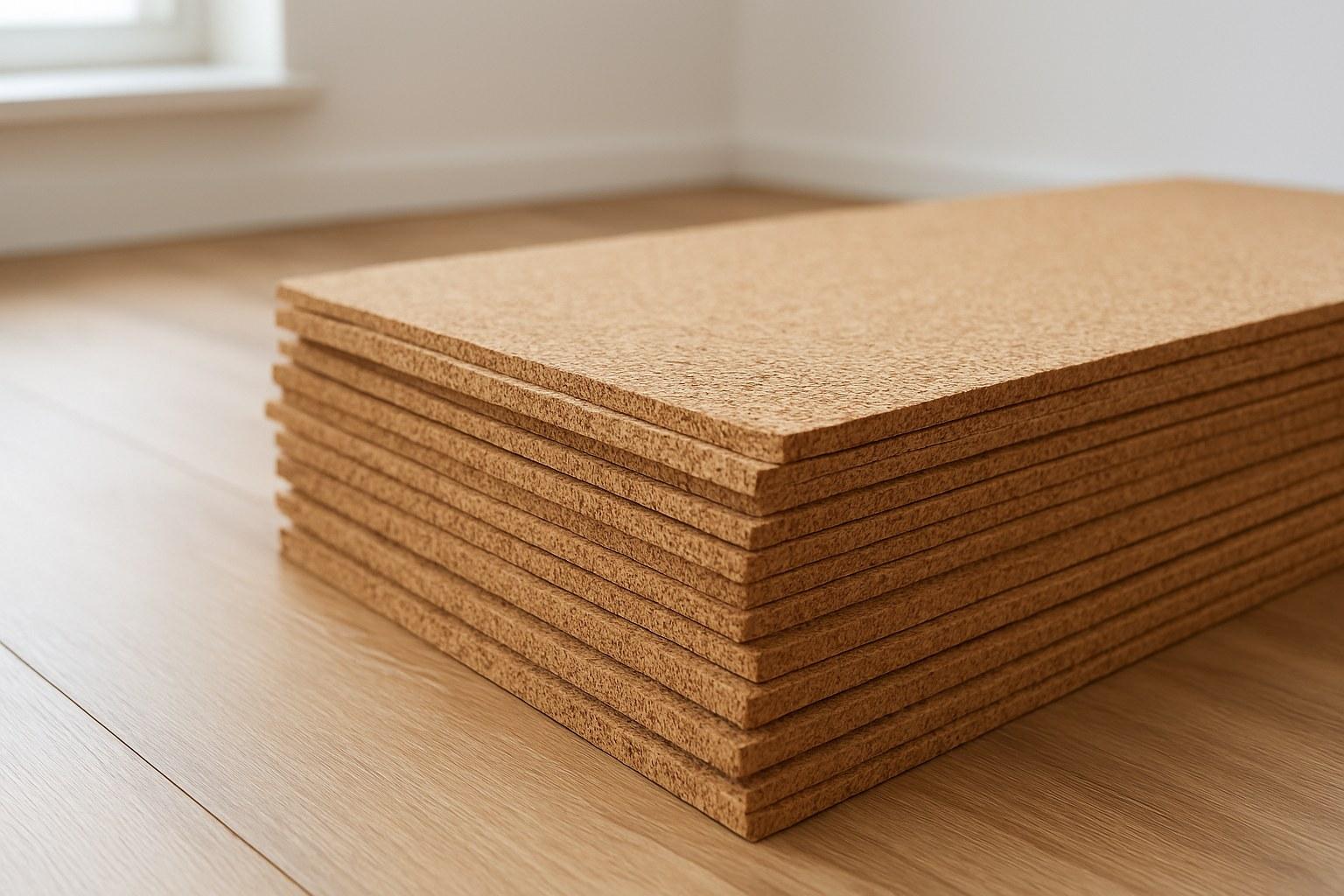
#3. Cork: Best for Quiet in Rooms Over Living Space
For an upstairs bedroom or any room sitting over a living space, cork is the quiet pick. yard-compass.com puts cork at $0.75-$1.25 per sq ft, and widgetco.com prices quarter-inch cork at $0.99-$1.14.
Cork is a natural sound deadener. On the spec sheet, look for two ratings: IIC (Impact Insulation Class), which scores impact sound like footsteps, and STC (Sound Transmission Class), which scores airborne sound like voices through the floor. Higher numbers mean quieter. Read the product's own sheet for honest figures here.
One catch: cork is not a vapor barrier. Over concrete, pair it with a separate moisture layer or it won't protect the planks from below.
#4. Felt and Fiber: Best for Comfort Underfoot
When you want a softer, warmer step and decent quiet without paying cork money, go with felt or fiber. yard-compass.com lists sound-dampening felt at $0.60-$1 per sq ft.
Felt is denser than foam, so it holds up better under furniture legs and foot traffic without flattening out over time.
Some felt products add a moisture-wicking layer; one maker calls its version Dri-Wick. That's a feature on that specific product, not something every felt has, so confirm it on the label before you count on it.
If indoor air quality matters in your house, look for a GreenGuard Gold label. That means the product passed a test for low chemical emissions when used indoors.
#5. Rubber: Best for Heavy Traffic and Sound Control
For busy entries, playrooms, and home gyms, rubber is the toughest and quietest of the bunch. usrubber.com puts rubber at $1.50-$4 per sq ft installed.
Rubber has the best compression resistance of these five, so the locking joints stay put under heavy load, and it's a top performer for killing impact sound.
Check that your laminate maker allows rubber first. Some rubber sheets can stain or react with certain plank backings. It's also the heaviest and priciest option here, so don't reach for it unless the room earns it.
The 5 Underlayments Side by Side: Cost, Moisture, Sound, and Warmth
Here's all five lined up. The foam, felt, and cork costs come from yard-compass.com; the rubber figure comes from usrubber.com and is an installed price, so it reads higher than the materials-only rows.
| Material | Cost per sq ft | Vapor barrier | Sound | Warmth (R-value) | Best for |
|---|---|---|---|---|---|
| Standard foam | $0.30-$0.50 | No; add a separate one over concrete | Basic | Low | Plywood and wood subfloors |
| Foam + vapor barrier combo | $0.50-$0.75 | Yes, built in | Basic to moderate | Low to moderate | Concrete slabs, basements |
| Felt / fiber | $0.60-$1.00 | Some add a moisture layer | Good | Moderate | Comfort, mid-level quiet |
| Cork | $0.75-$1.25 | No | Very good | Moderate to high | Rooms over living space |
| Rubber (installed) | $1.50-$4.00 | Varies by product | Best | Moderate | High traffic, gyms, playrooms |
Cost and strengths of five common laminate underlayment types, materials-only except the installed rubber row.
A couple of columns trip people up. R-value is a warmth rating, and it works backwards from what you'd think for heated floors. If you have radiant heat, you want a LOW R-value so the heat passes up through the floor. Thin foam does that. Thick cork or felt can trap the heat you paid to make.
Compression resistance is what keeps the joints locked under furniture. Thicker is not automatically better here. Go past the thickness your plank maker's spec sheet allows, and the extra give stresses the click joints instead of helping them. The thickest common underlayments are half-inch cork or rubber, but match thickness to your plank's spec, not to whatever is fattest on the shelf.
What Underlayment Costs: Materials vs. Labor
Split it into materials and labor. thebestlaminateflooring.com puts underlayment materials at $0.25-$1 per sq ft, depending on which of the five above you pick. homewyse.com lists underlayment install labor at $4.38-$5.27 per sq ft for 2026.
Most of the real cost is labor, and that's where you decide whether to do it yourself.
Rolling out foam or a combo over a clean, flat room is genuinely easy DIY work. You cut it to fit, butt the edges, tape the seams on a combo, and move on. If you're already laying click-lock laminate yourself, the underlayment is the simple part.
Where I'd hand it off: basements and slabs where the moisture call matters, rooms where the subfloor isn't flat yet, and stairs. Those jobs cost more than an open bedroom for a reason, and a bad vapor-barrier seam under a basement floor is the kind of thing you only find out about after the planks are down. That same room-by-room thinking matters even earlier, since not every room suits laminate flooring in the first place.