
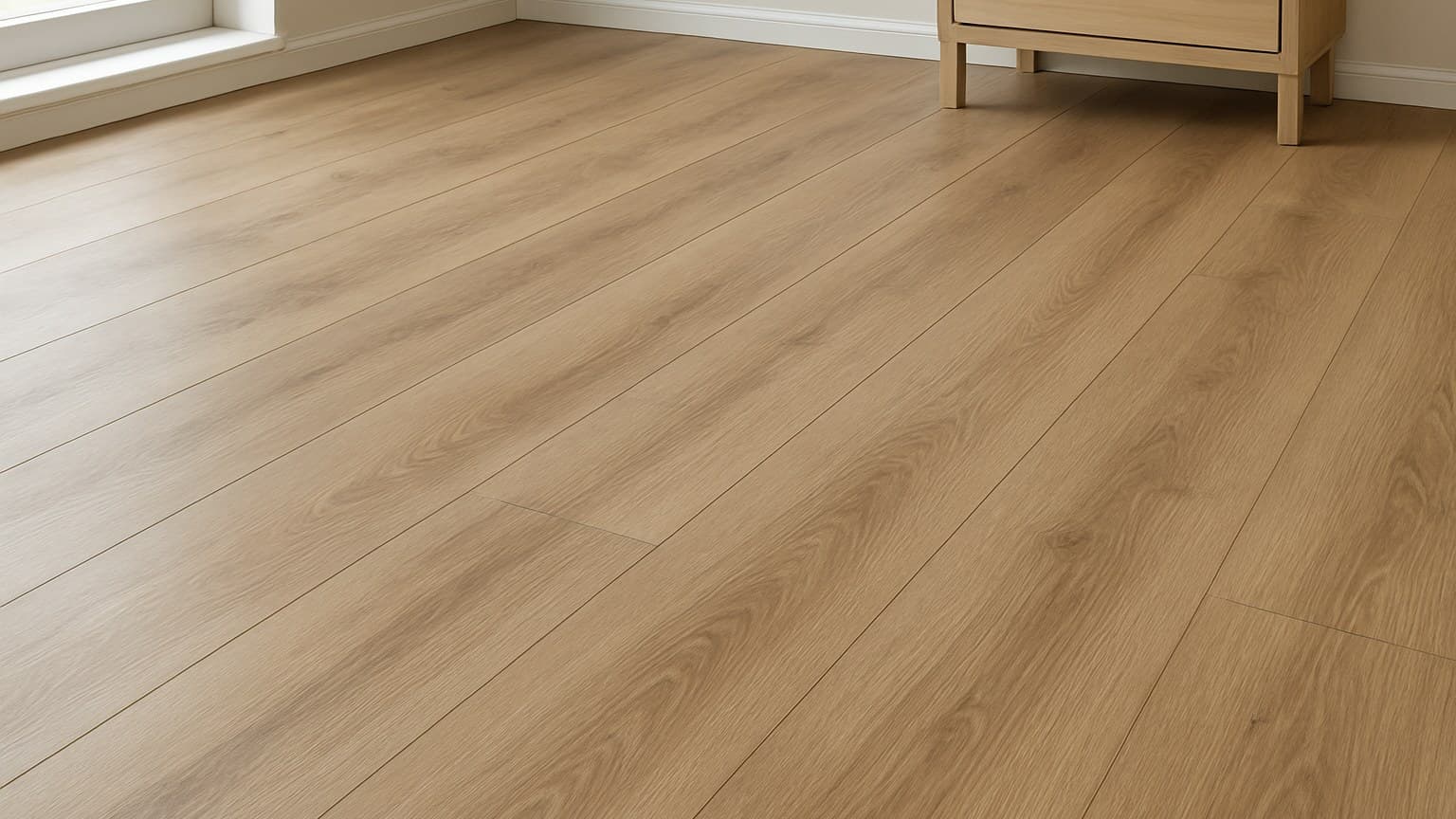
Laminate flooring runs about $1 to $5 a square foot in materials alone, and which floor holds up long-term comes down to four checkable specs, not the brand on the box. Skip the house-brand pick a store pushes to the top of its own list and judge products by their actual spec sheets instead. Here's how the major brands stack up, spec by spec.
Key takeaways
- The 'best laminate' list ranking on top today is published by a flooring seller that ranks its own product number one, so treat any unsourced ranking as an ad, not a review.
- Judge laminate by four checkable specs, not the logo: AC rating (AC3 covers most homes, AC4 for busy areas), core type, the product's own water-resistance hour claim, and third-party certs.
- Every composite-wood laminate sold in the US must meet the EPA's TSCA Title VI formaldehyde limit; a FloorScore or GREENGUARD Gold label proves low indoor emissions, and NALFA certification proves durability.
- A 'waterproof core' is not a waterproof floor. Most failures start at the seams between planks, so match the water claim to the exact product's spec sheet, never the brand's slogan.
- Budget laminate materials run about $1-3 per square foot and premium lines $3-5; labor adds roughly $2-4 in open rooms and $4-8 on stairs or basements.
Why the #1 "Best Laminate" List Is Written by a Company Selling Laminate
The page ranking at the top for this search is a flooring retailer, and it puts its own private-label product in the number-one slot. That's not a review. It's a storefront wearing a review's clothes.
The tell is easy to spot once you know it. If a ranking never says what it measured, no AC rating, no third-party certification, no spill-protection claim, and never points to any source outside its own shelves, it isn't a ranking at all. It's an ad with a number stuck on it.
So this list works differently. Every pick below is judged on things you can check yourself on the product's own spec sheet, not a trophy the seller handed to itself. Before the brands, here's the yardstick: the AC rating, the core type, the product's own water-resistance claim, and its third-party certifications. Learn those four and you can grade any laminate in the aisle, including ones I never mention.
The 4 Specs That Decide the Best Laminate (Not the Brand Name)
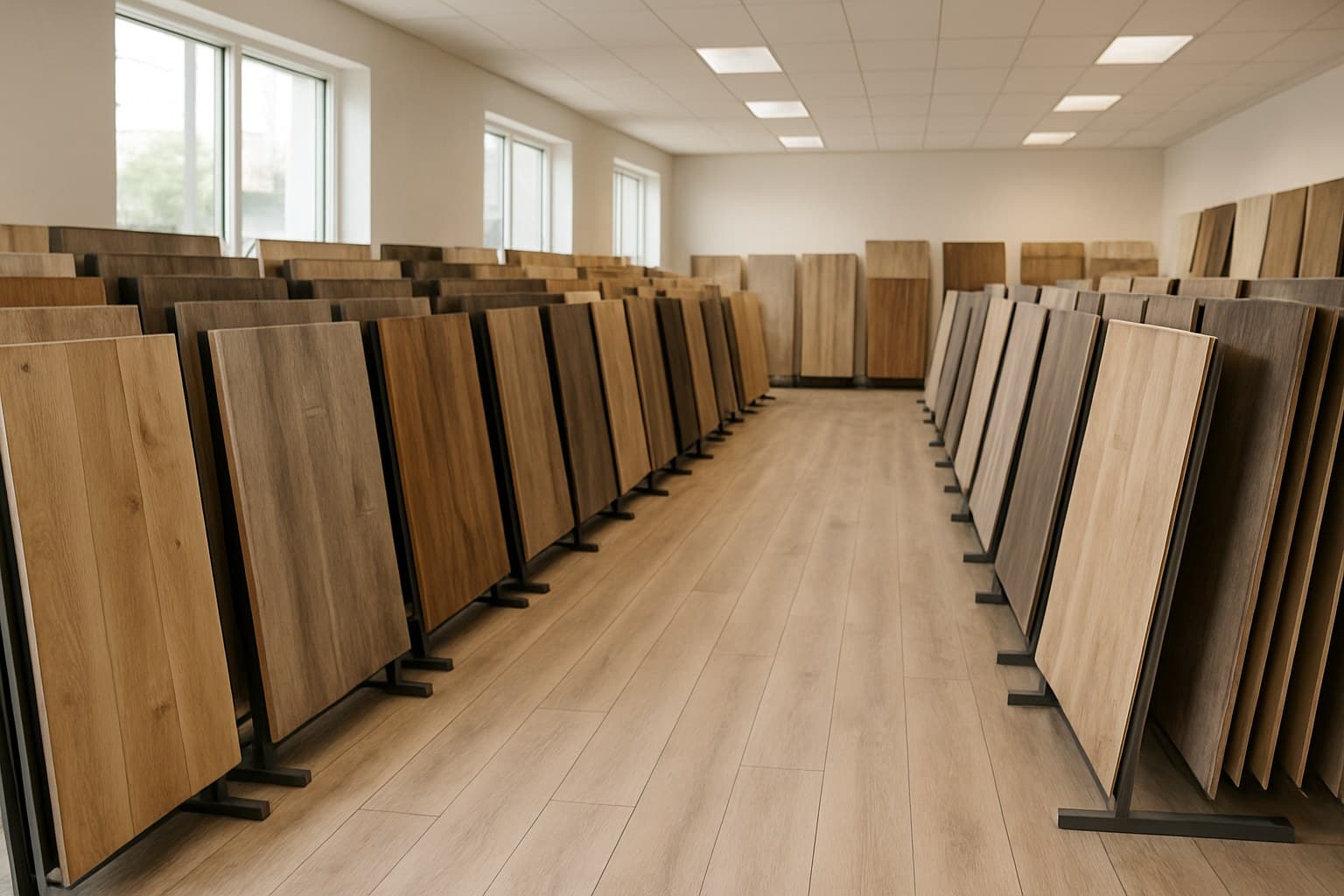
Four checkable specs separate a tough laminate from a pretty label. Get these right and the brand name barely matters.
AC rating. According to NALFA (North American Laminate Flooring Association), AC stands for abrasion class, a wear-resistance scale that runs AC1 up to AC5. It tells you how much foot traffic and grit the top wear layer can take before it starts to look tired. AC3 handles a normal house; AC4 is worth it for busy entries and homes with dogs. AC rating tells you what the surface can take, but which rooms laminate actually works in also comes down to moisture, not just the wear layer.
Core type. The core is the board under the picture layer. HDF (high-density fiberboard, a tightly pressed wood-fiber board) resists dents and swelling better than the softer, cheaper MDF (medium-density fiberboard). The difference matters most in rooms that see spills.
Water resistance. This is a per-product claim, never an industry-wide fact. Some lines advertise a set number of hours their surface holds off a spill. Read that number off the exact SKU you're buying instead of trusting the brand's water-resistant laminate flooring slogan, two floors from the same brand can rate very differently.
Certifications. FloorScore, GREENGUARD Gold, and NALFA each prove a different thing, which the next section breaks down.
Texture and locking come last. EIR (embossed-in-register, where the surface bumps line up with the printed wood grain) and click-lock systems change how real a floor looks and how easy it is to install yourself. Neither one makes the floor more durable, so weigh them after the four specs above.
Plank thickness is worth a quick check too, even though it's not one of the four core specs above. Laminate typically runs 6mm to 12mm; thicker boards tend to feel more solid underfoot and muffle sound better, but a thicker plank with a thin wear layer still won't outlast a thinner one with a higher AC rating. Treat thickness as a comfort-and-sound spec, not a substitute for AC rating or core type.
| AC class | Handles | Best room | Avoid |
|---|---|---|---|
| AC1 (moderate residential) | Light foot traffic only | Closets, low-use bedrooms | Main living areas |
| AC2 (general residential) | Normal home traffic | Bedrooms, light-use living rooms | Kitchens, entries |
| AC3 (heavy residential / light commercial) | All-day home traffic | Any room in a typical house, including halls | Nothing at home |
| AC4 (general commercial) | Busy traffic and grit | Entryways, busy kitchens, homes with dogs | Not needed for quiet bedrooms |
| AC5 (heavy commercial) | Store-level traffic | Retail floors | Usually overkill and pricier for homes |
| Source: NALFA / EN 13329 abrasion class scale | |||
| Matching each AC abrasion class to the room where it fits a normal home. |
Is Laminate Safe? Formaldehyde Rules and the Certs You Can Actually Check
Yes, with a caveat you can verify. Laminate is made from pressed wood and glue, and that can off-gas a little formaldehyde (a gas that can irritate eyes and airways). But according to the EPA, every composite-wood board legally sold in the US has to meet formaldehyde emission limits under TSCA Title VI, short for the Toxic Substances Control Act, Title VI, the federal rule capping how much formaldehyde a composite wood core can release. So low emissions are the legal floor here, not a special bonus a brand gives you.
Two voluntary labels go further on air quality. FloorScore, run by SCS Global Services, certifies that a hard floor gives off low VOCs (volatile organic compounds, the gases that can foul indoor air). GREENGUARD Gold, run by UL, is a stricter low-emission standard built for places like schools and clinics, and because the certified-product rosters shift constantly, it's worth checking our GreenGuard Gold certified flooring guide before assuming last year's brand list still holds.
Durability is a separate question, and that's where NALFA comes in. According to NALFA, its LF-01 certification tests real laminate performance directly on the finished product, wear, dents, staining, and moisture, not just the raw core. The air-quality labels say nothing about how the floor holds up underfoot; the NALFA seal does.
| Label | Proves | Type | Run by |
|---|---|---|---|
| EPA TSCA Title VI | Formaldehyde in the wood core is under the federal legal limit | Legally required, not optional | US EPA |
| FloorScore | Low VOC emissions into indoor air | Voluntary air-quality cert | SCS Global Services |
| GREENGUARD Gold | Stricter low emissions, including sensitive settings like schools | Voluntary air-quality cert | UL |
| NALFA LF-01 | Durability: wear, dent, stain, and moisture performance | Voluntary performance cert | North American Laminate Flooring Association (NALFA) |
| Source: US EPA, SCS Global Services, UL, NALFA | |||
| What each certification on a laminate box actually verifies, and who issues it. |
The practical move: look for a FloorScore or GREENGUARD Gold label for air quality and a NALFA seal for durability, and confirm TSCA Title VI compliance on the spec sheet. I'd double-check that last one hardest on cheap imported lines.
Pergo: Best for a Proven Track Record and Wide Availability
Pergo is the brand that put laminate on the map, and it's now owned by Mohawk. That ownership matters in a boring but useful way: the higher lines are stocked almost everywhere, so if you gouge a plank in three years, sourcing a matching run is realistic instead of a scavenger hunt.
Pergo's collections span a wide spread of AC ratings and water claims, so don't buy on the name alone. Pull up the exact collection you're eyeing and read its AC rating and its spill-protection hours off that sheet. Best for here means reliability and easy replacement, not the lowest sticker on the shelf.
Because several of these brands are actually the same parent company, here's who owns what before you read on.
| Brand | Owner | Best for | Check first |
|---|---|---|---|
| Pergo | Mohawk | Proven track record, wide availability | AC rating and water-hour claim per collection |
| Mohawk RevWood | Mohawk | Water-resistance-marketed lines | Which line (Plus vs standard) and its hour rating |
| Quick-Step | Mohawk (Unilin) | Realistic EIR looks, Uniclic locking | AC rating on the chosen decor |
| Shaw | Berkshire Hathaway | Warranty backing and dealer support | Warranty terms tied to the SKU |
| AquaGuard | Floor & Decor (private label) | Budget water-resistant pick | FloorScore label and hour claim |
| TrafficMaster | Home Depot (private label) | Cheapest DIY starter floors | AC rating; many are AC3 or lower |
| Home Decorators Collection | Home Depot (private label) | Mid-price looks at big-box stores | Core type (HDF vs MDF) and certs |
The seven brands covered here, their parent companies, and the one spec to verify on each.
Mohawk RevWood: Best for Water-Resistance-Marketed Lines
RevWood is Mohawk's laminate line that leans hard on water resistance in its marketing, and some of it earns the pitch. The catch is the range: a standard RevWood and a RevWood Plus are not the same floor. Confirm which line you're holding and the exact spill-hour rating printed for it. Mohawk sells several other collections beyond RevWood, each with its own strengths and weak spots, and our Mohawk laminate flooring guide sorts out which one actually fits your room.
Here's the part the ads skip. A waterproof core is not a waterproof floor. The board itself may shrug off water, but laminate almost always fails at the seams between planks first, where standing water wicks down into the edges. Match the water claim to the specific product sheet, not the slogan on the display, and wipe spills fast no matter what the box promises.
Quick-Step: Best for Realistic Wood Looks and Easy DIY Locking
Quick-Step, made under Mohawk's Unilin arm, is where I'd send someone who wants laminate that reads as real wood across the room. Its EIR texture, the grain you can feel that lines up with the grain you see, is among the more convincing looks in laminate, and that realistic wood grain is one of the real edges laminate still has over a lot of vinyl.
It also uses the Uniclic locking system, which snaps together cleanly and forgives a beginner's mistakes better than most, unlike glue-down laminate, where picking the right laminate flooring adhesive is half the battle. That makes it a friendly floor to install yourself. Just pick your decor first, then check that decor's AC rating, since the fancy look doesn't guarantee a heavy-traffic wear layer.
Shaw: Best for Warranty Backing and Dealer Support
Shaw, owned by Berkshire Hathaway, is the pick when you want a real company standing behind the floor and a local dealer to call. That backing is worth something on a big install where a whole run might need a warranty claim.
Warranties, though, live at the SKU level, not the brand level. Two Shaw products can carry very different terms, and most warranties quietly hinge on you meeting the install instructions, especially the subfloor and moisture requirements, which is exactly where our laminate flooring installation guide covers the details the box leaves out. Read the warranty tied to the exact floor you're buying, and keep your receipt and the box label.
AquaGuard: Best Budget Water-Resistant Pick
AquaGuard is Floor & Decor's private-label line, aimed at buyers who want water resistance without a premium price. If you're weighing the best waterproof laminate flooring options, it's one of the few private-label lines worth cross-checking against the pricier names. For a kitchen or a busy hallway on a budget, it's a fair option.
Since it's a store brand, do two checks before you commit. Look for a FloorScore label on the box for air quality, and read the actual spill-protection hours off the spec, rather than trusting the "aqua" in the name. A budget water-resistant floor is still only as good as the number on its own sheet.
TrafficMaster: Best for the Cheapest DIY Starter Floor
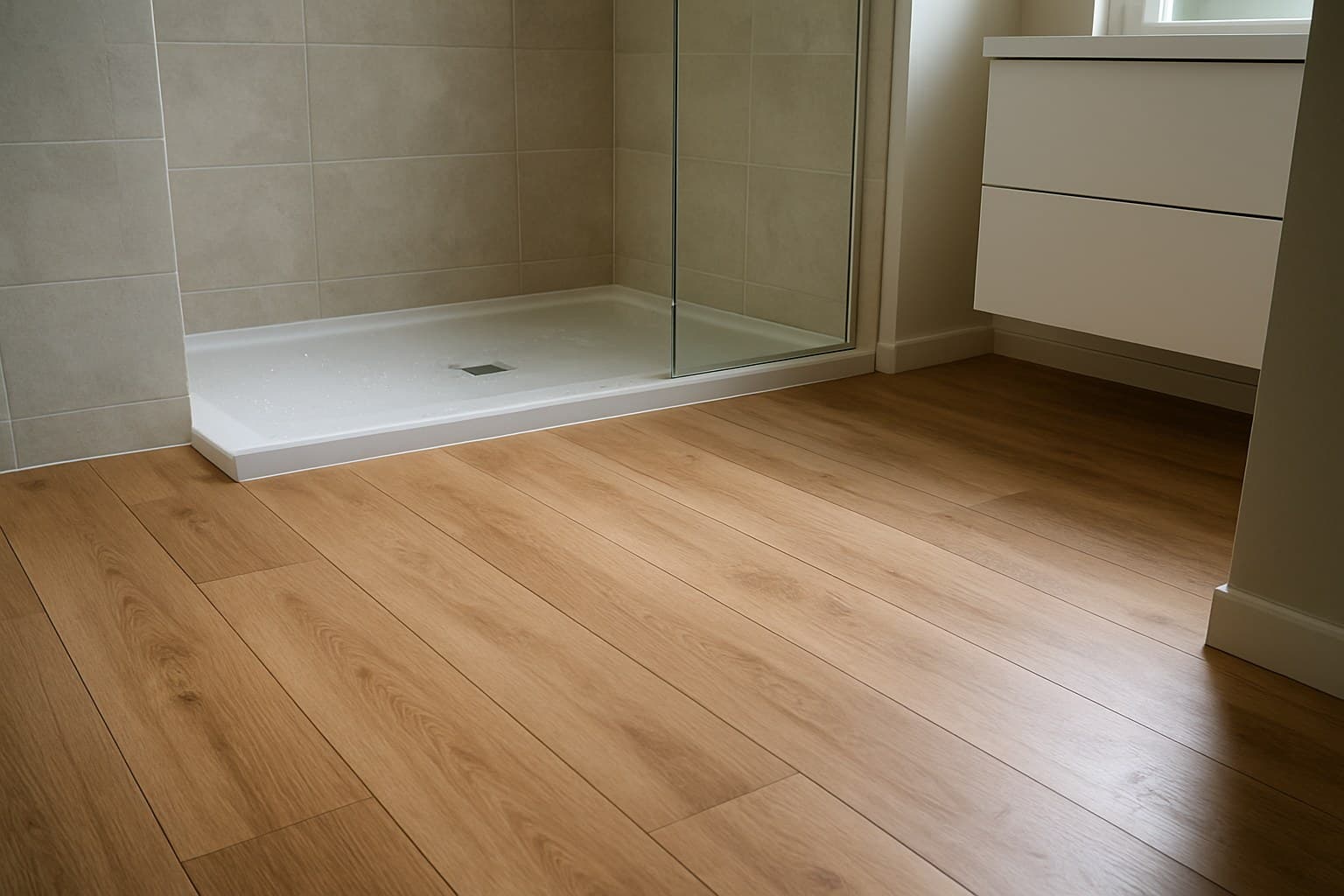
TrafficMaster is Home Depot's bargain private label, and it's the floor I'd point a first-time DIYer or a rental owner toward when the budget is tight. It's cheap, it's everywhere, it installs without special tools, and it's a solid starting point if you're comparing the best cheap laminate flooring on the market.
The trade-off is the wear layer. Many TrafficMaster products land at AC3 or lower, which is fine for a bedroom or a light-use room but underbuilt for an entry or a house full of dogs. Check the AC rating on the specific box and match it to the room using the table above, and don't expect a decade of hard traffic out of the cheapest tier.
Home Decorators Collection: Best Mid-Price Big-Box Looks
Home Decorators Collection, also a Home Depot label, sits a step above TrafficMaster on looks and price. It's a solid middle-ground pick when you want a nicer style without stepping up to a premium brand.
Two things decide whether a given Home Decorators floor is worth it: the core and the certs. Confirm it's HDF rather than the softer MDF for anything past a low-traffic room, and look for FloorScore plus TSCA Title VI compliance on the sheet. The looks are the easy part; those specs are what tell you it'll last.
What Laminate Actually Costs: Materials vs. Labor
Laminate splits into two costs that behave very differently, so never trust a single flat number for the whole job. Here's what I quote, split out, I keep material and labor apart on every estimate.
| Laminate tier | Materials per sq ft |
|---|---|
| Budget lines | $1-3 |
| Premium lines | $3-5 |
| Install area | Labor per sq ft |
|---|---|
| Open rooms | $2-4 |
| Stairs or basements | $4-8 |
Below-grade basements and stairs cost more for good reason: basements need moisture handling under the floor, and stairs are slow, cut-heavy handwork. I learned to price the cut-heavy areas on their own after I quoted a job flat-rate by the square foot, then watched a room full of closets, doorways, and a bay window eat a whole extra day. The open middle of a room is never where the hours go. If you want to dig deeper into the numbers, our full breakdown of what laminate flooring costs splits it further by room.
On the DIY-versus-hire call, be honest with yourself. Click-lock laminate in a plain open room is a doable weekend project for most people, as long as you get the right underlayment down and cut clean edges with a fine-tooth saw blade. Before a single plank goes down, though, check two things: that the subfloor is flat (a long straightedge across it shows the dips and rises) and that it's dry using a moisture meter, a handheld tool that reads how much water is in the slab or wood below. According to NALFA's installation and subfloor-prep guidance, the subfloor should be flat within 3/16 inch over any 10-foot span before laminate goes down, a gap that small is easy to miss by eye but shows up fast under a straightedge. I've relaid a cupped floor on my own dime because a customer waved off the moisture reading to save an afternoon, and that check is cheaper than the redo every time. Stairs, glue-down installs, if you go that route, picking the right glue for laminate flooring matters as much as the install itself, and big open-plan floors that cross a moisture change are where I'd hire it out.