
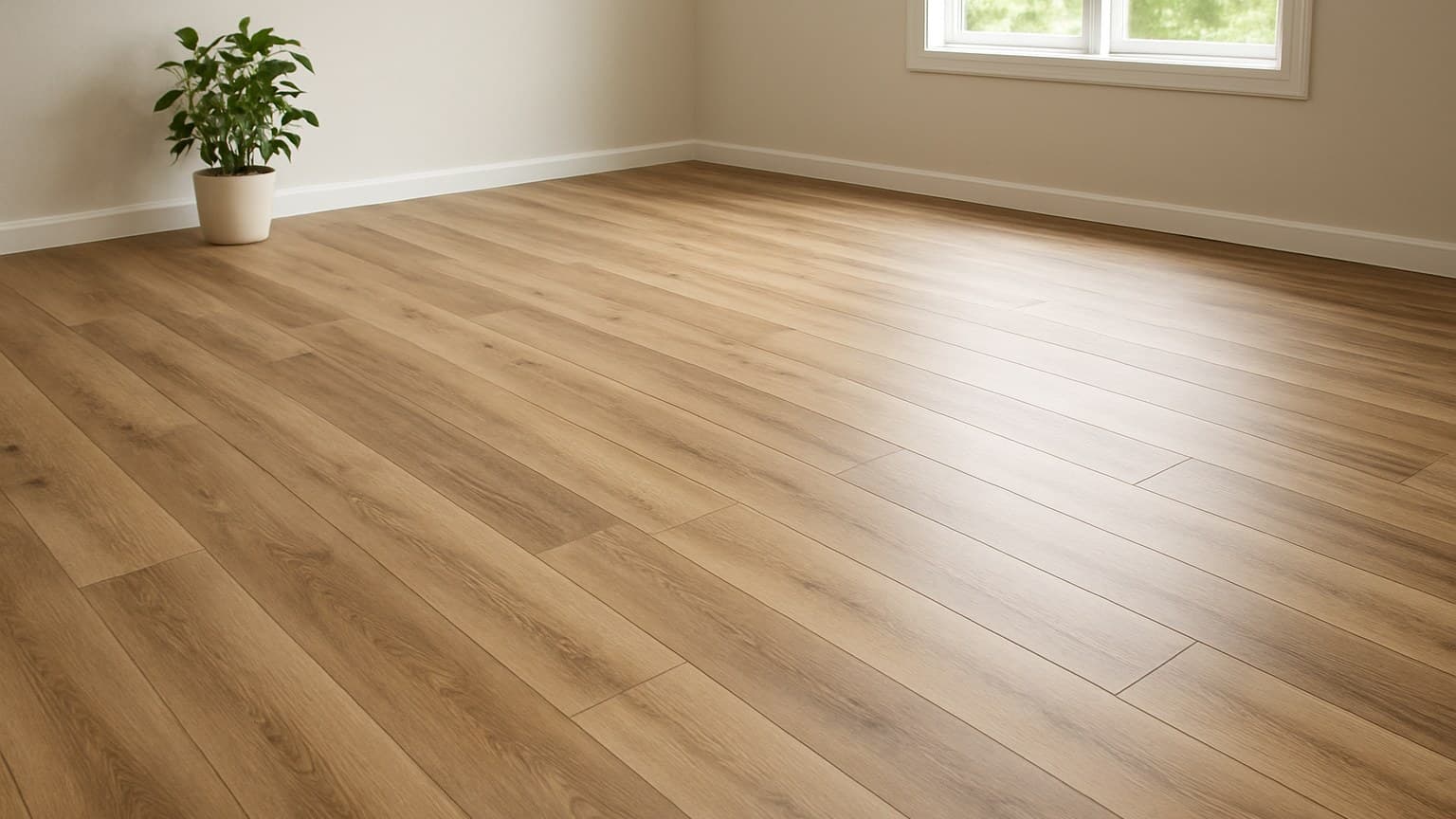
LVP stands for luxury vinyl plank: a vinyl board printed to look like wood and sold in long planks that click together or glue down. Terms like LVT (luxury vinyl tile), SPC (stone plastic composite), and WPC (wood plastic composite) just describe the shape and the core inside it. Pick the wrong core, and a bathroom floor can lift inside a year. This guide covers what each term means and which core belongs in your room.
Key takeaways
- LVP stands for luxury vinyl plank: a multi-layer PVC board printed to look like wood and sold in plank form; LVT is the same build in a tile shape.
- The cores differ a lot: flexible PVC runs 2-4 mm and is water-resistant but wrong for wet rooms, while rigid SPC (3.2-7 mm) and WPC (5-8 mm) handle bathrooms and basements.
- A waterproof core is not a waterproof floor. Most water failures happen at the seams and the perimeter gap, not the plank face.
- A residential wear layer runs 12-20 mil; choose 20 mil for pets and busy rooms. Expect roughly a 15-25 year lifespan.
- Installed cost splits into materials (about $2-7/sq ft) and labor (about $2-5/sq ft); basements and stairs cost more than open rooms.
What Is LVP Flooring? (and What It's Made Of)
LVP stands for luxury vinyl plank: a vinyl (PVC) board printed to look like wood and sold in long planks that either click together or glue down.
If you see "vinyl plank" and "LVP" on two different boxes, they are the same product. The word "luxury" isn't a grade anyone certifies. It just signals a thicker clear top layer and a sharper printed image than the thin bargain vinyl of years past.
Rigid cores, higher-resolution wood prints, and tougher wear layers hold up in real homes with real traffic. That's why the core underneath, not the name on the box, decides how a floor performs. LVT, by the way, is the exact same build in a tile shape instead of a plank.
What Is LVP Made Of?
Top to bottom, a plank is stacked layers of PVC vinyl. There's a clear protective top coat, a photo-realistic print layer, and a core that's either bendy or board-stiff. Most planks also carry a backing or an attached pad on the bottom for quiet.
Because LVP is a PVC product, its environmental footprint is also worth a look. The EPA's WARM (Waste Reduction Model) life-cycle analysis for vinyl flooring estimates the greenhouse gas emissions tied to manufacturing, use, and disposal, giving homeowners a sourced way to weigh vinyl's footprint against other flooring materials rather than taking a manufacturer's green marketing at face value.
LVP vs LVT vs SPC vs WPC, Explained Simply
Here's the naming confusion settled: LVP and LVT are shapes (plank versus tile), while SPC and WPC are core types inside them. They're not four separate products.
Flexible PVC is the original thin, bendy vinyl plank. WPC (wood-plastic composite) is thicker and warmer underfoot. SPC (stone-plastic composite) is thin but hard and rigid.
What that means when you stand on it: WPC feels softer and quieter, while SPC feels harder and shrugs off dents and heavy furniture legs better. Neither is "best." They just trade comfort against toughness.
| Core | Thickness | Feel | Best for |
|---|---|---|---|
| Flexible PVC (standard LVP/LVT) | 2-4 mm | Thin, slightly soft, bends in hand | Dry bedrooms, closets, low-traffic rooms; not wet areas |
| WPC (wood-plastic composite) | 5-8 mm | Thick, warm, softer underfoot | Living rooms, kitchens, light-use bathrooms |
| SPC (stone-plastic composite) | 3.2-7 mm | Thin but hard and rigid, dent-resistant | Bathrooms, basements, high traffic, homes with pets |
Source: Protex Flooring's product comparison guide
Thickness ranges and the room each LVP core suits best.
How LVP Is Built, Layer by Layer
From the surface down, a plank runs: UV top coat, clear wear layer, printed design layer, core, then a backing or attached pad.
The wear layer decides lifespan. It's a clear PVC shield measured in mils, and one mil is one-thousandth of an inch. That thickness sets how much foot traffic the floor takes before it dulls and scratches show.
The design layer is just a high-resolution photo of wood or stone. That's why prints range from flat and fake to genuinely convincing, and why it's worth looking at a plank in person. If the realistic look matters to you, compare wood-look vinyl flooring options before you commit to a sample off a showroom rack.
The core sets rigidity and how the floor handles water. One thing I warn every homeowner about: many rigid planks ship with a pad already attached, so adding a second underlayment underneath can void the product's warranty. Check the maker's sheet before you buy anything extra.
Plank dimensions matter more than most buyers realize, especially for click-lock floors, where even a slight size mismatch between planks can leave visible gaps or keep the locking mechanism from seating right. ASTM International is developing WK94994, a proposed standard test method for measuring the dimensions of resilient flooring like LVP, aimed at giving manufacturers and installers a consistent way to verify a plank is actually within tolerance before it ships.
Is LVP Really Waterproof?
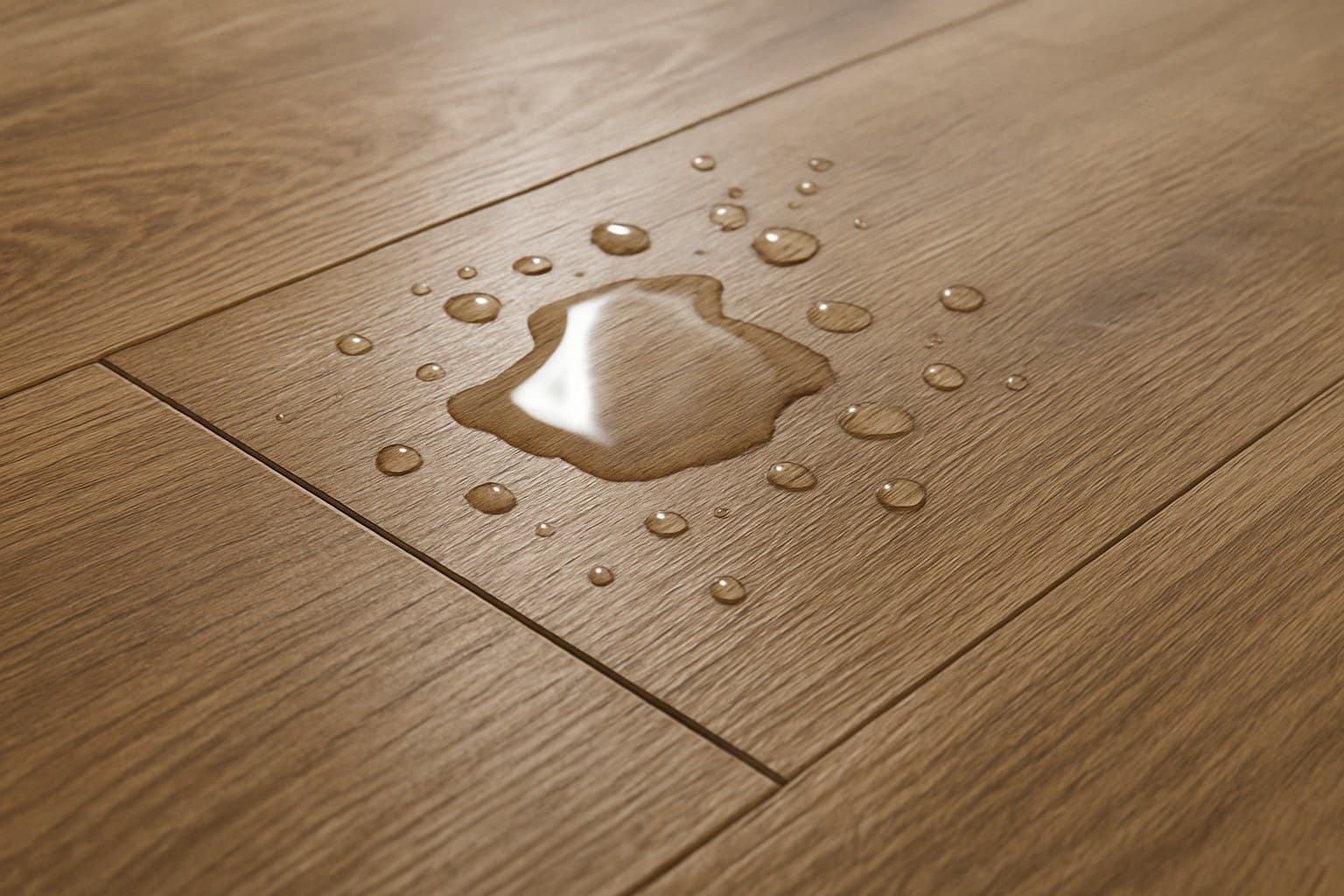
Not all LVP is equally waterproof, and the "best floor" other posts that lump it all together gloss right over this. Flexible PVC is water-resistant, not waterproof. Only rigid SPC and WPC cores are built to sit in a wet room.
Even then, a waterproof core isn't a waterproof floor. The plank face sheds water fine. The weak points are the seams between planks and the expansion gap around the perimeter. That's where water slips through, reaches the subfloor, and sits.
I've pulled up more than one "waterproof" floor in a Dayton basement where the planks were perfect but the subfloor underneath was ruined, because water got in at the edge and had nowhere to dry. The plank did its job. The seams and the slab did not.
This is also the real split against laminate, which fails fast once water reaches its fiberboard core. If you're weighing the two, the room-by-room breakdown in our vinyl vs laminate comparison shows where each one holds up.
Which LVP Core for Which Room
Here's the straight verdict. Dry bedrooms, closets, and offices do fine with flexible PVC or WPC, and the softer, warmer feel is a plus in those rooms.
Kitchens, bathrooms, laundries, and basements are a different story. Those need a rigid SPC or WPC core that tolerates spills and the humidity swings a slab throws at a floor. For a full bath or a basement, I lean SPC every time. If you want the full rundown of what else separates a floor that lasts five years from one that lasts twenty, our vinyl flooring buyer's guide to lasting 20 years covers basement and bedroom picks in more depth.
Homeowners ask me for the "best LVP brand" like there's one answer. But a customer with two dogs, south-facing sun, and a Columbus slab basement needs a different plank than someone doing a quiet upstairs bedroom. For pets, kids, and busy entries, I spec a rigid SPC core with a wear layer toward the top of the typical residential range, roughly 20 mil, which stands up to scratches and dents far better than a thinner budget plank.
Matching the plank to the room beats guessing from a chip sample. The best vinyl plank picks are a good shortcut once you know which core your room calls for.
What LVP Costs and Whether to DIY
LVP cost splits two ways, and you should never trust one flat number. Materials run roughly $2-7 per square foot depending on core and wear layer, and labor runs roughly $2-5 per square foot.
| Job | Materials | Labor | All-in |
|---|---|---|---|
| Budget flexible LVP, floating click-lock, open room | $2-4 | $2-3 | $4-7 |
| Mid-grade SPC/WPC, floating, open room | $4-6 | $3-4 | $7-10 |
| Rigid SPC, glue-down or basement | $4-7 | $4-5 | $8-12 |
Source: the LVP jobs I've quoted and laid around Dayton and Columbus
Installed LVP cost per square foot, split into materials and labor, for three common jobs.
Basements and stairs cost more than an open room, and it's not a markup for fun. Basements need moisture prep on the slab, and stairs are slow per-step work with a lot of cutting. A flight of stairs can cost as much to do right as a small room.
Before any install, two checks decide everything. First, the subfloor has to be flat within the maker's tolerance, so you're not laying planks over dips and humps. Second, run a moisture check, especially on a concrete slab, or the floor fails from below no matter how good the plank is.
On DIY versus hire: click-lock LVP in an open room is realistic for most handy homeowners. Glue-down, stairs, and large open-plan floors with moisture transitions are where I'd hire out. If you want to price your own layout, the full LVP cost breakdown walks through it by room.