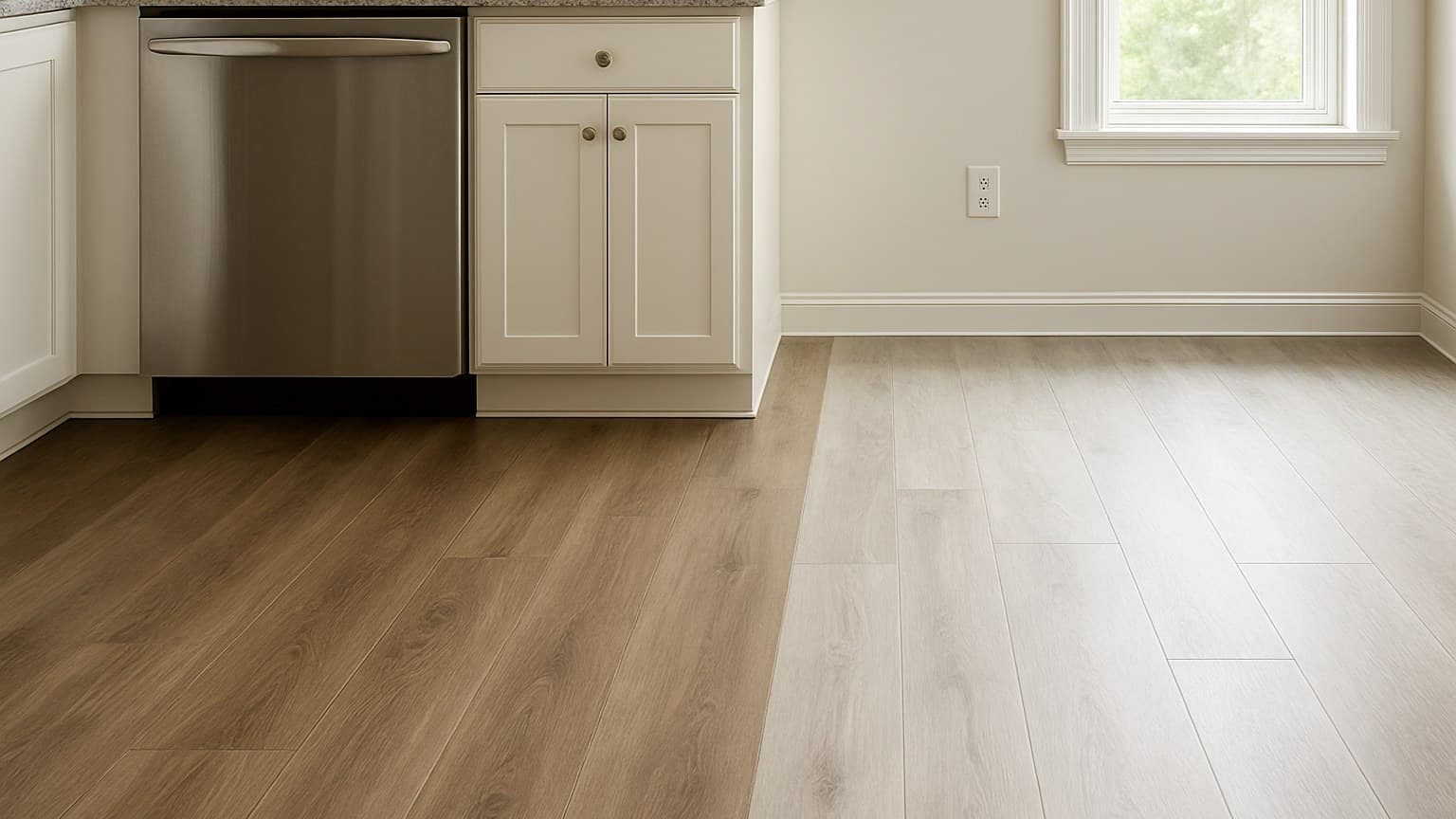
Vinyl plank wins in kitchens, baths, and basements because water is its whole job. Laminate wins in dry living rooms and bedrooms, where its more realistic wood look and harder scratch coat matter more than water. That's the honest answer to the vinyl vs laminate flooring question: there is no universal winner, and the room you're putting it in decides more than the brand on the box.
I've torn out plenty of floors that failed early, and the plank itself was almost never the problem. The real culprit was usually sitting under the floor the whole time, a slab nobody tested for moisture, or a subfloor with dips and humps nobody caught before the first row went down. So before you spend thousands on the "wrong" floor, let me walk you through where each one actually holds up, room by room.
Key takeaways
- There's no universal winner. Laminate gives a more realistic wood look and stronger scratch resistance in dry rooms; vinyl plank tolerates water far better in kitchens, baths, and basements.
- A "waterproof" vinyl plank is not a waterproof floor. The core shrugs off water, but standing water still runs down the seams to the subfloor, which is where most failures start.
- Basements almost always point to vinyl, but only after a slab moisture check. Skipping that test is how you end up ripping out a cupped floor.
- Costs split the same way for both: materials run roughly $2 to $7 per square foot depending on product, plus separate labor of $2 to $5 per square foot, with basements and stairs costing more than open rooms.
- Both click-lock versions are realistic DIY jobs. Glue-down, stairs, and big open-plan moisture transitions are where hiring a pro usually pays off.
Key takeaways
- There's no universal winner: laminate wins in dry living rooms and bedrooms for its realistic wood look and scratch resistance, while vinyl plank wins in kitchens, baths, and basements because it handles water far better.
- A 'waterproof' vinyl plank core still isn't a waterproof floor — standing water runs down the seams to the subfloor, which is where most floor failures actually start.
- Laminate is water-resistant at best; most warranties only cover spills wiped up promptly, not standing water left overnight, which causes the HDF core to swell and the edges to lift permanently.
- Basements almost always call for vinyl plank, but only after testing the slab for moisture — skipping that test is the most common reason floors end up cupped and torn out.
- Materials for both floors run roughly $2 to $7 per square foot, plus $2 to $5 per square foot for labor, with basements and stairs costing more; click-lock installs are realistic DIY jobs, but glue-down, stairs, and big moisture transitions are worth hiring a pro for.
The Short Version: Which Floor Wins Where
Pick laminate for dry, high-traffic living spaces where you want a wood look that reads as real. Pick vinyl plank for anything near water or below ground level.
The real tradeoff is simple once you stop reading marketing. Laminate usually looks more like real wood and its hard top coat shrugs off surface scratches better. Vinyl plank tolerates water that would ruin laminate, and it feels softer and quieter under your feet.
Neither one is the "best floor." The ranking pages usually skip this part: the subfloor and the moisture under it decide whether either floor lasts five years or twenty, far more than which plank you carry home. If you want the fast version, jump to the room-by-room table below and let the room make the call.
What Each Floor Is Actually Made Of
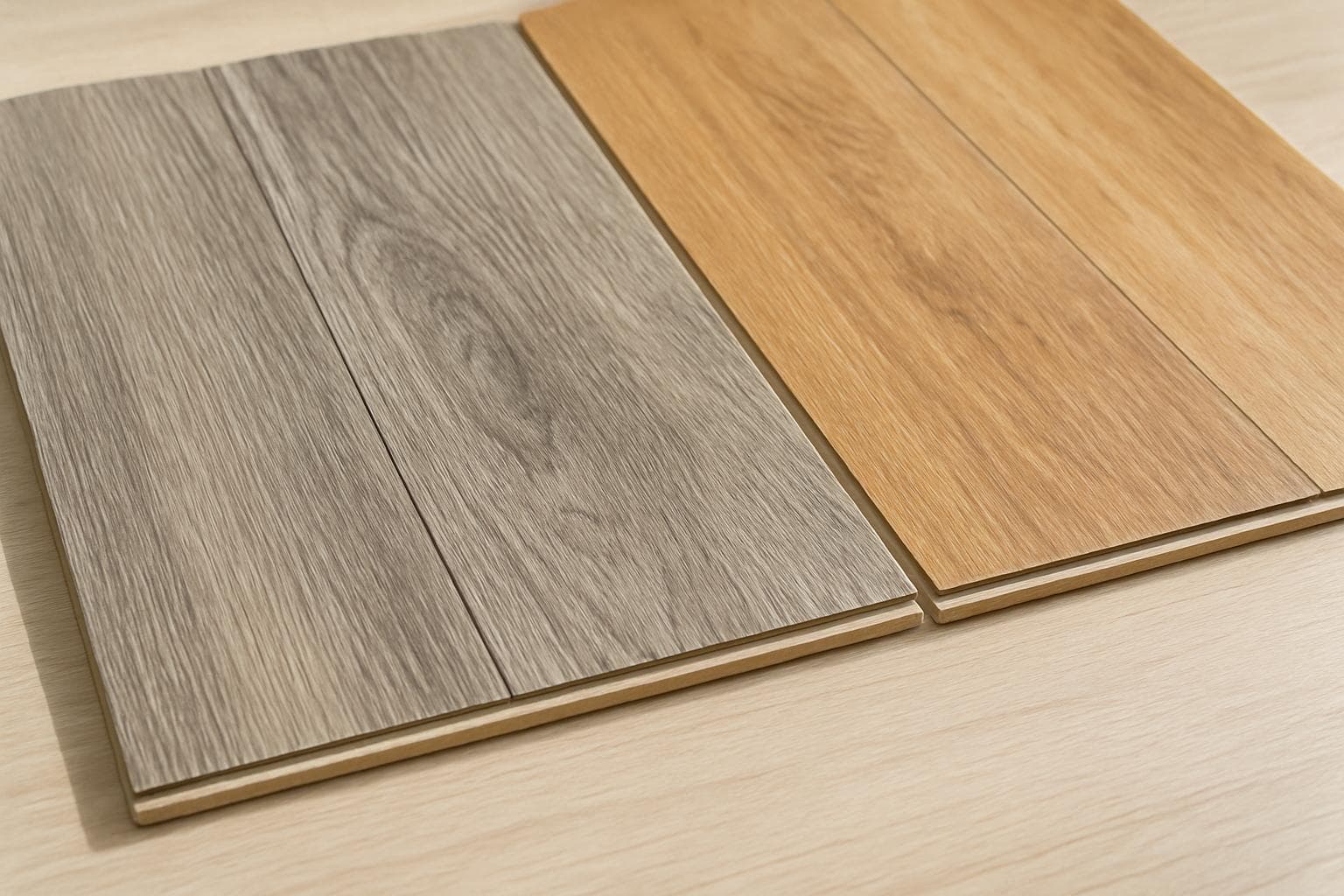
The core material is the single biggest reason these two floors behave so differently around water. Everything else follows from it.
Laminate is built on an HDF core. That's high-density fiberboard, which is basically wood fibers pressed hard together. On top sits a photo layer, a very realistic printed image of wood, then a clear, hard wear coating that takes the abuse. Products like Mohawk RevWood build a water-resistant coating into that core, but that's a coating, not a waterproof claim, and it doesn't change what happens when water sits on a cut edge or a seam for hours. That wood-fiber core is the catch: let water sit on it and it swells, and once HDF swells it does not shrink back.
Vinyl plank uses a PVC core instead, either rigid or a bit flexible, with a printed film and a clear wear layer over it. Some planks, like COREtec Pro Plus, come with a pad already attached to a rigid PVC core. PVC is plastic, so it doesn't swell when water touches it.
Two quick terms, because they matter later. The wear layer is the clear top skin that takes the scratches and scuffs. The core is the body underneath that gives the plank its stiffness and its relationship with water. LVP and LVT are the same idea in different shapes, plank versus tile; if you want that sorted out, here's what LVT flooring is and how it differs from LVP and laminate.
Waterproof vs Water-Resistant: Where Floors Actually Fail
A "waterproof" vinyl plank claim covers the plank itself, not the seams between planks or the subfloor beneath them. That distinction is the whole ballgame.
Here's how it plays out on a real floor. Take something like Shaw Floorte Pro Plus: its PVC core genuinely shrugs off water all day, and vinyl lines like this often carry a lengthy residential warranty on the core, though exact terms vary by product and are worth checking before you buy. But that warranty covers the core, not water damage from standing water that sat at an unsealed seam or edge. Standing water doesn't just sit politely on top. It finds the seams, runs down through the joints, and reaches the subfloor. So the failure point is the joint and what's under it, not the surface you can see. A "waterproof core" and a "waterproof floor" are two different things, and most people pay for the first while assuming they got the second.
Laminate is water-resistant at best, and only some products even claim that. Water-resistant laminate lines like Mohawk RevWood typically write their warranties to cover spills wiped up promptly, not standing water left overnight, check the specific warranty language for the product before you rely on it. A kitchen spill left overnight is enough to beat that kind of claim. Water works into the seams, the HDF core swells, and the edges lift. You can't sand that back down.
When I get called back to a job, it's rarely because the plank wore out. Usually a seam let water through that nobody caught in time, or the slab underneath was never tested before the crew rolled the floor out. I've stopped letting people talk me into skipping the moisture check to save a day, because the one time you skip it is the one time the floor cups on you.
Best Flooring Room by Room
Kitchens and basements lean vinyl for water. Living rooms and bedrooms often favor laminate for look, feel, and scratch resistance. Here's the fast version, with the real failure point named for each room.
| Room | Better pick | Why | Real failure point to watch |
|---|---|---|---|
| Kitchen | Vinyl plank | Handles spills and splashes without swelling | Seams near the dishwasher and sink, where water pools |
| Basement / below grade | Vinyl plank | Tolerates below-grade moisture far better | Slab moisture wicking up; test before you buy |
| Living room | Laminate | Realistic wood look, harder scratch coat | Standing water from a knocked-over drink at seams |
| Bedrooms | Laminate | Warm look, quiet, low moisture risk | Rarely fails if kept dry; look is the deciding factor |
| Pets / high traffic | Depends | Laminate resists claws; vinyl resists accidents | Thin vinyl wear layer scuffs; pet accidents on laminate seams |
| Rental | Vinyl plank | Cheaper to fix, forgives tenant spills | Cheapest thin-wear vinyl wears through fast |
Best-fit picks by room, based on which failure point matters most in each space. "Depends" means the room's use decides it, not the material.
Kitchens and Bathrooms
Vinyl wins most kitchens and nearly every bathroom. Water is a when, not an if, in these rooms, and the seams near your dishwasher and sink are where spills sit longest. Vinyl's PVC core doesn't care. Laminate can work in a kitchen only if you're the kind of person who wipes spills the moment they happen, every time. Most of us aren't. If vinyl is the direction you're headed, it's worth working through how to choose the right luxury vinyl tile for your room before you shop, since the best pick shifts depending on which room it's going in.
Basements and Below-Grade Rooms
Basements almost always point to vinyl, but only after a slab moisture check. Concrete below ground level pushes moisture up from the earth, slowly and constantly. That's exactly the condition that swells laminate's HDF core over months. Run the moisture test on the slab first, because that result decides the job more than the product does. If the slab reads wet, no floor goes down until you deal with it.
Living Rooms, Bedrooms, and Pets
Dry rooms are where laminate earns its keep. The look is more convincing, the hard top coat handles foot traffic and sun, and there's little water risk. For pets it's a genuine toss-up: laminate's harder surface resists dog claws better, but vinyl forgives accidents that would swell a laminate seam if they sat overnight. If your dog is a skidder and reliably house-trained, laminate; if accidents happen, vinyl.
Durability, Scratch Resistance, and Feel Underfoot
Laminate generally resists surface scratches and fading better, thanks to that hard top coat. It's the smarter pick for a sunny room or a house with dogs, as long as the room stays dry. Vinyl feels softer and quieter under your feet and takes a dropped pan better without denting, but a thin wear layer scuffs faster.
That wear layer is the number to watch on any vinyl. It's the traffic rating, and each maker publishes it per product. Premium vinyl planks often carry a wear layer of 20 mils or more, while a builder-grade box-store plank can run considerably thinner, check the spec sheet for the exact number on any product you're considering, since it varies a lot by brand and price tier. If a product markets itself as "luxury" vinyl, it's worth understanding what the luxury vinyl flooring label actually guarantees, since that word alone doesn't promise a thicker wear layer. Treat a thicker wear layer as more forgiving, not as a guaranteed number of years. Two vinyl planks that look identical in the store can be worlds apart here, and the cheap thin-wear stuff in a rental hallway shows it within a couple of years.
Wear layer is one piece of a bigger picture on vinyl. If you want the full checklist, here are the 9 things that decide if a vinyl floor lasts 5 years or 20, which covers how the wear layer, core, and install add up.
Cost and Installation: DIY or Hire a Pro
Materials run close for both, so let the room decide, not the sticker. Decent mid-range vinyl plank materials usually run $3 to $7 per square foot, and laminate lands close behind at $2 to $6 per square foot, with cheap options below that range and premium waterproof or scratch-resistant lines above it. Labor is separate and typically adds $2 to $5 per square foot for a straightforward open room, whether you're laying vinyl or laminate. Basements and stairs cost more, every time, because of the moisture prep and the fussy cuts, expect labor to run $1 to $3 per square foot higher on those jobs.
Before any plank goes down, two checks decide the whole job:
- Flatness. I get down on the floor with a long straightedge and a light behind it. The dips and humps that shows me tell me more about the job than the box the customer already bought. High spots and low spots telegraph through both floors and stress the seams.
- Moisture. On any slab, run a moisture check. Skip it and you're gambling the whole floor to save a day.
Then leave the expansion gap the maker's install sheet calls for around the room's edges. Both floors move with heat and humidity, and a floor pinned tight to the walls buckles.
On the DIY question: click-lock versions of both are realistic for most handy homeowners. Vinyl plank also comes in a loose-lay format, which sits in place under its own weight and friction instead of gluing or locking together, no adhesive, no snapped joints. That's worth knowing if you're flooring a rental: it goes down fast, and at move-out it lifts back up in one piece without damaging the subfloor underneath, which glue-down and even some click-lock jobs can't promise. Where I'd hire out is glue-down, stairs, and big open-plan rooms with moisture transitions between spaces. Those are where a mistake gets expensive fast. For cutting, a score-and-snap cutter keeps a lived-in house quiet and dust-free on straight runs; I only pull out the jigsaw for the fussy cuts around pipes and door casings.
Maintenance, VOCs, and When to Replace
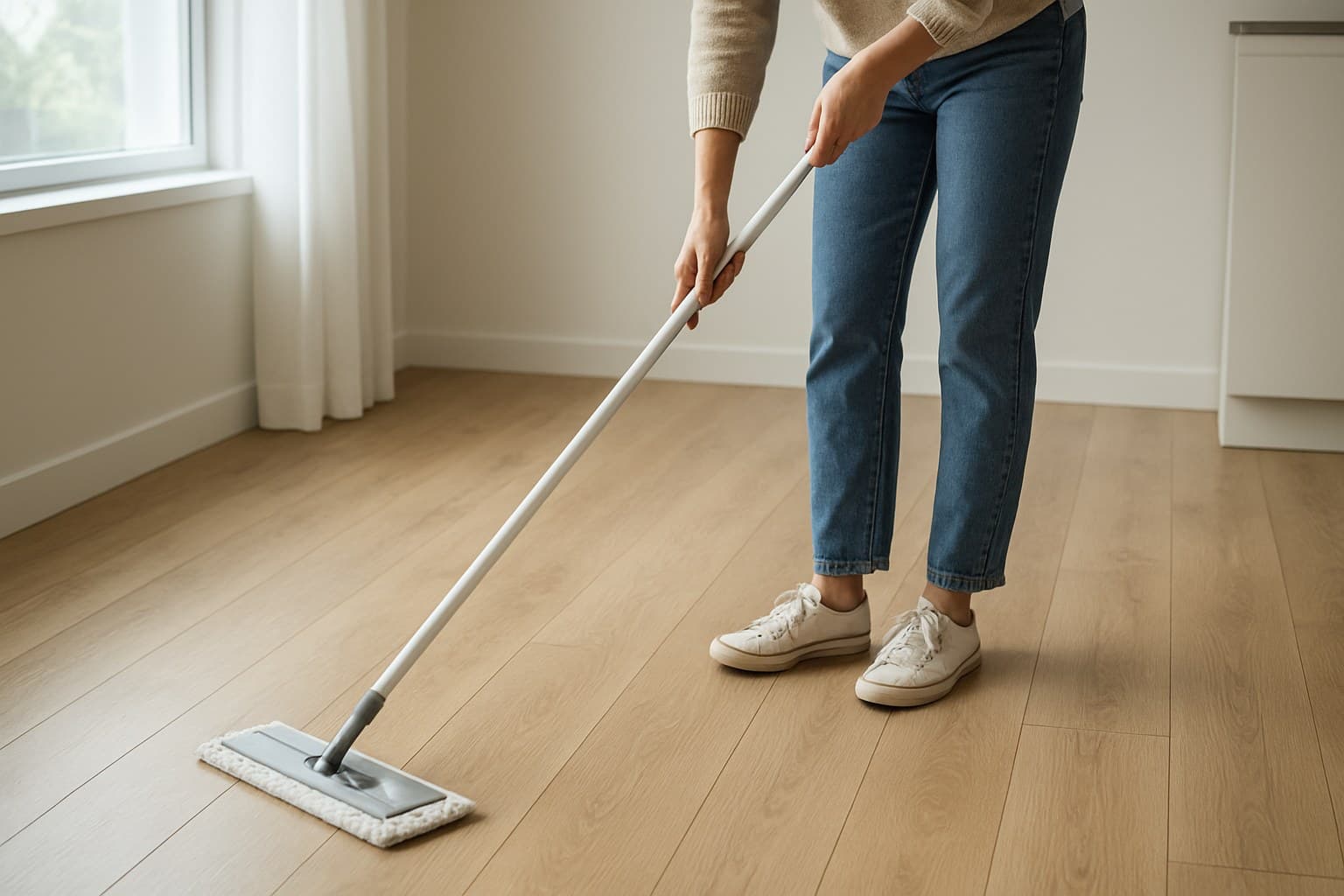
Both floors take a damp mop and little else. The catch is what you can't use: many makers warn against steam mops and harsh strippers on vinyl, because heat and strong chemicals can lift the wear layer or the seams. Check that specific product's care sheet before you reach for anything stronger than mild soap and water.
Both are plastic or resin products, so both can off-gas some VOCs, especially when new. VOCs are the fumes that give a new floor its smell. If that matters to you, look for a low-VOC label or a third-party emissions certification on the specific product you're buying, not a blanket claim about the category. Two certifications are worth knowing by name instead of just "check the label": FloorScore, a third-party indoor air quality certification program run by SCS Global Services that a lot of vinyl plank lines carry, and CARB2, the California Air Resources Board's Phase 2 formaldehyde emissions standard that applies to the composite wood core used in laminate. Both mean the product was independently tested against a defined emissions limit, which is a meaningfully stronger claim than a box that just says "low-VOC" with no certification behind it. Look for the FloorScore mark or a CARB2-compliance statement on the spec sheet or box, since not every product in either category carries them, even within the same brand's lineup.
On lifespan, published ranges vary a lot by product and traffic, and I won't quote you a single number, because in the real world the subfloor and moisture control decide it more than the material does. What I can tell you is how to read a failing floor:
- Worn-through looks like faded print, dull patches, and thinning at the top in high-traffic lanes. That's the wear layer used up. It's a normal end of life.
- Water damage looks like swollen seams, cupping (edges lifting higher than the middle), and soft spots underfoot. Cupping almost always means a moisture problem under the floor, not a bad plank. Swapping the floor without fixing the moisture just buys you the same failure again.
If you're leaning vinyl, read the 9 things that decide if a vinyl floor lasts 5 years or 20 next, because it turns the wear layer and subfloor points above into a full buying checklist you can shop with.