
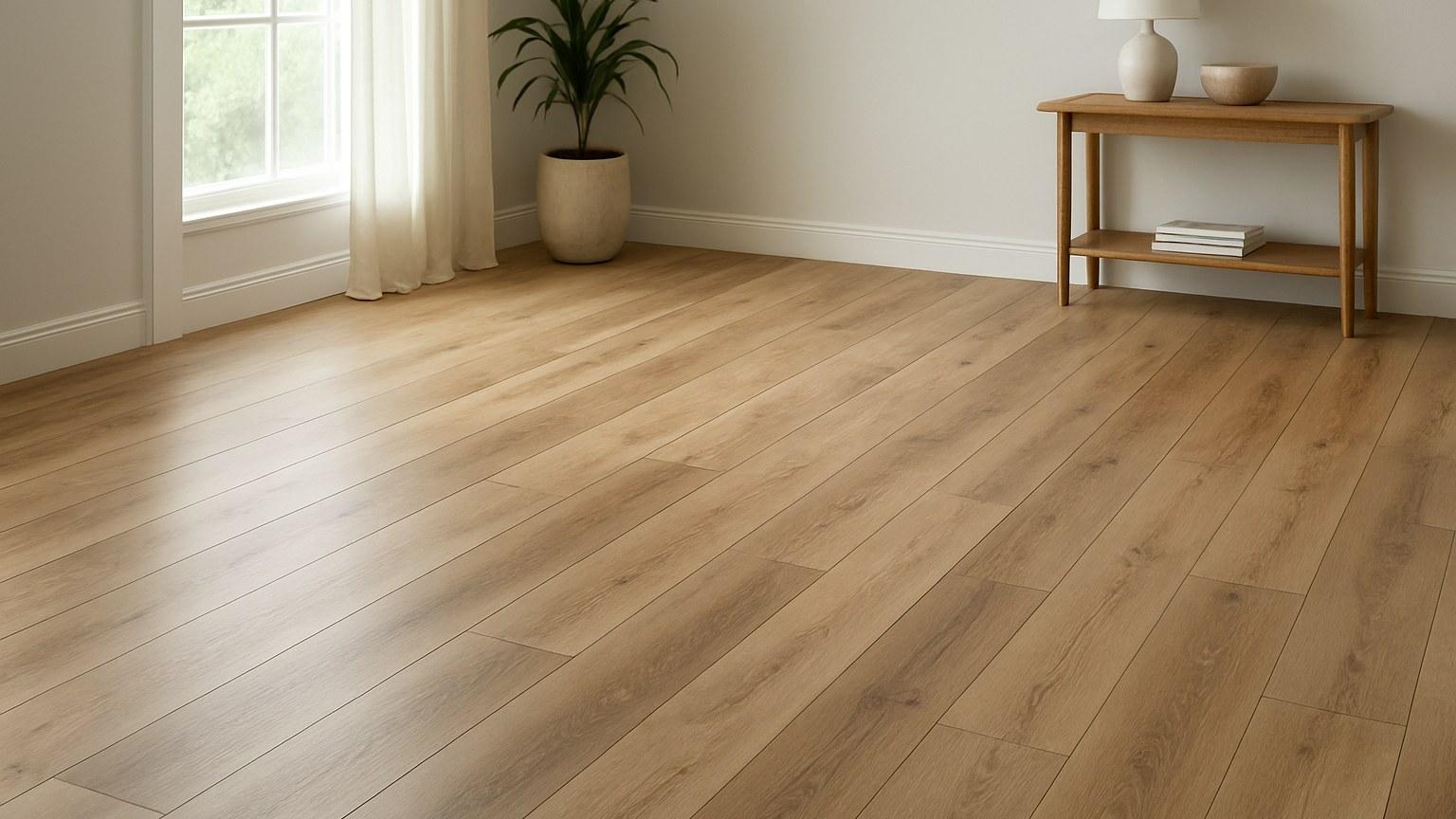
Pergo LVP is real luxury vinyl plank, sold mostly as Pergo Extreme, and whether it fits your house comes down to four checks: room moisture, subfloor flatness, underfloor heating, and your budget against the install method. None of those live on Pergo's own product page. Miss one and you'll be pulling the floor back up before the warranty would have helped you.
Key takeaways
- Pergo built its name on laminate (RevWood), but it does make real luxury vinyl plank, sold mainly as Pergo Extreme: a rigid vinyl core with fiberglass reinforcement and a TitanV topcoat.
- The plank core is waterproof, but that is not a waterproof floor; seams and the perimeter edge are only water-resistant, and that is where water gets under and sits on the subfloor.
- Material alone runs about $3-$5 per sq ft (homeadvisor.com); installed Pergo LVP (luxury vinyl plank) is roughly $4-$7, with rigid-core and higher-end lines $5-$9 (flooringrating.com).
- Click-lock Pergo LVP is a realistic DIY in a flat, dry, open room; basements, stairs, and big open-plan moisture transitions are worth hiring out.
- The real deciders are room moisture, subfloor flatness, underfloor heating compatibility, and budget versus install method, none of which Pergo's own page addresses.
What Pergo LVP Actually Is (and Whether It's Vinyl or Laminate)
Both exist, and they are not the same product. Pergo built its name on laminate, but it does make real luxury vinyl plank, sold mainly under the Pergo Extreme name. So when someone asks "is Pergo LVP or laminate," the straight answer is that Pergo sells both, and the LVP is its own vinyl floor, not a laminate with a different sticker. Other manufacturers draw that same line between product families, and vinyl flooring Forbo makes is a good example of a brand with its own distinct separation between lines.
Here's how a Pergo Extreme plank is built, top to bottom. A TitanV topcoat sits on the surface, and that's the layer your shoe actually touches. Under it is a clear wear layer that takes the daily scuffing, with the thickness in mils varying by line. Below that is a printed decor layer that gives you the wood look, then a rigid vinyl core with fiberglass reinforcement to keep it steady, and on some lines an attached pad underneath for a softer, quieter step. That same decor-layer trick is how other collections, like Malibu Wide Plank French oak styles, get a convincing wood grain without using real timber.
That rigid core is the SPC-style build, a stiff stone-plastic body that spans small dips and won't swell the way a laminate edge will. For the full layer-by-layer breakdown of what each part does, see the LVP explainer.
Pergo Extreme: The Line Most Pergo LVP Shoppers Mean
When people search "Pergo vinyl plank flooring" or "Pergo luxury vinyl plank," they're nearly always landing on Pergo Extreme. Those are the same product family. The confusion comes from the laminate side of the catalog, which is sold as RevWood.
Is RevWood More Expensive Than LVP?
Not usually. RevWood is Pergo's laminate, and laminate generally costs less per square foot than vinyl plank while giving a more realistic wood look. The tradeoff is water. Laminate tolerates far less of it than a vinyl core does, so you're paying up for Pergo's LVP mainly to buy water tolerance, not a better picture of oak.
Decision 1: Room and Moisture (Is Pergo LVP Waterproof?)
The plank core is waterproof, and Pergo markets this as AquaSafe, but a waterproof core is not a waterproof floor. The seams and the perimeter gap are only water-resistant, and that gap is where trouble starts.
Think about where water actually goes. A spill beads on the topcoat and wipes up fine. But standing water finds the click seams or slips under the expansion gap at the baseboard, runs down past the plank, and sits on the subfloor where you can't see it. The plank survives. The subfloor doesn't.
So read "waterproof" on the box as a claim about the plank, not the room. Room by room, that means:
- Kitchens and mudrooms: fine, as long as you wipe spills quickly.
- Full baths and basements: usable, but only over a subfloor you've moisture-tested and with the edges sealed so water can't reach the gap.
- Anywhere with standing water: be careful. A pooled leak that sits overnight is exactly the condition the seams aren't built to stop.
Decision 2: Your Subfloor Has to Be Flat and Dry First
A floating Pergo floor only lasts as long as the prep under it. The warranty actually rests on flatness and moisture control, rather than on which plank you chose. I've seen good planks blamed for a bad subfloor more than once.
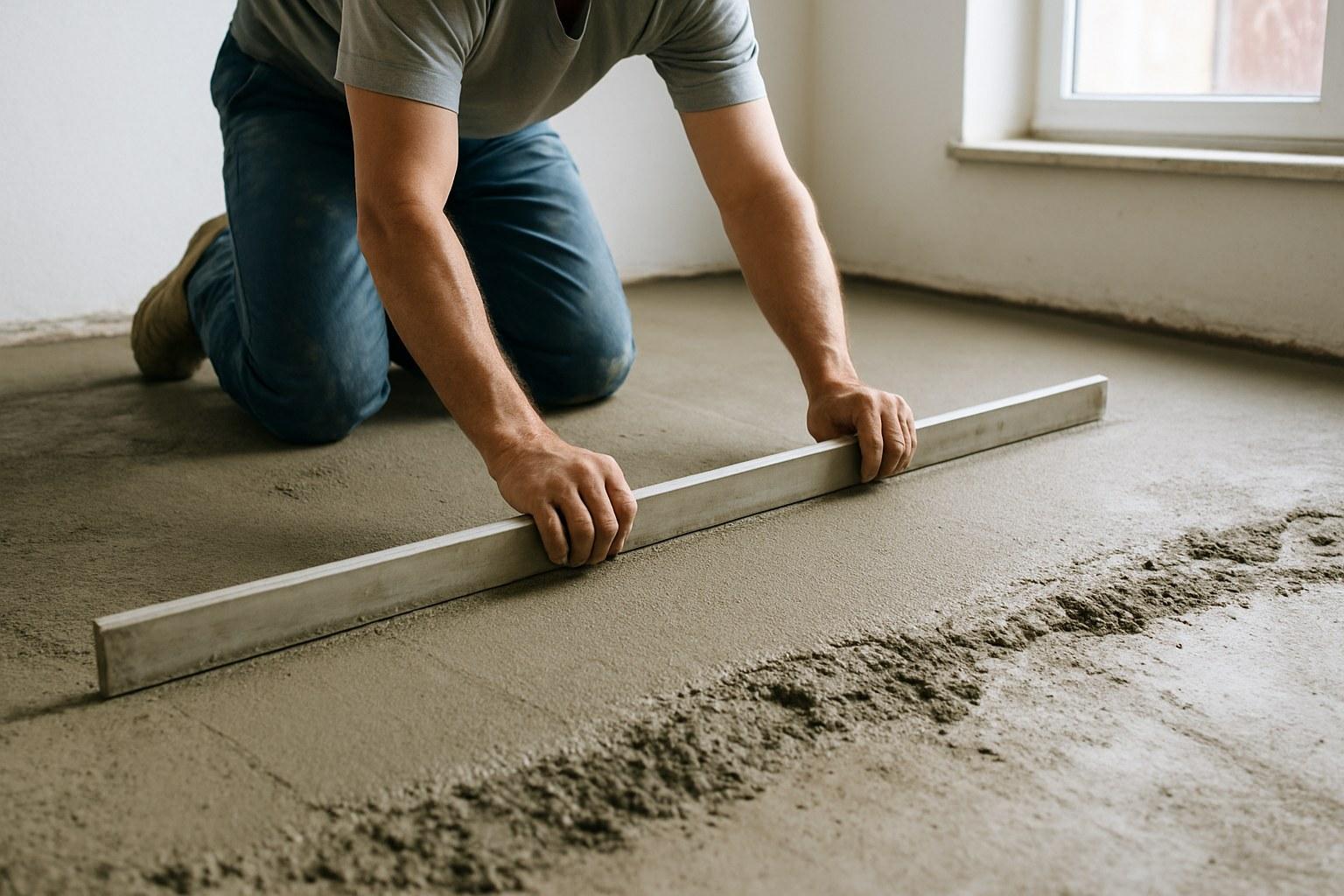
Checking it isn't complicated. Lay a long straightedge across the floor and look for daylight under it. Grind down the high spots, fill the dips to the maker's tolerance, and moisture-test any concrete before a single plank goes down.
Acclimation and underlayment should match what's on the box, not the informal guidance circulating online. Many rigid-core Pergo lines include an attached pad, so laying a second underlayment will likely void the warranty. Whether you need any padding at all depends on that specific product and the subfloor it's going over, which is worth sorting out before you buy. If you're unsure what belongs under the plank, start with whether vinyl even needs underlayment.
On a basement job in an older home outside Dayton, a homeowner was sure the vinyl he'd bought was defective because the floor felt soft in one corner. It wasn't the plank. My meter read the slab high in that corner, and there was a dip of close to a quarter inch I could rock the straightedge over. We ground, filled, and let it dry out before relaying the same planks, and they've been quiet since. The floor was fine. The prep wasn't. That same prep-first lesson applies to basement vinyl flooring jobs everywhere, and it's one of the factors that decide whether vinyl flooring lasts 5 years or 20.
Decision 3: Can Pergo LVP Go Over Underfloor Heating?
Many rigid-core Pergo lines are rated for radiant heat, but only up to a maximum floor temperature printed on that line's own spec sheet. Check the specific product, not the brand name. Not every Pergo line is cleared for heat, and assuming the whole brand is will get you in trouble.
Two rules hold wherever it is allowed. Bring the temperature up and down slowly, and never run past the stated limit. Push past it and you risk the seams gapping as the planks expand more than the click joints were built to handle. Treat underfloor heating as a per-product check, not a brand guarantee.
Decision 4: What Pergo LVP Costs and Whether to DIY the Click-Lock
The cost breaks into two pieces: materials and labor. According to homeadvisor.com, Pergo LVP material runs about $3-$5 per square foot, floating click-lock labor runs roughly $1.50-$4 per square foot per nedesestimating.com, and flooringrating.com puts a full installed job between $4 and $7 per square foot.
On paper, material plus floating labor is about $4.50-$9 per square foot. The installed figures below come from flooringrating.com, which puts a typical Pergo LVP job in that $4-$7 band and the rigid-core and higher-end lines above it.
| Item | Cost per sq ft | Source |
|---|---|---|
| Pergo LVP material only | $3-$5 | homeadvisor.com |
| Labor, floating click-lock | $1.50-$4 | nedesestimating.com |
| Pergo LVP installed | $4-$7 | flooringrating.com |
| Rigid-core/hybrid Pergo installed | $5-$8 | flooringrating.com |
| Higher-end Pergo lines installed | $5-$9 | flooringrating.com |
Basements and stairs cost more than an open room. Stairs are slow and fussy and often charged by the step, and basements add moisture prep and tricky transitions. Pricing also shifts by line, so the same brand name covers a wide spread.
Where to Buy Pergo LVP (and the Lowe's Question)
Pergo Extreme is carried at Lowe's, which is where most shoppers run into it. Don't buy off the price tag alone. Flip the sample over or read the spec card and check two things: the wear layer in mils for that exact line, and whether the core is the rigid build with an attached pad. Those decide how it holds up far more than the shelf price does.
If you want to see how Pergo's rigid core stacks up against another store brand, Shaw's Pantheon HD Plus is a fair point of comparison in the same tier. Lowe's is just one of several places to buy vinyl flooring, and what you actually get for the price can vary more than the sticker suggests.
DIY vs Hiring Out the Click-Lock
Pergo's Uniclic-style click-lock is realistic for a DIYer in a flat, dry, open room. If the subfloor passes the straightedge and moisture checks, the planks snap together without glue and a careful homeowner can do a bedroom or living room over a weekend.
Where I'd tell you to hire out is glue-down installs, stairs, and big open-plan floors that cross a moisture transition. Those are where small mistakes turn into a floor that lifts or gaps, and where paying for labor is cheaper than redoing it.
So Is Pergo LVP Actually Good? An Installer's Verdict
For a flat, dry room with the right line, yes. The rigid core is solid, it spans minor dips, and the wood look is convincing enough that guests won't clock it as vinyl. What it won't do is survive standing water at the seams, so don't put it where leaks sit.
Scratch resistance tracks the wear layer of the specific line you buy, not the brand as a whole. Comfort and quiet depend on whether that line has the attached pad. The honest verdict isn't "Pergo LVP is good" or "bad." It's match the line to the room and prep the subfloor. Get those right and it holds up. Get them wrong and no brand saves you. If you're also weighing a floor with a deeper wood look, Karndean's LVP is worth a look before you commit.
Will Bleach Ruin Vinyl Floors?
Straight answer: bleach won't eat through a vinyl plank's rigid core, but it can still damage the floor, so it's not worth the risk. Full-strength bleach is harsh enough to dull or cloud a clear topcoat finish, like the TitanV layer on Pergo Extreme, leaving a hazy patch that mopping won't fix afterward.
Bleach that pools on the floor also travels the same path as any other standing liquid, into the click seams and the perimeter gap, where it can discolor the plank edge or wear down the seam's water resistance faster than plain water would. That's the same weak point that causes most vinyl floor failures, not the plank surface itself.
If bleach does spill, wipe it up right away and go over the spot with plain water so nothing sits in the seams overnight. For regular cleaning, stick with a pH-neutral floor cleaner and a damp mop instead, and save bleach for the grout lines on a tile floor, not vinyl plank.