
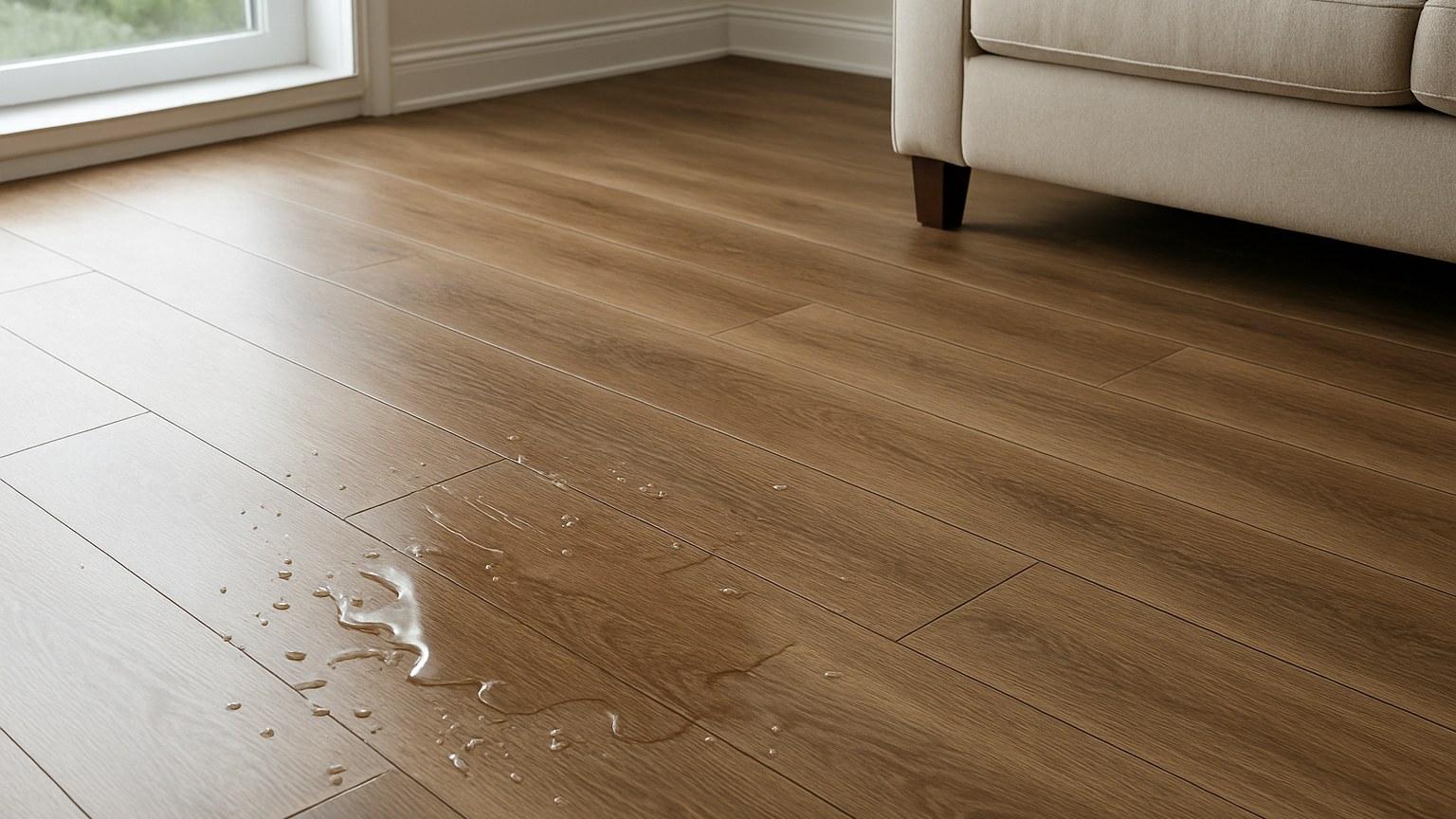
Shaw Pantheon HD Plus is Shaw's rigid WPC (wood plastic composite) vinyl plank: a 20mil wear layer, that's 20 thousandths of an inch of clear protective coating, over an 8mm waterproof core, built for busy, spill-prone rooms on a mid-range budget. The catch is that the spec sheet reads like code, the word "waterproof" hides where seams really fail, and the price swings by nearly three dollars a square foot depending on who sells it.
Key takeaways
- Pantheon HD Plus is Shaw's rigid WPC vinyl plank: a 20mil wear layer, an 8mm core, and 7-inch by 48-inch planks.
- It runs about $6.49 per square foot at Ferguson and Paneltown and up to $9.09 at Flooring Inc and Shaw's own site, before labor.
- The WPC core is waterproof, but water still slips under a floating floor at the seams and perimeter and sits on the subfloor, so it is not a sealed, waterproof room.
- The 20mil wear layer is enough for kitchens, entries, and pet households, not just light-traffic bedrooms.
- Click-lock planks make a simple square room a realistic DIY job; stairs and big open-plan floors are usually worth hiring out.
What Shaw Pantheon HD Plus Is (and Who It's For)
Pantheon HD Plus is a rigid WPC (wood plastic composite) vinyl plank from Shaw, made for kitchens, basements, and pet households rather than light-traffic bedrooms only. Other rigid WPC lines, such as CoreLuxe's rigid vinyl plank flooring, target that same spill-prone, pet-household use case.
Stack it up from the top down and here's what you're buying. The surface is a 20mil clear wear layer, the part that takes scuffs and scratches. Under that sits the printed design layer, the wood-look image you actually see. Below that is the 8mm WPC core, a rigid, waterproof board that gives the plank its body and hides minor bumps in the subfloor. On the back is an attached IXPE foam pad, a dense, cross-linked foam backing, for quiet underfoot, which usually means you skip a separate underlayment. Other collections lean harder into a specific wood look, like Malibu Wide Plank's French oak styles, if a lighter, more rustic board is what you're after.
Pantheon HD Plus vinyl flooring fits a specific buyer. You want a waterproof-core plank that holds up, but you don't want to pay top-shelf brand money. You may have also been burned, or heard enough horror stories, about cheap no-name LVP (luxury vinyl plank) that peels and gaps inside a year. If that's you, it's worth knowing the vinyl plank brands that fail early so you can see why a mid-range line like this one lands where it does.
How Thick Is Pantheon HD Plus?
The headline number is the 8mm WPC core. On top of that core you get the 20mil wear layer and the attached IXPE pad, so the finished plank measures a bit more than 8mm once everything is counted. The planks run 7 inches wide by 48 inches long, a common mid-size board.
Decoding the Spec Sheet: What the Numbers Mean for Your Room
Two numbers decide which room this plank belongs in: the 20mil wear layer and the 8mm WPC core. Everything else on the sheet is detail.
A mil is one-thousandth of an inch of clear top layer. That thin skin is what stands between your floor and the grit, claws, and chair legs that wear vinyl down. A thinner wear layer, roughly in the 6mil to 12mil range on many lighter-duty products, is more of a light-traffic spec, fine for a guest bedroom but quick to dull in a kitchen. The 20mil wear layer on Pantheon HD Plus is why it earns kitchens, entries, and homes with dogs, where a thinner vinyl would burnish through sooner. Budget lines sold under names like Happy Feet Flooring's vinyl options often sit at that thinner end of the range, which is fine for a bedroom but not a kitchen.
The core does the structural work. At 8mm, the rigid WPC board bridges small dips in the subfloor better than a thin flexible plank, so you feel fewer imperfections underfoot. Mannington's Adura Max rigid-core line takes the same approach for the same subfloor-bridging reason.
One note on the surface claims: the EIR (embossed in register, meaning the grain you can feel lines up with the printed grain) texture and the scratch-resistant top coat belong to Pantheon HD Plus specifically. They aren't a promise you can read across all vinyl, so treat them as this product's spec, not the category's. Forbo, for instance, builds its own vinyl flooring wear standards that don't map onto Shaw's numbers either.
| Spec | Figure | What it means for your room |
|---|---|---|
| Wear layer | 20 mil | Clear top layer; handles kitchens, entries, and pet traffic, not just bedrooms |
| Core | 8 mm WPC | Rigid wood-polymer-composite board; waterproof material that hides small subfloor dips |
| Plank size | 7 in x 48 in | A common mid-size plank; more seams than extra-wide boards, fewer than narrow strips |
| Texture | EIR (embossed in register) | The grain you can feel lines up with the printed grain for a more real wood look |
| Backing | Attached IXPE pad | Usually no separate underlayment needed; adding one can void the warranty |
Each headline spec turned into the plain room decision it actually drives.
The "Waterproof" WPC Core: What It Covers, Where Seams Fail
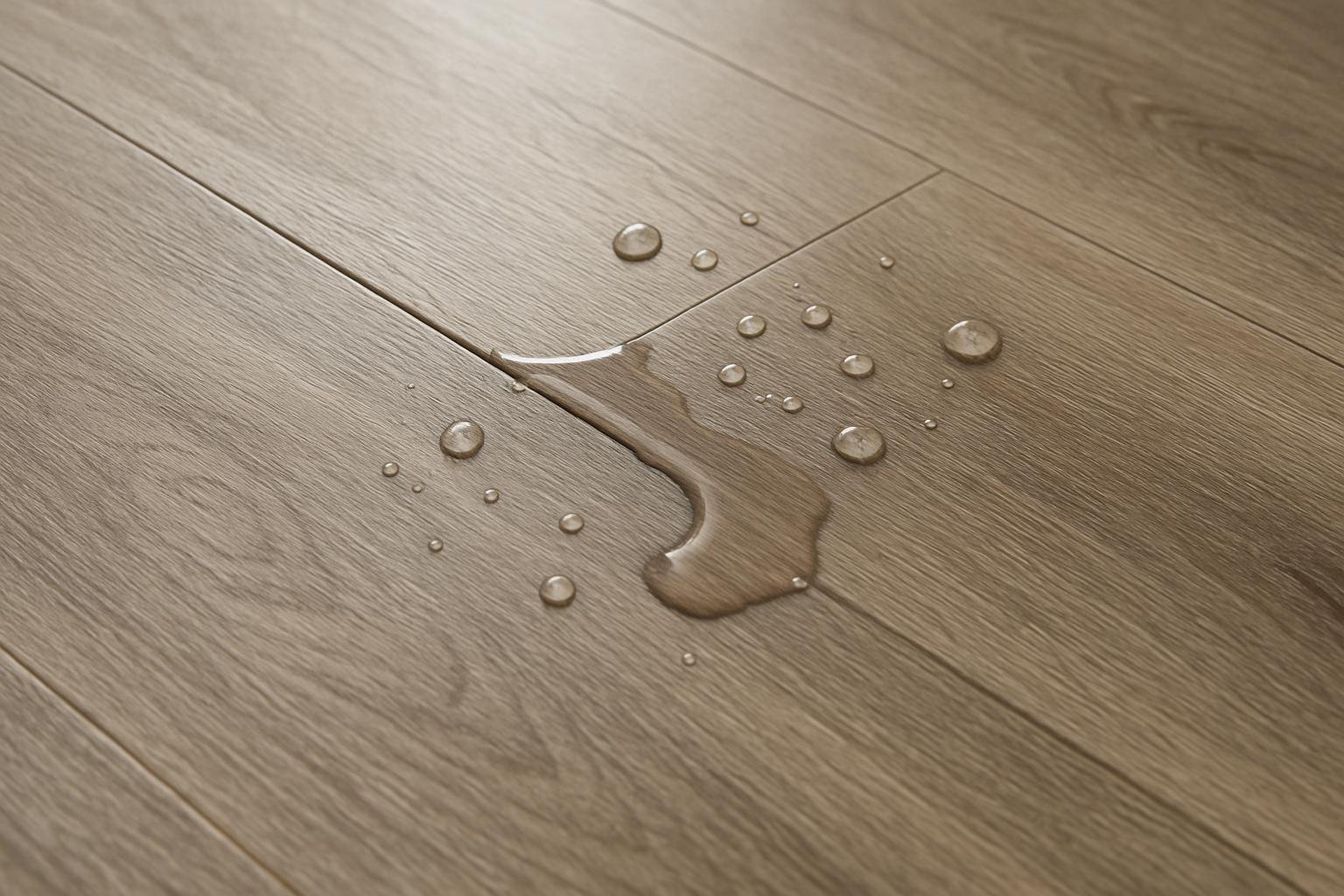
The WPC core is waterproof, but a floating Pantheon HD Plus floor isn't a waterproof room. Water gets under the planks at the seams and the perimeter and sits on the subfloor with nowhere to drain.
Keep the two claims separate in your head. "Waterproof core" describes the plank material itself, the 8mm board that won't swell or rot if it gets wet. "Water-resistant" is the most you can fairly say about the click-lock seams and edges. Seams are where trouble starts, not the plank face everyone pictures when they see the word waterproof on the box.
Where this floor shines is everyday spills in rooms you wipe up in good time: basements, kitchens, baths, and mudrooms. A dropped glass of water, a dog bowl that sloshes, a wet boot, none of that fazes it. Basements and bedrooms each come with their own wrinkles worth sorting out before you buy, covered in our broader guide to what makes vinyl flooring last.
Where to stay careful is standing water. A leaking dishwasher, a failed water heater, or a basement that floods can push water under any floating floor, and once it's under there it pools on the subfloor. The core rating means the plank survives a wetting. It doesn't mean the room is sealed or flood-proof.
What Pantheon HD Plus Costs Installed
The plank material runs about $6.49 per square foot at Ferguson and Paneltown and climbs to $9.09 at Flooring Inc and Shaw's own site, so where you buy moves the number by nearly three dollars a foot. That's before anyone touches your floor. That spread is exactly why it pays to compare retailers before you order, something we break down in our guide to buying vinyl flooring.
On top of the material you're paying for labor to install, which typically includes handling the attached pad or any allowed underlayment, pulling up the old floor, and setting transition strips at the doorways. According to homewyse's 2026 figures, install and underlayment labor runs $4.38 to $5.27 per square foot. Old floor removal estimates vary by source and by whether the old floor is nailed or glued down, dropcurb.com, buildsandbuys.com, and projectcalcs.com each put it somewhere in the $2 to $5 per square foot range. Transition strips for vinyl run $1 to $5 per linear foot, per dgfloors.com, all varying by region, material, and room shape. That same question, whether the old floor underneath is glued down, nailed, or just floating, is also the first thing to sort out before removing vinyl flooring the right way.
| Line item | Cost | Note |
|---|---|---|
| Pantheon HD Plus (material) | $6.49-$9.09 per sq ft | Lower at Ferguson and Paneltown, higher at Flooring Inc and Shaw's site |
| Install + underlayment labor | $4.38-$5.27 per sq ft | Per homewyse's 2026 figures; varies by region and room shape |
| Old floor removal | $2-$5 per sq ft | Nailed vs glued hardwood and disposal change the number |
| Transition strips | $1-$5 per linear foot | Vinyl T-molding and reducers at doorways; priced per linear foot, not per sq ft |
Material, labor, removal, and trim priced separately so you can build your own total.
Now work a real room. Take an open 1,000 square foot living area. Material alone runs $6,490 at the low retail price and $9,090 at the high one. Add install labor at $4,380 to $5,270. That puts the installed cost, before removing your old floor, at roughly $10,870 on the low end and $14,360 on the high end. Old floor removal adds another $2,000 to $5,000 depending on what's coming out, and transition strips are billed per linear foot at your doorways, not by the square foot.
Two things bend those numbers. A basement or a staircase costs more per foot than an open rectangle, because the cuts, the moisture prep, and the slow going all eat labor. And the retail spread on the plank is wide, so a big job is exactly where it pays to look at wholesale LVP pricing instead of grabbing boxes at the sticker price.
Installing Pantheon HD Plus: DIY or Hire a Pro?
The click-lock floating planks make a simple square bedroom or living room a realistic DIY job. Stairs and big open-plan floors with moisture transitions are where hiring a pro is usually worth the money.
Before a single plank goes down, I run two checks on every job. I pull a straightedge across the subfloor to find high spots and dips, because a floating floor over an uneven base flexes at the seams and the locks eventually let go. I conduct moisture testing on concrete, especially basement slabs, as well. The warranty quietly hinges on both of these, and I've seen homeowners lose a claim because nobody checked them before the planks went down.
I've pulled up floating floors where a slow appliance leak ran under the seams and sat on the slab for weeks before anyone noticed, the planks held up fine while the subfloor underneath was a mess. That's the whole point about seams versus core, and it's why I tell every customer the prep matters more than the plank.
Acclimation follows the box's own sheet, not an internet rule of thumb. Some products ask you to let the planks sit in the room first; others say skip it. Read the sheet that came with your order.
The attached IXPE pad usually means no separate underlayment, and this is where people get into trouble. Laying a second layer of foam under a plank that already has its own pad can void the warranty. Leave it alone unless Shaw's instructions for this product say otherwise. And leave the expansion gap Shaw's instructions call for around the entire perimeter, since the exact size is theirs to set, not a universal figure.
What does that warranty actually promise, though? On most rigid-core vinyl lines, a manufacturer's warranty covers defects in the plank itself, things like a wear layer that fails early or a core that delaminates under normal use. It does not cover damage from skipping the subfloor flatness or moisture checks, from stacking a second pad under a product that already has one, or from standing water that sits on the subfloor because of a leak. Warranty length and exact coverage differ by product and even by residential versus commercial use, so the number to go by is the one printed in Shaw's own warranty document for Pantheon HD Plus, not a general figure for vinyl plank as a category.