
Vinyl tiles aren't one floor but two: LVT (luxury vinyl tile), built for homes, and VCT (vinyl composition tile), built for commercial jobs. They behave differently on water, wear, and upkeep. Shopping by the shared name is how people end up buying the wrong one for the room.
That mix-up costs money. Someone walks in wanting a waterproof kitchen floor and walks out with a porous commercial tile that needs waxing, or the reverse. This sorts out which vinyl tile belongs in a wet room, which one needs a wax schedule, and what each really costs installed.
Key takeaways
- "Vinyl tiles" means two different floors: LVT (luxury vinyl tile) with a printed wood/stone look over a tough, often waterproof core, and VCT (vinyl composition tile), a porous commercial tile that needs regular stripping and waxing.
- A waterproof core protects the tile material, not the seams or the room. Water can still reach the subfloor at the edges of a floating floor, which is why most failures happen at seams.
- LVT total installed runs about $5-$22 per square foot, and homewyse puts the 2026 national average at $9.16-$13.63 per square foot.
- For bathrooms, kitchens, and basements, buy a waterproof-core LVT (not VCT), lean toward glue-down in wet rooms, and match the wear layer to the room's traffic.
- Subfloor flatness and a moisture check decide whether the floor lasts, not the tile you picked. The maker's warranty quietly hinges on that prep.
Vinyl Tiles Are Two Floors With One Name: LVT vs VCT
"Vinyl tiles" covers two products that look and act nothing alike. Before you compare anything, name which one you mean: luxury vinyl tile (LVT) or vinyl composition tile (VCT).
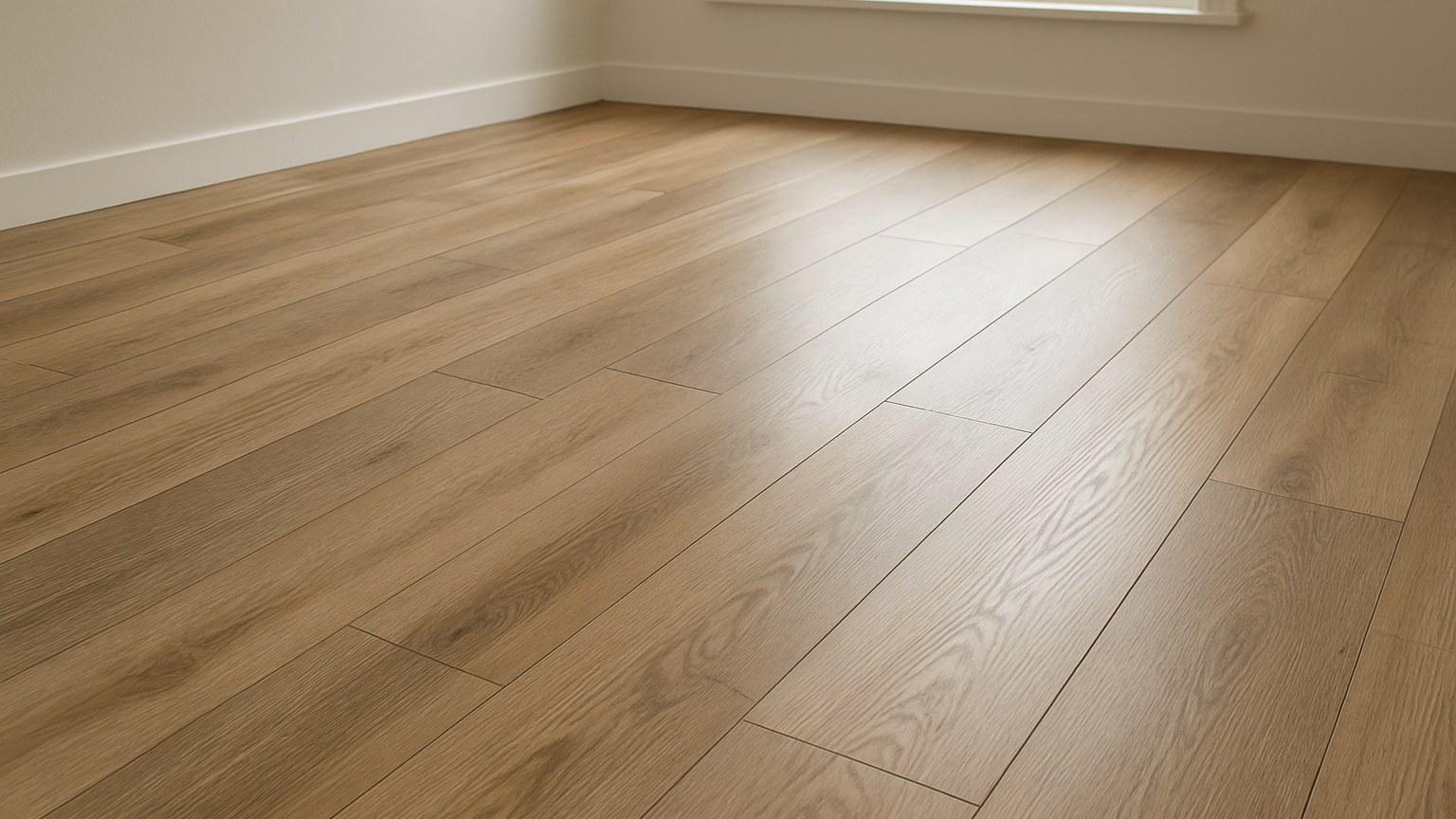
LVT is a printed photo layer of wood, stone, or ceramic under a clear top skin, sitting on a flexible or rigid core. It's what most homeowners picture, and it's where you get wood-look vinyl flooring that reads like real plank or the stone and ceramic patterns people search for.
VCT is the hard, speckled tile you've walked on in schools and stores. It's vinyl mixed with limestone filler, which makes it porous. It only stays sealed if you strip and wax it on a schedule. ASTM F1066, a standard from ASTM International (a group that writes material testing rules), the Standard Specification for Vinyl Composition Floor Tile, is what defines it.
The floor a homeowner wants for a kitchen or bath is a waterproof-core LVT, not VCT. Shop by the shared name alone and it's easy to grab the wrong box.
| Feature | LVT (luxury vinyl tile) | VCT (vinyl composition tile) |
|---|---|---|
| Looks like | Wood, stone, or ceramic (printed layer) | Solid or speckled color, utilitarian |
| Core | Flexible or rigid (SPC/WPC), often waterproof | Vinyl plus limestone filler, porous |
| Wear protection | Clear wear layer, measured in mils (thousandths of an inch) | Relies on a wax coating |
| Water | Waterproof-core options available | Not waterproof; soaks in without wax |
| Upkeep | Sweep and damp mop, no wax | Strip and wax on a schedule |
| Typical use | Homes: kitchens, baths, basements | Commercial: schools, stores |
How LVT and VCT compare on looks, core, water, and upkeep.
Are Vinyl Tiles Durable? The Wear Layer and Core Decide
LVT durability comes down to two things: the wear layer (the clear top skin, measured in mils) and the core underneath. VCT is hard underfoot, but it leans on its wax coat for scratch and stain protection, so a VCT floor is only as tough as the last time it was waxed.
The wear layer is the number to shop LVT by. A thicker one takes more scuffs and scratches before the print shows through. Each maker publishes the mil rating for its own product, so buy by the room's traffic and don't treat one guide's number as a universal rule. The rating is set per product, not across the category.
Rigid cores split two ways. SPC (stone polymer composite) is denser and firmer, so it hides a slightly imperfect subfloor better. WPC (wood polymer composite) is softer and a little warmer underfoot. A fiberglass layer inside the core helps the tile hold its shape over temperature swings.
Homeowners sometimes ask for the best LVT brand like there's one right answer. There isn't. A homeowner with two dogs, a south-facing space with abundant daylight, and a concrete basement needs different tile than someone refreshing a quiet upstairs bedroom; the right choice depends on the room and how much wear and abuse it will receive. If you're weighing LVT against the cheaper plank options, the vinyl vs laminate tradeoff room by room lays out where each one wins.
Is Vinyl Tile Waterproof? The Rooms It Belongs In
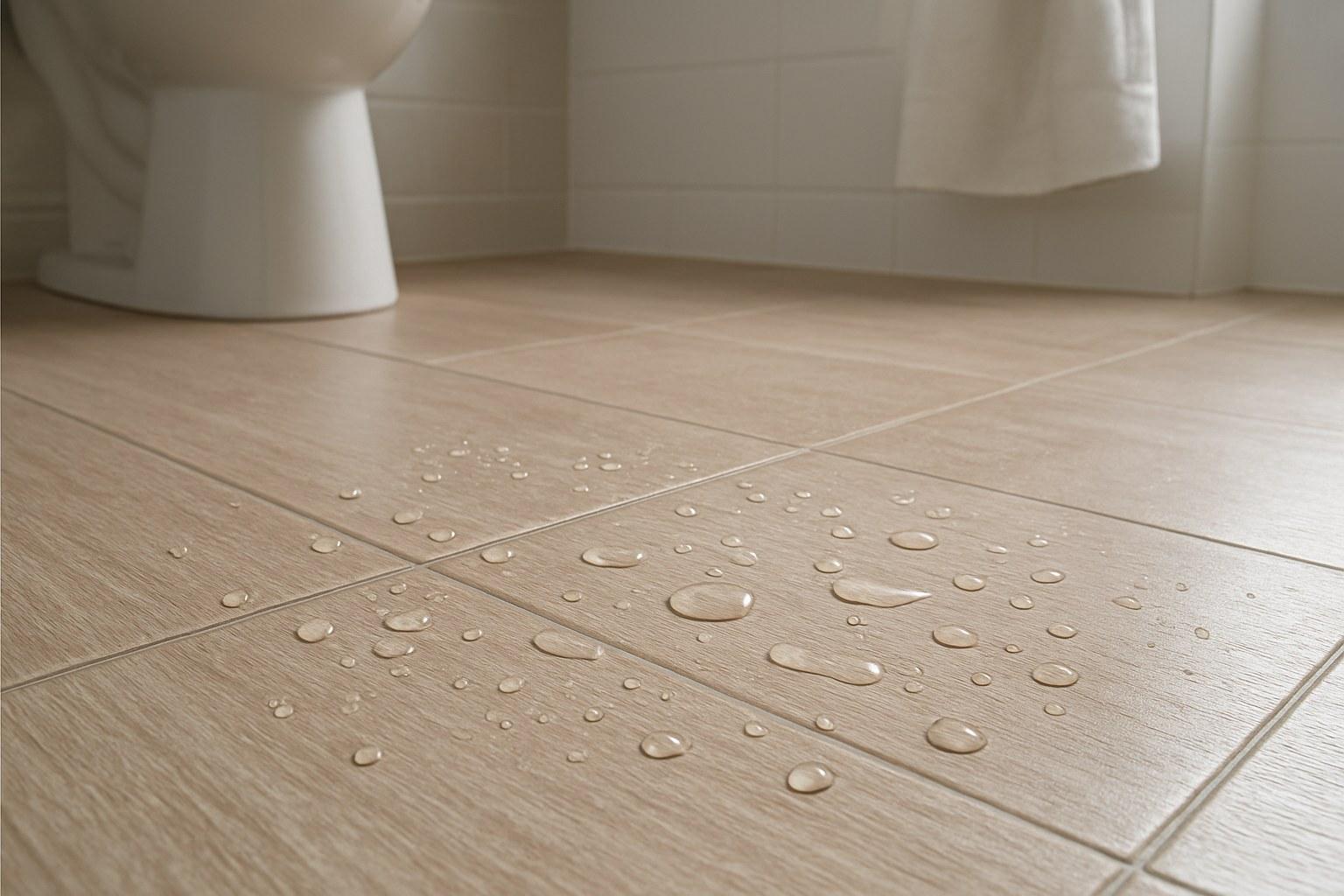
A waterproof-core LVT won't swell from water sitting on its surface, but "waterproof" describes the tile material, not the seams and not the room. In a floating floor installation, water can still seep through the edges and accumulate beneath the surface at the perimeter, where it remains hidden from sight.
VCT is not waterproof in this sense at all. It's porous, so water and stains soak straight in unless the wax coat is kept up. For a wet room, that rules VCT out unless you plan to wax it forever.
Keep the waterproof core separate from water-resistant seams in your head. Failures tend to show up at the seams and edges, not the middle of a tile. That's why a glue-down or tight-seam install matters more in a wet room than the word on the box.
Before any of that, two prep checks decide whether the floor lasts: the subfloor has to be flat within the maker's tolerance, and concrete needs a moisture test. Basements add slab moisture you can't see, so lean toward a rigid core down there and test the slab before you buy anything.
For a bedroom or living room, any quality LVT works fine. The wet rooms are where the choices tighten up. If you want the fuller rundown on what separates a floor that lasts five years from one that lasts twenty, the vinyl flooring lifespan factors guide walks through all nine.
Vinyl Tile in Bathrooms and the Master Bath
Use a waterproof-core LVT, lean toward glue-down, and seal the edges. A master bath sees standing water near the tub and shower, and the glue-down plus sealed perimeter keeps water from reaching the subfloor at the seams. This is the install worth hiring out rather than DIY, because wet-room edges are where a floating floor comes back to haunt you.
Vinyl Tile in Kitchens
A waterproof-core LVT is the right call here too, matched to kitchen traffic with a wear layer on the thicker side. Kitchens take rolling chairs, dropped pots, and dishwasher leaks. Click-lock LVT is realistic for a DIYer in a kitchen; just plan the layout so your seams don't land right in front of the sink. Getting that layout right starts with choosing the starting point and plank direction before the first row ever goes down, which the guide to laying vinyl plank flooring walks through step by step.
One kitchen job stuck with me. The homeowner wanted me to lay up to her new fridge instead of before it, so I worked the floor to the appliance and stopped. When the delivery crew dragged the old fridge out, they scraped a channel across three fresh planks, and I was back out for a repair that waiting one day would have skipped.
What Vinyl Tiles Cost: Materials vs Labor
Split out, the numbers look like this: rightstepflooringnc.com puts vinyl tile material at $2-$7 per square foot and labor at $2-$5 for a standard install, rising up to $2-$10 for a complex one. For installed LVT overall, rightstepflooringnc.com puts the total at $5-$22 per square foot. Homewyse puts the 2026 national average at $9.16-$13.63 per square foot.
| Item | Range ($/sq ft) | Source |
|---|---|---|
| Material (vinyl tile) | $2-$7 | rightstepflooringnc.com |
| Labor, standard install | $2-$5 | rightstepflooringnc.com |
| Labor, complex install | $2-$10 | rightstepflooringnc.com |
| LVT total installed | $5-$22 | rightstepflooringnc.com |
| LVT installed, 2026 national average | $9.16-$13.63 | homewyse |
The arithmetic is simple. Take your area in square feet, then multiply by (material per square foot plus labor per square foot). For a 200 square foot bath at a mid-range $4 material and $4 labor, that's $8 per square foot, or about $1,600.
Basements and stairs cost more than an open room, and a cut-up layout with lots of cuts pushes labor toward the high end. That spread is why a single flat national number doesn't tell you much about your specific job. Shopping by price point alone has its own pitfalls, since the cheap vinyl flooring price breakdown shows what each per-square-foot tier actually includes.
Is it cheaper than real tile? Often, yes. Click-lock vinyl can be a DIY job with no mortar and no grout, while ceramic or porcelain adds setting, grouting, and more labor, as the hexagon tile decisions that come back as callbacks spell out. If you want the plank version broken down the same way, the LVP (luxury vinyl plank) flooring cost guide splits material and labor in more detail.