
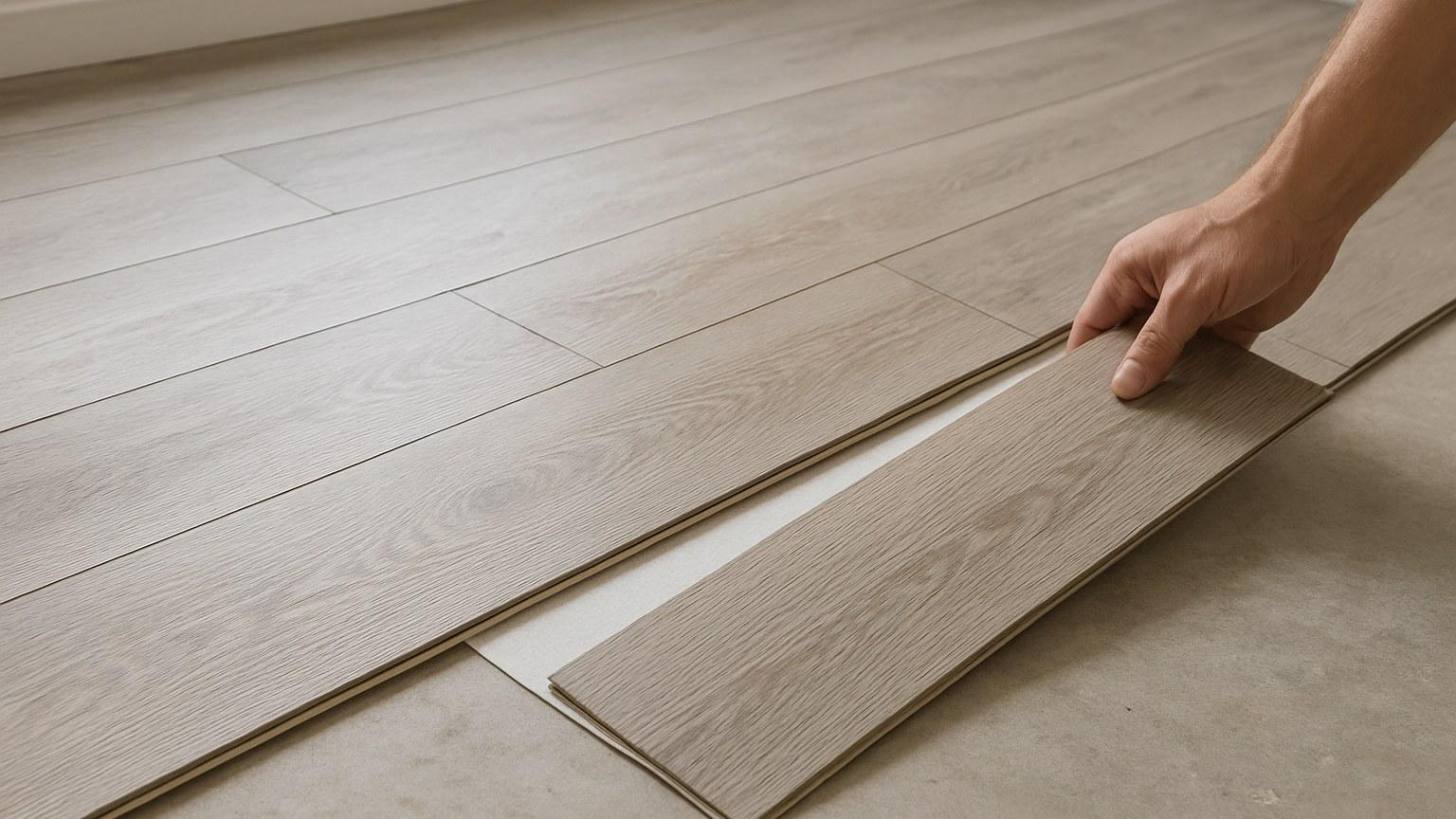
Cheap vinyl flooring runs roughly $1.50-$7 per square foot for plank materials, according to cost guides from nedesestimating.com and carpetexchange.com, with sheet vinyl often cheaper and rigid-core SPC/WPC sitting above that line. The catch is that "cheap" hides very different builds. Price alone won't tell you whether a floor lasts five years or twenty. Clearance racks and online clearance listings are often the fastest way to find legitimately cheap plank without dropping to peel-and-stick quality, which is why it pays to browse clearance vinyl plank flooring before shopping full-price aisles.
Key takeaways
- Entry-level vinyl plank runs about $1.50-$3 per square foot for materials, while rigid-core SPC/WPC jumps to $6-$12, per nedesestimating.com, so 'cheap' lives in the bottom third of the range.
- Installed, a budget vinyl floor runs roughly $4-$6 per square foot and a mid-range LVP (luxury vinyl plank) $6-$10, per carpetexchange.com, which puts 1,000 sq ft at about $4,000-$6,000 budget or $6,000-$10,000 mid-range.
- The wear layer (the clear top skin, measured in mils) decides how long cheap vinyl lasts; quote the specific product's number, and a 'waterproof core' does not mean waterproof seams.
- Sheet vinyl is usually the cheapest per square foot with the fewest seams, peel-and-stick is cheapest upfront but weakest at the seams, and click-lock plank is the DIY-friendly middle.
- Click-lock floating vinyl is a realistic DIY job; glue-down, stairs, and big open-plan moisture transitions are worth hiring out.
What Each Price Band of Cheap Vinyl Actually Buys
Cheap vinyl plank lands roughly between $1.50 and $7 per square foot in materials, per nedesestimating.com. Entry-level runs $1.50-$3, standard plank runs $2-$7, and mid-range LVP (luxury vinyl plank) runs $3-$5. Rigid-core SPC (stone plastic composite) and WPC (wood-plastic composite, a stiffer, denser core board) run $6-$12 per nedesestimating.com, which puts them above the cheap line.
What changes as you climb those bands is the build. At the bottom you get a thinner plank, a thinner wear layer (the clear top skin), flatter grain texture, and a shorter warranty. Move up and you get a rigid core, a deeper embossed texture, and a top layer that takes more abuse. Those build choices are just one entry on the longer list of factors that decide vinyl's lifespan.
A word on the rock-bottom searches: vinyl priced well under the typical plank range is almost always sheet remnant or thin peel-and-stick, not real plank. The cheapest vinyl plank usually comes from closeout and clearance lots, not everyday shelf price. If you want plank at the bottom of the range, hunt waterproof vinyl flooring clearance deals and check the specs before you trust the sticker.
Cheap doesn't mean bad. It means you trade thickness, wear layer, realistic grain, and warranty length for a lower price.
| Tier | Materials | What the build gives you |
|---|---|---|
| Entry-level plank | $1.50-$3 / sq ft | thin plank, thin wear layer, often an attached pad |
| Standard plank | $2-$7 / sq ft | flexible or rigid core, varies by product |
| Mid-range LVP | $3-$5 / sq ft | rigid core, better texture and a thicker wear layer |
| Rigid-core SPC/WPC | $6-$12 / sq ft | thick rigid core and top wear layers; above the "cheap" line |
Source: nedesestimating.com
Materials-only price per square foot by vinyl plank tier.
Plank, Tile, Sheet, or Peel-and-Stick: The Cheapest Type for Your Room
Sheet vinyl is usually the cheapest per square foot and has the fewest seams. Plank costs more but installs easily with click-lock edges. Peel-and-stick is cheapest upfront but weakest where it counts, at the seams.
The cost drivers differ by type. Plank carries a thicker rigid core, so you pay for the material. Sheet comes in one or two big pieces, so you buy fewer seams and often less labor. Tile gives you size and shape flexibility, which is why people reach for it on stone looks.
Match the type to how wet the room gets. Sheet is a good pick for a cheap bathroom or laundry. Click-lock plank handles living areas and kitchens. Peel-and-stick belongs in a rental or a small, low-traffic spot.
| Type | Relative cost | Seams | Water | Best room |
|---|---|---|---|---|
| Sheet vinyl / rolls | usually cheapest per sq ft | fewest (one or two sheets) | best against standing water | bathrooms, laundry |
| Plank (LVP / SPC) | middle of the three | click edge on every plank | waterproof core, water-resistant seams | living areas, kitchens |
| Vinyl tile (LVT) | similar to plank | many small seams | depends on install | stone looks, small rooms |
| Peel-and-stick | cheapest upfront | adhesive seams, weakest | poor at the seams | rentals, small low-traffic rooms |
Cost drivers, seam count, water tolerance, and best use by cheap vinyl type.
Sheet Vinyl and Cheap Vinyl Rolls
Sheet is the old-school budget floor, and it still wins on price in a small wet room. Fewer seams means fewer places water can sneak through to the subfloor. The hard part is the install. Cutting a 12-foot roll to fit around a toilet flange and a tub takes care, and a bad cut wastes the whole piece. That's the part of a sheet job worth thinking twice about doing yourself.
Peel-and-Stick Tiles and Planks
Peel-and-stick is the cheapest way to cover a floor today. The adhesive seams are also the first thing to let go, especially in heat or where water pools. It demands a dead-flat, bone-clean subfloor, because any grit or bump telegraphs through and lifts the edge. Good for a rental refresh or a closet. Not something to lay in a kitchen you plan to keep. Getting that subfloor prep and tile placement right from the start is exactly what a step-by-step peel and stick installation walkthrough walks you through.
Wear Layer: How to Shop Cheap Without Buying a 5-Year Floor
The wear layer is the spec that separates a plank that survives a kitchen from one that scuffs in a year. It's measured in mils (thousandths of an inch). Quote the specific product's mil number instead of trusting a vague "commercial grade" label, because that label isn't regulated the way the mil figure is published.
A vinyl plank is built in layers, and the price buys you each one. On top is the wear layer that takes the scratches. Under it sits the print layer, the photo that gives the wood or stone look. Below that is the core, either rigid SPC/WPC or a flexible body. At the bottom is the backing, and some planks add an attached foam pad there.
Keep the two water claims separate, because this is where cheap floors actually fail. A waterproof core means the plank itself won't swell when it gets wet. It does not mean the floor is waterproof. Water still gets under a floating floor at the perimeter and sits on the subfloor. The core shrugs it off; the seams and the subfloor under them don't.
When sizing up a cheap plank, look for these warning signs:
- A thin wear layer, or a product that won't publish a mil number at all.
- No FloorScore listing (a certification for low chemical give-off) and no low-VOC note. VOCs are volatile organic compounds, the chemicals that off-gas from a new floor.
- Flimsy click edges that flex or crumble when you handle a loose plank.
- A short warranty, which is the maker telling you what they actually expect.
What 500 and 1,000 Square Feet of Cheap Vinyl Really Costs
The math is simple: total = (materials per square foot + labor per square foot) x square footage, then add 5-10% extra for waste and cuts. Odd rooms and lots of corners push you toward the higher waste number.
Work it from carpetexchange.com figures. Budget vinyl installs around $4-$6 a square foot, and mid-range LVP runs $6-$10. So a 500 square foot room runs about $2,000-$3,000 on budget vinyl, and 1,000 square feet lands near $4,000-$6,000. Step up to mid-range LVP and those jump to $3,000-$5,000 and $6,000-$10,000. Those ranges swing a lot depending on product tier, which is why it helps to break down the average cost of LVP per square foot before settling on a budget.
| Tier | Materials | Labor | Installed | 500 sq ft | 1,000 sq ft |
|---|---|---|---|---|---|
| Budget vinyl | $2-$3 / sq ft | $2-$5 / sq ft | $4-$6 / sq ft | $2,000-$3,000 | $4,000-$6,000 |
| Mid-range LVP | $3-$5 / sq ft | $2-$5 / sq ft | $6-$10 / sq ft | $3,000-$5,000 | $6,000-$10,000 |
Source: carpetexchange.com
Installed cost split into materials and labor, with totals for 500 and 1,000 square feet.
A lot of that bill is labor. On a budget floor, labor can match or beat the cost of the planks themselves, which is why doing the install yourself moves the number so much. Basements and stairs cost more than an open room, because basements usually need a moisture check and sometimes a leveling step, and stairs are slow, finicky, cut-heavy work.
For a deeper look at how installers price the labor side, see what vinyl plank flooring installation really costs per square foot. To nail down your exact square footage before you buy, the flooring calculator guide walks through measuring room by room.
DIY or Hire: Where Cheap Vinyl Saves You
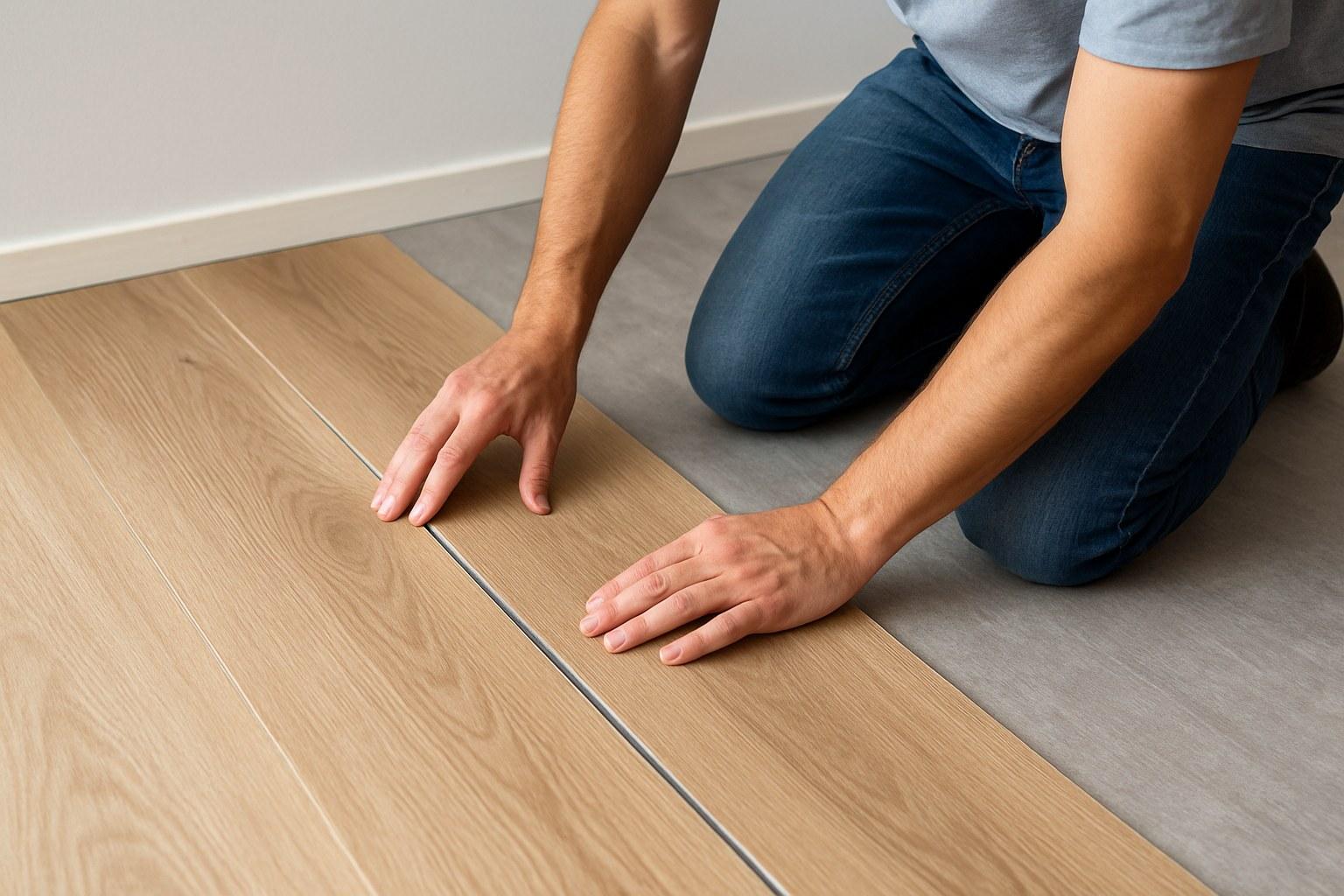
Click-lock floating plank is realistic for most DIYers, and that's where you keep the labor dollars in your pocket. Glue-down, stairs, and big open-plan floors with a moisture transition between rooms are better left to a hire.
Before any plank goes down, deal with the subfloor. It has to be flat and dry. A floating floor only lasts as long as the prep under it, and the maker's warranty quietly hinges on that flatness and moisture, not on which plank you chose. Check the subfloor with a straightedge for dips and humps, and test a slab for moisture. Then read the box for acclimation, because some products ask for it and some say skip it, and only that sheet governs.
Leave the expansion gap around the whole perimeter, and pay extra attention near sun-facing glass. The exact gap size is whatever the product's instructions say, not a one-size number off the internet.
On a Dayton install, rigid plank went down tight against the trim by a south-facing slider. The next hot stretch cooked that spot, and the seams there pushed up and peaked. Give the floor room to move near any big window.
If your job is a click-lock floor over a flat, dry subfloor, you can do it yourself and bank the labor. If it's a glued floor, a staircase, or a sprawling open floor where one room meets another over a moisture line, pay the pro. Hunting a deal first? Check a vinyl flooring sale for closeout plank before you price the labor, since the material savings stack on top.
Sources
- EPA WARM Tool: Vinyl Flooring Life-Cycle Data
- Carpetexchange.com
- Nedesestimating.com