
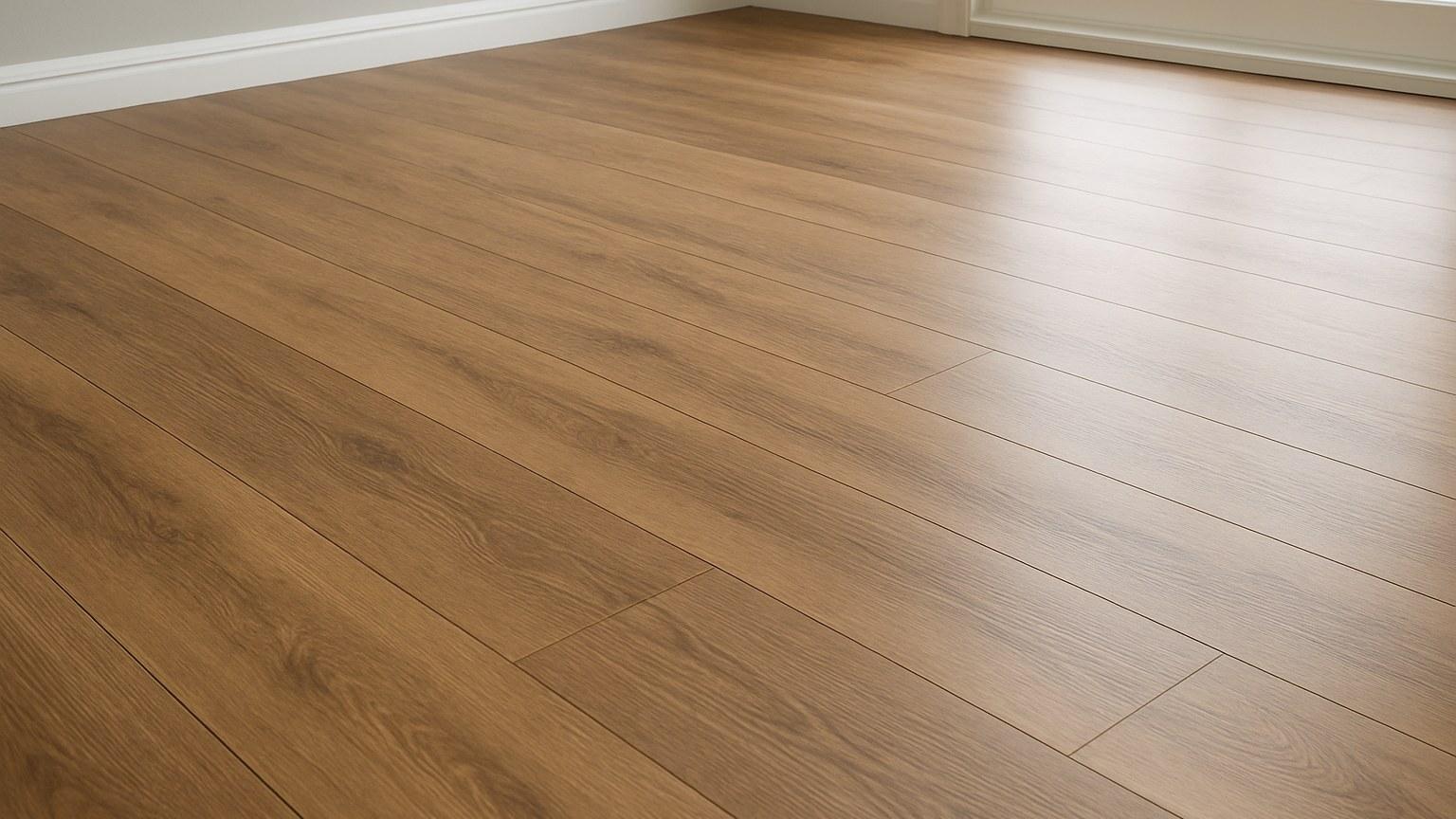
Loose lay vinyl flooring is vinyl plank that stays down by its own weight, a grippy backing, and a sealed edge, with no glue or click joints across the floor. It works great in bedrooms and closets but drifts under rolling loads. The trouble is that "easy to lay" gets sold as "works anywhere," and it doesn't.
Key takeaways
- Loose lay vinyl holds down by its own weight, a grippy backing, and a sealed perimeter, not glue or click edges, so it shines in bedrooms and closets but struggles under rolling loads.
- The problems owners and installers report are real: side seams opening past 1/8 inch, planks dragging when furniture slides, and edges going brittle in cool rooms.
- Kitchens, entries, big open rooms, and anywhere with rolling loads usually need full-spread adhesive, not true loose lay.
- Loose lay planks run about $2.50-$4.50 per square foot for materials (floorcity.com); fully installed by a pro, loose lay runs about $9.16-$13.63 per square foot (homewyse.com).
- A clean, dry, smooth, flat subfloor is what keeps the floor from moving; most shifting and seam problems trace straight back to prep.
What 'Loose Lay' Vinyl Flooring Actually Means
Loose lay planks lie flat on the subfloor and hold position by their own weight, a thick grippy backing, and friction, with the room's edge sealed by a silicone bead or adhesive tape. There's no glue spread across the field and no snap-together click edge. That's the whole idea. Getting that first row aligned still sets the tone for every plank that follows, which is why picking the right starting point and direction for vinyl plank flooring matters even on a floating floor like this.
Two things about "waterproof" matter here, and shoppers blur them all the time. The plank material can be waterproof while the floor as a whole is not. On a loose floating field, water still finds its way under the planks at the perimeter and sits on the subfloor. A waterproof core doesn't buy you waterproof seams.
This isn't the same as loose lay carpet tiles or rigid-core click planks. Carpet tiles grip with a tacky back; click planks lock edge to edge with a milled profile. Loose lay vinyl leans on a heavier, thicker, grippier backing to stay put instead of either of those.
One label check before you buy: if indoor air quality matters to you, look for FloorScore, a low-VOC (low off-gassing) certification. It only counts when the specific product you buy carries it, so read the label rather than assuming the whole category is covered.
Loose Lay vs Glue-Down vs Click-Lock
Loose lay wins on removability and quick DIY. Glue-down wins on stability under traffic and rolling loads. Click-lock sits in the middle: it floats over the subfloor like loose lay, but the edges still lock plank to plank. That milled joint is doing real work, and understanding what the click-lock joint actually is explains why it holds tighter than loose lay without needing glue.
The reason loose lay seams open more than clicked seams is simple. A clicked joint mechanically holds two planks together, so they move as a unit. Loose lay planks only touch each other; nothing ties them, so each one can creep on its own.
| Method | How it holds | Materials cost | Water tolerance | DIY difficulty | Removable | Rolling loads | Best rooms |
|---|---|---|---|---|---|---|---|
| Loose lay | Weight, grippy backing, friction, sealed perimeter | Low (budget to mid) | Waterproof core, weak at seams | Easiest | Yes, planks lift and reuse | Poor without full glue | Bedrooms, closets, light living rooms |
| Glue-down | Full-spread adhesive under every plank | Low to mid plus adhesive | Best edge stability | Hardest | No, bonded down | Best | Kitchens, entries, offices, big open rooms |
| Click-lock | Locking edges, floats over subfloor | Mid | Waterproof core, locked seams | Moderate | Partly, can disassemble | Moderate | Most living spaces, bedrooms, dens |
How the three install methods compare on cost, water tolerance, DIY difficulty, and room fit.
For a commercial-grade or high-traffic room, don't fight it with loose lay. Go to full adhesive. I walk through that call room by room in Glue-Down vs Floating Vinyl Plank Flooring: Which to Install by Room, including which rooms are worth the extra work and mess of glue.
Does Loose Lay Vinyl Really Stay Put? Pros, Cons, and the Problems
In a quiet room with a flat, dry subfloor and a sealed edge, yes, it stays put. In a room with sliding furniture, rolling appliances, or big temperature swings, not reliably. That split is the whole story.
The pros are real and worth naming. Loose lay is beginner-friendly, it lifts and reuses so you can swap a damaged board or change the look later, it goes down fast, and there are no adhesive fumes to live with while it cures.
The cons are just as real, and I've run into the same handful on jobs I've pulled up or repaired:
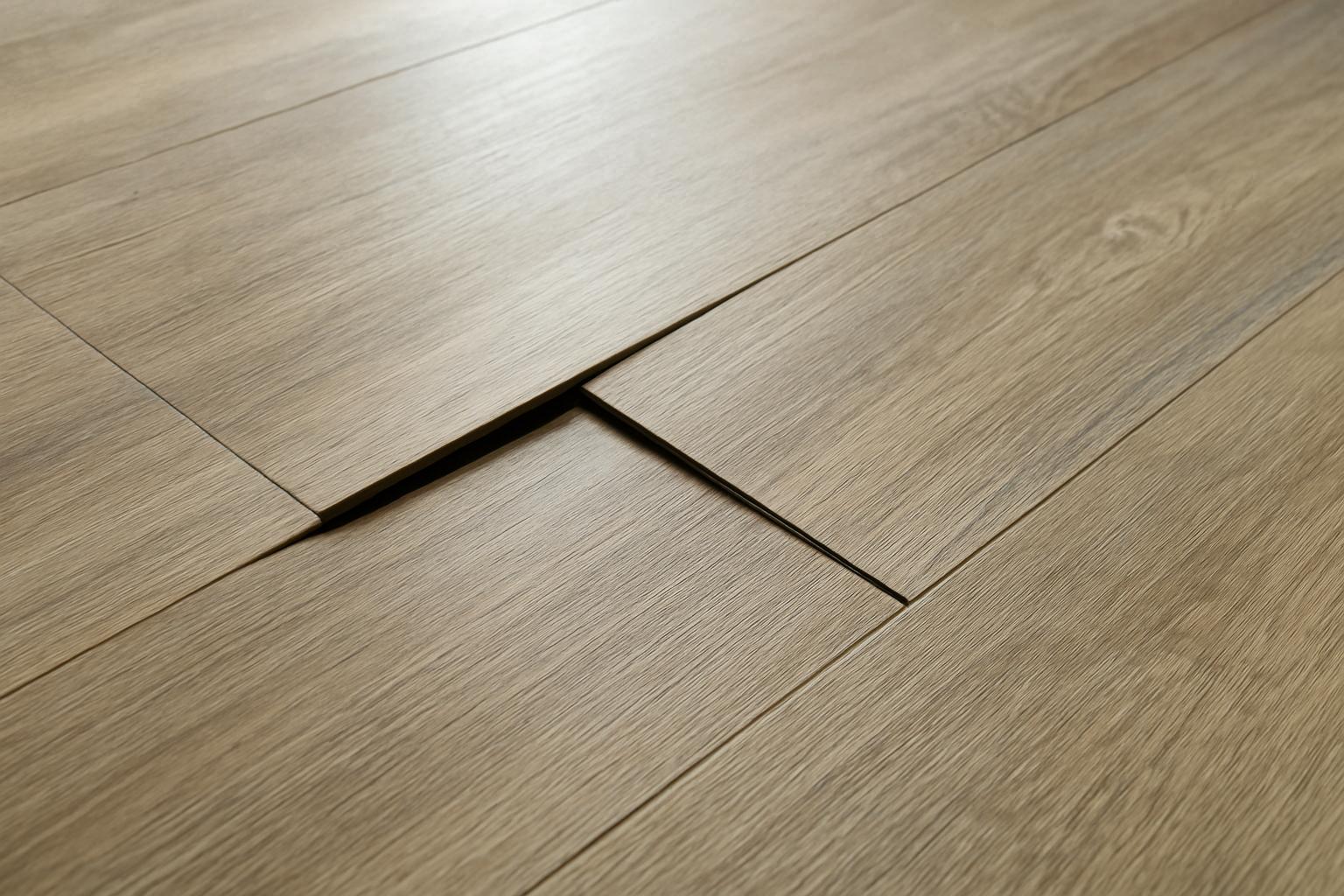
- Side seams opening past 1/8 inch, so you see a line and dirt collects in it.
- Planks dragging and bunching when someone slides furniture across them.
- Edges turning brittle and chipping in cool rooms.
- Lighter planks creeping out of place over months.
I pulled up a loose lay floor in a Dayton back room once where the seams had crept open along one wall. The room ran cool and the installer had skipped sealing the perimeter, so the planks had nothing holding the field tight. Nothing was wrong with the vinyl itself; it just had no reason to stay where it was laid.
When You Need Full-Spread Glue Instead
Reach for full-spread adhesive any time the room has rolling loads or constant water at the seams. That means kitchens, entries, mudrooms, offices with rolling chairs, and any big open stretch where furniture moves. Glue ties every plank to the subfloor so nothing creeps, nothing drags, and seams stay shut. You lose the easy-removal benefit, but in those rooms you were never going to keep the floor tight without it. That full-spread approach has its own install steps, material needs, and price range worth knowing before you commit, covered in this guide to LVT (luxury vinyl tile) glue-down flooring.
Is Loose Lay Right for Your Room?
Bedrooms and closets are the clean yes. Light living and dining rooms work with care. Kitchens, entries, mudrooms, and anything with rolling loads want full-spread adhesive, not true loose lay. Find your room below. That same room-by-room thinking applies to vinyl plank flooring overall, since the room-by-room verdict on vinyl plank flooring walks through which spaces it suits best.
| Room | Verdict | Why |
|---|---|---|
| Bedroom / closet | Good fit | Low traffic, little rolling load, few spills |
| Living / dining room | Works with care | Spot-glue under heavy furniture, lift legs to move it |
| Kitchen | Full glue or spot glue | Spills at seams and rolling appliances pull planks |
| Entry / mudroom | Full glue | Grit, water, and heavy foot traffic at the door |
| Basement | Depends | Check moisture and keep temperature steady year-round |
| Sunroom / porch | Poor fit | Cool swings make edges brittle and planks move |
| Office with rolling chairs | Full glue | Rolling loads drag loose planks apart |
A room-by-room call on where loose lay vinyl holds, where it needs spot glue, and where it needs full adhesive.
Sunrooms and three-season porches deserve a hard no for true loose lay. Cool swings make the edges brittle, and the temperature changes let planks shift. If you must put vinyl there, glue it down and pick a product rated for the temperature range you get.
Loose Lay in Kitchens and Bathrooms
Kitchens are where true loose lay bites people. Spills reach the seams fast, and a fridge or dishwasher rolls in and out right over the floor, dragging unglued planks apart. A sealed perimeter plus spot glue under the appliances is the floor minimum here, and full glue is the safer call. Baths are the same story on a smaller scale: standing water at the seams is the enemy, so seal the edge and glue the field around the tub and vanity.
What's the Correct Way to Lay Loose Lay Vinyl Plank?
Start under the plank, not with it. The subfloor has to be clean, dry, smooth, and flat before a single board goes down. Run a moisture check and a flatness check first, because the maker's warranty quietly hinges on the prep, not on the plank you picked. Most shifting and seam problems I get called to fix stem from either a slab that was too wet or a floor that dipped. A full step-by-step walkthrough of how to install vinyl plank flooring covers each of these checks in order, start to finish.
Read the box's own install sheet for two numbers people guess at. Acclimation varies by product, so some want the planks to sit in the room first and some say skip it. The perimeter expansion gap is set per product too, not by a rule passed around online. Look up both on the sheet for the exact product you bought.
From there the job runs in order: lay and stagger the planks across the field, trim them to the walls, seal or tape the perimeter, then spot-glue the first and last rows plus anything under heavy or rolling items. For straight, clean cuts you don't need a saw; a vinyl plank cutter does the trimming with no dust. Add transition strips at doorways so the edges stay protected where two rooms meet. Picking the right transition strips for vinyl plank floors keeps those doorway edges secure instead of lifting over time.
Don't add an extra pad under loose lay unless the specific product allows it. Many rigid cores already have an attached pad, and stacking a second one can void the warranty. The rules on whether vinyl plank needs underlayment at all come down to the product and the subfloor it sits on, not a blanket yes.
Loose lay is realistic for most DIYers in a quiet room. Where I tell people to hire out is full glue, stairs, and large open-plan floors that cross a moisture transition, because those are unforgiving and a slip shows for years. A full luxury vinyl plank installation guide walks through hiring help or doing it yourself from start to finish.
10 Common Mistakes When Installing Vinyl Plank
The mistakes that cause callbacks are almost always prep and perimeter: skipping the moisture test, laying over a floor that isn't flat, forgetting the expansion gap, and leaving the edge unsealed so the field has nothing to hold against. Stagger your end joints too, since lining them up makes a weak, obvious pattern. I break down the full list of what goes wrong and how to avoid each one in the common mistakes when installing LVP (luxury vinyl plank) guide.
What Loose Lay Vinyl Costs
Loose lay planks run about $2.50 to $4.50 per square foot for the material, per floorcity.com. Floating-install labor adds roughly $1.50 to $4 per square foot, per nedesestimating.com. For a full professional job with prep included, homewyse.com puts loose lay at about $9.16 to $13.63 per square foot installed, which is higher than the simple material-plus-labor math because it folds in site prep, overhead, and spot adhesive.
| Item | Cost per sq ft | Source |
|---|---|---|
| Loose lay planks (materials) | $2.50 - $4.50 | floorcity.com |
| Floating-install labor | $1.50 - $4.00 | nedesestimating.com |
| Fully installed by a pro | $9.16 - $13.63 | homewyse.com |
Material and labor ranges for loose lay vinyl, shown separately because they come from different sources and cover different scopes.
Two things move those numbers. Basements and stairs cost more than an open room, every time, because of moisture prep and the slow, fussy cutting. And if you DIY a quiet bedroom in loose lay, you drop the labor line entirely, which is a big part of why this install appeals to people in the first place. Those same factors, room type, moisture exposure, and expected traffic, are the same variables that decide whether vinyl flooring lasts 5 years or 20 in the first place.